2027 Online Photography Degree Programs With No Letters of Recommendation Required

Co-Founder and Chief Data Scientist
An online photography degree can be appealing when you have a portfolio and academic record but no recent professors or supervisors available to write recommendations. A 2024 NCES report found that 54% of U.S. postsecondary students took at least one distance-education course in fall 2022, reflecting how common online study has become.
This guide explains which photography programs may not require letters, what they assess instead, how to confirm accreditation, and how to compare cost, curriculum, flexibility, and career fit before applying.
Key Things You Should Know
- "No letters of recommendation required" means recommendation letters are not part of the standard application for the specific photography degree; applicants may still need transcripts, proof of graduation, a portfolio, an essay, or identity and residency documents.
- Online photography degrees without recommendation letters can be legitimate, but simplified admissions do not indicate automatic acceptance or lower academic expectations. Verify institutional accreditation, portfolio expectations, faculty credentials, and the exact program-level application checklist.
- Cost and outcomes matter as much as admission convenience: College Board reported average 2024-25 published in-state tuition and fees of $11,610 at public four-year institutions, while the U.S. Bureau of Labor Statistics reported a $42,520 median annual wage for photographers in May 2024.
Which Online Photography Degree Programs Require No Letters of Recommendation?
A small number of institutions offer online or substantially online photography degrees with undergraduate admissions processes that generally do not list recommendation letters among their standard required materials. Requirements can change by degree level, applicant type, and term, so treat this as a comparison starting point rather than a substitute for the current application portal.
The following programs are examples of options prospective students can investigate. Confirm the photography major is available fully online, ask whether a portfolio is required, and obtain written confirmation that recommendation letters are not required for your applicant category.
| Institution and online option | Credential | Admissions materials commonly listed instead of recommendations | Best fit |
| Academy of Art University Online | Associate of Arts or Bachelor of Fine Arts in Photography | Application, education records, and proof of prior education; portfolio expectations may vary by placement or course | Students seeking a studio-art curriculum with photography specialization |
| Rocky Mountain College of Art + Design Online | Bachelor of Fine Arts in Photography | Application, official transcripts, and other enrollment documentation; portfolio policies should be confirmed directly | Applicants seeking a BFA-oriented visual arts experience |
| Other online visual arts programs with photography concentrations | Associate or bachelor's degree | Typically transcripts, application, personal information, and sometimes a statement or portfolio | Students whose goals fit commercial, digital-media, or visual-communication coursework |
Do not confuse a degree program with a nondegree photography certificate. Certificates can be useful for technical skills and portfolio building, but they usually do not provide the general education, credit-transfer, or financial-aid structure of an associate or bachelor's degree. Students interested in adjacent creative technology fields can also compare video game programs, where portfolio-based learning and digital production skills may overlap with visual storytelling.
A program should be described as having no recommendation requirement only when its current, official application instructions omit letters for your degree and applicant type. "Optional," "encouraged," "waived with a high GPA," and "not required for transfer applicants" are different policies.
What Are the Admission Requirements for Online Photography Degree Programs With No Recommendation Letters?
Most undergraduate online photography programs use a streamlined review of academic readiness and identity documents rather than a recommendation-based review. Graduate-level photography and fine arts programs are more likely to request portfolios, artist statements, and recommendations, so applicants should not assume the undergraduate policy applies to an MFA.
Schools commonly replace letters with the following materials, each of which shows a different part of your readiness to enroll.
- Official high school transcript, GED record, or prior college transcripts to document completed education and GPA.
- Online application and application fee or qualifying fee waiver.
- Portfolio, sample images, or creative work when the program uses artistic review, placement, or scholarship selection.
- Personal statement or short responses explaining artistic interests, professional goals, and experience.
- Transfer-credit evaluation materials, including course descriptions or syllabi when equivalencies are unclear.
- English-language proficiency documentation for applicants whose prior education does not meet the institution's language requirement.
Some schools are test optional and do not require SAT or ACT scores, but test-optional does not mean every requirement is waived. Ask whether there is a minimum GPA, whether the portfolio is mandatory, and whether prerequisites such as introductory art or digital imaging are needed.
Applicants considering creative degrees alongside behavioral-science coursework may find that accelerated psychology programs use different admissions and pacing models. Compare each program on its own published requirements rather than carrying assumptions from one discipline to another.
Are Online Photography Programs With No Letters of Recommendation Easier to Get Into?
Not necessarily. Removing recommendation letters reduces the time and coordination needed to apply, especially for working adults, career changers, and students who have been out of school for years. It does not eliminate academic, artistic, financial, or technical expectations.
Admissions offices may use transcripts and a portfolio to determine whether you can succeed in college-level coursework and benefit from the curriculum. A school with broad-access admissions may admit more qualified applicants than a portfolio-selective BFA, while both may have no letter requirement. Acceptance rates alone also provide limited insight because institutions calculate and report them differently.
Photography is a competitive freelance and creative field. The Bureau of Labor Statistics projects 2% employment growth for photographers from 2023 to 2033, slower than the average for all occupations. That outlook makes curriculum quality, portfolio development, client-business skills, and internship access important factors beyond admission simplicity.
Applicants should be cautious about three common mistakes:
- Assuming no recommendations means guaranteed admission or no academic standards.
- Submitting an application before checking whether the policy differs for transfer, international, graduate, or readmission applicants.
- Choosing the first easy-to-apply option without reviewing total cost, equipment needs, course delivery, and graduate outcomes.
A no-recommendation pathway is most useful when it removes an administrative barrier while the program still matches your intended work, such as portraiture, commercial photography, photojournalism, editing, retouching, or visual content production.
Recommendation letters traditionally provide outside evidence of an applicant's reliability, curiosity, and potential. Programs without them usually build a decision from documents that applicants can provide directly. This approach can make admissions more accessible, but it places more importance on submitting complete and accurate materials.
This comparison shows what common substitutes can reveal to an admissions reviewer.
| Application material | What it can demonstrate | How to strengthen it |
| Academic transcript | Prior coursework, persistence, and preparation for college study | Explain significant gaps or academic improvement if the application provides space to do so |
| Photography portfolio | Technical control, visual judgment, editing, and developing artistic voice | Submit a focused selection, label work clearly, and follow file, image-count, and copyright rules |
| Personal statement | Goals, motivation, and the connection between the degree and your next step | Use specific examples of projects, subjects, clients, or skills you want to develop |
| Resume or experience summary | Employment, freelance work, volunteer projects, software familiarity, and professional responsibility | Include relevant tools, exhibitions, publications, client work, and production responsibilities |
A portfolio is not always an admissions requirement for an online undergraduate photography program. When it is required, it is usually evaluated for potential rather than perfection. Schools may look for thoughtful composition, exposure control, consistency, editing decisions, and evidence that you can respond to critique.
Do not use work you do not own or have permission to display. If generative AI, extensive compositing, or stock assets were used, follow the school's disclosure policy. Clear authorship matters because photography programs evaluate your creative process as well as the finished image.
Accreditation is the first legitimacy check. For most students, institutional accreditation recognized by the U.S. Department of Education is more consequential than a school's marketing language because it affects federal aid eligibility, transferability, and how other institutions evaluate the degree. Photography does not generally require occupational licensure, but employers and graduate schools may still scrutinize the institution, portfolio, and training quality.
Use these steps before applying or paying an enrollment deposit:
- Check the institution's accreditor and accreditation status in the U.S. Department of Education database and confirm the status is current.
- Read the exact online photography curriculum, including required studio courses, critique, history, ethics, editing, business, and capstone components.
- Ask whether online students receive faculty feedback, live critiques, career support, exhibition opportunities, and access to software or equipment discounts.
- Request the complete tuition schedule, technology charges, graduation fees, and estimated camera, lens, lighting, storage, and software costs.
- Confirm that the admissions office has documented in writing whether recommendations are required for your intended term and applicant category.
Legitimate online learning can include asynchronous lessons, live critique sessions, project deadlines, and peer review; it should not simply consist of purchasing a credential. Compare the same accreditation questions you would use for other clinical or professional programs, such as accredited speech language pathology programs, while recognizing that photography has different programmatic standards and no universal professional licensure pathway.
Red flags include vague accreditation claims, pressure to enroll immediately, unclear refund policies, promises of guaranteed work, unexplained fees, and an absence of named faculty or detailed course descriptions.
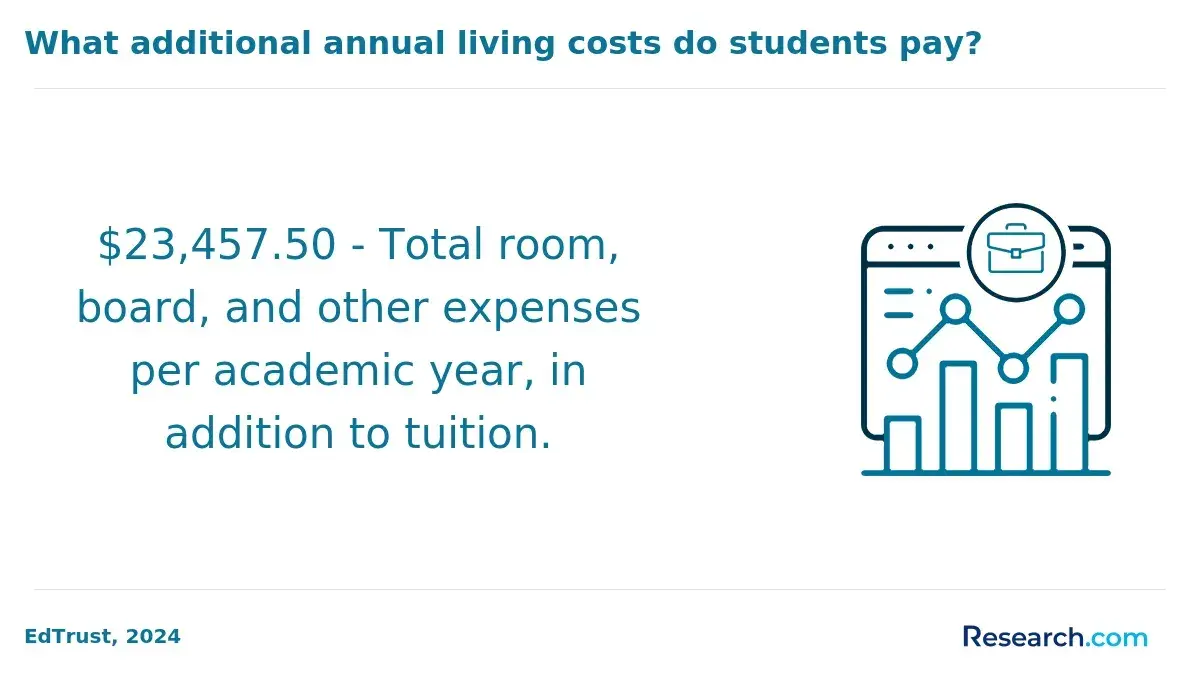
No-recommendation admissions policies do not determine tuition. Price depends primarily on institution type, degree level, residency rules, credit load, transfer credits, and whether the school charges a flat or per-credit rate. College Board reported that average published tuition and fees for in-state students at public four-year colleges were $11,610 in 2024-25; private and online art-focused institutions can be substantially higher.
For photography students, the advertised tuition is only one part of the budget. Build a total-cost estimate that includes the following categories before comparing schools.
- Tuition and mandatory institutional fees for all required credits.
- Camera body, lenses, lighting, tripods, memory cards, storage drives, printing, and repair or replacement costs.
- Editing software, computer upgrades, cloud storage, internet service, and online course technology fees.
- Portfolio production, shipping, travel for optional residencies or field projects, and graduation-related charges.
- Lost wages or reduced work hours if the course schedule limits your employment availability.
Ask whether the program requires specific equipment or merely recommends it. A school that permits rental, used, or equivalent gear can reduce startup costs, but students should still plan for reliable equipment and data backup. Compare net price after grants rather than selecting a program only by its published tuition.
Yes, an online format and a no-recommendation policy do not by themselves prevent financial aid eligibility. Students at eligible accredited institutions may be able to use federal aid if they meet citizenship or eligible-noncitizen, enrollment, satisfactory academic progress, and other federal requirements. Complete the Free Application for Federal Student Aid as early as possible for the applicable award year.
Financial aid can include federal grants, Direct Loans, work-study where available, state assistance, institutional grants, payment plans, and outside scholarships. Eligibility, award amounts, and whether online learners can use certain campus-based resources vary by institution.
Before borrowing, ask the financial-aid office whether photography equipment can be considered in your cost of attendance through a documented professional-judgment review. Approval is not automatic, but asking can clarify whether required equipment creates an aid gap. Also request a written aid offer that separates grants from loans and shows whether aid is renewable.
Applicants comparing flexible degree pathways may notice that an accelerated online business degree can have different session lengths and aid disbursement rules. The same principle applies to photography: confirm how the school defines full-time enrollment and how accelerated terms affect aid before registering.
Admission requirements do not control completion time. Program length depends on credential level, transfer credits, course sequencing, portfolio or capstone requirements, and whether a student enrolls full time or part time.
The table summarizes typical academic structures, not guaranteed timelines. A school's catalog and transfer evaluation provide the only reliable estimate for an individual student.
| Credential type | Typical credit structure | Common pacing considerations | Potential purpose |
| Associate degree | About 60 semester credits | General education and introductory studio courses may need to be completed in sequence | Entry-level creative skills, transfer preparation, or portfolio development |
| Bachelor's degree | About 120 semester credits | Upper-level photography, critique, history, and capstone requirements can affect course order | Broader liberal arts education and advanced portfolio development |
| Undergraduate certificate | Varies by institution | Often shorter but may not include general education or broad transfer options | Targeted technical upskilling rather than a full degree |
Look for courses that require prerequisites, scheduled live critiques, or limited annual offerings. An asynchronous program can still have fixed project deadlines and may not allow a student to accelerate through studio feedback or capstone work. Students should avoid choosing a program solely because its admissions process is fast.
Many online bachelor's and associate programs accept transfer credit, but transfer policy is separate from admissions policy. A school may admit you without recommendations while still requiring official college transcripts, a course-by-course review, minimum grades, and residency credits completed at that institution.
Transfer credits can reduce both time and tuition when prior coursework fits the degree plan. General education classes often transfer more readily than specialized photography studios because institutions need to confirm that prior work covered comparable technical and artistic outcomes.
Take these precautions before enrolling:
- Send official transcripts early and ask for a written transfer-credit evaluation before committing to a start date.
- Request the degree plan showing which requirements remain after transfer credit is applied.
- Keep syllabi, project descriptions, and portfolio samples for prior photography, design, or digital-media courses.
- Ask about maximum transferable credits, minimum grade requirements, expiration rules for older coursework, and residency requirements.
- Do not rely on verbal estimates of transfer credit when comparing net cost or completion time.
Professional experience may support a prior-learning review at some institutions, but it does not automatically become academic credit. Ask whether the school offers portfolio-based credit assessment, standardized exam credit, or articulation agreements with community colleges.
How Should You Compare Online Photography Degree Programs That Do Not Require Letters of Recommendation?
The right program is not simply the one with the shortest application. Compare each option against your intended career, budget, current credits, and preferred way of receiving critique. A commercial photographer, fine-art photographer, social-media content producer, and photo editor may need different electives, equipment access, and portfolio opportunities.
Use this side-by-side framework when narrowing your choices.
| Comparison factor | What to verify | Why it matters |
| Admissions policy | Whether letters are truly not required for your degree level and applicant type | Prevents late surprises and incomplete applications |
| Accreditation | Current institutional accreditation and eligibility for federal aid | Supports transfer, aid, and employer confidence |
| Curriculum | Lighting, editing, visual storytelling, ethics, copyright, business, and capstone requirements | Determines whether training matches your intended role |
| Online learning design | Live critiques, response time from faculty, group projects, and asynchronous expectations | Photography improves through feedback, not only recorded lectures |
| Total cost | Net tuition, fees, equipment, software, and likely transfer-credit savings | Shows the realistic financial commitment |
| Career support | Portfolio reviews, internships, alumni connections, freelance-business preparation, and job resources | Helps translate coursework into marketable work samples |
Ask an admissions representative for the current checklist, then speak with a program chair or faculty member about feedback and portfolio expectations. Request a sample course sequence and confirm whether students retain rights to their work. If your longer-term goal includes managing a creative practice, marketing services, or working with clients, compare the business coursework available within the photography degree rather than assuming it is included.
Broad online-degree comparisons can be useful when considering alternatives, including online speech pathology programs, but photography applicants should prioritize evidence of strong visual instruction, meaningful critique, and a portfolio they can use after graduation. Choose a no-recommendation program when it removes an unnecessary application obstacle without compromising the learning experience and career preparation you need.
Other Things You Should Know About Photography
It depends on the program and course sequence. Many programs expect students to have access to a camera with manual controls, a computer capable of photo editing, and reliable internet. Ask for the required-equipment list and whether used or equivalent equipment is acceptable before enrolling.
Freelance work usually does not formally replace a required recommendation letter. In a program that does not require letters, however, client projects, published work, exhibitions, and relevant technical skills can strengthen a portfolio, resume, or personal statement.
Verify it when you begin the application and again before submitting it, especially if several months have passed. Review the current program application page, the application portal checklist, and any requirements sent by admissions for your applicant category.
Employers and clients commonly focus on the quality and relevance of your portfolio, technical abilities, reliability, and experience. A recognized institution, strong work samples, practical production experience, and clear communication generally matter more than the absence of a recommendation-letter requirement in your admissions history.
- Online Photography School | F.I.R.S.T. Institute https://www.first.edu/programs/online-photography-school/
- Online Photography Degrees https://www.affordablecollegesonline.org/degrees/best-online-bachelors-in-photography-programs/
- Online Photography Degrees | Photography Programs & Courses https://www.onlinecolleges.net/degrees/photography/
- How to Choose the Right Photography Program https://nossi.edu/how-to-choose-the-right-photography-program/
- Best Online Photography Degrees https://www.onlineu.com/degrees/photography