2027 Best Online Photography Degree Programs at Nonprofit Universities

Co-Founder and Chief Data Scientist
Choosing an online photography degree means weighing creative training against cost, schedule, and career goals - not simply choosing the lowest tuition. The U.S. Bureau of Labor Statistics reports a $42,520 median annual wage for photographers in May 2024, while employment is projected to change slowly through 2034. This guide helps aspiring photographers, working creatives, and transfer students compare nonprofit university programs, verify quality, estimate total costs, and select a degree format that supports their portfolio and professional plans.
Key Things You Should Know
- Nonprofit status is not a quality guarantee: prioritize recognized institutional accreditation, a portfolio-centered curriculum, transparent total costs, and support for online learners.
- A bachelor's degree is usually the most versatile choice for students seeking editorial, commercial, communications, or graduate-study options; associate programs can be a lower-cost entry point for technical skill building.
- Photographers had a median annual wage of $42,520 in May 2024, according to the U.S. Bureau of Labor Statistics, but earnings vary substantially by specialty, location, self-employment, client base, and business skills.
What Makes an Online Photography Degree Program at a Nonprofit University Different?
An online photography degree at a nonprofit university is an academic credential delivered partly or primarily through digital learning platforms by a public or private institution that does not distribute operating profits to owners or shareholders. Public universities are generally nonprofit, and many private universities are nonprofit as well. That status may affect governance and mission, but it does not by itself establish affordability, academic rigor, transferability, or career value.
Photography programs differ more meaningfully by degree level, curriculum, faculty feedback, equipment expectations, and the way they assess creative work. Strong online programs usually combine technical instruction in camera operation, lighting, editing, visual storytelling, copyright, and business practices with recurring portfolio reviews. Students should expect to make photographs independently in their own communities while receiving critique from instructors and peers.
The degree level should match the student's starting point and intended use of the credential. This comparison highlights common paths rather than treating one route as best for every applicant.
| Program type | Typical purpose | Best fit | Important trade-off |
| Associate degree | Foundational technical and creative training | Career changers, beginners, and students planning to transfer | May offer fewer liberal-arts, leadership, and advanced business courses |
| Bachelor's degree | Broad photography education with general education and portfolio development | Students seeking versatile creative, communications, or graduate-school preparation | Usually requires more time and total credits |
| Master's degree | Advanced studio practice, research, criticism, or specialized visual work | Students with a bachelor's degree and a defined artistic or academic direction | Can be costly and is not required for most entry-level photography work |
| Certificate or nondegree study | Focused software, lighting, or genre-specific skills | Working photographers who need a targeted upgrade | Usually does not provide the breadth or transfer value of a degree |
A nonprofit bachelor's program can be particularly useful when a student wants a recognized academic degree alongside portfolio work. However, a certificate, associate degree, or self-directed portfolio strategy may be more appropriate for someone whose goal is limited to improving a specific technical skill. Students interested in adjacent digital-production work can also compare video game programs when their interests center on visual design, interactive media, or digital asset creation rather than photographic practice.
How Can Students Verify Accreditation for an Online Photography Degree at a Nonprofit University?
Start with institutional accreditation. This means the university as a whole has been reviewed by a recognized accrediting agency and is eligible, when other requirements are met, to participate in federal student aid programs. Confirm the school's accreditor, current status, and any warning or probation history through the institution's official disclosures and the U.S. Department of Education's accreditation database.
Photography does not usually require a universal programmatic accreditor in the way that nursing, teaching, or clinical fields may. A program can be legitimate without specialized photography accreditation. The more relevant questions are whether the institution is accredited, whether credits transfer as expected, and whether the curriculum provides credible evidence of learning through work samples and critique.
Use the following verification sequence before paying an application or enrollment deposit.
- Confirm that the university is institutionally accredited by an agency recognized by the U.S. Department of Education.
- Check that the exact online degree, concentration, and campus or division appear in the current academic catalog.
- Ask whether online students receive the same degree title and transcript designation as campus students.
- Request the transfer-credit evaluation policy in writing before relying on prior coursework.
- Review faculty biographies, course descriptions, portfolio requirements, and graduation disclosures.
Do not confuse accreditation with nonprofit status, state authorization, professional membership, or a polished website. Students considering regulated helping professions should be especially careful about program-specific requirements; for example, accredited speech language pathology programs must address standards that do not generally apply to photography degrees.
How Rigorous Are Online Photography Degree Programs at Nonprofit Universities?
A well-designed online photography degree can be rigorous because the work is practice-based, iterative, and publicly critiqued. Students commonly complete weekly shooting assignments, technical demonstrations, readings, discussion critiques, editing projects, artist statements, and cumulative portfolio submissions. Online delivery changes where learning occurs; it should not remove deadlines, standards, or faculty evaluation.
Rigorous programs teach more than camera settings. Students should develop visual literacy, ethical decision-making, image editing, lighting control, project planning, file management, copyright awareness, accessibility considerations, and client communication. Commercially oriented curricula may add marketing, pricing, contracts, entrepreneurship, and social-media strategy. Fine-art-oriented programs may place greater emphasis on theory, history, exhibitions, and sustained bodies of work.
Course workload depends on credit load and individual skill level. A student taking studio-intensive courses should budget time for shooting, location planning, uploading large files, software practice, and revising images after critique. Programs that appear fully asynchronous can still require scheduled virtual critiques, group projects, or in-person exhibitions, so applicants should read each course's format rather than relying on the word "online."
Academic rigor is easier to assess when a school can clearly explain its evaluation methods. Look for detailed rubrics, live or recorded critiques, faculty feedback cycles, capstone requirements, and a final portfolio that demonstrates technical and conceptual growth. Be cautious if a program emphasizes software badges but provides little evidence of critique, original image-making, or professional portfolio development.
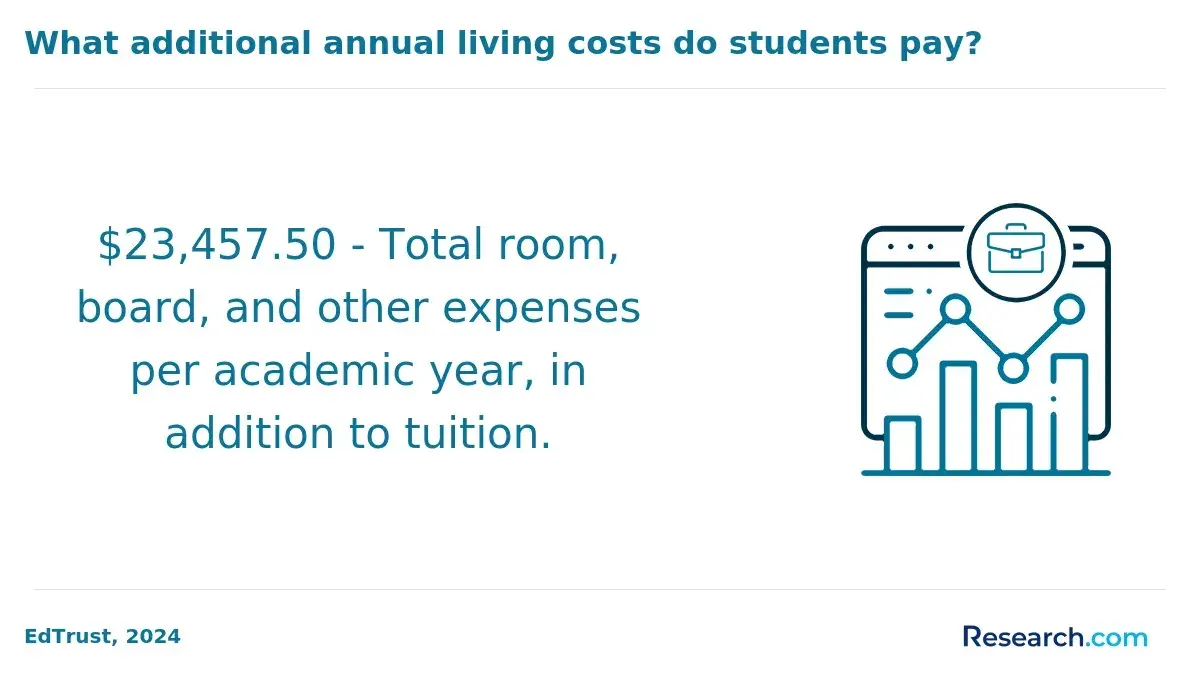
The advertised tuition rate is only one part of an online photography degree's price. Students should calculate tuition for every required credit, then add mandatory fees, technology charges, software subscriptions, cameras and lenses, lighting, storage, printing, travel, optional residencies, and portfolio production. A student who already owns capable equipment may face a very different total cost than a beginner building a kit.
For context, College Board reported average published tuition and fees for 2024-25 of $11,610 at public four-year colleges for in-state students and $43,350 at private nonprofit four-year colleges. These are broad national averages, not online photography program prices or estimates of what an individual student will pay after aid. They illustrate why public in-state options and institutional grants deserve close attention.
This cost comparison identifies the major differences students should investigate before comparing offers.
| Cost factor | Public nonprofit university | Private nonprofit university | What to verify |
| Tuition structure | May distinguish in-state and out-of-state tuition | Often uses one published rate, sometimes with online discounts | Whether online students qualify for resident, distance, or special rates |
| Transfer credits | Policies vary by system and major requirements | May offer individualized review or transfer agreements | Maximum credits accepted and applicability to photography major courses |
| Institutional aid | May be limited for nonresidents or part-time students | May provide merit or need-based grants | Renewal conditions and whether awards apply to online enrollment |
| Equipment and production | Often paid separately by the student | Often paid separately by the student | Required camera specifications, software, printing, and travel costs |
The lowest per-credit tuition is not automatically the best value. A higher-priced program may be reasonable if it accepts substantially more transfer credit, includes software or advising, offers meaningful portfolio review, or allows a student to finish sooner. Conversely, a program with an attractive tuition rate can become expensive if it requires extensive equipment purchases or does not accept prior credits.
Eligible students at accredited nonprofit institutions may qualify for federal aid by submitting the Free Application for Federal Student Aid (FAFSA). Aid can include Pell Grants for eligible undergraduates, Direct Loans, work-study opportunities, and certain state or institutional awards. Eligibility, loan limits, satisfactory academic progress rules, and program participation vary, so students should confirm details with each financial aid office.
Financial aid offers should be compared by net price rather than by the largest scholarship headline. Grants and scholarships generally do not require repayment when conditions are met; federal and private loans do. Ask whether a scholarship applies to online students, continues for part-time enrollment, and can be renewed through the expected completion date.
Before accepting aid, use this checklist to identify the funding sources and obligations attached to each offer.
- Submit the FAFSA early and review the school's aid offer for grants, scholarships, work-study, and loans separately.
- Ask about department scholarships, portfolio competitions, transfer awards, and aid reserved for adult or online learners.
- Compare annual borrowing with the program's remaining credits and expected equipment expenses.
- Review satisfactory academic progress standards, including minimum grades and completion rates needed to retain aid.
- Check whether employer tuition assistance can be combined with institutional scholarships.
Students pursuing a faster completion plan should calculate whether a heavier course load reduces living costs and time in school without creating an unsustainable workload. The same analysis applies to an accelerated online business degree: acceleration can reduce time to completion, but it may limit flexibility for work, caregiving, and portfolio production.
Flexibility varies by program design. An asynchronous course lets students view lectures and complete much of their work on their own schedule, usually within weekly deadlines. A synchronous course requires attendance at scheduled online sessions. Many photography programs use a hybrid approach: recorded technical instruction paired with live critiques, office hours, team discussions, or portfolio reviews.
Online students still need time and access to make photographs. Assignments may require shooting at specific times of day, finding willing subjects, arranging permissions, using editing software, and uploading high-resolution files. A program can be online without being entirely location-independent, especially when it includes exhibitions, internships, fieldwork, short residencies, or required access to campus equipment.
Students comparing traditional and accelerated schedules should focus on the pace of creative production, not only the calendar. A traditional term may suit students who need time to reshoot and revise assignments, while an accelerated format can work for experienced photographers who already have technical fluency and reliable equipment. Part-time enrollment often supports working adults, but it can extend the total time before graduation and may affect aid eligibility.
Ask admissions staff for a sample term schedule and request clear answers about live-session times, time-zone expectations, required travel, course sequencing, and the maximum time allowed to complete the degree. Avoid assuming that "100% online" means every task can be completed at any hour or from any location.
Online photography students need both general academic support and discipline-specific resources. The strongest fit depends on the student's experience level: a first-time college student may prioritize tutoring and advising, while a working photographer may place greater value on portfolio mentorship, career coaching, and flexible technical support.
Before enrolling, ask which services are available to online students and whether access is included in tuition. The following services are especially relevant because photography courses involve creative feedback, large digital files, and career-facing portfolios.
- Academic advising that can map prerequisites, transfer credits, and a realistic graduation timeline.
- Library access, research assistance, citation help, and digital collections for visual-culture coursework.
- Technology support for learning platforms, file submission, editing software, and accessibility tools.
- Faculty office hours, peer critique groups, portfolio reviews, and mentorship opportunities.
- Career services that review résumés, artist statements, websites, client proposals, and internship strategies.
- Disability services and accommodations that apply to online courses and assessment processes.
Ask whether career staff understand freelance and creative work. Photography graduates may need help documenting project experience, pricing services, preparing invoices, building a website, and translating visual skills for communications or marketing roles. Students exploring people-centered careers with different professional requirements may find it useful to compare online speech pathology programs, where supervised clinical placement support is a central program-selection issue.
An online photography degree can prepare students for creative careers, but a degree alone does not guarantee employment, freelance income, clients, or a specific salary. Employers and clients commonly evaluate a photographer's portfolio, reliability, technical range, specialization, communication skills, and ability to deliver usable files on deadline. The degree is most valuable when it helps students build those capabilities and document them clearly.
The U.S. Bureau of Labor Statistics projects photographer employment to grow 1% from 2024 to 2034. That modest national outlook means students should plan for a competitive field and consider related roles in content creation, marketing, communications, e-commerce, journalism, visual production, editing, and digital asset management. Local demand can differ from national projections, and self-employed photographers are not represented in the same way as employees in every labor-market measure.
A career-focused program should help students connect coursework to realistic work settings. This table outlines common directions and the preparation that matters most.
| Career direction | Typical responsibilities | Useful program preparation | Portfolio evidence to seek |
| Commercial or product photography | Create images for brands, retailers, and campaigns | Lighting, styling, retouching, client workflow, licensing | Consistent product sets and polished retouching |
| Portrait or event photography | Plan shoots, direct subjects, deliver client galleries | Lighting, posing, contracts, scheduling, business practices | Realistic sessions showing varied lighting conditions |
| Editorial or documentary work | Tell visual stories for publications or organizations | Ethics, captioning, storytelling, research, interviewing | Sequenced projects with context and clear narrative choices |
| Digital content or communications | Produce visual assets for websites, social channels, and campaigns | Photo editing, branding, video basics, analytics awareness | Platform-ready campaigns and collaborative project examples |
Artificial intelligence is changing image-generation, editing, search, and content workflows, increasing the importance of ethical practice, rights awareness, originality, and client trust. Students should look for instruction on copyright, consent, disclosure, metadata, and responsible use of AI-assisted tools. For students drawn to human behavior, audience research, or creative strategy alongside visual work, accelerated psychology programs can represent a different academic path with transferable research and communication skills.
Yes, an accredited online bachelor's degree can prepare a student for graduate school when it includes sufficient academic coursework, strong grades, faculty recommendations, and a polished portfolio or writing sample. Graduate admissions requirements vary widely. Master of Fine Arts programs often emphasize artistic direction and portfolio quality, while master's programs in communications, education, media, arts administration, or digital media may weigh academic preparation, professional experience, and stated goals differently.
A bachelor's degree is generally the appropriate foundation for graduate study. An associate degree can be a useful step toward a bachelor's degree but may not meet graduate admission requirements on its own. A master's degree is appropriate for advanced practice, teaching ambitions in some settings, research interests, or a specialized career shift; a doctorate is usually relevant only for students pursuing research-intensive, higher-education, or highly specialized academic work.
Students who may pursue graduate study should choose courses deliberately. Art history, visual culture, writing, research methods, ethics, and advanced studio electives can strengthen an application beyond technical camera training. Keep copies of major projects, syllabi, critiques, exhibition records, and final portfolios. These materials can help demonstrate progression and clarify whether an online curriculum aligns with a prospective graduate program's expectations.
Before enrolling, ask whether the program offers faculty mentorship, upper-level electives, a capstone, and opportunities to develop an artist statement. Students should not assume that every professionally oriented photography degree has the same preparation for an MFA or another graduate credential.
How Should Students Compare the Best Online Photography Degree Programs at Nonprofit Universities?
The best online photography degree is the one that fits a student's target career, prior credits, financial limits, schedule, and preferred learning style. A public in-state program may offer the strongest price for a resident, while a private nonprofit program may be more attractive if institutional aid, transfer policies, or specialized mentorship lower the actual net cost. Compare written evidence, not marketing claims.
Create a short list of three to five programs, then collect the same information from each school. The comparison points below help students evaluate total value instead of making a decision based on rankings, nonprofit status, or tuition alone.
| Comparison category | What to collect | Why it matters |
| Accreditation and authorization | Accreditor, current standing, and permission to enroll students in your state | Supports aid eligibility, transfer planning, and institutional legitimacy |
| Curriculum | Required courses, specializations, critique format, capstone, and portfolio expectations | Shows whether the program matches commercial, editorial, fine-art, or digital-content goals |
| Total net cost | All tuition, fees, aid, equipment, software, printing, and travel estimates | Prevents a low advertised rate from masking major out-of-pocket expenses |
| Transfer pathway | Credits accepted, course equivalencies, residency requirement, and evaluation timeline | Can materially change time to degree and borrowing needs |
| Online structure | Live requirements, deadlines, residencies, internships, and course sequencing | Determines whether the program genuinely fits work and family obligations |
| Outcomes and support | Retention, graduation disclosures, career services, faculty access, and portfolio support | Provides context beyond promotional employment claims |
After gathering this information, take four practical steps before making a final choice.
- Request an official or preliminary transfer evaluation and compare remaining credits, not only the degree's published length.
- Read the academic catalog and at least two sample course descriptions to identify equipment, software, critique, and residency requirements.
- Calculate a personal net-cost estimate that includes grants, loans, and photography-specific expenses.
- Choose the program whose curriculum and portfolio outcomes best match the work you want to pursue within a schedule you can sustain.
Common mistakes include assuming nonprofit means low-cost, overlooking live critiques or required travel, borrowing without a total-cost calculation, and choosing a specialization without reviewing the faculty's expertise. A careful comparison should end with written answers from each school, a realistic budget, and a portfolio plan - not simply an admissions deadline.
Other Things You Should Know About Photography
Not always. Programs may specify minimum camera capabilities, but requirements differ. Ask for the equipment list before enrolling and avoid buying a costly system until you know whether the curriculum requires interchangeable lenses, flash equipment, editing software, or specific file formats.
Yes. Many photographers build careers through portfolios, assistant work, client relationships, and independent training. A degree can add structured critique, broader academic skills, mentorship, and a credential, but it is not the only route into photography.
Follow each school's instructions. A strong portfolio usually shows technical control, intentional composition, editing consistency, and range or depth in a chosen subject. Submit original work and include concise context when the application requests captions or an artist statement.
Many programs include digital workflow and editing instruction, but the software and depth of coverage vary. Review course descriptions to see whether the curriculum teaches editing as a technical foundation, advanced retouching skill, or part of a broader visual-storytelling process.
- Digital Photography AAS https://explore.cscc.edu/programs/DIGTLPHOTO.AAS/digital-photography-aas
- Online Photography Degrees https://www.affordablecollegesonline.org/degrees/best-online-bachelors-in-photography-programs/
- Colorado's College for Photography - Colorado Mountain College https://coloradomtn.edu/programs/professional-photography/
- 20 Best Photography Schools In The World https://iso.500px.com/best-photography-schools/
- Best Online Photography Courses | Best Online Photography School https://www.nyip.edu/photo-articles/news/nyip-named-best-online-photography-school
- Accredited Online Photography Degree Programs https://www.accreditedonlinecolleges.org/photography/
- Best Online Photography Degrees https://www.onlineu.com/degrees/photography
- Online Photography Degree and Certificate Programs | Sessions College https://www.sessions.edu/digital-photography-info/