2027 Online MSN Public Health Nursing Programs for Nurses in Massachusetts: Population Health Practicum and Cost
Audited and Verified:
Our Editorial and Data Verification Process
Research.com uses government datasets, official education statistics and primary institutional information to support its career and degree guides. Our review process checks factual accuracy, occupational definitions, source dates and the requirements associated with the credentials discussed.
How This Article Was Fact-Checked
Our editorial team verifies salary estimates, employment projections, education requirements and program information against original data providers and official organizations. Salary figures are checked against the relevant occupational definitions and reporting periods. Information about licensure, accreditation and required in-person training is reviewed separately.
Fact-checked and verified on:

Co-Founder and Chief Data Scientist
For a Massachusetts RN, an online MSN in public health nursing is useful only if its fieldwork, cost, and career outcomes fit the role you want. Online coursework does not eliminate supervised population health practice, and a public health MSN is not automatically an advanced practice nursing degree. This guide explains how to identify an appropriate program, evaluate a local practicum, estimate the full cost, and distinguish community-focused RN roles from APRN roles before you enroll.
Key Things You Should Know
- Look for an explicitly named public or population health nursing track; an online MSN with one population health course is not necessarily equivalent.
- Budget beyond tuition: a hypothetical 36-credit program at $600 per credit would cost $21,600 in tuition alone, before fees, travel, and practicum expenses.
- A non-APRN public health MSN does not, by itself, qualify a Massachusetts RN for nurse practitioner licensure; confirm the track's supervised practice and credential outcomes separately.
What are online MSN public health nursing programs in Massachusetts?
These are postlicensure master's programs for RNs that emphasize health outcomes across communities or defined populations. Coursework may be online, while supervised fieldwork occurs at an approved organization. Depending on the track, graduates may prepare for community health leadership, program evaluation, outreach, or care coordination rather than diagnosis and prescribing as an APRN.
"Online" describes course delivery, not the entire degree. A school may still require scheduled video meetings, a campus visit, or fieldwork during an agency's operating hours. Also distinguish a public health nursing specialty from a general MSN that includes population health as one course.
These programs assume nursing preparation and an RN license. Someone who is not yet an RN needs to examine online nursing degree programs for non-nurses instead of treating a postlicensure MSN as an entry route.
Which Massachusetts schools offer accredited online MSN public health nursing programs?
Worcester State University is a Massachusetts school to investigate for an online MSN described as public and population health nursing. Do not treat that lead as confirmation that the track is accepting students for your intended term, is fully online, or can approve your proposed practicum. Obtain the current catalog, curriculum, tuition schedule, and written placement policy directly from the school before comparing it with alternatives.
An authoritative statewide list requires checking each school's current offerings; a university's accredited nursing degree does not establish that every advertised concentration still exists. The comparison below shows what to confirm rather than attributing unverified features to a school.
| Option to investigate | What it could offer | Decisive verification |
| Worcester State public/population health MSN | A potentially close match to community-focused graduate nursing | Current track name and availability, nursing-program accreditation scope, required visits, practicum hours, and total charges |
| Another Massachusetts online MSN | Leadership or education preparation with some population health content | Whether population health is a genuine specialty with relevant supervised practice, not just a course |
| Out-of-state online public health MSN | A wider selection of specialty tracks | Authorization to enroll a Massachusetts resident and approval of a Massachusetts practicum site |
Check institutional accreditation and nursing-program accreditation separately with the institution and the applicable accreditor, such as CCNE or ACEN. Ask whether the accreditation covers the MSN and whether the school can enroll and place students in Massachusetts. If you are comparing a graduate entry route rather than an RN specialty, direct-entry MSN admission planning addresses a different eligibility question.
What are the admission requirements for an online MSN in public health nursing?
Expect a school to review your RN license, nursing education, transcripts, academic performance, and readiness for graduate writing and evidence appraisal. Programs may also request a résumé, statement of purpose, references, or an interview. An ADN-prepared RN should not assume that every MSN accepts applicants without a BSN; some offer a bridge, while others require a completed bachelor's degree.
Check whether your license must be active in Massachusetts, whether the school accepts an RN licensed elsewhere, and whether its practicum sites impose additional clearance, immunization, or background-check requirements. Admission and eligibility to begin fieldwork are separate decisions. If admission standards are your main obstacle, a guide to nursing schools with easier entry requirements can help frame questions, but only the graduate program can confirm its current criteria.
Look for graduate nursing work in epidemiology, population assessment, health equity, prevention, evidence appraisal, program planning, policy, leadership, and evaluation. Informatics and data interpretation matter when a nurse must identify needs, monitor an intervention, and explain results to a community partner. Course titles vary, so compare syllabi and learning outcomes rather than counting courses with "public health" in their names.
A useful distinction is whether assignments prepare you to assess a population and implement a nursing intervention, or primarily to manage a healthcare organization. Some nurses seeking larger systems-level improvement projects may also compare systems-focused DNP study options; a DNP's project requirements and cost should be assessed separately from an MSN practicum.
Students generally complete school-approved, supervised work with a community agency, health department, clinic, school system, or nonprofit serving a defined population. A feasible project might assess barriers to preventive services, help implement an education initiative, and evaluate an approved measure. The school - not the student's employer alone - determines whether the site, preceptor, activities, and documented hours meet degree requirements.
Before enrolling, ask who finds the site, when affiliation agreements must be signed, which preceptor credentials qualify, whether paid employment can be used, and what happens if a site withdraws. Get the required hours and any in-person schedule in writing. Work on an agency project may require privacy safeguards, permission to use data, and institutional review; community volunteering does not automatically count as supervised nursing practice.
Placement support is not interchangeable across specialties. Resources for comparing clinical site support for FNP students can suggest useful questions, but an FNP direct-care placement and a population health practicum have different objectives and approval rules.
Duration depends on credits, course sequencing, enrollment pace, and when the practicum is offered. A working RN should request a term-by-term plan for both part-time and full-time study rather than relying on a shortest-possible completion claim. A course offered once a year or a delayed site agreement can extend the schedule even when classes are online.
For an ADN-prepared RN, bridge programs from an ADN to an MSN may add undergraduate nursing requirements before graduate coursework. Ask for an individualized degree audit: transferred credits, required bridge courses, and fieldwork timing determine the actual finish date.
Without a school's current credit requirement and charge schedule, a reliable Massachusetts program price cannot be quoted. Use the same calculation for every offer: required credits multiplied by the applicable per-credit tuition, plus mandatory fees and the expenses needed to finish the practicum. The following figures illustrate the method; they are not a quoted school price.
- Illustrative tuition: 36 credits × $600 per credit = $21,600.
- Additional charges to request in writing: university and technology fees, books, clearances, and graduation fees.
- Costs to estimate personally: site travel, any campus visits, and reduced paid hours during fieldwork.
Ask about employer tuition assistance, reimbursement timing, grade conditions, and repayment obligations. Compare the expected benefit with a lower-cost option that serves the same goal; comparing lower-cost NP programs is relevant only if your intended role actually requires NP preparation.
Not merely because it is an MSN. Massachusetts APRN authorization depends on preparation for a recognized advanced practice role and population focus, applicable national certification, and the Massachusetts Board of Registration in Nursing's requirements. A non-APRN public health nursing track should not be represented as an NP, clinical nurse specialist, nurse-midwife, or nurse anesthesia pathway.
If you intend to provide advanced psychiatric or primary care, request the program's explicit certification-eligibility statement and clinical plan for that role. An RN with a public health MSN would generally need additional role-specific education before seeking an unrelated APRN credential. For example, PMHNP certificate admissions and timelines concern psychiatric-mental health NP preparation, not a credential automatically conferred by public health coursework.
Potential roles include community health nurse, population health program coordinator, public health nursing supervisor, care coordination leader, and nurse involved in outreach or program evaluation. Duties may include identifying service gaps, designing education, coordinating referrals, evaluating results, and reporting to agency or government stakeholders. Hiring requirements differ: an MSN may strengthen an application, but many community RN jobs do not require one, while leadership jobs may demand relevant experience.
Start with actual Massachusetts job postings and compare their required license, field experience, supervisory responsibilities, and preferred degree. If the target is an RN community health position, existing experience or RN-to-BSN education for working registered nurses may be a more direct step than an MSN. If the goal is to manage population health programs, look for a track with substantial evaluation and leadership work.
What salary and job outlook can public health nurses expect in Massachusetts?
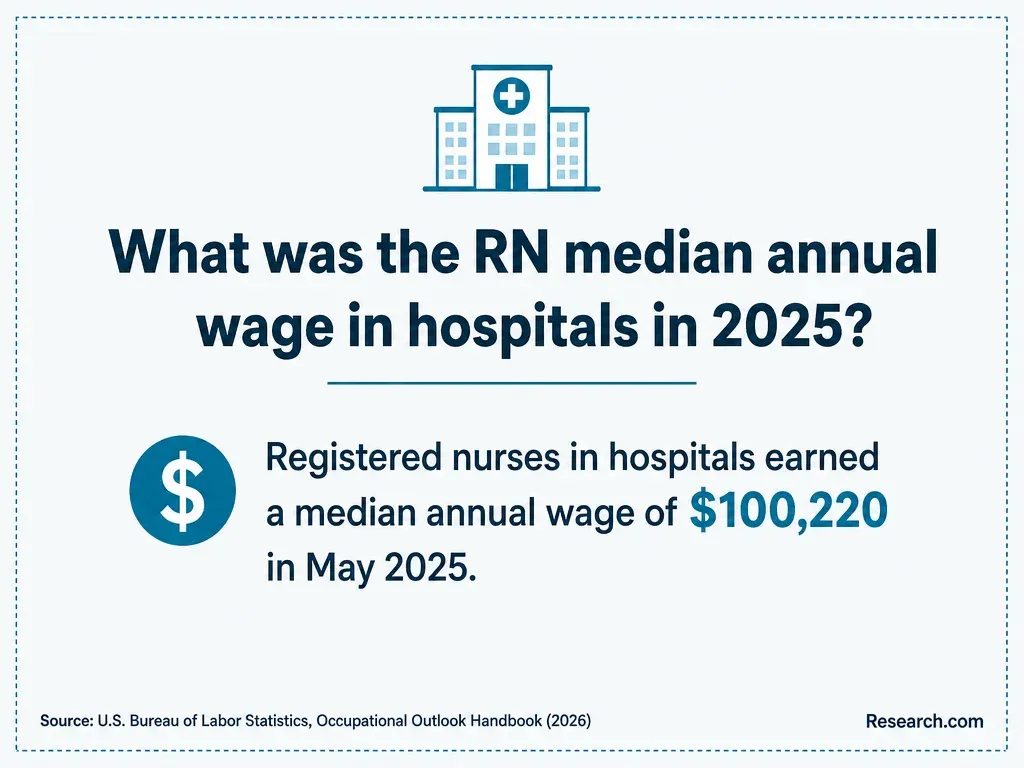
There is no single reliable salary figure for everyone called a "public health nurse." Some positions are classified and paid as registered nurse jobs; others are government roles with published salary grades or management positions with different duties. The U.S. Bureau of Labor Statistics reports RN wages and employment projections for the occupation as a whole, not earnings specifically attributable to a public health MSN. Massachusetts occupational wage estimates and actual state or municipal pay schedules are better starting points for a local comparison.
Compare offers by salary grade, pension or benefits, schedule, travel, supervisory expectations, and advancement rules - not an occupation-wide median alone. A short degree is not necessarily a better financial choice if it lacks the preparation an employer requires; likewise, short-format DNP degree programs should not be assumed to produce a pay increase in a public-sector nursing role. Ask prospective employers which qualification changes eligibility or pay before committing to tuition.
Other Things You Should Know About Nursing
An MPH may fit epidemiology, policy, or program analysis goals that do not require graduate nursing preparation. Choose an MSN when the intended role specifically calls for graduate-level nursing practice or leadership; compare actual job requirements first.
Not by itself. Check the Massachusetts Department of Elementary and Secondary Education's requirements for the specific school nurse position and credential; RN licensure, experience, and other conditions may apply.
No. Online tuition may have its own rate, and residency policies vary by school. Request the rate that applies to your program and entry term in writing.
A degree does not grant interstate practice authority. Before providing nursing services across state lines, verify the applicable licensing and practice rules for the patient's location and your employer's policies.
- About Board approved prelicensure nursing programs | mass.gov https://www.mass.gov/info-details/about-board-approved-prelicensure-nursing-programs
- Estimate your college cost | usa.gov https://www.usa.gov/estimate-college-cost
- Population health in a global society: Preparing nurses... - PMC https://pmc.ncbi.nlm.nih.gov/articles/PMC10081155/
- Cost of Attendance (Budget) | 2025-2026 Federal Student Aid Handbook https://fsapartners.ed.gov/knowledge-center/fsa-handbook/2025-2026/vol3/ch2-cost-attendance-budget
- Section 4. Practicum Approval Process - Academic Guides | Academics at Walden University https://academicguides.waldenu.edu/nursing-practicum-manual/approval
- What Is the Difference Between Public Health and Community Health? | Worcester https://online.worcester.edu/programs/nursing/msn-public-health/public-health-community-health-difference/
- Population Health Practicum Orientation & Training | kumc.edu https://www.kumc.edu/school-of-nursing/about/preceptors/bachelor-of-science-in-nursing-preceptor/population-health-practicum-orientation-and-training.html