2027 Online International Business Master's Programs With University Scholarships: Awards, Eligibility & Tuition After Aid

Co-Founder and Chief Data Scientist
Online International Business master's tuition can vary widely, and an advertised scholarship may cover only part of tuition or exclude fees. College Board reported that average published tuition and fees for graduate students at public four-year institutions were $12,596 in 2024-25, illustrating why applicants should calculate aid before enrolling.
This guide is for prospective and current students comparing U.S. online programs. It explains university scholarships, eligibility, award terms, net-cost questions, and practical ways to build a funding plan that limits borrowing.
Key Things to Know About International Business Master's Programs with Scholarships
- University scholarships for online International Business master's students are commonly merit-based tuition awards, but availability, award size, residency rules, and online-program eligibility differ by institution.
- For context, College Board's 2024-25 average published graduate tuition and fees at public four-year institutions was $12,596; a program's actual price can be substantially higher, so compare total program cost rather than a single per-credit figure.
- Prioritize schools that provide a written aid offer stating the award amount, renewal GPA, enrollment requirement, covered charges, and whether outside scholarships or employer reimbursement reduce the institutional award.
What online International Business master's programs offer university scholarships?
Some U.S. universities make institutional scholarships available to graduate business students, including students in online or hybrid formats, but few guarantee that every online International Business master's student will receive one. The most reliable approach is to treat each school's graduate business aid page, program admissions office, and financial-aid office as separate sources to confirm.
Programs may be titled Master of Science in International Business, Master of International Business, Global Business master's, or MBA with an international business concentration. A similarly named degree is not necessarily eligible for the same scholarship pool, particularly when the online program is administered through continuing education rather than the main graduate school.
The comparison below shows the information that matters more than a general claim that a university "offers scholarships." Ask each institution to verify these details in writing before paying an enrollment deposit.
| Program-aid feature to verify | Why it affects affordability | Best question to ask |
| Online format eligibility | Some awards exclude fully online, part-time, or non-degree students. | "Is this scholarship available to students in the fully online International Business master's program?" |
| Automatic versus separate consideration | An admissions application may be enough for one award but not another. | "Do I need a separate scholarship application or essay?" |
| Renewal terms | A first-term discount can be less valuable than a renewable award. | "What GPA, credit load, and completion pace are required each term?" |
| Covered charges | Tuition-only awards can leave technology, distance-learning, and course fees unpaid. | "Which charges appear on my bill that this award will not cover?" |
| Stacking policy | Institutional aid may be reduced after outside funding is added. | "Can this award be combined with employer and external scholarships?" |
Applicants seeking a flexible business degree should favor programs that answer those questions clearly over programs that advertise an award without publishing conditions. A lower tuition rate with modest but renewable aid can be more predictable than a higher-priced program with a one-time scholarship.
What is the average tuition for International Business master's programs before aid?
There is no single authoritative U.S. average published specifically for online International Business master's programs because universities price these degrees by credit, term, cohort, residency category, or total program package. As a broad graduate-cost benchmark, College Board reported average 2024-25 published tuition and fees of $12,596 at public four-year institutions and $29,960 at private nonprofit four-year institutions.
Those figures are not an International Business program quote and should not be used as a budget by themselves. Specialized business programs, private institutions, and programs with required global components may cost more; an online format may also add distance-learning or technology fees. The decision-relevant number is the total cost of attendance: tuition, mandatory fees, books, technology, travel if required, and reasonable living costs, less grants and scholarships that do not need repayment.
Use this simple cost framework when comparing offers. It separates an appealing scholarship headline from the amount you may need to pay or finance.
| Cost measure | How to calculate it | How to use it |
| Published program tuition | Required credits × current per-credit tuition, or the published program total | Starting point for comparing schools |
| Direct billed cost | Tuition + mandatory institutional fees | Amount likely to appear on the university bill |
| Gift-aid net tuition | Direct billed cost − scholarships − grants | Best measure for comparing scholarship offers |
| Financing gap | Total cost of attendance − gift aid − confirmed employer support − personal resources | Amount to cover through payment plans, work income, or loans |
Do not assume a lower sticker price automatically produces the lowest net cost. Compare awards that are renewable for the full program against one-time awards, and request confirmation if tuition can rise after you enroll.
What types of financial aid and scholarships are available for International Business master's programs?
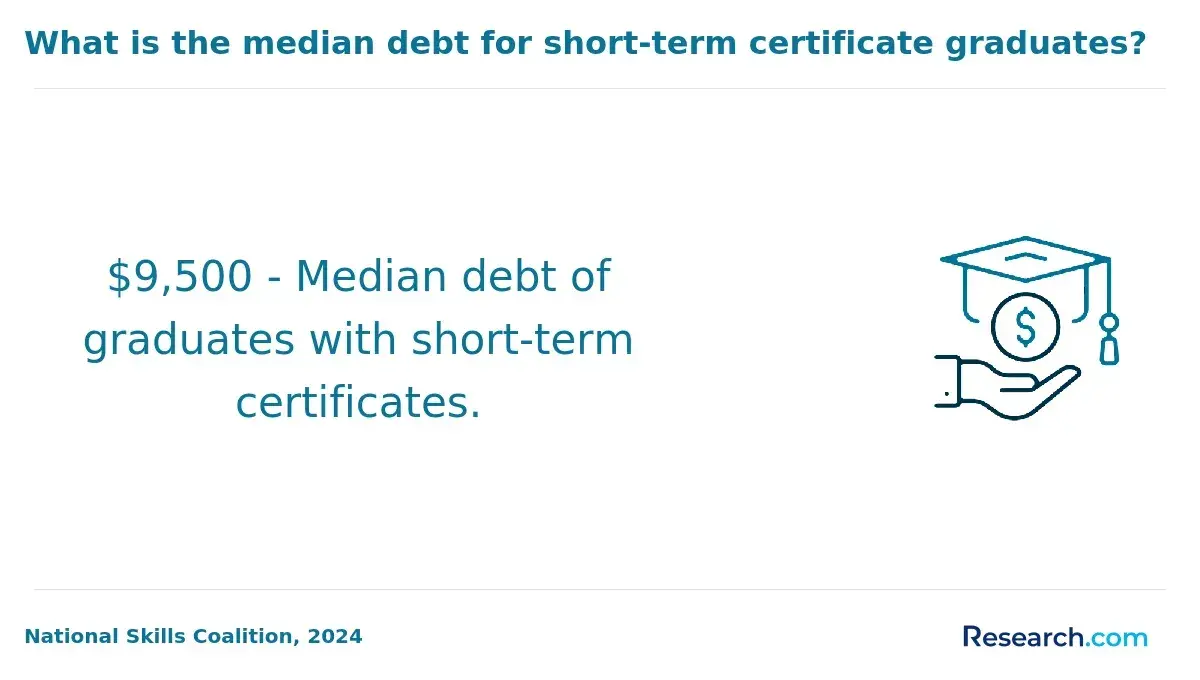
International Business master's students can use several funding sources. Scholarships and grants are generally gift aid; loans must be repaid, while employer assistance may create employment or repayment obligations. Graduate students should start with university aid but build a plan that does not depend on one competitive award.
The most common funding categories are below. Their names vary by school, so eligibility language - not the label alone - should guide your application decisions.
| Funding type | Typical basis | When it makes sense |
| University merit scholarship | Academic record, professional experience, leadership, admissions strength, or career goals | Strong fit for applicants with a competitive academic and professional profile |
| Need-based institutional grant | Financial circumstances, often documented through FAFSA or a university form | Worth pursuing for eligible U.S. citizens and eligible noncitizens with demonstrated need |
| Program, business school, or alumni award | Program enrollment, field interest, donor criteria, or cohort selection | Useful when a general graduate scholarship excludes online students |
| External scholarship | Professional association, employer, community, identity, service, or industry criteria | Helpful for filling remaining tuition or fee gaps |
| Employer tuition assistance | Employment status and company policy | Often valuable for working professionals whose role supports international operations, trade, supply chain, or global strategy |
| Federal Direct Unsubsidized or Graduate PLUS loans | FAFSA eligibility and federal borrowing rules | A financing option after evaluating gift aid and repayment capacity |
Federal Student Aid requires the FAFSA for federal graduate loans and may be used by schools to assess some institutional need-based aid. International students often cannot file a FAFSA, but may still qualify for university merit awards, external funding, private loans with a qualified borrower, or employer sponsorship.
Funding research skills transfer across graduate fields. For example, a working professional comparing business programs may also review affordability approaches used for an MSW online program, while still confirming that business-school scholarship rules are specific to the degree.
How much do International Business master's scholarships typically cover?
International Business master's scholarships most often reduce part of tuition rather than cover every educational expense. Universities may state awards as a fixed amount, a per-credit reduction, a percentage of tuition, or a full-tuition award. Because program-specific award distributions are not reported in one national dataset, applicants should not assume that a published maximum is the amount most recipients receive.
A useful way to assess coverage is to convert every award into a full-program estimate and compare what it actually pays. The table identifies the trade-offs behind common award structures.
| Award structure | What it may cover | Key limitation to check |
| One-time fixed scholarship | A stated amount applied to one term or the first year | May not renew for later terms |
| Per-credit tuition award | A set reduction for each eligible enrolled credit | Could change if tuition changes or if enrollment drops below a threshold |
| Partial tuition scholarship | A portion of eligible tuition charges | Usually excludes fees, books, travel, and living expenses |
| Full-tuition scholarship | Eligible tuition up to program or annual limits | May still exclude mandatory fees and require full-time enrollment |
| Full cost-of-attendance package | Potentially tuition, fees, and some living costs | Uncommon and often highly selective at the master's level |
For a defensible after-aid estimate, subtract only confirmed renewable gift aid from direct billed charges. Keep fees and living costs separate unless the award letter expressly says they are covered. A smaller renewable award can produce a lower total net tuition than a larger first-term award that disappears after the first semester.
Who is eligible for International Business master's scholarships?
Eligibility depends on the award, not simply on admission to an International Business master's program. Merit awards may consider prior academic performance, work history, leadership, international exposure, language ability, or the quality of an application essay. Need-based awards generally require financial documentation and may have citizenship or FAFSA eligibility requirements.
Before investing time in an application, match your circumstances to the eligibility category below. This prevents a common mistake: applying to awards that exclude online, part-time, or international students.
| Eligibility factor | Common requirement | What to confirm for online students |
| Admission status | Accepted, admitted, or enrolled in an eligible degree program | Whether the fully online track has the same award access as campus tracks |
| Academic record | Minimum undergraduate GPA or evidence of strong academic preparation | Whether transfer, graduate, or international transcripts are evaluated differently |
| Enrollment intensity | Full-time status or a minimum number of credits | Whether accelerated or part-time terms meet the threshold |
| Citizenship or residency | U.S. citizenship, eligible noncitizen status, state residency, or no restriction | Whether non-U.S. students may receive institutional merit aid |
| Financial need | FAFSA or institution-specific financial information | Which form is accepted if FAFSA is unavailable |
| Career or donor criteria | Industry, employer, service, demographic, geographic, or leadership requirement | Whether online learners are explicitly included |
Working professionals with employer support should still apply for university aid unless the policy says employer reimbursement makes them ineligible. Conversely, applicants with limited academic history or who cannot meet a full-time requirement may need to emphasize external scholarships, installment plans, savings, and carefully evaluated loan options.
What is the application process for International Business master's scholarships?
The scholarship process usually begins before admission is finalized. Some awards are automatic based on the admissions file; others require a separate form, recommendation, financial-need documentation, or essay. Deadlines can precede the program application deadline, especially for awards tied to a specific incoming cohort.
Follow this sequence to avoid missing funding that requires an earlier submission.
- Build a spreadsheet with each school's program deadline, scholarship deadline, separate application requirement, award notification date, and renewal rule.
- Request the total program cost, current tuition schedule, mandatory fees, and online-student eligibility from each admissions or financial-aid office.
- Submit the admissions application early enough for automatic scholarship consideration and complete the FAFSA when eligible.
- Prepare a targeted résumé, transcripts, recommendation materials, and an essay connecting your international business goals to the award criteria.
- Apply for program-specific, university-wide, employer, and external awards whose conditions you meet.
- Compare written offers by full-program net tuition, not just the largest first-term award, then ask for clarification or reconsideration before accepting.
Keep copies of submissions and award notices. If a school offers less aid than a comparable program, a respectful reconsideration request can be reasonable when you provide a competing written offer, updated academic achievement, or material financial information. It is a request, not an entitlement.
Applicants evaluating aid processes across online graduate degrees may find that eligibility checklists in a list of CACREP accredited programs illustrate why institutional accreditation and program-specific aid rules should be confirmed separately.
Do online International Business students qualify for the same aid as on-campus students?
Sometimes, but not automatically. Eligibility for federal student aid generally depends on the institution, program eligibility, enrollment, and student eligibility rather than whether instruction is online. University-funded scholarships can be more restrictive: some are open to all degree-seeking graduate students, while others are reserved for campus cohorts, students paying a particular tuition rate, or learners who attend full time.
Online students should compare aid access in four areas before treating an online offer as equivalent to a campus offer.
- Institutional scholarships: Confirm that the award page names online students or that financial aid confirms inclusion in writing.
- Federal aid: Eligible online degree programs at participating institutions may support federal aid for eligible students, subject to current federal rules and enrollment requirements.
- State and campus-based aid: Residency, campus attendance, and state appropriations can limit availability even when federal aid is available.
- Assistantships: Graduate assistantships may be less available to remote students because duties can require campus presence, although remote research or administrative roles may exist.
Do not equate "online" with lower quality or lower cost. The better choice is the program with transparent net pricing, an academically suitable format, and aid terms you can maintain while working. For comparison, students assessing format restrictions in other professional programs can examine how an best online construction management degree option may distinguish program delivery from its separate financial-aid policies.
Can International Business master's students combine multiple scholarships and grants?
In many cases, yes. Students may combine university scholarships with outside scholarships, employer tuition assistance, grants, savings, and federal loans. However, each source has rules, and the combined amount may not exceed the school's cost of attendance or the charges an institutional award is intended to cover. A university can adjust institutional aid after receiving outside funding.
Stacking works best when you understand the interaction among awards before accepting them.
| Combination | Potential benefit | Possible issue |
| University merit award + external scholarship | Can reduce remaining tuition or fees | School may revise institutional aid under its over-award policy |
| University aid + employer reimbursement | Can substantially reduce out-of-pocket cost for employed students | Employer may reimburse only after successful completion or require continued employment |
| Grant + federal loan | Grant reduces the amount that must be borrowed | Loans still require repayment and should be evaluated against expected cash flow |
| Several small external awards | May close gaps left by one partial scholarship | Multiple deadlines, reporting requirements, and payment timing can create administrative work |
Report outside scholarships promptly and ask whether the university will reduce loans first, unmet need, or institutional grant aid. If a scholarship check is paid directly to you, confirm whether the school still requires reporting. Students comparing overall graduate affordability across fields may also see similar stacking questions in an online bachelor of architecture funding discussion, but degree-level and institutional rules remain different.
What are the requirements to maintain scholarship status in International Business master's programs?
Scholarship renewal is conditional. Requirements typically address academic performance, satisfactory academic progress, enrollment level, conduct, degree progress, and the period for which the award is available. The exact GPA threshold and credit requirement are set by the university or donor, so students should rely on their award letter and current catalog rather than a general rule of thumb.
Review these terms before enrollment and at the start of every term.
- Maintain the minimum cumulative and, where applicable, term GPA stated in the award agreement.
- Remain enrolled in the eligible International Business master's program and meet any minimum credit-load requirement.
- Complete courses at a pace that satisfies the institution's satisfactory academic progress policy.
- Meet conduct, academic-integrity, and financial-account standing requirements when they are part of the award terms.
- File renewal materials or FAFSA updates by the stated deadline if the award is not renewed automatically.
- Notify the financial-aid office about withdrawals, leaves, program changes, outside awards, or reduced enrollment before making the change.
A withdrawal can affect both future eligibility and the current term's aid calculation. If work or family responsibilities make full-time study uncertain, choose a scholarship that explicitly accommodates part-time enrollment rather than accepting an award built around a schedule you cannot realistically sustain.
This need to verify progression rules applies across online degree pathways. For example, students researching an computer science bachelor degree online should likewise distinguish general aid eligibility from program-specific renewal conditions.
What tips can help International Business master's students secure more scholarship funding?
Applicants improve their funding position by applying early, targeting awards with clear fit, and comparing net cost across several schools. Competitive merit awards usually reward evidence that you will contribute to the cohort and use the degree purposefully; a generic application rarely demonstrates that fit.
Use the following practices to make your scholarship search more efficient and credible.
- Apply to multiple universities and separate scholarship competitions rather than relying on one admission-based award.
- Tailor each essay to show relevant international business experience, cross-cultural collaboration, global market interest, language skills, or career goals without overstating accomplishments.
- Ask recommenders early and give them your résumé, target program, and a concise description of the scholarship's selection criteria.
- Request a written estimate of tuition, mandatory fees, scholarship duration, and renewal requirements before committing.
- Ask your employer about reimbursement, professional-development budgets, and any required grade or service commitment before using loans.
- Search for external awards through credible professional, community, and employer organizations, then check whether the university will reduce institutional aid.
- Appeal thoughtfully when you have new information or a comparable competing offer, and ask whether a one-time grant, installment plan, or later scholarship cycle is available.
Common mistakes include missing early deadlines, comparing only scholarship amounts instead of net tuition, assuming a scholarship renews, and overlooking fees or employer repayment conditions. The strongest program choice is not necessarily the school with the largest advertised award; it is the option whose total cost, funding reliability, curriculum, format, and career relevance fit your circumstances.
Other Things You Should Know About International Business
Scholarship amounts used for qualified tuition and required course-related expenses may receive different tax treatment than amounts used for living expenses. Tax rules depend on the payment and your circumstances, so keep award and billing records and consult a qualified tax professional or current IRS guidance when needed.
Usually only if the award terms specifically permit it. Tuition scholarships commonly apply to billed tuition, while travel, lodging, visas, and optional experiences may remain the student's responsibility. Ask for a written breakdown before committing to a program with a global residency component.
Contact admissions and financial aid immediately. Ask whether the deposit or enrollment deadline can be extended, whether a conditional acceptance is possible, and when the final award letter will be issued. Do not assume an extension without written confirmation.
Most merit scholarships do not create a work obligation, but assistantships, employer sponsorship, and some service-based awards can. Read the agreement for employment duties, minimum work hours, post-graduation service, repayment clauses, and conditions that apply if you withdraw.
References
- MBA Scholarships and Financial Aid | ARINGO https://aringo.com/mba-scholarships/
- MBA in International Business Online: Review Top Programs https://www.onlinemastersdegrees.org/best-programs/mba-programs/international-business/
- What You Need To Know About Scholarships For International Master's Degrees (And Where To Ask About Them) https://edu.srtfairs.com/what-you-need-to-know-about-scholarships-for-international-masters-degrees/
- 50+ Scholarships & Grants for Study Abroad in 2025 | Go Overseas https://www.gooverseas.com/blog/study-abroad-scholarships-grants
- MBA Scholarships: 50 Scholarships to Pay for a Campus Or Online MBA https://www.gograd.org/financial-aid/scholarships/mba/
- Scholarships for Online Grad School | OEDb.org https://www.oedb.org/graduate-scholarship/
- List of MBA Scholarships - Eligibility, Awards & Deadlines https://www.bschools.org/blog/mba-scholarships
- MBA Scholarships and Financial Aid Guide | OnlineMBA.com https://www.onlinemba.com/resources/mba-scholarships/
- How to Pay for Graduate School Outside of the U.S. (+39 Scholarship Resources) https://www.collegeessayguy.com/blog/financial-aid-non-us-graduate-school
- The MBA Scholarships and Grants Guide https://teach.com/online-ed/business-degrees/online-masters-business-administration/scholarships/