2027 Online International Business Degree Programs With Monthly Tuition Payment Plans

Co-Founder and Chief Data Scientist
Monthly tuition plans can make an online International Business degree easier to budget for, but they do not always lower its price. College Board reported average published tuition and fees of $11,610 at public four-year colleges for the 2024-25 academic year, underscoring why payment timing matters.
This guide is for prospective undergraduate and graduate students comparing flexible online programs. Learn how installment plans work, what they can cost, how aid applies, and how to identify terms that fit your income and career plans.
Key Things to Know About International Business Programs with Monthly Tuition Payments
- Online International Business programs may offer installment plans that divide a term's remaining balance into monthly payments, commonly after financial aid, employer benefits, and deposits are applied.
- A payment plan improves cash-flow management but usually does not reduce tuition; a $330-per-credit, 3-credit course billed across four installments would be about $247.50 per month before plan fees and other charges.
- Confirm the school's written plan terms before enrolling: installment count, enrollment fee, missed-payment policy, excluded charges, and whether an aid disbursement changes the amount due.
Which online International Business degree programs have monthly tuition payment plans?
Some online schools that offer International Business majors, concentrations, or related business degrees also provide institutional payment-plan options. Availability can change by term, campus, student residency, program level, and account status, so a school's student accounts office is the final authority. A plan may cover only the balance due for one session rather than the full degree.
The examples below show the kind of program and payment arrangement to investigate. Tuition rates and installment availability should be confirmed directly in the current enrollment agreement, especially when a degree includes a business administration major with an International Business concentration.
| Institution and online option | Published tuition context | Payment-plan question to verify |
| Southern New Hampshire University, BS in Business Administration with International Business concentration | Online undergraduate tuition is published per credit; pricing can differ by degree level. | Whether the account balance may be divided by term and whether a plan fee applies. |
| University of Maryland Global Campus, bachelor's business programs with global-business coursework | Tuition is generally published by residency category and credit level. | Whether the interest-free plan covers all required charges or tuition only. |
| Florida International University, online BBA in International Business | Tuition and fees can vary by residency, course level, and university charges. | Whether online students can use the same installment or deferment option as campus students. |
| Liberty University, BS in Business Administration and Data Analysis with International Business-related study options | Online undergraduate tuition is generally published as a per-credit rate. | Whether monthly billing is available for the specific session length and enrollment status. |
Start with the academic fit, not the payment plan. A program should hold appropriate institutional accreditation, offer the international trade, finance, management, language, or regional-business coursework relevant to your goals, and provide a transparent net-price estimate. Students interested in business analytics or technology-focused business roles may also compare AI degrees online if that curriculum better matches their intended work.
Ask admissions for the program's official tuition page and ask student accounts a separate, precise question: "Can my remaining balance for this online International Business program be paid in monthly installments, and what is the total fee if I do?" Request the response in writing.
How much do online International Business degree programs typically cost?
There is no single national average tuition figure published specifically for online International Business degrees. Total cost depends on credits required, transfer credits, residency rules, degree level, mandatory fees, and whether the program charges by credit or by subscription. Use a school's published rate to calculate a realistic program estimate rather than relying on a general business-degree average.
For context, College Board's 2024-25 average published tuition and fees were $11,610 for public four-year in-state students and $43,350 for private nonprofit four-year students. These figures are not online International Business program prices, but they illustrate why comparing the full annual and degree-level cost matters more than comparing a single monthly bill.
This table shows how to turn a per-credit price into a monthly planning figure. It is an illustration, not a quoted school charge, and it excludes fees, books, aid, and prior payments.
| Example calculation | Amount | What it means |
| Per-credit tuition | $330 | Illustrative published-rate style used for planning. |
| One 3-credit course | $990 | $330 multiplied by 3 credits. |
| Four-payment term plan | $247.50 per payment | $990 divided by 4, before any plan fee or excluded charges. |
| Ten-payment academic-year plan | $99 per payment | Only possible if the school permits an annual balance to be spread over 10 payments. |
Accelerated formats can change the cash-flow picture. Taking one course at a time may lower each billing-period balance, yet a shorter session can require fewer and larger installments. Review course cadence carefully; 6-week courses can be convenient for working students, but their compressed billing schedules may not align with monthly paychecks.
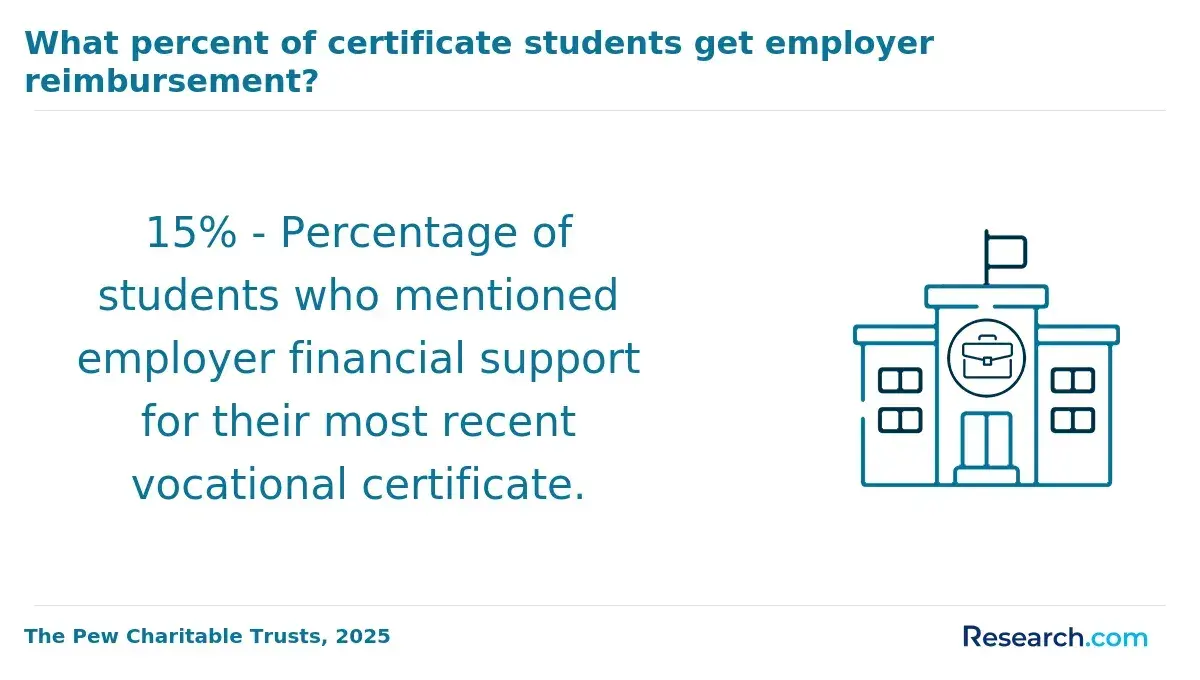
Before comparing schools, calculate net cost: published tuition plus required fees and expected course materials, minus grants, scholarships, approved employer reimbursement, and other non-loan aid. Then divide only the balance that the plan actually covers by the permitted number of payments.
How common are monthly tuition payment plans among International Business programs?
Monthly payment plans are common across U.S. higher education, but they are not universal and are rarely guaranteed by major. Schools often outsource administration to a tuition-management provider or administer plans through student accounts. The option may be available to eligible students across online programs rather than advertised on an International Business program page.
Payment-plan availability is best treated as an administrative feature, not evidence that one program is more affordable or academically stronger. It is especially important to check each term because a school may offer different schedules for eight-week sessions, semesters, summer terms, and graduate courses.
When comparing institutions, use the following checks to distinguish a true monthly plan from a loan or a one-time deferred-payment arrangement.
- Ask whether payments are interest-free and whether the agreement is a tuition payment plan rather than private education financing.
- Confirm the number and due dates of installments, including whether the first payment is due at enrollment.
- Determine whether you must enroll again for every term and whether the plan is available before or after course registration.
- Read whether a missed payment can block registration, trigger late fees, cancel the plan, or result in course removal.
Schools increasingly emphasize clear cost disclosures because students need to separate monthly affordability from total affordability. A lower required payment can simply reflect a longer schedule, a later first due date, or a balance that excludes fees.
Can monthly tuition plans make paying for International Business degrees more attainable?
Monthly plans can make an International Business degree more attainable for students with predictable income who can cover tuition over the academic term without borrowing. They are often useful for employed adult learners, students receiving employer reimbursement after grades post, and families coordinating several recurring expenses. The main benefit is timing: the balance is divided into scheduled payments rather than being due in one lump sum.
A payment plan is less suitable when income is irregular, the plan ends before reimbursement arrives, or the required installment still exceeds a safe monthly budget. In those cases, compare scholarships, need-based aid, a lower course load, a less expensive accredited program, or delaying a course. Students considering graduate study can also review affordable master's degrees to compare broader pricing structures before committing.
The following comparison helps clarify when each way of paying tends to make sense. The best choice depends on the total price, aid package, timing of income, and ability to absorb unexpected expenses.
| Option | May fit best when | Primary trade-off |
| Monthly tuition plan | You have reliable monthly cash flow and can pay the term balance on schedule. | Fees and strict missed-payment consequences may apply. |
| Pay tuition upfront | You have sufficient savings and the school offers no meaningful installment advantage. | A large immediate cash outlay reduces liquidity. |
| Federal student aid, if eligible | Grants, work-study, or federal loans are part of your aid offer. | Loans create repayment obligations and interest may accrue under applicable rules. |
| Employer tuition assistance | Your employer offers a qualifying benefit and the program meets policy requirements. | Reimbursement timing, grade requirements, and annual caps can leave a temporary balance. |
Do not use a monthly plan to make an unaffordable degree appear affordable. A sound budget leaves room for rent, transportation, technology, books, emergency costs, and the possibility that a course load changes.
Does monthly payment plans have an effect on the overall cost of International Business degrees?
Monthly payment plans generally affect when tuition is paid, not the published tuition itself. Many are interest-free, but they can increase total out-of-pocket cost through enrollment, returned-payment, late-payment, or reinstatement fees. A plan can also become costly if a student misses payments and loses registration access or must re-enroll.
Compare the total amount due under the plan with the amount due without it. This simple review prevents a low monthly number from obscuring added charges.
| Cost component | Usually changes with a payment plan? | What to confirm |
| Published tuition | Usually no | Whether the school offers a discount for full payment. |
| Mandatory institutional fees | Sometimes excluded | Whether they are due upfront or included in installments. |
| Plan enrollment fee | Often yes | Flat amount, frequency, refundability, and whether it is per term. |
| Late or returned-payment fees | Only if a payment fails or is late | Amount, grace period, and plan-cancellation consequences. |
| Loan interest | No, for a true interest-free installment plan | Whether the product is actually credit financing. |
A student loan can spread payments well beyond the term, while an institutional plan normally must be completed within a semester, session, or academic year. The loan may offer a lower immediate monthly obligation but can cost more over time because of interest. The plan may cost less overall when it is genuinely interest-free, but it demands stronger short-term cash flow.
Career return should also be considered separately from payment mechanics. Explore fields and credentials with care rather than assuming any business degree will produce a particular outcome; comparisons of degrees that make the most money can provide broader context for evaluating education investment.
Do monthly payment plans affect your financial aid eligibility for International Business programs?
Enrolling in a monthly payment plan does not usually make a student ineligible for federal financial aid. Eligibility is generally determined through the Free Application for Federal Student Aid, institutional requirements, enrollment status, satisfactory academic progress, citizenship or eligible noncitizen status, and other applicable federal rules.
However, the plan amount can change after aid disburses because the school applies eligible grants, scholarships, and loans to the student account.
Financial aid timing is the key issue. Aid often disburses after enrollment and attendance requirements are met, while the first payment-plan installment may be due earlier. Do not assume an anticipated award will automatically postpone a payment; ask whether the school uses pending aid to reduce the scheduled balance.
Before accepting either a plan or loans, complete these steps with financial aid and student accounts.
- Review your aid offer and identify grants, scholarships, work-study, and loans separately.
- Ask when each form of aid is expected to disburse and whether any verification or document is still outstanding.
- Request the payment-plan schedule after anticipated aid is reflected on your account.
- Ask what happens if aid is reduced, delayed, declined, or returned after you withdraw from a course.
- Keep copies of the aid offer, billing statement, and payment-plan agreement.
A payment plan also does not replace financial-aid counseling. Borrow only what you need after considering grants, scholarships, employer support, and available cash flow. If you receive a refund after aid pays institutional charges, confirm whether that money is needed for books, living expenses, or later installments before spending it.
Is there a deposit required before starting International Business monthly payment plans?
A deposit may be required, but the terminology varies. Schools may call it a down payment, initial installment, enrollment fee, confirmation deposit, or payment-plan setup charge. In many plans, the first installment is due when the student enrolls in the plan, so "monthly payments" do not necessarily mean waiting a full month before paying anything.
Do not confuse an admissions deposit with a payment-plan deposit. An admissions deposit may reserve a place in a program, while a plan's down payment reduces the tuition balance before remaining installments are calculated. Either charge may have different refund rules.
Ask these questions before paying a deposit or first installment.
- Is the payment credited toward tuition, or is it a separate nonrefundable fee?
- What exact amount is due today, including any setup charge and excluded fees?
- Does enrolling in the plan hold my course registration if financial aid is still pending?
- What is refunded if I drop, withdraw, or the school cancels a course?
- Will a later scholarship or employer payment reduce future installments automatically?
A school that cannot provide a clear written answer should not be treated as having a transparent plan. Keep the receipt and verify that the payment appears correctly on the student account.
Are there fees not covered by monthly tuition payment plans for International Business programs?
Payment plans commonly cover an eligible tuition balance, but not necessarily every cost of attending online. Charges may be billed separately, due before the plan begins, or excluded from the balance that can be financed. International Business students should also account for technology requirements, course materials, and any optional travel or experiential-learning costs.
This table identifies charges that deserve a line-by-line review. Actual coverage varies by institution and term.
| Charge | May be covered by installments? | Why it matters |
| Tuition | Commonly covered | This is usually the core balance divided into payments. |
| Student, technology, or course fees | Sometimes | They may be due at registration even when tuition is on a plan. |
| Books and digital materials | Often not covered | These costs may be paid to a bookstore or vendor separately. |
| Application and graduation fees | Often not covered | They can be nonrefundable and outside term billing. |
| Proctoring, software, or examination charges | Varies | Online courses may require third-party services or specialized platforms. |
| Study abroad or travel expenses | Usually not fully covered | International experiences can involve passports, airfare, lodging, and insurance. |
Read the student bill rather than relying on a marketing estimate. A monthly plan that excludes $300 in fees may require more cash upfront than a slightly higher-priced program that includes those charges in its installment balance.
For students weighing International Business against a quantitatively focused alternative, an online degree in finance may have different software, exam, or course-material costs. Compare total required charges, not only stated tuition.
What should you look for in payment plan terms for International Business programs?
Read payment-plan terms as carefully as admissions and financial-aid documents. The most important details are the total scheduled amount, payment dates, consequences of missing a payment, and rules for changes in enrollment or aid. Verbal assurances are not enough when a late payment could affect course access or future registration.
Use this review process before accepting a plan.
- Match the plan balance to your itemized student account and identify every charge excluded from installments.
- Calculate the total of the deposit, all scheduled payments, and every mandatory plan fee.
- Put each due date beside your expected paydays, aid disbursements, and employer reimbursement dates.
- Read the late-payment, returned-payment, cancellation, withdrawal, and refund provisions.
- Ask whether the school reports unpaid balances to collections and when that could occur.
- Save a dated copy of the agreement, billing statement, and any written answers from the school.
Red flags include an unclear total cost, a plan described as "monthly" without an installment count, fees disclosed only after enrollment, automatic cancellation without a grace period, and staff who cannot explain how pending aid affects the bill. A longer plan is not automatically better: it may reduce each payment while adding fees or extending your financial obligation past the point you expected.
Also confirm whether dropping below half-time or withdrawing changes aid, tuition liability, or the plan. Those rules are institution-specific and can materially affect the amount you owe.
How do you know if online International Business degrees with monthly payments are right for you?
An online International Business degree with monthly payments may be right for you if the curriculum supports a defined career goal and you can pay each installment from reliable income without depending on high-cost borrowing. The program should also fit your schedule, transfer-credit situation, employer needs, and desired specialization, such as global supply chains, international marketing, trade, or finance.
It may not be the right choice if you need payments spread over several years, have unstable income, are selecting a school solely for its installment option, or have not calculated fees and living costs. In those situations, a less expensive accredited program, a reduced course load, additional aid research, or waiting until employer benefits are available may be safer.
Use this final comparison to decide whether the plan supports - not drives - your enrollment decision.
| Situation | Monthly plan may be a good fit | Consider another approach when |
| Reliable employment income | Your monthly surplus comfortably exceeds the installment and school fees. | Income fluctuates or an emergency expense would cause a missed payment. |
| Employer reimbursement | The reimbursement date aligns with the school's installment schedule. | You must pay well before reimbursement and cannot carry the temporary balance. |
| Federal aid eligibility | Anticipated aid is documented and the school explains its application to the plan. | Your aid is incomplete, conditional, or likely to change. |
| Academic goal | The degree's international-business curriculum, accreditation, and outcomes fit your target role. | You have not compared relevant alternatives, transfer policies, or total net cost. |
Make the final decision using the program's net cost and educational value, not the smallest advertised payment. International Business can complement careers in trade, operations, sales, logistics, and multinational organizations, but employers may value specific skills, languages, experience, and location differently. Review course offerings, career support, internship access, and transfer-credit policies before committing.
Other Things You Should Know About International Business
Possibly. Payment-plan eligibility is often based on the school's billing system and the size of the term balance, not only degree status. Confirm whether certificate students, nondegree students, and part-time students qualify.
Not always. Some schools publish a distinct online rate, while others use residency-based or campus-based tuition schedules. Check the rate assigned to your specific program, location, and course level.
They can lower the total number of credits you must purchase if the school accepts them toward degree requirements. They do not necessarily lower the per-credit rate, and a transfer evaluation should be completed before you build a payment budget.
Start with institutional accreditation recognized by the U.S. Department of Education or the Council for Higher Education Accreditation. Business-school accreditation may be an additional consideration, but requirements vary by employer and career goal.
References
- International Scholarships Search | Financial Aid To Study Abroad https://www.internationalscholarships.com/
- Top 20 Fully Funded Scholarships for International Students 2026 https://www.wemakescholars.com/blog/fully-funded-scholarships
- What Is a Tuition Payment Plan and How Can You Benefit from One? | NC Assist Loans https://www.ncassist.org/paying-for-college-101/blog/tuition-payment-plan/
- Monthly Payment Plan https://www.umgc.edu/current-students/finances/payments/monthly-payment-plan
- Bachelor of Business Administration in International Business | Houston Christian University https://hc.edu/online-learning/degrees/bba-international-business/
- Financial Aid for Undergraduate International Students https://www.nafsa.org/about/about-international-education/financial-aid-undergraduate-international-students
- Do Online Colleges Offer Payment Plans? https://www.collegetransitions.com/blog/do-online-colleges-offer-payment-plans/
- International Student Scholarship Search & International Financial Aid https://www.iefa.org/
- Online International Business Bachelor's Degree https://www.linfield.edu/programs/online-international-business/index.html
- MBA in International Business Online: Review Top Programs https://www.onlinemastersdegrees.org/best-programs/mba-programs/international-business/