2027 Online Health Communication Master's Programs Under $20,000: Total Tuition and Required Fees

Co-Founder and Chief Data Scientist
An advertised low tuition rate can be misleading when mandatory online-learning, enrollment, and graduation fees push a health communication master's degree over budget. This guide is for working health professionals, communicators, and career changers comparing online programs with a $20,000 ceiling.
It explains how to calculate the real program price, evaluate credits and pacing, verify accreditation, and assess career value. For context, the U.S. Bureau of Labor Statistics reported a $63,000 median annual wage for health education specialists in May 2024, a related occupation where communication skills can be central.
Key Things You Should Know
- An online health communication master's program is truly under $20,000 only when required tuition and institutionally mandatory fees stay below that threshold; books, optional travel, and personal equipment should be budgeted separately.
- A 30-credit program at $600 per credit equals $18,000 in tuition, leaving only $2,000 for required fees before it exceeds the target; credit count matters as much as the advertised rate.
- Low cost is worthwhile only if the institution is appropriately accredited, the curriculum fits the intended role, and the schedule allows completion without avoidable extra terms or borrowing.
How Much Does an Online Health Communication Master's Degree Under $20,000 Cost in Total?
Health communication is the practice of creating, testing, delivering, and evaluating health information for patients, communities, clinicians, public agencies, and other audiences. A master's program may be labeled health communication, health promotion communication, strategic communication with a health emphasis, or public health communication. Before comparing programs, confirm that the curriculum - not just the title - covers the audience research, message design, health literacy, digital communication, ethics, and evaluation skills you need.
For a strict under-$20,000 comparison, count all charges that every online student must pay to earn the degree: tuition, required university fees, mandatory distance-learning fees, and required graduation or candidacy fees when known. Do not assume that books, software, proctoring, travel, or optional residencies are included unless the university states so.
The budget examples below show how the same $20,000 cap produces different room for required charges. They are calculation examples, not published prices for specific institutions.
| Budget scenario | Tuition | Required fees | Total required institutional cost | Under $20,000? |
| Lower tuition with moderate fees | $17,250 | $950 | $18,200 | Yes |
| Near-cap tuition with low fees | $19,100 | $650 | $19,750 | Yes |
| Low advertised tuition with higher fees | $18,600 | $1,650 | $20,250 | No |
A program close to the ceiling can still be a sound choice if it offers the specialization, advising, schedule, or employer recognition you need. However, leave a margin for a fee increase, a repeated course, or a required course that is billed differently from the standard online rate.
Ask each admissions or bursar office for a written estimate based on your entry term, residency status, credit load, and anticipated graduation date. A useful request is: "What are the total tuition and mandatory fees for all credits required for this online degree, excluding optional living costs?"
What Required Fees Can Increase the Cost of an Online Health Communication Master's Degree Beyond $20,000?
Required fees are charges a student cannot reasonably decline while enrolled or graduating. They can be charged per term, per credit, per course, or once during the program, which is why a program with lower tuition can ultimately cost more than a higher-tuition competitor.
Review the student account schedule line by line. The following charges commonly affect an online graduate student's final bill, although names and applicability vary by institution.
| Potential required charge | How it may be billed | Why it changes the comparison |
| University or student-services fee | Per term or per credit | More terms can raise the total even when total credits do not change. |
| Online-learning or distance-education fee | Per course or per credit | May apply only to online sections and may not appear in the headline tuition rate. |
| Technology or learning-platform fee | Per term or program | Can be mandatory even if the student already owns a computer. |
| Application, candidacy, or graduation fee | One time | Small charges still matter when a program is close to $20,000. |
| Course-specific assessment or proctoring fee | Per course or exam | May be unavoidable if attached to a required class. |
Separate mandatory institutional charges from expenses that are real but less predictable, such as textbooks, a webcam, reliable broadband, parking for an optional campus event, or travel for a required residency. If a residency is mandatory, include reasonable travel and lodging estimates in your personal affordability decision even if those costs are not billed by the university.
A common mistake is multiplying tuition by credits and stopping there. Avoid it by checking whether fees apply every session; an accelerated program with several short sessions can generate more term-based charges than a program using traditional semesters.
How Does Per-Credit Tuition Affect the Total Cost of an Online Health Communication Master's Degree Under $20,000?
Per-credit tuition is useful only after multiplying it by the exact graduation credit requirement. Programs that appear similarly priced may require different numbers of credits, and prerequisites, foundation courses, or a capstone can add credits for students without the expected background.
These examples illustrate the relationship between credit requirements and tuition. Required fees must be added afterward to determine whether the degree remains under the stated limit.
| Required credits | Tuition per credit | Calculated tuition | Maximum room left for required fees |
| 30 | $600 | $18,000 | $2,000 |
| 33 | $550 | $18,150 | $1,850 |
| 36 | $500 | $18,000 | $2,000 |
| 36 | $575 | $20,700 | $0; tuition alone exceeds the cap |
Use the formula required degree credits × applicable per-credit tuition + mandatory fees = estimated required institutional cost. Confirm whether the published rate is locked for the cohort or may change annually. A rate that is affordable for the first term does not necessarily establish the price of the entire degree.
Students weighing adjacent clinical or nursing pathways should not compare only one rate card. For example, published options for cheapest RN to BSN online texas may use a different credit structure, clinical policy, and tuition model than a communication-focused graduate program.
Also check whether tuition is billed by credit, by term, or at a flat program rate. A flat-rate program can be predictable, but students should ask whether additional courses, leaves of absence, or enrollment beyond the standard completion window trigger extra charges.
How Long Does It Take to Complete an Online Health Communication Master's Degree Under $20,000?
Most online master's degrees in this area are designed for students with a completed bachelor's degree and commonly require roughly 30 to 36 graduate credits. Completion time depends less on whether instruction is online than on course sequencing, transfer credit approval, work commitments, and whether the program uses semesters, quarters, or accelerated sessions.
The pacing comparison below helps applicants translate a credit requirement into a realistic enrollment plan. Actual availability of required courses can alter the schedule.
| Enrollment pattern | Example for a 30-credit program | Primary advantage | Main cost or planning risk |
| Full time | About 9 credits in each of three terms plus one lighter term | Faster completion and fewer term-based fee cycles | May be difficult alongside full-time employment. |
| Part time | About 6 credits across five terms | More manageable workload | Term fees and tuition changes may affect the total. |
| One course at a time | About 3 credits across 10 terms | Maximum scheduling flexibility | Longer exposure to fee increases and course-sequencing delays. |
Asynchronous courses allow students to complete coursework on their own schedule within weekly deadlines; synchronous classes require attendance at set times; hybrid programs include some scheduled or in-person activity. Asynchronous delivery can suit shift workers, but it still demands consistent participation. Hybrid or synchronous options may be worth more when live practice, faculty feedback, or networking is important to your goal.
Before applying, obtain a term-by-term plan showing required courses, capstone timing, and any internship, practicum, or residency requirement. Students considering longer professional health education routes can also compare the sequencing demands of 6 year PharmD programs, which have substantially different prerequisite and licensure expectations.
Delays often come from missing prerequisites, waiting for a once-a-year course, or postponing a capstone. Ask whether the program guarantees required course availability for online students and whether a leave of absence changes tuition, fee, or curriculum requirements.
How Can Students Verify Accreditation for an Online Health Communication Master's Degree Under $20,000?
Accreditation is a quality-review process, but it is not a single universal stamp for every health communication degree. The first priority is institutional accreditation from an accreditor recognized by the U.S. Department of Education or the Council for Higher Education Accreditation. This can affect credit transferability, employer confidence, and federal aid eligibility.
Then look for program-level recognition where it fits the curriculum. A public health-oriented degree may have specialized accreditation relevant to public health education, while a communication-school program may follow different disciplinary standards. Health communication itself is generally not a licensed profession with one mandatory programmatic accreditor, so applicants should not assume that the absence of a particular specialty label is disqualifying.
Use these verification steps before paying an application deposit.
- Check the institution's accreditation listing through the accreditor or a recognized federal or higher-education accreditation directory.
- Match the accredited institution name to the university that will issue the transcript and diploma, not merely an online partner or marketing brand.
- Read the curriculum and confirm that it supports your intended setting, such as public health, patient education, health systems, nonprofit communication, or digital health.
- Ask whether the online pathway is covered by the same institutional approval and whether any specialized accreditation applies to the specific degree.
- Save the written response and the current catalog requirements for your records.
A red flag is a school that makes broad quality claims but does not clearly identify its accreditor, degree-granting institution, or total credit requirement. Accreditation does not guarantee career outcomes, but it is a basic screening criterion before price comparisons begin.
Do Out-Of-State Students Pay More for an Online Health Communication Master's Degree Under $20,000?
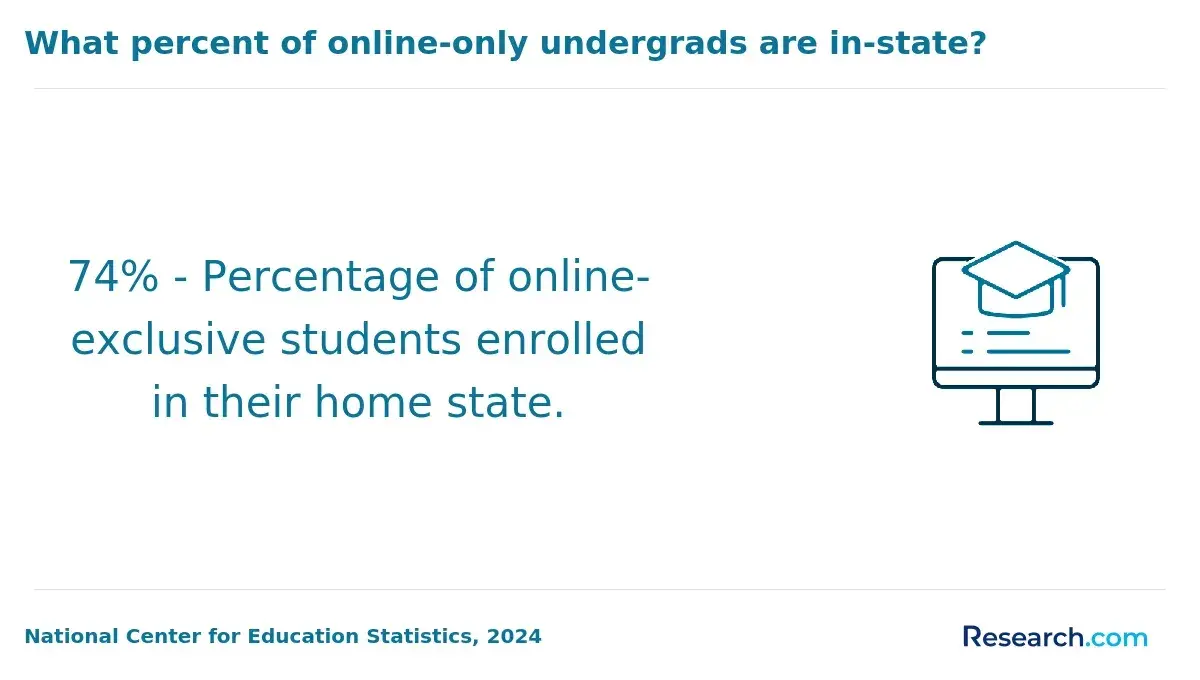
Out-of-state students may pay more, the same, or less depending on the institution's online tuition policy. Public universities often distinguish resident and nonresident tuition, while some publish one online graduate rate for all students. Private nonprofit and private for-profit institutions may also use uniform online rates, but institution type alone does not determine affordability or value.
Ask for a quote that identifies the rate category assigned to you. This comparison shows the policies that matter more than a school's location.
| Tuition policy | Effect for an out-of-state online student | What to confirm |
| Resident and nonresident rates | Nonresident tuition may exceed the target budget. | Residency rules and whether online enrollment qualifies for any exception. |
| Uniform online rate | Location may not affect tuition. | Whether all required online fees are also uniform. |
| State authorization restrictions | Enrollment may be unavailable in some states. | Whether the program is authorized to enroll students where you live. |
| Military or partner discount | Eligible students may receive a lower rate. | Eligibility, documentation, renewal rules, and whether the discount applies to fees. |
Do not move or change residency solely because a website suggests a lower in-state figure. Residency classifications can have detailed requirements, and online students may not be eligible for the rate assumed in a general tuition table. Get the determination in writing before treating it as part of your budget.
Can Transfer Credits Keep the Total Cost of an Online Health Communication Master's Degree Under $20,000?
Transfer credit can reduce both completion time and tuition, but it is not automatic. Many master's programs limit the number of graduate credits accepted, require a minimum grade, set an age limit on prior coursework, and decide whether a course matches their curriculum after admission.
Transfer credit has the greatest financial value when it replaces a required course rather than an elective you would not otherwise need. Request a preliminary evaluation early, because paying for a duplicate course can erase the savings expected from an under-$20,000 option.
Prepare the following materials before asking for a transfer review.
- An official transcript showing completed graduate-level coursework and grades.
- Course descriptions, syllabi, assignments, and learning outcomes for proposed equivalents.
- The receiving program's current degree plan and transfer-credit limit.
- Written confirmation of which credits apply, which requirements they satisfy, and whether they change the expected graduation date.
Do not assume that professional experience, certificates, or undergraduate health courses will replace graduate credits. Some schools offer prior-learning assessment, but policies vary and may involve separate fees. Nurses comparing degree-completion routes should likewise confirm how prior coursework applies in RN BSN online programs no clinicals rather than assuming that an online format creates automatic credit portability.
Transfer policies can also create a trade-off: a slightly higher-priced program that accepts several applicable graduate credits may cost less overall than a lower-rate program that accepts none. Compare the written net credit requirement, not the maximum transfer number advertised.
Can Financial Aid Bring the Cost of an Online Health Communication Master's Degree Below $20,000?
Financial aid can reduce out-of-pocket cost, but it does not change the published price of the degree. Eligible graduate students may use federal Direct Unsubsidized Loans, employer tuition assistance, scholarships, assistantships, veterans' education benefits, or payment plans. Availability and eligibility differ by school and student.
For federal aid consideration, submit the Free Application for Federal Student Aid and confirm that the institution and specific program are eligible. Graduate students are generally considered independent for federal aid purposes, but that does not mean every applicant will receive grants or that borrowing is the best choice.
Build an aid comparison that separates money that does not need repayment from money that does. This order can help protect a tight budget.
- Start with employer education benefits, scholarships, grants, and veterans' benefits for which you qualify.
- Subtract confirmed nonrepayable aid from the verified total tuition-and-required-fee estimate.
- Compare any remaining amount with available savings and a realistic monthly cash-flow plan.
- Review federal loan terms, interest accrual, origination charges, and repayment implications before borrowing.
- Recheck eligibility each academic year because enrollment intensity and institutional policies can affect awards.
A common mistake is treating a loan offer as a discount. Loans can make enrollment possible, but they remain a financial obligation. If employer reimbursement requires continued employment, verify repayment conditions if you leave the job before the required service period ends.
Is an Online Health Communication Master's Degree Under $20,000 Worth the Cost for Career Advancement?
An under-$20,000 online health communication master's degree can be worthwhile when it directly strengthens the work you want to do: translating medical information for public audiences, developing patient education, managing health campaigns, supporting community outreach, improving health literacy, or communicating during public-health initiatives. It is less compelling when the target job requires a clinical license, a different technical credential, or a portfolio and experience that the program does not help you build.
The U.S. Bureau of Labor Statistics reported that health education specialists had a median annual wage of $63,000 in May 2024. That figure is a national occupation-wide benchmark, not a predicted salary for graduates; pay varies by employer, region, experience, job duties, and credentials. Health communication graduates may also pursue roles that are not captured by that occupation, including communications, marketing, research, nonprofit, and health-system positions.
Compare the degree to your target role rather than relying on a general salary claim. The following distinctions can clarify fit.
| Career objective | How a health communication master's may help | When another path may fit better |
| Health education or community outreach | Builds message-design, health-literacy, evaluation, and audience-engagement skills. | A public health degree may be preferable when epidemiology or program administration is central. |
| Health-system communications | Can support patient-facing content, internal communication, and campaign work. | Communications experience and a strong portfolio may carry equal or greater weight for some roles. |
| Clinical imaging or direct patient-care work | May improve communication skills but does not provide clinical qualification. | Explore credential-specific pathways such as online radiology programs when clinical imaging is the actual goal. |
| Health leadership or operations | Can be useful for stakeholder communication and change-management work. | Healthcare administration or management training may align better with operational leadership roles. |
AI tools are increasingly used to draft, translate, personalize, and analyze health content, making human skills in source evaluation, plain-language editing, bias awareness, privacy, and ethical review especially valuable. Ask whether coursework teaches students to evaluate digital tools and protect confidential information rather than simply produce more content.
For a practical return-on-investment check, identify three target job postings, list their required and preferred qualifications, and compare them with the curriculum, capstone, and career support. A degree is more likely to justify its cost when it fills a documented skill gap or supports advancement with your current employer.
How Should Students Choose the Best-Value Flat-Rate Online Health Communication Master's Program?
A flat-rate online program charges one published amount for the degree or a defined enrollment period rather than billing each credit separately. It can simplify budgeting, but the best-value choice is not automatically the lowest advertised flat price. Read what happens if you need an extra course, take a leave, or finish after the included timeframe.
Use the following decision process to compare flat-rate options consistently.
- Confirm the exact degree title, total required credits, concentration requirements, and whether the quoted price covers the full curriculum.
- Add every mandatory fee and identify excluded costs, including books, software, proctoring, travel, and any required residency.
- Confirm whether the rate is fixed for your cohort and obtain the policy for additional terms, repeated courses, and tuition increases.
- Compare delivery format, live-session expectations, faculty access, capstone support, and course scheduling against your work and caregiving obligations.
- Verify institutional accreditation, state authorization, transfer-credit treatment, and the curriculum's relevance to your intended role.
- Review admissions prerequisites and determine whether missing courses will add time or cost before you can start.
- Choose the program with the strongest documented fit within your sustainable budget, not merely the smallest headline number.
For some applicants, a health communication master's is not the right first credential. People entering nursing from another field may need foundational professional preparation first; reviewing best online BSN programs for non nurses can help distinguish a clinical entry path from a nonclinical communication specialization.
Red flags include vague total-cost language, missing fee schedules, no clear timeline for completion, unclear accreditation disclosures, and claims that a degree alone guarantees employment. A more expensive program can be justified when it provides a needed specialization, required in-person practice, stronger employer alignment, or a schedule that prevents costly delays. Conversely, a lower-cost program may offer excellent value for a working professional who needs credible graduate-level communication training without extensive campus services or a narrow specialty.
Other Things You Should Know About Health Communication
Common subjects include health literacy, communication theory, health campaigns, research methods, digital media, audience analysis, cultural responsiveness, ethics, and program evaluation. Course titles vary, so review descriptions to ensure the degree teaches the practical skills relevant to your target role.
Most health communication programs are nonclinical and do not lead to clinical licensure. Some may require a practicum, capstone, internship, applied project, or short residency, especially when the program emphasizes community engagement or public health practice.
Applicants commonly need a bachelor's degree, official transcripts, a statement of purpose, and sometimes letters of recommendation or a résumé. Requirements for minimum GPA, standardized tests, writing samples, and health-related prerequisites vary by university.
Not always. Many programs offer a capstone project, applied campaign, portfolio, practicum, or comprehensive exam instead of a traditional thesis. Students considering doctoral study may prefer a research-intensive option, while working professionals may favor an applied project tied to their workplace goals.
References
- Master of Public Health Online https://www.unthealth.edu/tcom/public-health/master-of-public-health-online.html
- Master of Public Health - UNE Online https://online.une.edu/program/master-of-public-health/
- Online Master's in Health Communication Programs (2025 Update) - All Schools https://www.mastersincommunications.com/faqs/online-masters-in-health-communication
- Online Master's in Health Communication Programs in 2025 https://www.mastersincommunications.org/online-health-communication/
- Employment Opportunities and Experiences among Recent Master's-Level Global Health Graduates | Annals of Global Health https://annalsofglobalhealth.org/articles/10.5334/aogh.305