2027 Online Family Nurse Practitioner (FNP) Programs for Virginia Residents: Costs and Clinical Training

Co-Founder and Chief Data Scientist
Choosing an online family nurse practitioner program while living in Virginia means comparing more than coursework. Tuition may depend on the school's location and residency policy, while clinical rotations still require approved, in-person sites.
This guide is for registered nurses weighing Virginia-based programs against out-of-state alternatives. It explains where to look, how to build a realistic budget, what to ask about placements, and how to check whether a program supports your intended path to practice.
Key Things to Know About Online FNP Programs in Virginia
- Virginia-based options include online FNP pathways at Old Dominion University in Norfolk, George Mason University in Fairfax, Marymount University in Arlington, and Liberty University in Lynchburg; confirm each program's current format and campus requirements.
- Living in Virginia does not automatically secure an in-state rate: public universities apply their own residency and online tuition policies, while private universities set their own prices.
- Online coursework does not replace in-person clinical training. National FNP certification eligibility generally calls for at least 500 supervised clinical hours, and a school may require more or impose additional placement rules.
What online FNP programs are available in Virginia?
Several institutions physically located in Virginia offer online FNP coursework, but their degree types, required visits, and clinical placement procedures differ. An FNP is an advanced practice registered nurse educated to provide primary care across the lifespan; an online FNP program delivers academic coursework remotely while retaining supervised, in-person clinical training.
The following are Virginia-based institutions with FNP pathways to investigate. Confirm the current catalog and admissions page before applying, particularly if you need a fully remote classroom schedule rather than a hybrid format.
| Virginia institution and location | FNP pathway to investigate | Decision point |
| Old Dominion University - Norfolk | Online MSN family nurse practitioner pathway | Ask about campus visits and approved clinical placements. |
| George Mason University - Fairfax | Online MSN family nurse practitioner pathway | Confirm the current delivery format and Virginia clinical requirements. |
| Marymount University - Arlington | Online MSN family nurse practitioner pathway | Compare private-university tuition and placement support. |
| Liberty University - Lynchburg | Online MSN family nurse practitioner pathway | Check required intensives, clinical rules, and total fees. |
These are examples, not a ranking or an exhaustive list. Entry requirements also vary: a current RN license, prior nursing degree, GPA, and nursing experience may all matter. If your work history is limited, review understanding nursing experience needed for FNP programs and ask each admissions office which experience it actually requires.
Can Virginia residents enroll in online FNP programs based in other states?
Yes, a Virginia resident may be able to enroll in an out-of-state online FNP program, but an online listing alone does not establish eligibility. The institution must permit enrollment from Virginia, its clinical policies must allow an approved placement where the student will train, and the education must fit the requirements of the state where the graduate intends to seek licensure.
For example, the University of Cincinnati is located in Ohio, and the University of South Alabama is located in Alabama; their online FNP offerings are out-of-state alternatives, not programs located in Virginia. Ask either institution to confirm in writing that it currently enrolls Virginia residents in the specific FNP track and permits the proposed Virginia clinical sites. Authorization to offer online education, permission to conduct a clinical placement, and eligibility for Virginia NP licensure are separate questions.
Before paying an application fee, request the program's Virginia enrollment disclosure and its assessment of licensure issues with family nurse practitioner programs. If you expect to practice outside Virginia, check that state's rules separately.
How much do online FNP programs cost in Virginia?
The cost of a Virginia-based online FNP program depends on its current per-credit rate, required credits, mandatory fees, and clinical expenses; tuition alone is not a reliable total. Published prices also may distinguish residents from nonresidents or charge a separate online-program rate. Because those figures change by term and program, use a current, program-specific estimate rather than an older advertised tuition figure or a statewide undergraduate average.
Request an itemized estimate from each school and compare the same cost categories:
- Tuition: Multiply the applicable graduate FNP rate by every required credit, including clinical courses.
- University and program fees: Check online, technology, lab, and other mandatory charges by term.
- Clinical preparation: Budget for background checks, immunizations, insurance, equipment, and any site-specific onboarding costs.
- Travel and lost work time: Account for required campus visits, clinical commutes, and shifts you may need to reduce.
Ask whether quoted tuition covers the full curriculum, not just a sample term, and whether fees could change before completion. Two schools with similar tuition can produce substantially different personal costs if one requires more travel or fewer workable clinical sites near home.
Do Virginia residents pay in-state tuition for online FNP programs?
Virginia residents may qualify for an in-state rate at a Virginia public university, but residence alone does not establish the rate for every online FNP program. Public institutions determine tuition classification under applicable Virginia rules and publish their own graduate and online pricing. Private Virginia institutions generally do not use the same public in-state versus out-of-state tuition distinction.
Ask a public university for both its residency determination process and the specific FNP program's tuition schedule. An out-of-state institution may instead charge one online rate regardless of residence, or it may apply a nonresident charge. For that comparison, online FNP master's programs without out-of-state surcharges can be a useful starting point, but confirm the current rate directly with each school. Do not treat a Virginia mailing address, RN license, or employment in the state as automatic proof of tuition residency.
Are there scholarships or grants for FNP students in Virginia?
Virginia FNP students can pursue school-based aid and potentially eligible nursing workforce or service programs, but funding depends on the degree, school, applicant, and any service commitment. A scholarship described as available to "nursing students" may exclude graduate students or advanced practice tracks.
Start with the financial aid and nursing departments at each Virginia institution. Ask about graduate nursing scholarships, employer tuition assistance, and whether your planned clinical or post-graduation work qualifies for a service-based award. For Virginia-specific opportunities, check the current eligibility and application terms of Virginia Department of Health nursing scholarships and loan-repayment programs rather than assuming every FNP student qualifies. Federal aid may also be available through the school's aid office, but loans increase the eventual cost of attendance.
Before accepting service-based funding, confirm where you must work, for how long, and what happens if you cannot complete the obligation. Compare the award's value with restrictions on your future job choices.
How many clinical hours do online FNP programs require for Virginia students?
Virginia students should expect substantial supervised, in-person FNP clinical training, but the exact hour total is set by the program and applicable certification standards - not by whether lectures are online. National FNP certification eligibility generally includes at least 500 supervised clinical hours; a program can require more. Ask for the current curriculum's total and for the portion devoted to direct patient care.
Hours also need to cover appropriate patients and experiences across the lifespan. A student who already works as an RN should not assume paid RN shifts count as FNP clinical hours: the school must approve the site, preceptor, duties, and documentation. Each school should explain how it verifies completed hours and what happens if a rotation falls through.
Clinical days may be difficult to fit around regular employment even when coursework is asynchronous. Use a guide to combining a full-time job with an FNP program to plan your schedule, then ask the school when rotations begin and whether consecutive daytime shifts are expected.
What types of clinical sites are available to FNP students in Virginia?
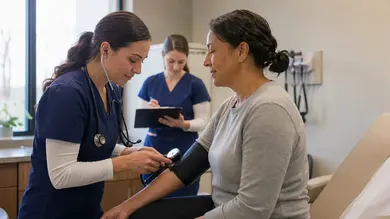
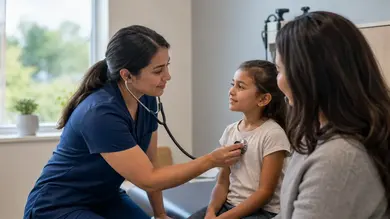
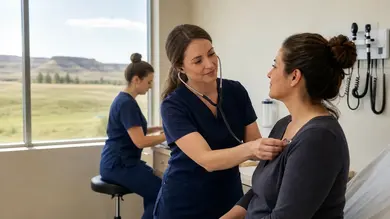
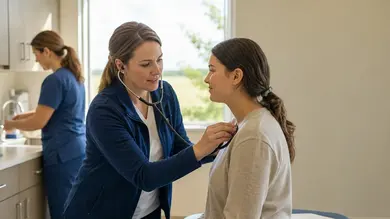
Virginia FNP students may train in approved primary care settings such as family medicine practices, community health centers, pediatric or women's health clinics, and other outpatient sites that match their course objectives. A site's location or willingness to take a student does not by itself make it acceptable: the school must approve the patient population, qualified preceptor, supervision arrangement, and any affiliation agreement.
Possible site types differ across Virginia communities, and a clinic's presence is not evidence that it has an open student placement. Ask programs where recent students completed approved rotations in your region, whether those sites still consider students, and whether the school has active agreements there. If a program requires pediatric or women's health experiences, find out whether one family practice can meet those objectives or whether separate sites are needed.
Can Virginia students complete FNP clinical rotations near home?
Virginia students often can propose clinical sites near home, but nearby placement is not guaranteed. The school's placement model matters: some programs coordinate introductions, while others expect students to identify potential preceptors and then obtain school approval. Neither model means a student can begin hours at any convenient workplace.
Ask the clinical coordinator these questions before enrolling; the answers reveal how much placement work and travel you may face:
- Who identifies and contacts Virginia sites and preceptors - the school, the student, or both?
- How far ahead must a site be approved, and who handles the affiliation agreement?
- What support is available if a proposed site declines or a preceptor withdraws?
- May clinical hours occur at my employer, and what separation from my paid RN role is required?
Start those conversations early. Waiting until the rotation term, or assuming an informal offer from a local clinician is sufficient, can delay progress and add commuting or tuition costs.
How can Virginia students determine if an FNP program aligns with their goals?
A Virginia student can assess fit by matching the program's patient focus, schedule, total cost, placement process, and licensure disclosures to a specific career plan. FNP preparation emphasizes care across the lifespan, commonly in primary care. It is not the same specialty preparation as adult-gerontology acute care, even when both are nurse practitioner pathways.
Compare shortlisted programs in this order:
- Identify the patient population and setting where you hope to work, then confirm that the FNP track - not merely the university - supports that goal.
- Ask which professional accreditation applies to the nursing program and which national FNP certification examinations graduates are prepared to pursue.
- Obtain the school's written disclosure about Virginia professional requirements and its rules for any other state where you might practice.
- Compare the full cost estimate and a term-by-term clinical schedule against your work and family commitments.
If your goal includes hospital-based acute care, investigate combined family and adult acute care NP pathways rather than assuming an FNP credential alone covers both roles. Accreditation, state authorization to educate you, national certification, and Virginia licensure serve different purposes; confirmation of one does not establish the others.
Is an online FNP program worth the investment for Virginia students?
An online FNP program may be worth the investment for a Virginia RN who wants primary care practice and can manage the full education cost and clinical schedule, but it is not automatically a financial upgrade. The relevant comparison is your likely post-licensure opportunities against tuition, fees, foregone work hours, financing costs, and the time needed to complete approved rotations.
Virginia licenses nurse practitioners through its state regulatory process; earning a degree does not itself authorize NP practice. Virginia's rules for NP practice authority also affect what a new graduate can do after licensure, so check current Virginia Board of Nursing requirements when assessing your career plan. Nurse practitioner wage or employment figures, when available, describe an occupation across specialties - not guaranteed earnings for a new FNP graduate or outcomes from a particular school.
A program is a stronger fit if its clinical support is credible in your part of Virginia, its total cost works under a conservative budget, and its curriculum supports your intended certification and licensure path. If any of those points remains unclear, get a written answer before committing to enrollment.
Other Things You Should Know About Family Nurse Practitioner
No. An RN license and an FNP credential are different. Advanced education, national certification, and Virginia nurse practitioner licensure are separate steps.
Do not assume so. Both qualifying master's and doctoral FNP pathways may prepare students for certification; verify the current Virginia licensure requirements and the specific program's eligibility disclosures.
Potentially. Some schools offer post-master's FNP certificates, but required courses and clinical training depend on the nurse's prior graduate preparation.
No. RN licensure under the Nurse Licensure Compact does not replace the advanced practice authorization required by the state where the person will practice as an NP.
References
- Code of Virginia Code - Chapter 5. In-State Tuition and Reduced Rate Tuition Eligibility https://law.lis.virginia.gov/vacodefull/title23.1/chapter5/
- Pre-Licensure Nursing Education Programs | Virginia Board of Nursing https://www.dhp.virginia.gov/Boards/Nursing/EducationPrograms/EstablishingMaintainingEducationPrograms/Pre-LicensureNursingEducationPrograms/
- Family Nurse Practitioner MSN Online | ODUGlobal https://online.odu.edu/academics/programs/family-nurse-practitioner-degree-online
- Tuition & Costs | UVA Wise https://www.uvawise.edu/affordability/tuition-costs
- Program and course fees - Virginia Commonwealth University https://sfs.vcu.edu/tuition-and-fees/understanding-tuition-and-fees/program-and-course-fees/
- FNP + BSN Nursing Clinical Placement Services | marymount.edu https://marymount.edu/academics/college-of-health-and-education/malek-school-of-nursing-professions/graduate-programs/clinical-placement-services/
- Eligibility for In-State Tuition | schev.edu https://www.schev.edu/financial-aid/in-state-residency