2027 Online Educational Policy Doctorate Programs with No Dissertation Requirement

Co-Founder and Chief Data Scientist
Many education leaders want a doctorate that improves policy, systems, and organizational practice without spending years on a traditional dissertation. That choice matters as school districts, higher education offices, nonprofits, and agencies increasingly need leaders who can use evidence to solve complex problems.
The BLS reported a May 2024 median wage of $103,960 for postsecondary education administrators, showing why doctoral preparation can be a serious career investment. This guide explains what "no dissertation" really means, how to verify legitimate programs, and how to decide whether an applied doctoral pathway fits your goals.
Key Things You Should Know
- Yes, some online education doctorates use a capstone, applied doctoral project, or dissertation-in-practice instead of a traditional five-chapter dissertation, but very few are narrowly titled "Educational Policy" and fully dissertation-free.
- No-dissertation does not mean no research: students typically complete policy analysis, data interpretation, literature review, organizational diagnosis, and a final project tied to a real education problem.
- Cost and ROI vary widely; graduate students may borrow up to $20,500 per year in federal Direct Unsubsidized Loans, so total tuition, fees, residency costs, and employer tuition support should be compared before enrolling.
Which Online Educational Policy Doctorate Programs Do Not Require a Dissertation?
The most accurate answer is that fully online doctorates specifically named "Educational Policy" rarely advertise a true no-dissertation structure. Most dissertation-free options appear in adjacent EdD fields such as educational leadership, education systems, organizational leadership, leadership and learning, higher education leadership, or policy-oriented executive education pathways.
For students focused on educational policy, the practical search strategy is to look for online EdD programs that combine policy coursework with a capstone or applied project. The table below summarizes the program types most likely to meet that need and what to verify before applying.
| Program type to search | How it connects to educational policy | Typical final requirement | What to verify |
| Online EdD in Educational Leadership with policy coursework | Often covers governance, school law, equity, finance, accountability, and district-level decision-making | Capstone, applied project, or dissertation-in-practice | Whether the catalog says "dissertation," "capstone," or "doctoral project" and how each is evaluated |
| Online EdD in Education Policy, Organization, or Systems | Closest match for students interested in policy design, implementation, and institutional change | Often a dissertation or dissertation-in-practice, though some programs may use applied alternatives | Whether the program is fully online and whether the final project is a traditional dissertation |
| Online EdD in Higher Education Leadership or Administration | Useful for policy work in colleges, state systems, accreditation offices, and student success divisions | Applied capstone, institutional improvement project, or dissertation-in-practice | Whether the curriculum includes higher education policy, finance, compliance, and assessment |
| Online EdD in Organizational Leadership with an education concentration | Can support policy implementation, nonprofit leadership, workforce learning, and cross-sector education reform | Capstone or consulting-style doctoral project | Whether the degree is education-focused enough for your target employer |
A common mistake is relying only on marketing language such as "no dissertation." Some schools use that phrase because they require an applied doctoral project, while others still require a formal dissertation under a different name. Before you treat a program as dissertation-free, ask admissions for the official catalog page, final project handbook, sample project titles, and whether students must defend the project before a committee.
What Replaces the Dissertation in an Online Educational Policy Doctorate?
In legitimate online EdD programs, the dissertation is usually replaced by an applied scholarly product. The purpose is not to remove rigor; it is to shift the doctoral work from original theory-building toward solving a real education problem in a school system, college, nonprofit, agency, or policy organization.
The main alternatives differ in scope, audience, and research expectations. This comparison can help you understand whether a program's "no dissertation" model still matches your tolerance for writing, data work, and long-term project management.
| Final requirement | What students usually produce | Best fit | Key caution |
| Capstone project | A structured final project that applies research to a defined institutional or policy problem | Working professionals who want a practical deliverable | May still require extensive research, writing, and oral defense |
| Applied doctoral project | A policy brief, evaluation plan, implementation study, improvement proposal, or organizational intervention | Students aiming for leadership, consulting, or systems improvement roles | Quality depends heavily on faculty supervision and project standards |
| Dissertation-in-practice | A practice-based study of a problem of practice using scholarly evidence and data | EdD students who want rigor but prefer applied research over traditional academic research | Some employers or doctoral committees may still treat it as a dissertation equivalent |
| Portfolio defense | A curated set of doctoral papers, policy analyses, leadership artifacts, and reflective evidence | Experienced leaders with substantial professional work to document | Less common and should be carefully reviewed for academic credibility |
Students evaluating these formats should look closely at the skills each project develops. In educational policy, the most valuable final projects often involve the ability to define a policy problem, analyze stakeholder impact, interpret data, evaluate implementation barriers, and recommend evidence-based changes.
Before enrolling, ask these questions about the final requirement so you know exactly what you are committing to:
- Is the final project completed individually, in a group, or through an employer-based setting?
- Does the project require original data collection, secondary data analysis, program evaluation, or only literature-based analysis?
- Is there a committee, oral defense, publication expectation, or public presentation?
- How early in the program do students begin the capstone or applied project?
- What happens if a student changes jobs and no longer has access to the original project site?
Are Online Educational Policy Doctorate Programs Without Dissertations Legitimate and Accredited?
Yes, an online educational policy doctorate without a traditional dissertation can be legitimate if it is offered by an institution with recognized accreditation and a transparent doctoral curriculum. Accreditation matters more than the dissertation label because it signals that the institution is reviewed for academic quality, governance, faculty qualifications, student support, and financial stability.
For U.S. students, the first check is institutional accreditation from an accreditor recognized by the U.S. Department of Education or the Council for Higher Education Accreditation. Some education-related fields also involve specialized approval or professional standards, though educational policy doctorates generally do not have a single mandatory programmatic accreditor in the way some clinical or licensure programs do.
Accreditation can be confusing because requirements vary by profession. For example, students comparing education-related graduate pathways may see specialized standards in areas such as school psychology programs online accredited by NASP, but that does not mean educational policy doctorates follow the same approval model.
Policy-focused EdD students should focus on institutional accreditation, state authorization for online learning, and whether the degree meets employer or licensure expectations.
Use this checklist to avoid common legitimacy problems:
- Confirm the institution's accreditation status directly through official accreditation directories, not only the school's advertising page.
- Review the academic catalog to see the exact degree name, credit requirements, final project requirement, residency rules, and dismissal policies.
- Ask whether the program is authorized to enroll students in your state, especially if the program includes internships, fieldwork, or leadership licensure components.
- Verify faculty expertise in education policy, law, finance, governance, leadership, research methods, or your intended policy area.
- Be cautious of programs that promise unusually fast completion, guaranteed graduation, or a doctorate with little research or writing.
Employer Confidence in Online vs. In-Person Degree Skills, Global 2024

Are No-Dissertation Online Educational Policy Doctorate Programs Easier to Complete?
They may be more practical for working professionals, but they are not automatically easier. A dissertation-free EdD often replaces the traditional dissertation with a sequence of applied research courses, milestone papers, data analysis assignments, and a final capstone tied to a real organization or policy issue.
The difference is mainly the type of difficulty. A traditional dissertation can be difficult because it requires a long, independent research process and a sustained contribution to scholarship. A capstone can be difficult because it requires access to a real problem, cooperation from stakeholders, usable data, project management, and recommendations that make sense in practice.
Students often underestimate the following workload areas in no-dissertation programs:
- Writing intensity, including literature reviews, policy memos, evaluation reports, and leadership reflections
- Research methods, especially applied statistics, qualitative analysis, assessment design, or program evaluation
- Stakeholder management when the project involves a district, college, agency, nonprofit, or employer
- Revision cycles, because capstones and applied projects may still require faculty approval at multiple stages
- Time management, since online doctoral students often complete coursework while working full time
The better question is not whether the program is easier, but whether the final requirement aligns with how you work best. Students who prefer structured milestones and direct professional application may find a capstone more manageable. Students who enjoy independent scholarship, theory development, and academic publication may prefer a traditional dissertation.
How Long Does It Take to Complete an Online Educational Policy Doctorate Without a Dissertation?
Most online EdD programs without a traditional dissertation are designed for completion in about three to four years of part-time study, although accelerated and cohort-based formats can be shorter. The final timeline depends on transfer credits, course load, term length, residency requirements, and how early the capstone begins.
Students searching for the fastest route should be careful: speed only helps if the program is accredited, academically credible, and realistic for their schedule. Some learners compare 1-year EdD programs online, but policy-focused students should verify whether those options actually include relevant coursework in education governance, policy analysis, finance, law, and systems change.
The table below shows typical timeline patterns and how the final requirement can affect completion. These are planning categories, not guarantees, because schools set their own credit loads and milestone rules.
| Program format | Common pace | Final requirement impact | Best for |
| Accelerated online EdD | Often built around short terms and continuous enrollment | Capstone work may begin early and run alongside coursework | Students with strong writing skills, stable work schedules, and clear project ideas |
| Standard part-time online EdD | Often structured around working professionals taking one or two courses at a time | Final project may be completed in stages over several terms | Full-time employees balancing leadership roles and doctoral study |
| Cohort-based online EdD | Students move through a fixed sequence together | Milestones are usually scheduled, which can reduce drift | Students who want peer support and predictable sequencing |
| Hybrid executive EdD | Online coursework with short campus or residency sessions | Residencies may support proposal development, project design, or final defense | Students who value networking and can travel when required |
A common red flag is a program that advertises extremely fast completion but does not clearly explain credit requirements, doctoral milestones, or final project expectations. A legitimate accelerated program should still show how students meet doctoral-level research, writing, ethics, and leadership outcomes.
How Much Do Online Educational Policy Doctorate Programs Without Dissertations Cost?
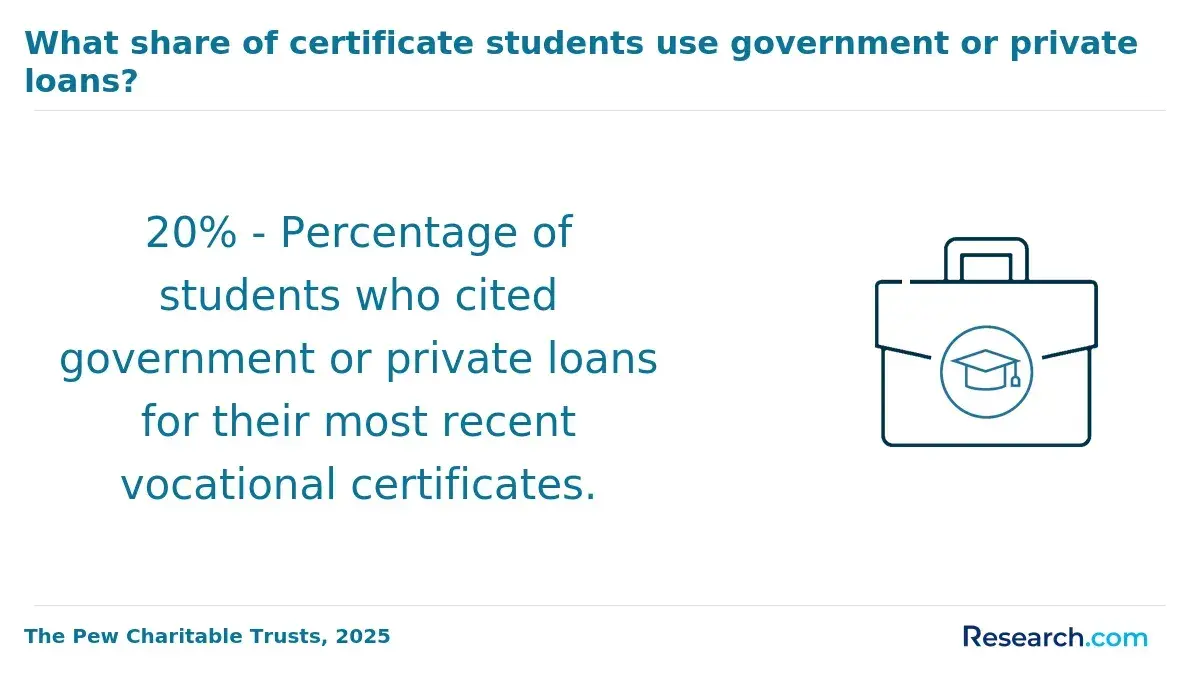
Costs vary because online EdD programs charge different tuition rates, require different credit totals, and may add technology fees, residency fees, dissertation or capstone continuation fees, graduation fees, and books. The absence of a dissertation does not automatically make a doctorate cheaper; the total price depends on the full curriculum and how long you remain enrolled.
Students comparing affordability should calculate the total cost of attendance rather than focusing only on per-credit tuition. Federal graduate loan limits also matter: Direct Unsubsidized Loans for graduate and professional students are capped at $20,500 per year, which means students may need savings, employer benefits, scholarships, payment plans, or Grad PLUS Loans if annual costs exceed that amount.
When comparing programs, list every cost category before you apply:
- Per-credit tuition multiplied by the total number of required credits
- Mandatory online learning, technology, library, assessment, or student services fees
- Residency, travel, lodging, parking, or meal costs if any in-person sessions are required
- Capstone, doctoral project, continuation, defense, or graduation fees
- Books, software, data tools, transcription, survey platforms, or research-related expenses
- Lost income or reduced work hours if the program requires intensive synchronous participation
Cost-conscious students can also compare cheapest online EdD programs, but the lowest tuition is not always the best value. For an educational policy pathway, affordability should be weighed against accreditation, faculty expertise, policy coursework, applied project support, completion rates where available, and employer recognition.
The table below shows how major cost drivers affect the final price and why students should ask for a written estimate from each school.
| Cost factor | Why it matters | Question to ask |
| Total credits | A lower per-credit rate can still be expensive if the program requires many credits | How many credits are required after transfer credit evaluation? |
| Residency requirements | Short campus visits can add travel and lodging costs | Are any in-person sessions required, and are they optional or mandatory? |
| Final project fees | Some programs charge continuation or doctoral project fees if students need extra terms | What fees apply if I do not finish the capstone on schedule? |
| Employer tuition support | Districts, colleges, agencies, and nonprofits may reimburse part of the cost | Does the school offer billing or documentation that works with my employer benefit? |
Who Benefits Most From an Online Educational Policy Doctorate Without a Dissertation?
A no-dissertation online educational policy doctorate is usually best for experienced professionals who want to apply research to leadership decisions rather than pursue a tenure-track academic research career. The strongest fit is a student who already works in education, policy, training, administration, nonprofit leadership, government, philanthropy, or organizational change.
This pathway may fit you well if your goal is to solve practical problems such as improving student outcomes, evaluating programs, redesigning policy implementation, expanding access, leading institutional change, or advising decision-makers. It can be especially useful when your desired role values applied evidence, executive communication, and systems thinking.
Students who benefit most often share these characteristics:
- They have professional experience and can connect doctoral assignments to real education problems.
- They want a terminal degree for leadership, consulting, administration, policy implementation, or executive advancement.
- They prefer producing a usable final project, such as a policy brief, improvement plan, or program evaluation.
- They are comfortable with research and writing but do not want a traditional academic dissertation process.
- They can manage online coursework while maintaining professional responsibilities.
A dissertation-free doctorate may not be the best fit if you want to become a university researcher, publish extensively in scholarly journals, or pursue roles where a traditional PhD is strongly preferred. It may also be unnecessary if your career goal can be reached with a master's degree, certificate, or specialized credential; for example, professionals focused on learning technology may want to compare best online instructional design master's programs before committing to a doctorate.
How Does a No-Dissertation Online Educational Policy Doctorate Affect Career Opportunities?
A dissertation-free EdD can support career advancement when the target role values applied leadership, policy implementation, program evaluation, and organizational change. It is most relevant for professionals who want to move into senior roles in districts, higher education, education nonprofits, government agencies, consulting firms, foundations, or workforce development organizations.
Career value depends on the degree's accreditation, institutional reputation, your experience, and how well the capstone demonstrates policy-relevant expertise. Employers usually care less about the word "dissertation" and more about whether you can analyze evidence, lead change, manage stakeholders, communicate recommendations, and improve outcomes.
The BLS reported a May 2024 median wage of $104,070 for education administrators in elementary and secondary schools. This figure does not mean a doctorate automatically leads to that salary, but it shows that senior education leadership roles can carry meaningful earning potential when paired with the right experience, licensure where required, and organizational responsibility.
Common roles that may align with an applied educational policy doctorate include:
- District administrator or central office leader focused on curriculum, equity, assessment, operations, or improvement
- Higher education administrator in student success, academic affairs, institutional effectiveness, accreditation, or policy compliance
- Education policy analyst or program evaluator in a government agency, nonprofit, advocacy organization, or foundation
- Consultant supporting school systems, colleges, education technology organizations, or workforce learning initiatives
- Executive director or senior program leader in an education nonprofit or community-based organization
Licensure is a major limitation to check. Some superintendent, principal, school psychologist, counseling, or special education leadership roles require state-specific credentials that a policy-focused doctorate may not provide. If your target job is regulated, confirm requirements with the state agency or licensing board before enrolling.
AI is also changing the work of policy leaders. Tools for data visualization, enrollment forecasting, learning analytics, grant reporting, and policy scanning can make leaders more efficient, but they also increase the need for ethical judgment, privacy awareness, bias detection, and human-centered decision-making.
How Do No-Dissertation Online Educational Policy Doctorates Compare With Traditional Doctorates?
The main difference is purpose. A traditional PhD or dissertation-based doctorate usually prepares students to conduct original research and contribute to academic knowledge. A no-dissertation EdD generally prepares experienced professionals to use evidence to improve practice, policy, and organizational outcomes.
The comparison below shows how the two pathways differ for educational policy students. Use it to decide which format supports your intended career, not just which one sounds faster or easier.
| Factor | No-dissertation online EdD | Traditional dissertation-based doctorate |
| Primary goal | Apply research to a real education or policy problem | Produce original scholarship that contributes to the field |
| Typical final product | Capstone, applied project, improvement study, policy analysis, or dissertation-in-practice | Formal dissertation with original research and committee defense |
| Best career fit | Leadership, administration, consulting, policy implementation, program evaluation, nonprofit or agency leadership | Academic research, tenure-track faculty roles, advanced research positions, policy scholarship |
| Research expectation | Applied research, data-informed decision-making, evaluation, and evidence-based recommendations | Deep methodology, theory, original data or analysis, and scholarly contribution |
| Completion risk | Often reduced by structured milestones, though capstone delays can still occur | Can be extended by dissertation design, data collection, committee revisions, or research barriers |
| Employer interpretation | Often valued for applied leadership when institution is accredited and experience is strong | Often valued for research credibility, academic roles, and scholarly expertise |
A traditional doctorate may make more sense if you want to teach in a research university, lead major research grants, publish extensively, or pursue policy research roles where methodological depth is the primary qualification. A no-dissertation EdD may make more sense if you want to lead institutions, implement policy, evaluate programs, or solve complex education problems in practice.
How Should Students Choose an Online Educational Policy Doctorate Without a Dissertation?
The smartest way to choose a program is to evaluate the whole doctoral structure, not just the absence of a dissertation. A legitimate no-dissertation program should still show strong coursework, qualified faculty, applied research training, transparent milestones, student support, and a final project that has professional value.
Use this step-by-step process to compare programs before applying:
- Define your target outcome first, such as district leadership, higher education administration, policy analysis, nonprofit leadership, consulting, or program evaluation.
- Confirm that the degree title and concentration match your goal closely enough to be understood by employers in your field.
- Verify institutional accreditation and state authorization for online enrollment.
- Read the catalog description of the final requirement and identify whether it is a capstone, applied project, dissertation-in-practice, portfolio, or traditional dissertation.
- Request sample capstone titles or project abstracts to see whether students complete policy-relevant work.
- Compare total cost, not just tuition, including fees, residencies, project continuation charges, and financing limits.
- Ask whether transfer credits, prior graduate coursework, or professional credentials can reduce time or cost.
- Review faculty backgrounds for expertise in education policy, leadership, governance, equity, finance, law, assessment, or organizational change.
- Check whether the program includes synchronous sessions, residencies, internships, field-based projects, or employer-site requirements.
- Confirm whether the degree supports any licensure, certification, or employer requirement connected to your career goal.
Several red flags deserve extra caution. Avoid programs that cannot provide an official catalog, do not clearly name their accreditor, advertise a doctorate with minimal research, pressure you to enroll quickly, or refuse to explain what replaces the dissertation. Also be cautious if a program sounds policy-focused in marketing materials but contains little coursework in governance, law, finance, equity, data use, or systems change.
The best program is usually the one that balances credibility, relevance, cost, completion structure, and career alignment. If the capstone can become a policy brief, evaluation report, implementation plan, or leadership portfolio that directly supports your next role, a dissertation-free online EdD may provide strong practical value.
Other Things You Should Know About Educational Policy
Many online EdD programs no longer require the GRE, especially professional doctorate programs designed for experienced educators and leaders. However, some schools may still request standardized scores, writing samples, interviews, resumes, or evidence of leadership experience.
Sometimes. Schools may accept a limited number of graduate credits if they are recent, relevant, earned from an accredited institution, and approved by the program. Transfer policies vary, so students should request a formal evaluation before assuming credits will apply.
An EdD is usually better for applied leadership, policy implementation, administration, and organizational change. A PhD is usually better for academic research, university faculty roles, and policy scholarship that requires advanced research methodology.
Many online EdD programs are designed for working professionals, but full-time work still requires careful planning. Students should ask about weekly workload, synchronous meetings, residency dates, capstone deadlines, and whether major project work can be connected to their current organization.
References
- Online Ed.D. in Healthcare Leadership | No Dissertation https://blog.methodistcollege.edu/doctorate-degree-online-no-dissertation
- What Is a Non-Dissertation Doctorate, and Is It Right for You? https://www.snu.edu/blog/what-is-a-non-dissertation-doctorate-and-is-it-right-for-you
- 25 Best Online EdD Programs of 2025 https://www.eddprograms.org/schools/best-online-doctor-of-education-programs/
- 2025 Most Affordable Online Doctorates in Education https://www.onlineu.com/most-affordable-colleges/education-doctoral-degrees
- Financial Support for the Pardee RAND Ph.D. in Public Policy Analysis https://www.rand.edu/programs/phd-policy-analysis/funding-your-phd.html
- What to Expect from Ed.D. Programs - Graduate Programs for Educators https://www.graduateprogram.org/blog/what-to-expect-from-ed-d-programs/
- 2026 Online EdD Programs No Dissertation Required (Applied Capstone Projects) https://www.onlineeddprograms.com/faqs/edd-programs-no-dissertation
- Academic and non-academic career paths of international and domestic PhD holders https://tuningjournal.org/article/view/3126
- How to Pay for a Ph.D in 2026 - ELFI https://www.elfi.com/how-to-pay-for-a-ph-d/
- Average Cost of a Doctorate Degree [2026]: Ph.D., Psy.D. & More https://educationdata.org/average-cost-of-a-doctorate-degree