2027 Low-Cost Online Educational Policy Doctorate Programs with Financial Aid: Scholarships, Grants, and Employer Tuition Support

Co-Founder and Chief Data Scientist
An online educational policy doctorate can help educators, administrators, analysts, and nonprofit leaders move into higher-impact roles, but the price can vary widely. NCES data published in 2024 shows average graduate tuition and required fees were $12,596 at public institutions and $29,931 at private nonprofit institutions for 2022-23, before living costs or loan interest. This guide explains how to compare low-cost online EdD and PhD options, identify financial aid, use employer support, avoid hidden costs, and choose a program that fits your career goals without unnecessary borrowing.
Key Things You Should Know
- The lowest total cost usually comes from public online EdD programs with 54-60 credits, flat online tuition, limited residency requirements, and dissertation support that helps students finish on time.
- Graduate students can usually borrow up to $20,500 per year in federal Direct Unsubsidized Loans, but scholarships, employer tuition assistance, fellowships, and payment plans should be reviewed before borrowing.
- BLS May 2024 data places median pay above $100,000 for some education administrator roles, but policy, nonprofit, district, and higher education outcomes vary by employer and region.
Which Online Educational Policy Doctorate Programs Offer the Lowest Total Cost?
The lowest-cost online educational policy doctorate is not always the school with the lowest advertised per-credit tuition. The real comparison should include total credits, mandatory fees, residency travel, dissertation extension charges, transfer-credit limits, and whether tuition differs for in-state and out-of-state online students.
Most affordable options fall into a few recognizable program types. The table below shows where students typically find the lowest total cost and what trade-offs to check before applying.
| Program type | Why it can cost less | Best fit | Cost risk to verify |
| Public university online EdD with flat tuition | Online students may pay one rate regardless of residency | Working educators seeking district, policy, or leadership roles | Program fees, residency travel, and dissertation continuation costs |
| In-state public online doctorate | Resident tuition can be substantially lower than private tuition | Students who qualify for state residency pricing | Whether online doctoral students actually receive the in-state rate |
| Cohort-based EdD in educational leadership or policy | Structured pacing can reduce extra semesters | Students who want predictable scheduling and peer support | Less flexibility if work or family obligations interrupt progress |
| Accelerated or transfer-friendly EdD | Approved prior graduate credits may reduce billed credits | Students with recent specialist, master's, or post-master's coursework | Strict transfer rules and minimum credits that must be completed in residence |
| Private nonprofit online EdD with strong institutional aid | Scholarships or employer partnerships can lower net price | Students whose employer or school partnership reduces tuition | Higher sticker price if scholarships are not renewable |
A practical shortlist starts with programs that publish a complete tuition-and-fee estimate, not just a per-credit rate. If you want a broader starting point, a curated list of cheapest online EdD programs can help you identify schools to verify directly against current catalogs and financial aid pages.
As a rule of thumb, a lower-credit program with modest tuition often beats a cheaper-per-credit program that requires more credits, multiple residencies, or extra dissertation semesters. However, the lowest-cost program may not be the best choice if it lacks the policy coursework, research methods, faculty expertise, or professional network you need for your target role.
What Financial Aid Is Available for Online Educational Policy Doctorate Students?
Online educational policy doctorate students may qualify for several types of aid, but graduate funding works differently from undergraduate aid. Pell Grants generally do not apply to doctoral study, and institutional grants are more selective, so students should build a funding plan from multiple sources.
The main aid categories differ in how they are awarded, whether they must be repaid, and how much control students have over receiving them. The table below compares the most common options for online doctoral students.
| Aid type | Usually repaid? | Common eligibility basis | Best use |
| Federal Direct Unsubsidized Loan | Yes | FAFSA eligibility and enrollment level | Covering remaining tuition after gift aid and employer support |
| Graduate PLUS Loan | Yes | Credit check and cost of attendance | Last-resort funding when other aid is insufficient |
| Institutional scholarship or grant | No | Merit, need, employment sector, leadership record, or program priority | Reducing tuition without increasing debt |
| External scholarship | No | Field, identity, dissertation topic, employer type, or professional membership | Funding dissertation research, fees, or partial tuition |
| Employer tuition assistance | Usually no, if conditions are met | Employment status, grade requirement, job relevance, and service agreement | Spreading tuition across fiscal years and lowering out-of-pocket cost |
| Assistantship or fellowship | No, though service may be required | Academic merit, research fit, teaching need, or grant funding | Reducing tuition while building research or teaching experience |
Students should complete the FAFSA even if they hope to avoid loans because some institutions use FAFSA data to evaluate need-based graduate aid. The federal Direct Unsubsidized Loan limit for graduate and professional students is generally $20,500 per academic year, which makes it important to know whether a program's annual tuition can fit below that amount or whether additional borrowing would be needed.
A common mistake is accepting the full loan amount before asking about school-specific scholarships, tuition discounts for educators, alumni grants, or payment plans. Borrow only after you know your net cost for the term, not just the estimated cost of attendance.
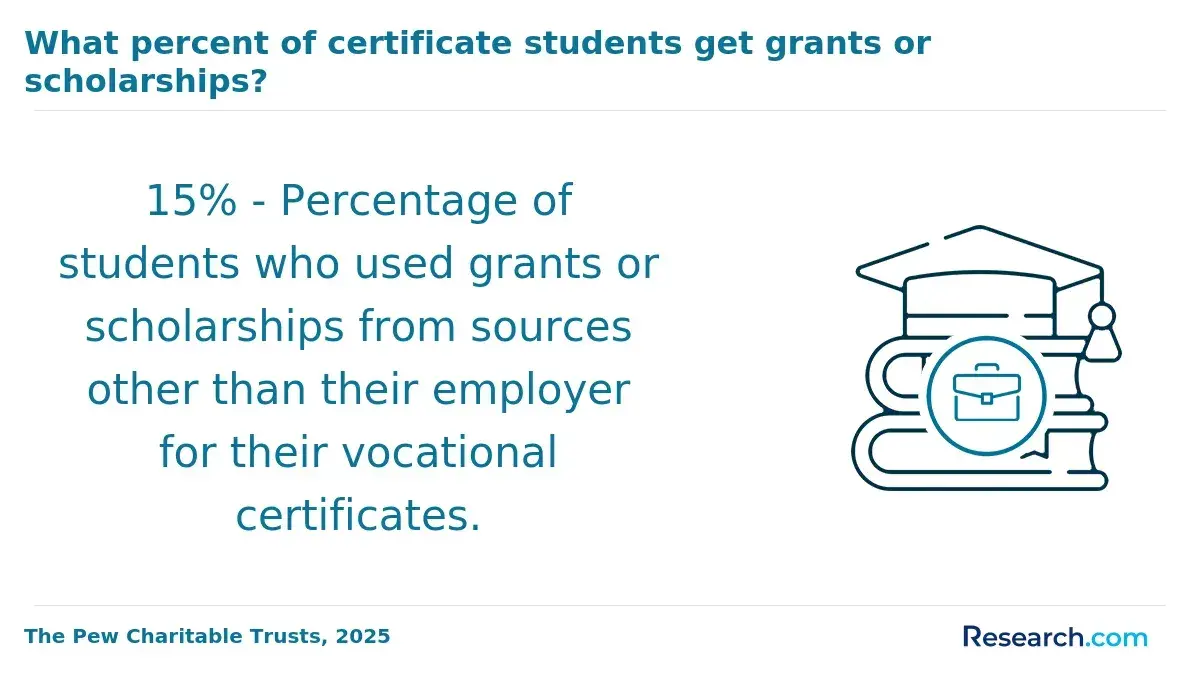
Which Scholarships Help Reduce the Cost of an Online Educational Policy Doctorate?
Scholarships for educational policy doctorate students are often narrower than undergraduate awards, but they can be valuable because many support research, leadership, diversity in education, public service, or dissertation completion. The strongest candidates usually connect their policy interests to a clear population, problem, or institutional need.
The table below highlights scholarship and grant categories worth checking. Award amounts and deadlines change by cycle, so students should verify current details before building them into a budget.
| Scholarship or grant category | Who it may help | What reviewers often look for | Planning note |
| Dissertation fellowships in education research | Doctoral candidates studying policy, equity, school finance, accountability, or higher education systems | Strong research design and a feasible completion timeline | Most useful after coursework is complete or nearly complete |
| Professional association scholarships | Members of education leadership, policy, administration, or research organizations | Leadership, service, and alignment with the association's mission | Membership may be required before applying |
| Diversity and equity fellowships | Students whose work addresses underrepresented communities or equity-focused policy questions | Clear impact statement and evidence of commitment | Often competitive but well aligned with policy-focused doctorates |
| State education agency or local foundation awards | Educators serving specific states, districts, or student populations | Public service, local need, and career commitment | May require employment in a target region |
| Institutional doctoral scholarships | Admitted students with strong academic, leadership, or professional profiles | Prior graduate GPA, career goals, and program fit | Ask whether the award is renewable and whether it covers fees |
To improve your odds, treat scholarship applications as part of your doctoral planning rather than a last-minute task. A focused application process usually works better than applying to every award you find.
- Create a one-page research agenda that explains the policy problem you want to study, why it matters, and who benefits from the work.
- Ask prospective faculty whether your topic aligns with funded research centers, grants, or dissertation awards at the university.
- Build a deadline calendar that begins at least six months before your expected dissertation phase.
- Reuse core materials carefully, but tailor each essay to the funder's mission and eligibility rules.
- Confirm whether outside awards reduce loans, unmet need, institutional grants, or your out-of-pocket balance.
Do not skip scholarships because they seem too competitive. Even smaller awards can prevent extra borrowing, pay for research software, cover conference travel, or reduce the need to extend a dissertation term.
How Can Employer Tuition Assistance Help Pay for an Online Educational Policy Doctorate?
Employer tuition assistance can be one of the most powerful ways to reduce the cost of an online educational policy doctorate because many students are already working in schools, districts, colleges, government agencies, or education nonprofits. The key is to understand the policy before enrolling, not after the first bill arrives.
Under federal tax rules, employers with qualified educational assistance programs can generally provide up to $5,250 per employee per year in tax-free education benefits. For doctoral students, that amount may not cover a full year of tuition, but it can meaningfully reduce borrowing if the program is paced across multiple calendar years.
Employer programs vary, so students should read the policy closely and ask HR or payroll direct questions before counting the benefit as guaranteed funding.
- Check whether the doctorate must be directly related to your current role, future role, or organizational mission.
- Ask whether the employer pays the school upfront or reimburses you after grades are posted.
- Confirm grade requirements, course limits, annual caps, and whether fees or books are covered.
- Look for repayment clauses if you leave the organization within a specified period after receiving assistance.
- Ask whether dissertation credits, research courses, and residency expenses qualify for reimbursement.
Employer support makes the most sense when the degree aligns with advancement opportunities inside your organization, such as district leadership, policy analysis, program evaluation, institutional research, or cabinet-level administration. It makes less sense if the service commitment would keep you in a role that no longer fits your goals.
How Do Assistantships, Fellowships, and Research Funding Work for Online Educational Policy Doctorate Students?
Assistantships, fellowships, and research funding are common in full-time residential PhD programs, but they are less predictable for online EdD students. That does not mean online students should ignore them; it means they need to ask more specific questions about eligibility, location, workload, and whether remote students are included.
The most relevant funding opportunities for online educational policy doctorate students often support research tasks, dissertation completion, or part-time project work rather than traditional on-campus teaching assistantships. The table below explains the differences.
| Funding type | Typical structure | Online-student access | Best fit |
| Teaching assistantship | Teaching, grading, or supporting courses in exchange for stipend or tuition support | Often limited if campus presence is required | Students seeking higher education teaching experience |
| Research assistantship | Work on faculty or grant-funded research projects | Possible when tasks can be completed remotely | Students with policy analysis, data, writing, or evaluation skills |
| Doctoral fellowship | Merit-based or mission-based support with limited service requirements | Varies widely by institution and program | Students with strong academic records or aligned research topics |
| Dissertation completion award | Short-term funding near the final research and writing stage | Often available to both online and campus students if eligible | Students who need time or funding to finish without extending enrollment |
| Grant-funded project role | Paid work tied to a center, lab, or external grant | Possible if the project uses remote collaboration | Students interested in applied policy, program evaluation, or data analysis |
The best way to find these opportunities is to contact the program director and potential faculty advisors before applying. Ask whether online doctoral students have received funding in the past, what percentage of awards require campus work, and whether part-time students are eligible.
A red flag is vague language such as "funding may be available" without examples, eligibility rules, or contact information. For online students, funding is most reliable when it is named, budgeted, renewable, and confirmed in writing.
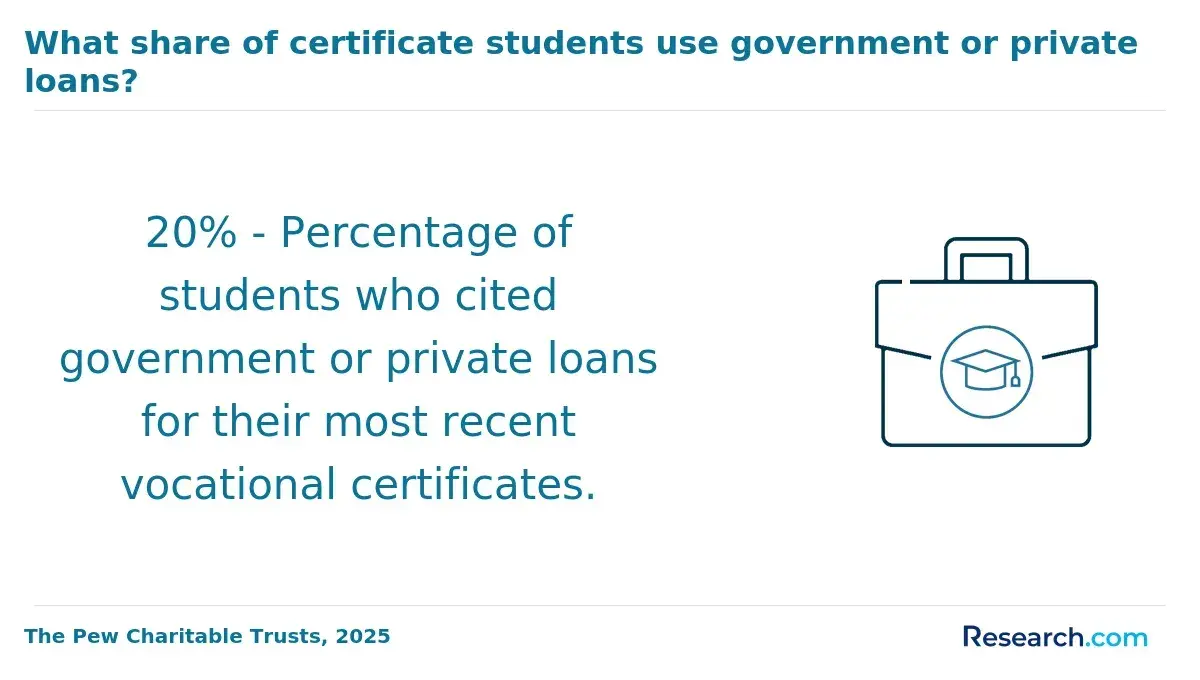
Which Program Features Have the Biggest Impact on the Total Cost of an Online Educational Policy Doctorate?
Several program features can change the total cost more than the tuition rate itself. This is especially true in online doctoral programs because students often pay over several years while balancing work schedules, residency requirements, and dissertation timelines.
The table below shows the features that most often move a program from affordable to expensive once real enrollment patterns are considered.
| Feature | Why it affects total cost | What to ask before enrolling |
| Total required credits | More credits usually mean more tuition, fees, and time in school | What is the minimum credit requirement after transfer review? |
| Dissertation or capstone model | Unstructured dissertations can add extra terms if advising is weak | What is the median time to dissertation completion for online students? |
| Residency requirements | Travel, lodging, meals, and unpaid time off can add substantial costs | How many campus visits are required, and when are they scheduled? |
| Per-term fees | Technology, online learning, library, and graduation fees may not appear in tuition quotes | Can the school provide a full program cost sheet? |
| Transfer-credit policy | Accepted credits can reduce tuition, but rejected credits do not help | Will you evaluate my prior graduate credits before I commit? |
| Pacing options | Part-time enrollment can fit work schedules but may extend fee payments | Can I slow down without losing scholarships or cohort status? |
Accelerated programs can reduce opportunity cost if they are well structured, but speed should not come at the expense of dissertation quality, advising access, or work-life sustainability. Students considering 1 year EdD programs online should verify accreditation, credit load, transfer assumptions, and whether the timeline is realistic for working professionals.
The biggest mistake is comparing only tuition per credit. A program with higher tuition but fewer credits, stronger advising, and no travel requirement may cost less in practice than a lower-rate program that extends beyond the planned timeline.
How Can Students Reduce Borrowing While Earning an Online Educational Policy Doctorate?
Reducing borrowing starts with building a term-by-term funding plan. Because graduate loan interest can accumulate while students are enrolled, even modest reductions in borrowing early in the program can lower the long-term cost of the degree.
Students can use the following sequence to reduce reliance on loans without delaying progress unnecessarily.
- Request a full cost-of-attendance estimate that separates tuition, mandatory fees, books, residency travel, and dissertation continuation charges.
- Subtract confirmed gift aid first, including institutional scholarships, external scholarships, grants, and tuition discounts.
- Apply employer tuition assistance by calendar year if your employer has an annual cap, so you do not leave unused benefits on the table.
- Ask whether a payment plan can cover the remaining balance without interest or with lower fees than loan origination and interest costs.
- Borrow only the amount needed for the term rather than automatically accepting the maximum loan offer.
- Revisit the plan each year because tuition, employment benefits, scholarship eligibility, and course load can change.
Part-time enrollment can be financially smart when it allows students to keep full-time employment and employer benefits. Full-time enrollment may be better when it shortens the program, reduces extension fees, or helps a student qualify for funding that part-time students cannot receive.
Another practical way to reduce borrowing is to choose a dissertation topic connected to your workplace. If your employer benefits from the research, you may be able to receive paid time, data access, internal mentoring, or project support that reduces indirect costs.
Does Paying Less for an Online Educational Policy Doctorate Affect Career Outcomes?
Paying less does not automatically weaken career outcomes, but choosing a low-cost program without checking quality signals can. For educational policy doctorates, the strongest return usually comes from alignment among curriculum, faculty expertise, dissertation topic, professional network, and the role you want after graduation.
BLS May 2024 wage data shows the median annual wage for postsecondary education administrators was $103,960, while elementary and secondary education administrators had a median annual wage of $104,070. These figures do not prove that a doctorate will produce a specific salary, but they show that leadership and administration pathways can support careful ROI analysis when the degree is required or strongly preferred for advancement.
Educational policy doctorate graduates may pursue roles such as district administrator, policy analyst, institutional research leader, education nonprofit director, higher education administrator, program evaluator, curriculum policy leader, or faculty member in some practice-focused settings. The best financial case is usually strongest when the doctorate helps the student qualify for a specific promotion, leadership track, consulting niche, or research-focused role.
Technology is also changing the field. AI tools, learning analytics, and data dashboards are increasing demand for leaders who can interpret evidence, evaluate programs, protect student data, and translate research into policy decisions. Students who want education technology or curriculum design roles may not need a doctorate; in some cases, the best online instructional design master's programs may offer a faster and less expensive path.
A lower-cost doctorate is most likely to support strong outcomes when it is accredited, has relevant policy coursework, provides rigorous research training, and offers faculty advising in your area of interest. It is less likely to pay off if you enroll mainly because the tuition is low but the program does not match your career direction.
Which Online Educational Policy Doctorate Programs Offer the Best Combination of Cost, Financial Aid, and Flexibility?
The best combination of cost, financial aid, and flexibility usually comes from programs that are affordable by design and transparent about funding. Instead of looking for one universal "best" program, students should match program type to career goal, work schedule, and funding source.
The table below summarizes which program profiles tend to offer the strongest value for different student situations.
| Student situation | Best-value program profile | Why it works | Watch out for |
| Full-time educator seeking district leadership | Public online EdD in educational leadership with policy coursework | Often balances applied research, leadership preparation, and manageable tuition | State-specific administrator licensure rules if licensure is part of the goal |
| Policy analyst or nonprofit professional | Online EdD or PhD with strong research methods and policy faculty | Supports program evaluation, applied policy research, and evidence-based leadership | Programs that are leadership-only with limited policy analysis training |
| Higher education professional | Online doctorate in higher education policy, leadership, or administration | Aligns with institutional research, student success, accreditation, and administrative roles | Whether coursework addresses postsecondary systems rather than K-12 only |
| Employer-funded student | Flexible part-time program with predictable annual tuition | Allows tuition to be spread across employer benefit years | Reimbursement delays and service obligations |
| Student prioritizing speed | Accelerated or transfer-friendly EdD with strong advising | Can reduce opportunity cost and extra terms | Overloaded schedules and unrealistic dissertation timelines |
Students should also avoid using an educational policy doctorate as a substitute for a credentialed clinical or school-based professional pathway. For example, if your goal is to become a school psychologist, compare school psychology programs online accredited by NASP instead of assuming an education policy doctorate will meet that career requirement.
The strongest overall choice is usually the program that has the lowest verified net cost among schools that meet your academic, professional, accreditation, and scheduling needs. A higher sticker price can be reasonable only if renewable aid, employer support, or better completion support clearly lowers the total risk.
How Should Students Compare Low-Cost Online Educational Policy Doctorate Programs?
Comparing low-cost online educational policy doctorate programs requires more than scanning tuition pages. The smartest approach is to create a side-by-side comparison using the same assumptions for every school.
Before applying, students should complete a structured review that covers cost, quality, funding, and career fit.
- Confirm institutional accreditation through a recognized accreditor and check whether any role-specific licensure or endorsement requirements apply in your state.
- Calculate total tuition by multiplying required credits by the correct online tuition rate, then add mandatory fees and residency costs.
- Ask for the typical completion time for online students, not just the minimum advertised timeline.
- Request written details on scholarships, grants, assistantships, employer partnerships, and renewal requirements.
- Review faculty profiles to see whether at least two faculty members work in educational policy, finance, equity, governance, accountability, or your intended research area.
- Compare dissertation support, including research methods sequencing, proposal milestones, advisor assignment, and access to data tools.
- Ask admissions or career staff where recent graduates work and how the program supports leadership, policy, or research transitions.
Several red flags should slow your decision. Be cautious if a school will not provide a full cost estimate, advertises unusually fast completion without explaining dissertation expectations, lacks transparent accreditation information, or promises career outcomes that no degree can guarantee.
The final decision should balance affordability with completion probability. A program that you can finish on time, fund responsibly, and connect to a specific professional goal is usually a better investment than the cheapest option on paper.
Other Things You Should Know About Educational Policy
An EdD is usually better for practitioners who want to apply policy research in districts, colleges, agencies, or nonprofits. A PhD is usually better for students who want intensive research training, academic research roles, or tenure-track opportunities, though outcomes vary by institution and labor market.
Some are fully online, while others require short residencies, dissertation workshops, or orientation sessions. Students should ask how many visits are required, where they occur, and whether travel costs are included in the published estimate.
Common requirements include a master's degree, transcripts, professional resume, statement of purpose, recommendation letters, and sometimes writing samples or interviews. GRE requirements are less common than they once were, but policies vary by school.
Only if the program is specifically designed to meet that state's licensure requirements. Educational policy doctorates often support leadership and research careers, but licensure rules are state-specific and should be verified before enrollment.
References
- 2025 Most Affordable Online Doctorates in Education https://www.onlineu.com/most-affordable-colleges/education-doctoral-degrees
- Scholarships & Grants for PhD & Doctoral Students | PhDs.me https://www.phds.me/financial-aid/scholarships-and-grants/
- Educational Funding https://phdproject.org/educational-funding/
- Making College Affordable by Improving Aid Policy https://issues.org/long-2/
- Employer-offered educational assistance programs can help pay for college | Internal Revenue Service https://www.irs.gov/newsroom/employer-offered-educational-assistance-programs-can-help-pay-for-college
- Best Online Doctor of Education Programs for 2025 https://www.princetonreview.com/education-school-rankings
- Scholarships for Doctor of Education (EdD) Students | Teach.com https://teach.com/online-ed/education-degrees/online-edd-programs/scholarships/
- Employer Tuition Assistance Program / Employee Tuition Reimbursement - Finance | Learn & Work Ecosystem Library https://learnworkecosystemlibrary.com/topics/employer-tuition-assistance-program-employee-tuition-reimbursement-finance/
- Education assistance https://www.lambenefits.com/work-life/educational-assistance
- Ed.D. vs. Ph.D.: Which Doctoral Degree is Right for You? | ACE Blog https://ace.edu/blog/edd-vs-phd/