2027 Online Ed.D. in Leadership and Learning in Organizations: Degree Fit for Leaders Tackling Uneven Access to Sponsorship and Mentoring
Audited and Verified:
Our Editorial and Data Verification Process
Research.com uses government datasets, official education statistics and primary institutional information to support its career and degree guides. Our review process checks factual accuracy, occupational definitions, source dates and the requirements associated with the credentials discussed.
How This Article Was Fact-Checked
Our editorial team verifies salary estimates, employment projections, education requirements and program information against original data providers and official organizations. Salary figures are checked against the relevant occupational definitions and reporting periods. Information about licensure, accreditation and required in-person training is reviewed separately.
Fact-checked and verified on:

Co-Founder and Chief Data Scientist
Some employees receive useful advice but never gain an advocate who puts their name forward for consequential opportunities. For leaders trying to close that gap, an online Ed.D. in Leadership and Learning in Organizations may offer a way to study the problem, test changes, and evaluate results. This article is for experienced organizational leaders and learning professionals deciding whether doctoral study is worth the commitment. It explains what the degree can contribute, what it cannot fix on its own, and how to judge program fit against faster, less costly ways to improve access.
Key Things You Should Know
- An Ed.D. fits best when you have authority or a committed partner to change how opportunities are allocated - not merely to offer more mentoring.
- Assess access to sponsorship separately from mentoring: introductions, stretch assignments, and promotion advocacy require different evidence from meeting attendance or satisfaction.
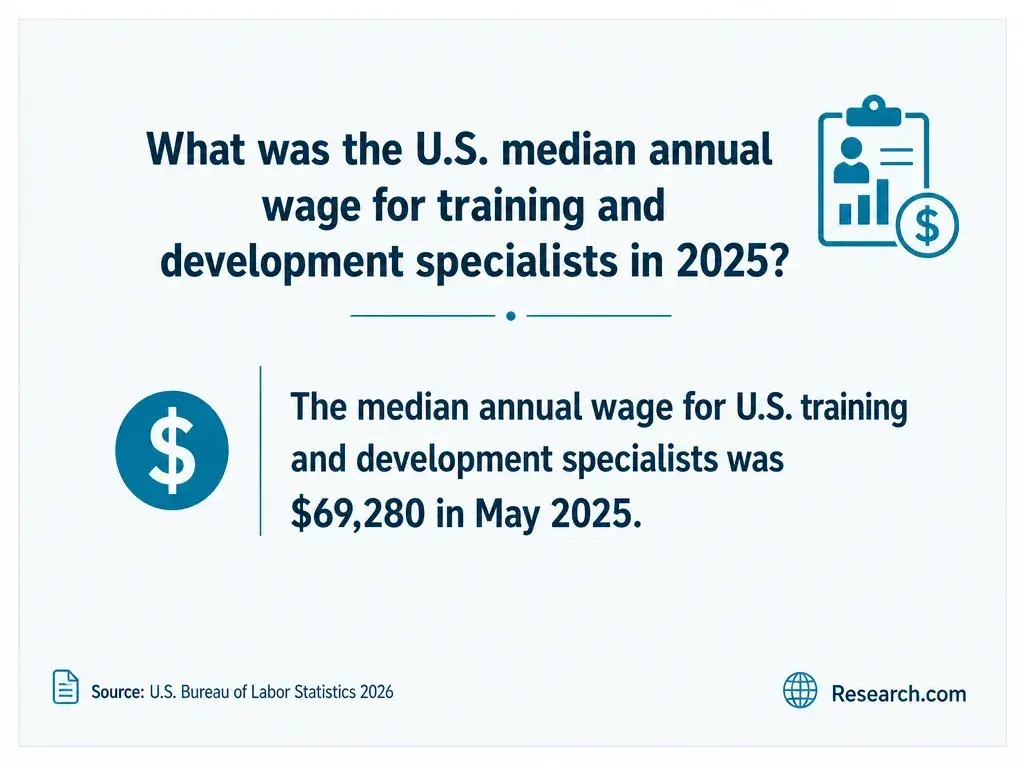
- The Bureau of Labor Statistics reports a $133,000 median annual salary for training and development managers in May 2025; that occupational figure is not a projected salary or return on investment for Ed.D. graduates.
What is an online Ed.D. in Leadership and Learning in Organizations?
It is a practice-oriented doctorate focused on how people learn, lead, and change organizations. Programs with similar names may differ substantially: one may emphasize adult learning and applied organizational research, while another focuses on educational administration. Online describes where much of the instruction occurs, not whether classes are self-paced or whether campus visits are unnecessary.
For this challenge, mentoring means guidance and developmental feedback; sponsorship means an influential person actively advocating for someone's access to opportunities. A leader might study why capable employees receive coaching yet remain absent from high-visibility assignments. Coursework can help frame and investigate that gap, but a degree does not grant authority over promotion decisions.
Check the awarded degree, required courses, and applied-project rules rather than inferring a specialty from the program title. A guide to selecting a professional focus for an Ed.D. can help distinguish a formal concentration from a general leadership curriculum.
Is an online Ed.D. in Leadership and Learning worth it for organizational leaders?
It can be worth it if your role requires sustained organizational diagnosis, change implementation, and evaluation - and you can apply those skills to decisions you can influence. Uneven sponsorship is not necessarily a training deficit. Informal nomination practices, opaque assignment criteria, manager incentives, and limited access to senior decision-makers may all play a part. Those are possibilities to investigate, not a diagnosis to assume.
The comparison below focuses on the work needed to change access, rather than the prestige of each credential.
| Pathway | Strongest fit | Key limitation |
| Leadership and learning Ed.D. | Leading a sustained, evidence-informed change effort while developing applied research skills | Requires substantial time and cost; cannot substitute for decision authority |
| Targeted organizational development training or executive education | Improving a defined practice, such as assignment selection or sponsor training | Usually offers less depth in research design and evaluation |
| Employer-led improvement project with experienced partners | Changing a process when capable internal staff and leadership support already exist | Learning and results depend on available expertise and follow-through |
If you can already convene decision-makers, establish fair criteria, and obtain evaluation support, start with the employer-led project. Consider the Ed.D. when you repeatedly face complex learning and change problems and want doctoral-level preparation that will remain useful beyond this one initiative. Without organizational access or a credible project partner, even excellent coursework may be difficult to translate into practice.
What careers can an online Ed.D. in Leadership and Learning prepare you for?
Established learning and development leaders might use the degree to design leadership-development systems and evaluate who benefits. Talent or organizational development leaders may work on succession processes and access to stretch assignments. Consultants may help clients diagnose how informal networks shape advancement. In higher education or the public sector, comparable work must also account for governance, hiring rules, and constrained budgets.
These are experience-dependent roles, not positions conferred by the doctorate. A strong portfolio might document an authorized needs assessment, revised opportunity-allocation criteria, an implementation plan, and a candid evaluation of limitations. Keep confidential personnel information out of any public version. Leaders seeking a college-focused path can also examine online Ed.D. pathways for college organizational leadership, while checking each employer's actual hiring requirements.
Verify that the university holds recognized institutional accreditation and that its scope covers the institution awarding the doctorate. Confirm the status through the accreditor and the institution before enrolling. Then inspect the particular Ed.D.'s curriculum, faculty support, completion requirements, and disclosures; institutional accreditation alone does not establish that a program is well suited to studying sponsorship.
A general organizational leadership Ed.D. does not automatically qualify someone for teacher, principal, or superintendent licensure. If a regulated role is your goal, ask the program which state requirements its curriculum is designed to meet and confirm eligibility with the relevant licensing authority.
Relevant study may combine adult learning, organizational culture, leadership development, change implementation, and qualitative or quantitative evaluation. The useful distinction for this problem is between helping someone develop and changing who gets access to advancement opportunities. A mentoring workshop might improve conversations without changing who receives influential advocacy.
Look for methods instruction that helps you define the eligible employee population, examine how assignments are awarded, and interpret differences without assuming they prove discrimination or causal impact. An applied project could compare access to opportunities before and after a process change, alongside interviews about how the process operates. It would need appropriate comparison, careful interpretation, and permission to use organizational data.
Ask prospective programs whether these topics are required or elective, how students receive research guidance, and what kind of capstone or dissertation is permitted. Course exposure alone is not evidence that you will become an expert evaluator or that your proposed workplace project will be approved.
Requirements vary by institution. Programs may request a qualifying prior degree, transcripts, professional experience, recommendations, a statement of purpose, and evidence that the applicant is ready for doctoral study. An education master's, a senior title, or a fixed number of management years is not a universal requirement.
For this topic, describe decisions you have actually made: perhaps you led talent reviews, assigned developmental work, or improved a learning process. Explain the sponsorship problem you want to investigate without claiming access to personnel data or promising results you have not obtained. Ask admissions staff separately whether your background meets entry requirements and whether prior graduate coursework can satisfy any degree requirements; those are different decisions. Applicants with an Ed.S. can begin by reviewing Ed.S.-to-Ed.D. transition requirements, then request a written evaluation from the prospective institution.
Completion time depends on required credits, course sequencing, enrollment pace, and the final project. An online format can remove a commute while retaining scheduled classes, group meetings, campus convenings, and substantial writing. A project involving sponsorship may also depend on the timing of talent reviews and on approvals to examine organizational records.
Request the program's published course sequence and completion rules. Ask when project approval begins, what happens if your employer or project sponsor changes, and whether a leave affects progression or aid. Prior doctoral work should not be treated as an automatic shortcut: all-but-dissertation education doctorate admission options have program-specific eligibility and completion rules that require direct confirmation.
There is no reliable single price for programs with this focus. Compare the full required curriculum, not an advertised per-credit charge alone. Include mandatory fees, books or technology, any campus travel and lodging, and additional enrollment if the final project takes longer than planned. Ask the institution for a written estimate based on your intended pace and entry term.
Employer support can change the calculation, but tuition reimbursement is not the same as project sponsorship. One may help pay for study; the other may provide access, decisions, or data needed for applied work. Confirm reimbursement caps, grade and employment conditions, and any repayment obligation in writing. For a broader cost comparison, use resources on education doctorate tuition and affordability alongside each school's current charges. Do not count an unpromised promotion or salary increase as a financial offset.
Delivery format matters less than access to the people and decisions your project needs. Online study may let a working leader remain close to an employer's talent processes; campus study may make in-person faculty collaboration easier. Neither format guarantees a suitable project site, responsive advising, or permission to use employee records.
Compare actual attendance requirements, faculty feedback, cohort collaboration, campus visits, and project supervision. If you need to coordinate with human resources, senior sponsors, and employees across locations, ask how each program supports a project conducted at a distance. Choose the format whose obligations you can meet while maintaining credible organizational partnerships - not simply the one described as convenient.
What salaries and job outlook can Ed.D. graduates expect?
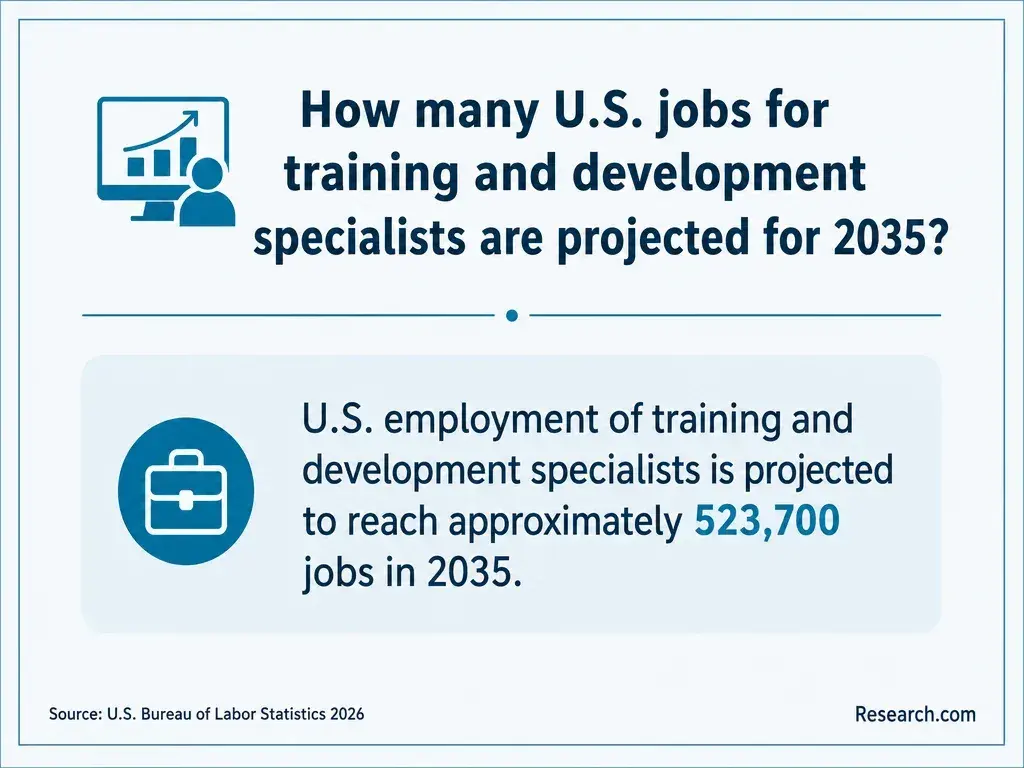
Salary data describes occupations, not graduates of a particular doctorate. The U.S. Bureau of Labor Statistics reports a May 2025 median annual salary of $133,000 for training and development managers and projects employment growth of 6.4% from 2025 to 2035. That role is relevant to leaders overseeing development systems, but its median includes workers with varied degrees and experience; it cannot predict an Ed.D. graduate's pay.
For a personal career decision, compare vacancies in your target sector with your existing responsibilities. Check whether employers seek experience leading talent decisions, evaluating programs, managing teams, or influencing executives - and whether a doctorate is required, preferred, or absent from the posting. Advancement is more plausible when the degree strengthens work you can already demonstrate.
Other Things You Should Know About EdD Leadership
Not as the only route to opportunity. Self-selection can favor people who already know influential leaders. An organization can also make assignment criteria visible and review who receives advocacy.
Yes, an external sponsor may open professional networks. They may have less influence over internal assignments or promotions, so match the arrangement to the opportunity the employee needs.
Document roles, decision rights, and how participants will be supported through a transition. A process that depends entirely on one influential person is vulnerable to turnover.
Possibly, but supervisory authority raises consent and confidentiality concerns. Discuss the design with the program's research-oversight office and the employer before recruiting anyone or accessing records.
- General Schedule Qualification Policies | U.S. Office of Personnel Management https://www.opm.gov/policy-data-oversight/classification-qualifications/general-schedule-qualification-policies/
- Maximizing the Impact and ROI of Leadership Development | nih.gov https://pmc.ncbi.nlm.nih.gov/articles/PMC11505461/
- Accreditation in the U.S. | ed.gov http://www.ed.gov/laws-and-policy/higher-education-laws-and-policy/college-accreditation/accreditation-in-the-us
- Cost of Attendance (Budget) | 2025-2026 Federal Student Aid Handbook https://fsapartners.ed.gov/knowledge-center/fsa-handbook/2025-2026/vol3/ch2-cost-attendance-budget
- Leadership and Learning in Organizations Online Ed.D. | Peabody College of Education and Human Development https://peabody.vanderbilt.edu/academics/edd-programs/online-leadership-learning-organizations/
- 2026 UNC Online EdD in Organizational Learning & Leadership https://online.unc.edu/online-doctoral-programs/online-edd-organizational-learning-and-leadership/
- Career Outcomes - School of Education and Social Policy | Northwestern University https://sesp.northwestern.edu/graduate-professional/learning-and-organizational-change/ms-organizational-dynamics/career-outcomes.html
- PhD vs. EdD in Education: Nine expert tips to help you choose | USC Rossier https://rossier.usc.edu/news/phd-vs-edd-in-education-nine-expert-tips-to-help-you-choose/
- synchronous Archives | Ohio State Online https://online.osu.edu/tag/synchronous/
- Application Requirements by Program | umn.edu https://www.hhh.umn.edu/application-requirements