2027 Online Data Science Master's Programs for New Hampshire Residents: In-State and National Options

Co-Founder and Chief Data Scientist
New Hampshire residents can consider nearby universities and online programs based elsewhere, but proximity alone does not determine the best choice. The useful comparison is whether a program accepts students living in New Hampshire, teaches the skills needed for a target role, fits a working schedule, and has an affordable total cost. This guide identifies programs worth investigating and shows where to verify details before applying.
Key Things You Should Know
- New Hampshire residents are not limited to in-state schools; confirm each national program's authorization to enroll students residing in New Hampshire and whether any required activities involve travel.
- Compare degree titles and curricula carefully: a data analytics or computer science master's may serve a similar career goal, but it is not automatically an online data science degree.
- The U.S. Bureau of Labor Statistics projects 35% growth in data scientist employment from 2025 to 2035; that national outlook is not a forecast of openings in New Hampshire or of an individual graduate's prospects.
What are the best online data science master's programs for New Hampshire residents?
There is no single best program for every New Hampshire applicant. Start with programs whose degree titles and online delivery match the search, then compare their current catalog pages, residency eligibility, curriculum, scheduling, and full price. The schools below make a useful shortlist, not a ranking.
The table distinguishes degree names from a recommendation to enroll. Program format, enrollment availability, and costs can change; confirm them with the institution before applying.
| University | Program to investigate | Potential fit | Critical check |
| University of Texas at Austin | Online Master of Science in Data Science | Applicants seeking a data science degree with substantial quantitative and computing content | Current prerequisites, course availability, and total charges |
| University of Colorado Boulder | Online Master of Science in Data Science | Applicants who want to examine a flexible online course pathway | Current pathway rules and the time and cost of completing the full degree |
| University of Michigan | Online Master of Applied Data Science | Applicants interested in an applied, project-oriented degree | Course sequencing, live-session expectations, and total cost |
| Syracuse University | Online Master of Science in Applied Data Science | Applicants seeking an applied program with a structured student experience | Required attendance, project expectations, and tuition and fees |
Choose by evidence rather than a school's location or reputation alone. A strong shortlist contains programs you can attend from New Hampshire, afford under a realistic completion schedule, and use to produce work relevant to the jobs you want.
Which in-state and national universities offer online data science master's degrees?
The national universities in the comparison above offer online degrees explicitly named data science or applied data science. For an in-state search, investigate the University of New Hampshire's current graduate offerings first, but verify the exact degree title and delivery format rather than assuming that a data-related graduate program is a fully online data science master's. An in-state institution's on-campus program, online certificate, or analytics degree should not be counted as an online data science master's without that confirmation.
Southern New Hampshire University is another local institution to examine if a closely related credential would meet your goal. Its data-related offerings should be compared under their actual degree titles, not relabeled as data science. For a broader comparison of that alternative, see graduate-level data analytics programs.
In-state status matters financially only when a particular program gives New Hampshire residents a different rate. It may also matter if you want access to local faculty, employers, or optional campus events. Otherwise, an eligible national online program may be the better curricular or financial fit. Ask each university to confirm New Hampshire enrollment eligibility, any in-person requirements, and whether online students can use campus-based services.
Is an online master's in data science worth it for New Hampshire students?
It can be worth the investment when the degree closes a specific skills gap and its full cost is reasonable for the career move you are considering. It is less compelling if you already have the needed statistical and programming skills, or if your target employer values demonstrated projects more than an additional degree.
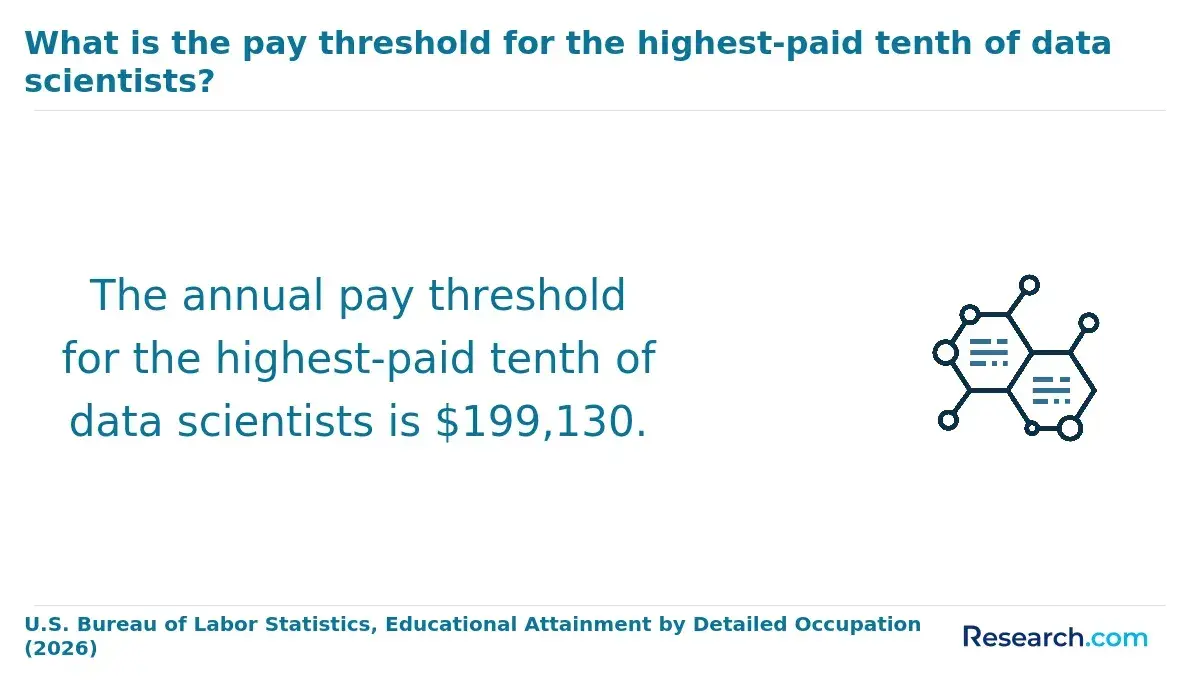
The Bureau of Labor Statistics reports a $120,230 U.S. median annual wage for data scientists in May 2025. That figure describes workers in the occupation nationwide - not starting pay, New Hampshire pay, or an increase caused by earning a master's. Evaluate the investment against your current earnings, likely target roles, employer tuition support, and the time you would spend studying.
Before committing, compare the degree with a smaller course sequence or a more specialized credential. If your goal is specifically AI engineering rather than broad data science practice, lower-cost artificial intelligence master's options may warrant a separate comparison. Do not assume the cheapest credential is the best value: check whether it teaches the methods and produces the project evidence your target jobs require.
How do online data science programs compare with campus-based degrees?
An online degree can let a New Hampshire resident study without relocating or leaving work. A campus-based degree may make face-to-face collaboration, research participation, and local recruiting easier. Neither format guarantees stronger instruction or employment outcomes.
Format labels can hide important differences. Ask whether lectures are asynchronous, whether discussions or exams require attendance at fixed times, and whether projects depend on group meetings. New Hampshire is in the Eastern Time Zone, so a live class scheduled around another region's workday may be inconvenient even when the program is fully online.
Choose online study if its schedule preserves your ability to work and the program still provides useful feedback, projects, and career support. Consider campus study if in-person research or a particular local recruiting network is central to your goal. Avoid treating "online" as synonymous with self-paced or assuming it means there will never be a campus visit.
What courses are included in an online data science master's program?
Look for a connected sequence in programming, statistics, data management, machine learning, and evaluation - not just an assortment of courses with current-sounding titles. Programs differ in whether they emphasize mathematical foundations, production systems, business decisions, or domain applications.
A useful curriculum comparison examines what students actually build. Does a machine learning course require model evaluation on unseen data? Does data engineering include preparing and managing substantial datasets? Does a capstone require students to explain limitations and decisions to a stakeholder? Those questions reveal more than a course title alone.
If your intended work is in healthcare, check for opportunities to study sensitive data, domain-specific evaluation, and responsible deployment. Healthcare-focused career paths through an AI master's provide a different specialization to compare; a general data science program should not be assumed to offer equivalent healthcare experience.
What are the admission requirements for online data science master's programs?
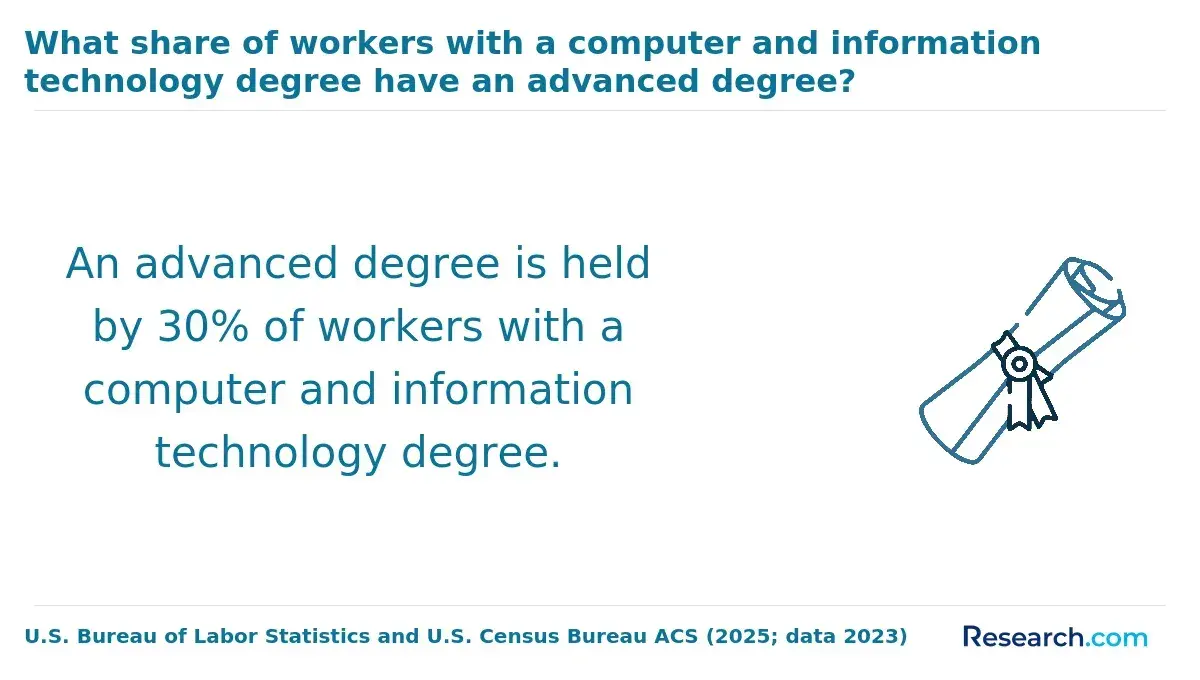
Requirements vary by university. Expect schools to review an applicant's academic record and preparation for quantitative and computing coursework; some also request recommendations, a résumé, or an essay. Do not assume that every program requires a computer science bachelor's degree - or that professional experience automatically substitutes for a stated prerequisite.
Compare your transcript and work against each program's published expectations in statistics, calculus or linear algebra, and programming. If you have a gap, ask admissions whether a specific course can formally satisfy a requirement. Independent study may help you succeed, but it does not necessarily fulfill an admissions condition.
Application materials also differ across related fields. Applicants considering graduate ML study without a required personal statement should still verify each school's current policy; an easier application is not, by itself, a reason to choose a program that does not fit the career goal.
How long do online data science master's programs take and cost?
Completion time depends on required credits, course availability, and how many classes you take while working. Published time-to-degree estimates may assume a pace you cannot maintain. Ask for a course-by-course plan at your intended pace, including when required classes are offered and whether there is a maximum completion period.
Published tuition alone is not a reliable cross-school comparison. The relevant figure is the amount you would expect to pay to finish under your own enrollment plan. Request an itemized estimate covering tuition, mandatory fees, materials or technology, and any travel; then ask whether tuition can change before you graduate.
For New Hampshire residents, confirm whether an in-state rate applies to the specific online program. Do not assume that a public university's campus residency rate applies online or that a private university prices by state. Also check employer reimbursement terms and financial aid eligibility before comparing out-of-pocket costs.
What jobs can you get with a data science master's degree?
Depending on prior experience and the program's technical depth, possible targets include data scientist, machine learning specialist, data analyst, and analytics-focused research or product roles. Job titles overlap: one employer's data scientist may build predictive models, while another's may spend more time on experimentation and communicating findings.
Read postings for jobs you would realistically pursue in New Hampshire, nearby states, or remotely. Compare their required tools and methods with the program's assignments and capstone opportunities. A candidate changing fields may need a portfolio that demonstrates relevant work, while an experienced analyst may be better served by advanced modeling or engineering projects. The degree is evidence of study, not a substitute for role-specific experience.
How much do data science professionals earn in New Hampshire?
A reliable current New Hampshire-specific data scientist wage figure is not established here, so a precise state salary would be misleading. The Bureau of Labor Statistics' May 2025 national median of $120,230 is a benchmark for the occupation, not an estimate of what a New Hampshire graduate will earn.
Pay can vary with role, experience, industry, employer location, and whether a remote job follows a location-based pay policy. Compare actual openings you qualify for and ask prospective employers how they set pay for New Hampshire-based remote staff. For another way to assess the importance of employer type, see data science salaries across different business sectors. Avoid using a national median as the expected salary in a personal return-on-investment calculation.
Do data scientists need licenses or professional certifications?
Data scientist is not generally a state-licensed occupation in New Hampshire. Employers may nevertheless require particular technical skills, security training, or industry-specific credentials for certain positions. Rules governing sensitive data or regulated work can also affect what a professional may do in a particular role.
Optional technology certifications can demonstrate familiarity with a platform, but they do not replace statistical judgment, programming ability, or a strong project record. Check the requirements in your target job postings before paying for a certification, and confirm whether the master's program offers preparation relevant to those requirements.
Other Things You Should Know About Data Science
Often, yes, but tell the university where you will physically reside during study. Residence can affect enrollment authorization and some institutional policies; your employer's location alone may not answer that question.
Diploma wording is institution-specific. Ask the registrar for a sample or the official policy if the distinction matters to you.
Availability varies by school and position. Ask whether online students are eligible, whether work must be performed on campus, and whether an award reduces tuition or provides pay.
Only with appropriate employer and university permission. If approval is uncertain, ask whether you can use a public, synthetic, or properly de-identified dataset instead.
References
- Data Science and Analytics, MS Online | New England College https://www.nec.edu/programs/data-science-and-analytics-ms-online
- What Is Data Science? Definition, Skills, Applications & More | Harvard SEAS https://seas.harvard.edu/news/what-data-science-definition-skills-applications-more
- Rivier University's online master's programs ranked as New Hampshire's best | Rivier University https://www.rivier.edu/news/rivier-universitys-online-masters-programs-ranked-as-new-hampshires-best/
- Asynchronous Classes | Online Courses | SNHU https://www.snhu.edu/online-degrees/classes/asynchronous
- State Authorizations | Empire State University - Student Accounts https://student-accounts.sunyempire.edu/web-archive/academic-affairs/state-authorizations/
- MS in Data Science | Online | $9900 | Eastern University https://www.eastern.edu/academics/graduate-programs/ms-data-science
- 13 Top Data Science Careers: Key Insights | Syracuse University https://ischool.syracuse.edu/data-science-careers/
- Data Science and Artificial Intelligence Master's Degree Program | Harvard Extension School https://extension.harvard.edu/academics/programs/data-science-artificial-intelligence-graduate-program/
- Federal Regulation & State Authorization | ku.edu https://codl.ku.edu/federal-regulation-state-authorization
- What Makes the Best MSDS Programs | Master of Science in Data Science | University of Connecticut https://masters.datascience.uconn.edu/about/best-data-science-degrees/