
2027 Online Counseling Psychology Doctorate Programs with Strong Student Support: Advising, Writing Help, and Career Services

Co-Founder and Chief Data Scientist
Choosing an online counseling psychology doctorate is not just about curriculum; it is about whether the program can support you through advanced coursework, research, clinical or applied training, and a long dissertation process. The stakes are real: the U. S. Bureau of Labor Statistics projects psychologist employment to grow 7% from 2023 to 2033, faster than average. This guide helps prospective doctoral students compare advising, writing help, faculty access, dissertation mentoring, and career services so they can identify programs built for persistence, not just enrollment.
Key Things You Should Know
- Strong online doctorate programs usually combine faculty mentoring, dedicated advising, dissertation support, research help, online library access, career coaching, technology support, accessibility services, and peer connection rather than relying on one general student services office.
- Support quality varies widely: look for named advisors, virtual appointment options, published response-time expectations, online access to writing and statistics help, and career services designed for doctoral-level counseling psychology students.
- Use outcomes and cost data carefully: BLS projects 7% growth for psychologists from 2023 to 2033, while Federal Student Aid allows graduate students to borrow up to $20,500 per academic year in Direct Unsubsidized Loans, making completion support and debt planning part of the same decision.
What Student Support Services Should Strong Online Counseling Psychology Doctorate Programs Provide?
A strong online counseling psychology doctorate should provide support across the full student lifecycle: entry, coursework, practicum or field requirements, comprehensive exams, dissertation work, and career transition.
For online doctoral students, "student support" means more than a help desk; it means structured, accessible services that reduce confusion, keep research moving, and connect students with faculty and professional opportunities.
The best programs make support visible before enrollment. If a school says it offers "personalized support," ask who provides it, how often students can meet with that person, and whether fully online students receive the same access as campus-based students.
The table below summarizes the major support areas worth comparing. Use it to separate high-touch programs from programs that mainly provide self-service resources.
| Support area | What strong support looks like | Why it matters for online doctoral students |
| Academic advising | Assigned advisor, degree plan reviews, registration guidance, milestone tracking | Prevents missed prerequisites, delayed dissertation starts, and course-sequencing problems |
| Faculty mentoring | Regular access to faculty with counseling psychology, research, or clinical expertise | Helps students connect coursework, research interests, ethics, and professional goals |
| Writing and dissertation support | Doctoral writing consultations, APA style help, proposal feedback, dissertation workshops | Supports the most time-intensive phase of the degree |
| Research and statistics support | Database access, librarian consultations, methodology coaching, software guidance | Helps students design feasible studies and analyze data appropriately |
| Career services | Doctoral career coaching, CV review, interview preparation, licensure guidance, networking | Supports transitions into academic, clinical, supervisory, research, consulting, or leadership roles |
| Technology and accessibility | Reliable learning platform support, captioning, accommodations, telehealth or virtual meeting tools | Makes participation realistic for working adults and students with disabilities |
Students who are still exploring graduate psychology pathways may find that a doctorate is not the only route. For example, those focused on developmental or youth-focused work can compare doctoral options with child psychology master's programs before committing to a longer doctoral path.
Common red flags include vague references to "mentoring," no clear dissertation support model, online students being told to contact campus offices during business hours only, and admissions staff being unable to describe how students get help after enrollment. A program does not need to be perfect, but it should be able to explain its support structure clearly.
How Does Academic Advising Work in Online Counseling Psychology Doctorate Programs?
Academic advising in an online counseling psychology doctorate should help students plan the degree from the first term through final doctoral milestones. Advising typically covers course sequencing, registration, practicum or applied experience requirements when applicable, comprehensive exams, dissertation readiness, leave policies, transfer credits, and satisfactory academic progress.
The strongest models combine administrative advising with faculty guidance. Administrative advisors help students stay on track with requirements, while faculty mentors help students shape research, professional identity, and long-term goals.
This distinction matters because a general advisor may understand registration rules but may not be equipped to advise on dissertation feasibility or counseling psychology career fit.
When comparing advising models, focus on the level of structure and accountability. The following checklist can help you evaluate whether advising is proactive or merely available on request.
- Ask whether each online doctoral student receives a named advisor or is routed through a general advising queue.
- Request the expected advisor response time for email, phone, and virtual appointment requests.
- Confirm whether advising appointments are available outside standard weekday business hours.
- Ask how often advisors review degree plans and whether students receive written milestone maps.
- Find out who contacts students if they miss registration, fall behind on dissertation tasks, or fail to meet academic progress requirements.
- Ask whether academic advisors are trained on counseling psychology licensure, doctoral research expectations, and field placement requirements, or whether those questions are referred elsewhere.
Some students discover during advising conversations that they need a faster, licensure-oriented master's route before or instead of doctoral study. In that case, comparing accelerated mental health counseling programs online can clarify whether a master's-first pathway better fits the student's timeline and career goals.
A practical test is to ask the admissions office for a sample doctoral plan of study and then ask who updates that plan after enrollment. If the answer is unclear, advising may not be as structured as the marketing language suggests.
What Dissertation Mentoring and Committee Support Should Online Counseling Psychology Doctoral Students Expect?
Dissertation support is often the difference between making steady progress and getting stuck after coursework. In online counseling psychology doctorate programs, dissertation mentoring should begin before the formal dissertation phase, not after students finish every class.
Strong programs help students move from broad interests to a feasible research question, then to a proposal, approval process, data collection, analysis, defense, and final manuscript submission.
Committee structure varies by university, but students should know how chairs are assigned, how committee members are selected, what happens if a chair leaves, and how often feedback is expected. Online students should also ask whether dissertation meetings can be conducted by video and whether defenses may be completed virtually.
The following table shows practical differences between weak, adequate, and strong dissertation support models. It can help you ask more precise questions when comparing programs.
| Dissertation support feature | Weak sign | Stronger sign |
| Chair assignment | Students must find a chair with little guidance | Program provides a transparent matching process based on topic, method, and faculty capacity |
| Milestone planning | No written timeline until late in the program | Students receive a dissertation roadmap before or during advanced coursework |
| Feedback expectations | No stated review window for drafts | Program publishes typical feedback timelines and escalation steps |
| Methodology support | Students rely only on the chair for methods guidance | Students can access statistics, qualitative methods, and research design consultations |
| Committee continuity | No clear policy if faculty availability changes | Program explains replacement procedures and protects student progress when possible |
Because dissertation timelines can affect total cost, ask how tuition is charged after coursework. Some programs charge per dissertation credit, some require continuous enrollment, and some use doctoral continuation fees.
Federal Student Aid's 2024-25 rules allow graduate students to borrow up to $20,500 per academic year in Direct Unsubsidized Loans, but borrowing more because of dissertation delays can materially change the total cost of the degree.
A common mistake is assuming that a well-known faculty member will automatically become your dissertation chair. Faculty workload, research fit, and program policy all matter. Before enrolling, ask how many doctoral students each faculty member typically supervises and whether students can review faculty research areas before choosing a topic.
What Writing and Dissertation Help Is Available in Online Counseling Psychology Doctorate Programs?
Doctoral writing support should be more advanced than undergraduate tutoring. Online counseling psychology doctoral students need help with scholarly synthesis, APA style, literature reviews, argument structure, research proposals, IRB documents, dissertation chapters, and revision strategies. The best writing support teaches students how to improve their work rather than simply editing papers.
Writing support can be delivered through live consultations, asynchronous draft reviews, workshops, writing groups, dissertation boot camps, embedded course resources, and faculty-led research seminars.
The format matters because working adults may need evening appointments or asynchronous feedback, while students in the dissertation phase may need recurring support instead of one-time help.
When evaluating writing support, ask for specifics rather than accepting broad claims. These questions reveal whether the support is designed for doctoral-level work.
- Does the writing center work with dissertation chapters, or only course papers?
- Are consultants trained in APA style, research writing, and graduate-level psychology assignments?
- Can online students schedule live video appointments, or are they limited to asynchronous comments?
- How many writing consultations can doctoral students use per term?
- Are there workshops for literature reviews, synthesis, scholarly voice, and dissertation proposal development?
- Does the program offer writing groups or accountability sessions during the dissertation phase?
- Are editing, formatting, and final manuscript services included, optional, or fee-based?
AI writing tools are another current issue. Some programs now publish policies on acceptable AI use for brainstorming, grammar support, citation checking, or coding assistance, while prohibiting uncredited authorship or fabricated sources.
Ask how the program teaches ethical AI use, because doctoral students are responsible for research integrity even when using digital tools.
A red flag is a program that advertises "writing help" but only provides a general library page or automated grammar software. Those tools can be useful, but doctoral students often need human feedback on logic, evidence, methodology, and scholarly positioning.
Do Online Counseling Psychology Doctorate Programs Provide Research, Statistics, and Library Support?
Yes, strong online counseling psychology doctorate programs should provide research, statistics, and library support comparable to what campus students receive. This support is especially important for students who have been out of school for several years, are changing research areas, or have limited experience with quantitative, qualitative, or mixed-methods designs.
Research support should help students move from interest to evidence-based inquiry. Library support should include remote access to psychology databases, interlibrary loan, citation management help, systematic search guidance, and librarian consultations. Statistics support may include tutoring, workshops, software guidance, or methodology consultations, but students should verify the depth of help available.
The most useful research support services usually include several layers. Look for resources that help with both the technical and conceptual parts of doctoral research.
- Remote access to databases commonly used in psychology, counseling, education, and social science research.
- One-on-one librarian consultations for dissertation literature searches and search strategy refinement.
- Guidance on citation managers, evidence organization, and source evaluation.
- Statistics or methodology help for common doctoral methods, including survey design, qualitative coding, regression, and mixed-methods planning when applicable.
- IRB preparation support, including templates, consent-form guidance, and human-subjects research training.
- Software access or training for tools such as statistical packages, qualitative analysis platforms, survey tools, or reference managers.
One important limitation is that research support is not the same as doing the research for the student. Ethical programs provide instruction, feedback, and resources while requiring students to design, conduct, and defend their own scholarly work.
Ask whether online students can meet virtually with librarians and research support staff. If a program offers database access but no human research guidance, students may struggle to narrow a topic or build a defensible literature review.
What Career Services Should Online Counseling Psychology Doctorate Programs Offer Doctoral Students?
Doctoral career services should go beyond résumé templates and job boards. Online counseling psychology doctoral students may be preparing for clinical leadership, supervision, teaching, research, consulting, program administration, policy work, or specialized practice. Career support should reflect those doctoral-level pathways and the student's state-specific licensure or credentialing goals.
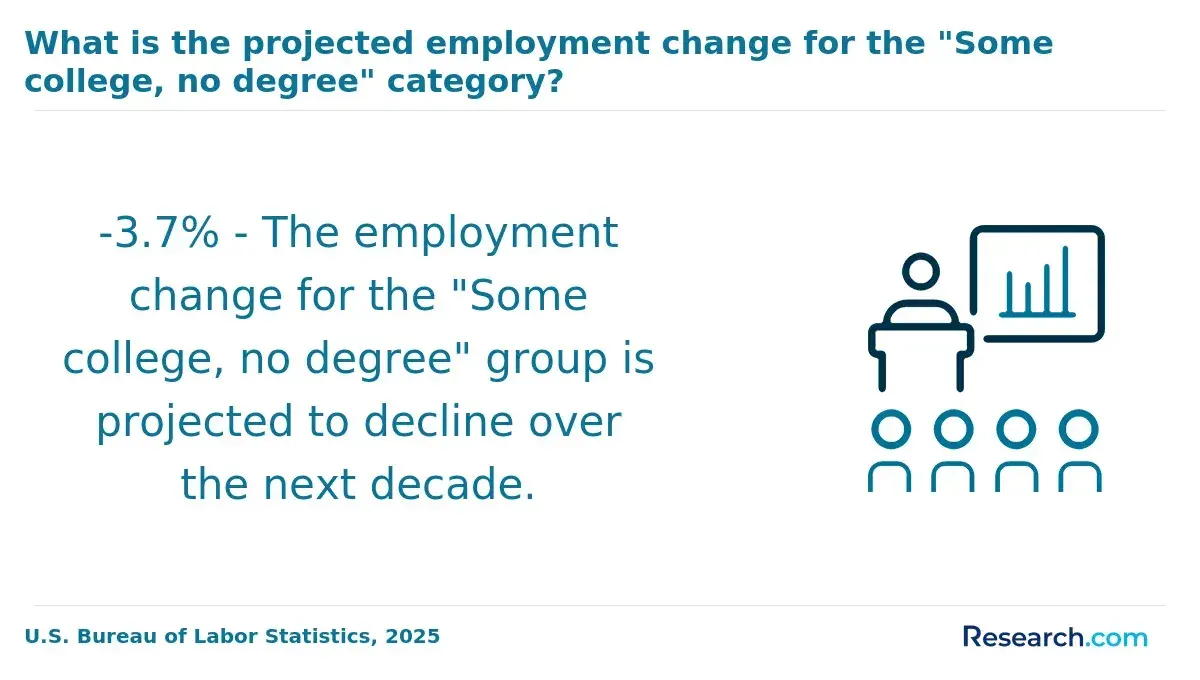
The labor market context is favorable but not automatic. The U.S. Bureau of Labor Statistics projects 7% employment growth for psychologists from 2023 to 2033, but roles, requirements, and salaries vary by setting, state, licensure status, and specialization. That means career services should help students interpret opportunities realistically rather than implying that a doctorate alone produces a specific outcome.
Strong doctoral career services often include the following elements. Each one helps students translate the degree into a practical next step.
- Doctoral CV and résumé reviews tailored to academic, clinical, research, and leadership roles.
- Mock interviews for faculty positions, clinical leadership roles, internship or postdoctoral opportunities, and administrative jobs.
- Licensure planning resources that explain state-board variability without replacing official board guidance.
- Networking events with alumni, faculty, professional associations, and employers familiar with online doctoral learners.
- Support for conference proposals, teaching portfolios, research statements, and professional presentations.
- Career coaching for students changing fields, returning to the workforce, or moving from master's-level practice into doctoral-level roles.
Students considering forensic, correctional, legal-system, or expert-witness-related work may also want to compare counseling psychology pathways with forensic psychology career information, including guidance on how much do forensic psychologists make.
A common mistake is overlooking career services because doctoral students are already working professionals. Even experienced clinicians and counselors may need help repositioning for teaching, supervision, assessment-related work, research, executive leadership, or consulting roles.
How Accessible Are Faculty and Support Staff in Online Counseling Psychology Doctorate Programs?
Faculty and staff accessibility is one of the clearest indicators of whether an online doctorate is built for real students or simply delivered through an online platform. Accessibility includes office hours, response times, feedback quality, virtual meeting availability, staff handoffs, and the ability to reach the right person when a problem becomes urgent.
Online doctoral students often balance work, family, clinical responsibilities, and research deadlines. A program that only offers support during narrow weekday hours may not be realistic for students who cannot step away from work. At minimum, ask whether faculty hold virtual office hours, whether appointments are available by video, and how quickly students can expect replies.
Use the following questions to test access before enrolling. These are especially useful during admissions calls, open houses, and conversations with current students.
- Ask a program representative to explain the normal pathway for resolving an academic issue, a technology issue, and a dissertation issue.
- Ask whether faculty office hours are posted in each course and whether online students can attend live or schedule alternatives.
- Ask current students how long it usually takes to receive substantive feedback on papers, dissertation drafts, or research proposals.
- Ask whether support staff are assigned by program, college, or university-wide service center.
- Ask what happens if a student cannot reach an advisor, instructor, or dissertation chair within the expected response window.
Fast replies are helpful, but quality matters more than speed alone. A strong program provides clear answers, documents next steps, and routes students to the right resource instead of making them contact multiple offices repeatedly.
A red flag is inconsistent ownership. If every office tells students to contact someone else, online learners can lose weeks during registration, dissertation review, financial aid, or field-placement planning.
How Do Online Counseling Psychology Doctorate Programs Build Peer, Cohort, and Mentoring Support?
Peer and cohort support can reduce isolation and help students persist through demanding doctoral work. In online counseling psychology programs, peer connection may happen through cohort models, synchronous seminars, discussion groups, research teams, writing circles, residency experiences, student organizations, alumni mentoring, or informal faculty-led communities.
The best programs do not leave peer connection entirely to chance. They create structured opportunities for students to meet, collaborate, receive feedback, and build professional identity. This is especially important for students who live far from campus or are completing the degree while working full time.
The table below shows common support models and what to watch for when comparing them.
| Peer support model | Potential benefit | Question to ask |
| Cohort model | Students progress with the same group, which can build accountability | How flexible is the program if a student needs to slow down? |
| Residency or intensive sessions | Students meet faculty and peers for skills, research, or dissertation work | Are residencies required, optional, virtual, or in person? |
| Writing groups | Students create regular accountability during dissertation work | Are groups facilitated by faculty, staff, or peers? |
| Alumni mentoring | Students learn from graduates in relevant professional settings | How are mentors matched with students? |
| Research teams | Students gain scholarly experience and faculty connection | Can fully online students participate meaningfully? |
Peer support is valuable, but it should not replace institutional support. A program should not rely on students to explain policies, interpret dissertation rules, or provide unofficial advising. Peer communities work best when they supplement a clear academic and faculty support structure.
Ask whether online students have access to professional organizations, honor societies, research colloquia, guest speakers, and student leadership opportunities. These experiences can help students build a doctoral network even when they are not physically on campus.
What Technology, Accessibility, and Student Wellness Support Do Online Counseling Psychology Doctorate Programs Provide?
Technology, accessibility, and wellness support are not secondary features in an online doctorate. They affect whether students can attend class, submit assignments, meet faculty, access readings, participate in research, and manage stress during high-pressure milestones.
Technology support should include learning management system help, video-conferencing support, password and access assistance, digital library troubleshooting, and guidance for required software. Because doctoral students may work on assignments outside regular business hours, 24/7 help-desk coverage or extended evening support can be a meaningful advantage.
Accessibility services should be available to online students in the same formal way they are available to campus students. This may include accommodations for exams, captioning, screen-reader compatibility, accessible course documents, alternative formats, assistive technology, and flexibility for documented disabilities.
Wellness support matters because doctoral education can be isolating and stressful. Counseling psychology students may also be managing emotionally demanding work in clinical, school, community, or human-services settings.
Programs should clearly explain whether online students can access counseling, wellness coaching, crisis support, referrals, or employee-assistance-style resources. When comparing support infrastructure, consider these practical factors.
- Whether the help desk is available during the hours you are most likely to study.
- Whether orientation teaches students how to use the learning platform, library systems, video tools, and dissertation resources.
- Whether accessibility requests are handled by a formal disability services office rather than informally by individual instructors.
- Whether wellness services are available remotely and across state lines, or whether the school only provides referrals.
- Whether the program has clear policies for emergencies, leaves of absence, military deployment, caregiver responsibilities, and return-to-study plans.
A common mistake is testing the learning platform only after classes begin. Before enrolling, attend a virtual information session, ask for a technology requirements list, and confirm whether required software carries extra costs.
How Can You Compare Online Counseling Psychology Doctorate Programs Based on Student Support Quality?
To compare online counseling psychology doctorate programs effectively, evaluate support as part of academic quality, not as an add-on. A lower tuition rate may be attractive, but weak advising, limited dissertation support, or inaccessible faculty can increase time to completion and frustration. Conversely, a higher-cost program may be worth considering if its support model is transparent, responsive, and aligned with your needs.
Start by defining your own support profile. A student who recently completed a research-heavy master's degree may need less writing and statistics help than a student returning after a long break. A working clinician may need evening advising. A student aiming for academia may need stronger faculty mentoring, research collaboration, and teaching portfolio support.
Use the following comparison process before applying or enrolling.
- Identify your likely support needs in advising, writing, statistics, dissertation planning, career development, technology, accessibility, and wellness.
- Request a written plan of study, dissertation milestone map, and support-services overview from each program.
- Ask admissions staff to connect you with a current online doctoral student or recent graduate.
- Compare advisor assignment models, faculty access, response-time expectations, and online appointment availability.
- Review whether career services are designed for doctoral students or mainly for undergraduates and master's students.
- Confirm accreditation, licensure alignment, residency requirements, field requirements, and state authorization before focusing on convenience.
- Estimate total cost using tuition, fees, required residencies, technology, books, software, continuation credits, and possible dissertation-extension costs.
The table below gives a simple scoring framework for comparing programs. It is not a ranking system, but it can help you make a more disciplined decision.
| Category | Strong evidence | Weak evidence |
| Advising | Named advisor, milestone tracking, virtual appointments, escalation process | General email inbox with no stated response expectations |
| Dissertation support | Early topic development, chair-matching process, methods help, draft timelines | Students receive dissertation guidance only after coursework |
| Writing support | Doctoral writing consultations, dissertation workshops, APA support | Only automated tools or undergraduate-level tutoring |
| Career services | Doctoral coaching, licensure resources, CV help, networking, alumni access | Basic job board with little counseling psychology specialization |
| Online access | Evening or flexible appointments, remote library help, online disability services | Campus-centered services with limited online availability |
| Transparency | Clear policies, published requirements, written support descriptions | Marketing claims without operational details |
Students comparing doctoral options with master's-level clinical preparation can also review online clinical psychology masters programs to decide whether they need doctoral study now or a shorter graduate pathway first.
The best final step is to create a side-by-side worksheet and score each program using evidence, not impressions. If a school cannot clearly explain how online students receive advising, writing help, dissertation mentoring, and career support, treat that as a serious concern before committing time and money.
Other Things You Should Know About Counseling Psychology
It depends on the program, degree type, accreditation, supervised experience, internship or practicum structure, and state licensing board rules. Always check the licensing board in the state where you plan to practice before enrolling, and ask the program for written licensure-disclosure information.
APA accreditation can be important for certain psychology licensure, internship, postdoctoral, academic, and employer pathways, but requirements vary by state and role. Prospective students should verify whether the specific online or hybrid program, not just the university, holds the accreditation needed for their goals.
Many counseling psychology doctorates take several years because students complete advanced coursework, research training, practicum or applied requirements, exams, and a dissertation. Timeline varies by enrollment status, transfer credits, dissertation progress, residency requirements, and whether the student takes breaks.
An online doctorate may not fit students who need daily in-person structure, want a quick credential, have not confirmed licensure alignment, or are mainly seeking entry-level counseling preparation. Those students may be better served by a licensure-focused master's program or a campus-based doctoral format.
References
- How to Apply to Clinical Psychology PhD Programs — TAP Magazine https://tapmagazine.org/all-articles/how-to-apply-to-clinical-psychology-phd-programs
- Best Doctoral Programs in Counseling Psychology - Dr. Joseph H. Hammer https://drjosephhammer.com/psych-grad-school/best-doctoral-programs-in-counseling-psychology/
- Writing Resources & Tutors https://www.pacifica.edu/student-services/writing-resources-tutors/
- Society for the Teaching of Psychology https://teachpsych.org/page-1603066
- The Impact of Educational Counseling on Students' ... https://www.amrsjournals.com/index.php/jamres/article/download/570/655
- List of APA-Accredited Counseling Psychology PhD and PsyD Program https://www.div17.org/list-of-apa-accredited-counseling-psychology-phd-and-psyd-programs
- Online Degrees https://onlinecounselingprograms.com/online-counseling-degrees/
- Best Online Counseling Psychology Ph.D. Programs https://www.psychology.org/rankings/best-counseling-psychology-doctorate-programs/


![2027 Best Advanced Standing Online MSW Programs [CSWE Accredited] thumbnail](/uploads/Online_Advanced_Standing_MSW_301dbd5368.jpg)


