
2027 Online Counseling Psychology Doctorate Programs with One-on-One Faculty Mentorship

Co-Founder and Chief Data Scientist
Choosing an online counseling psychology doctorate is not just about flexibility; it is about whether faculty support is strong enough to carry you through advanced research, clinical theory, supervision training, and career planning. The Bureau of Labor Statistics reported a May 2024 median annual wage of $95,830 for clinical and counseling psychologists, but doctoral paths vary widely in licensure fit and mentorship quality.
This guide is for working counselors, psychology graduates, and mental health professionals who want to compare programs, verify one-on-one mentoring claims, and decide whether the added cost and commitment make sense.
Key Things You Should Know
- One-on-one mentorship matters most when a doctorate includes a dissertation, applied research project, supervision practicum, or licensure-sensitive career goal; it should mean scheduled faculty access, not just general academic advising.
- The strongest online options usually publish faculty profiles, mentor assignment processes, dissertation chair expectations, residency requirements, and accreditation status; many "counseling psychology" searches actually lead to counselor education and supervision doctorates.
- Use value carefully: BLS May 2024 data reports $95,830 as the median annual wage for clinical and counseling psychologists, while Federal Student Aid allows up to $20,500 per year in Direct Unsubsidized Loans for many graduate students before Grad PLUS borrowing is considered.
How Does One-on-One Faculty Mentorship Work in Online Counseling Psychology Doctorate Programs?
In an online counseling psychology doctorate, one-on-one faculty mentorship is individualized academic and professional guidance from a doctoral-level faculty member. It may cover research design, dissertation planning, clinical scholarship, counselor education, supervision skills, teaching preparation, publication strategy, and career direction. It is different from routine advising, which usually focuses on registration, degree audits, policies, and deadlines.
The first decision is whether the program is truly a counseling psychology doctorate or a related online doctoral pathway. Fully online APA-accredited counseling psychology PhD or PsyD options are limited, and many programs that appear in searches are PhD or EdD programs in counselor education and supervision, counseling, pastoral counseling, or psychology with counseling-related concentrations. That distinction matters because psychologist licensure, counselor licensure, faculty roles, and supervision credentials are governed differently by states and employers.
Strong one-on-one mentorship usually has several visible features. Before trusting a phrase such as "personalized support," look for formal structures that show how often faculty interact with doctoral students and what the mentor is responsible for.
- Assigned mentor or advisor: The program identifies whether students receive a faculty mentor at admission, after core coursework, or when they begin dissertation planning.
- Dissertation chair access: The program explains how students select or are assigned a chair, how committee members are chosen, and what milestones trigger faculty review.
- Synchronous communication: Students can meet by video, phone, or live virtual office hours rather than relying only on message boards or ticket-based support.
- Research alignment: Faculty expertise matches the student's topic, such as trauma counseling, multicultural counseling, counselor supervision, school counseling, assessment, or telebehavioral health.
- Documented expectations: The handbook or doctoral guide states response-time norms, review timelines, residency requirements, and escalation steps if mentoring breaks down.
For students still deciding whether to begin with a master's pathway, options such as accelerated mental health counseling programs online may be a better first step than committing immediately to a doctorate, especially if the main goal is state counselor licensure rather than university teaching or doctoral-level research.
Which Online Counseling Psychology Doctorate Programs Offer the Strongest Faculty Mentorship?
The strongest programs are not simply the ones that use the word "mentor." They are the programs that make mentorship operational: faculty are identifiable, research interests are public, students know how mentors are assigned, dissertation support is structured, and communication expectations are clear. Because offerings, accreditation status, and faculty rosters can change, use the examples below as programs to investigate rather than as a fixed ranking.
This table summarizes common online or low-residency doctoral options that counseling-focused students often compare. It emphasizes mentorship signals you can verify before applying, because those signals are more useful than marketing language alone.
| Program type students commonly compare | Online or residency format | Mentorship features to verify | Best fit | Key caution |
| PhD in Counselor Education and Supervision | Often online with residencies, internships, or supervision experiences | Faculty advisor, dissertation chair, supervision faculty, research-methods support | Licensed or license-eligible counselors seeking teaching, supervision, research, or leadership roles | Usually not designed as a psychology licensure pathway |
| EdD in Counseling, Counselor Education, or Community Care | Often online or hybrid | Applied project chair, practitioner-scholar mentor, leadership-focused faculty advising | Practitioners seeking program leadership, training, consulting, or applied scholarship | May place less emphasis on traditional research careers than a PhD |
| PhD or PsyD in Counseling Psychology | Commonly campus-based or hybrid when licensure-focused | Research mentor, clinical training faculty, practicum oversight, dissertation committee | Students seeking psychologist licensure, academic research, or advanced clinical training | Confirm APA accreditation and state licensure alignment before enrolling |
| Doctorate in Psychology with counseling-related concentration | Often online | Dissertation chair, concentration faculty, professional-development advising | Students seeking non-licensure psychology leadership, consulting, research, or teaching-adjacent roles | Program title may not meet counseling psychology licensure expectations |
A good shortlist should include programs that show evidence of faculty access before the application stage. If a school will not clarify whether doctoral students can review faculty research interests, request a mentor match, speak with current students, or see dissertation support policies, treat that as a red flag.
Use a simple screening sequence before spending money on applications. This helps you separate genuine doctoral mentoring from basic student services.
- Confirm the exact degree title, accreditation status, and whether the program is intended for psychologist licensure, counselor education, supervision, leadership, or non-licensure psychology roles.
- Identify three to five faculty members whose research or professional background matches your goals.
- Ask when the mentor is assigned and whether students may request a change if the fit is poor.
- Request the dissertation or applied-project handbook and look for review timelines, chair responsibilities, and committee expectations.
- Ask admissions to connect you with an enrolled student or recent graduate who can describe actual faculty availability.
How Does Faculty Mentorship Support Dissertation or Applied Research in an Online Counseling Psychology Doctorate?
Faculty mentorship is most valuable when the program reaches the dissertation, doctoral project, or applied research stage. At that point, students must narrow a topic, design a defensible study, obtain institutional review board approval when human subjects are involved, analyze data, respond to committee feedback, and complete revisions. Online students often need especially clear guidance because they are not casually meeting faculty after class or in campus offices.
Mentorship should support the research process in stages. The following list shows what meaningful faculty involvement looks like at each point, and it can help you evaluate whether a program's dissertation support is robust enough for your working style.
- Topic development: The mentor helps the student turn a broad interest, such as trauma-informed counseling or supervision ethics, into a feasible doctoral research question.
- Method selection: The mentor explains whether a quantitative, qualitative, mixed-methods, program-evaluation, or applied project design fits the question and available data.
- Literature review discipline: The mentor helps the student avoid overly broad reviews and connect the study to current counseling, psychology, supervision, or mental health literature.
- IRB and ethics preparation: The mentor checks whether recruitment, consent, confidentiality, and risk management procedures are appropriate for counseling-related research.
- Feedback management: The mentor helps the student interpret committee comments, prioritize revisions, and maintain momentum without turning every draft into a full restart.
One common mistake is choosing a doctoral program before identifying whether anyone on the faculty can support the student's intended topic. A student interested in child trauma, adolescent behavior, or family systems may need a very different mentor than a student focused on counselor supervision or crisis intervention. If your interests are developmental or youth-focused, reviewing related pathways such as child psychology master's programs can also clarify whether your long-term goal is clinical practice, research, school-based work, or doctoral study.
One-on-one mentorship can improve progress when it reduces ambiguity. Doctoral students often stall not because they lack motivation, but because they are unsure how to move from coursework to an approved dissertation or applied project. A responsive mentor can help students set milestones, interpret feedback, and avoid changing topics repeatedly.
Mentorship is not a guarantee of faster completion. Doctoral timelines depend on transfer credits, enrollment intensity, research readiness, committee availability, practicum or internship requirements, employment demands, and personal circumstances. The National Center for Science and Engineering Statistics' 2024 reporting on earned doctorates continues to show that doctoral education is a multi-year commitment across fields, which is why students should evaluate support systems before enrolling rather than assuming they will "figure it out" later.
Students should compare how programs manage common bottlenecks. The table below shows where mentorship can make a practical difference and what to ask before choosing a program.
| Potential bottleneck | How mentorship helps | Question to ask the program |
| Choosing a research topic | Mentor helps narrow scope and avoid topics that are too broad, inaccessible, or unsupported by faculty expertise | When do students begin topic planning with faculty? |
| Moving from coursework to dissertation | Mentor explains milestone sequence, proposal expectations, and committee roles | What is the average process from concept paper to proposal approval? |
| Waiting for feedback | Clear review expectations reduce uncertainty and repeated delays | What response-time standards apply to chairs and committee members? |
| Balancing work and doctoral study | Mentor helps students plan realistic course loads and research timelines | Can part-time students access the same faculty support as full-time students? |
| Losing mentor fit | Program has a process for changing chairs or adding committee expertise | What happens if a faculty member leaves or is no longer a good match? |
A major red flag is a program that says students receive mentorship but cannot explain how many students each faculty member advises, how dissertation chairs are assigned, or how long faculty normally take to review major drafts. Doctoral students should not need to guess whether faculty support is available.
Online doctoral programs use different support models. Some emphasize individualized faculty mentoring, while others rely on cohorts, structured courses, writing centers, dissertation sequence courses, or residency intensives. The best model depends on your goals, independence, research readiness, and need for flexibility.
The comparison below helps clarify which model offers the best fit. It is especially useful if you must choose between lower tuition, stronger structure, and more individualized faculty time.
| Mentorship model | How it works | Strengths | Limitations | Best for |
| Dedicated one-on-one mentor | Student works closely with an assigned faculty advisor or dissertation chair | Strong research alignment, individualized feedback, better fit for specialized topics | Quality depends heavily on mentor availability and match | Students with clear research or academic career goals |
| Cohort-based support | Students progress with peers and receive group guidance from faculty | Peer accountability, predictable sequence, community for online learners | Less individualized attention unless paired with faculty advising | Students who want structure and shared milestones |
| Dissertation-course model | Students receive research guidance through a sequence of doctoral project courses | Clear milestones and standardized expectations | May feel procedural if chair access is limited | Students who need step-by-step scaffolding |
| Residency-intensive model | Online coursework is supplemented by campus or virtual residencies | Deeper faculty interaction, networking, concentrated research planning | Travel, time away from work, and added costs may apply | Students who benefit from live feedback and professional community |
| Advising-plus-support-services model | Academic advisors, writing centers, librarians, and faculty each handle different support needs | Broad support infrastructure | Can be fragmented if no faculty member owns the student's progress | Independent students with strong project-management skills |
A highly structured cohort program may be better than a loosely defined one-on-one model if you need deadlines, peer accountability, and predictable pacing. Conversely, individualized mentorship is usually more valuable when your research topic is specialized, your career goal involves publishing or teaching, or you need a mentor with specific clinical or supervision expertise.
Students comparing counseling psychology with adjacent clinical pathways may also want to review online clinical psychology masters options before choosing a doctorate, since a master's program may better match early-stage licensure preparation or clinical skill development.
Faculty mentorship can extend beyond coursework when mentors help students translate doctoral work into professional opportunities. In counseling-related doctoral programs, this may include conference proposals, article manuscripts, teaching preparation, supervision practice, leadership projects, consultation work, and introductions to professional networks.
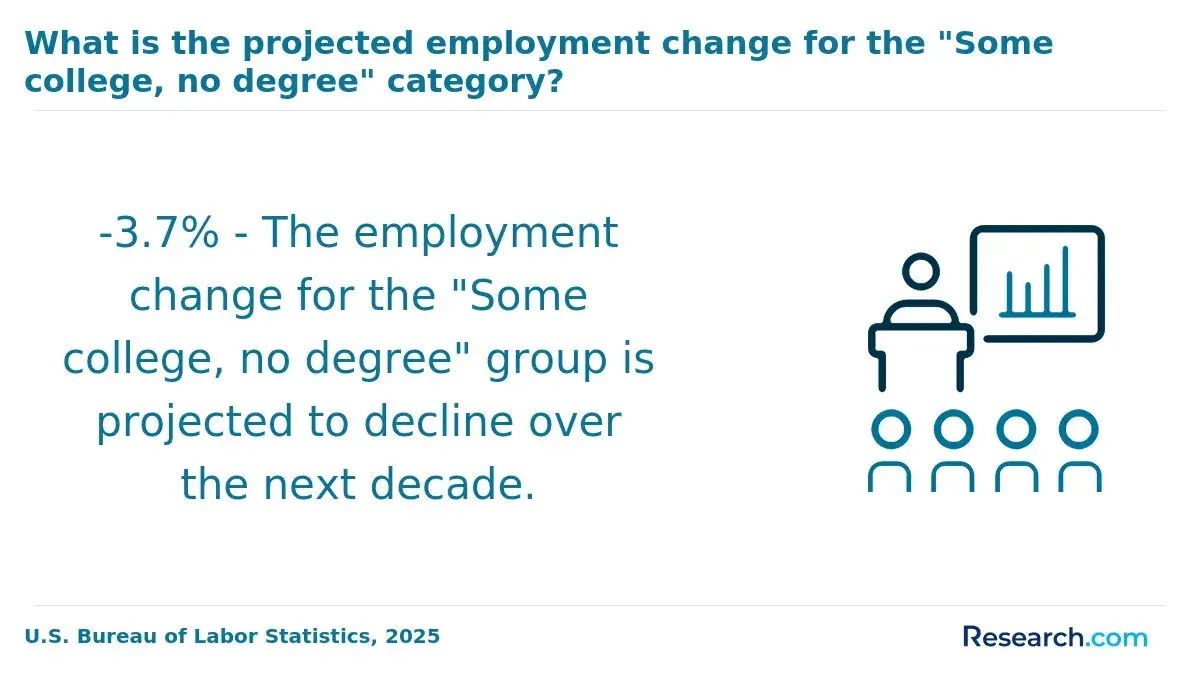
The labor market context makes this support important. BLS employment projections released for the 2024 to 2034 period show psychologists growing by 6%, which is faster than the average for all occupations. That does not mean every doctorate produces the same outcome; it means students should choose programs that connect faculty mentorship to specific career goals rather than treating the degree as a general credential.
Faculty mentorship is especially useful for students pursuing roles where doctoral identity matters. The following career directions often benefit from individualized guidance because hiring committees, licensing boards, employers, or clients may look closely at specialization, dissertation topic, teaching experience, and supervised practice.
- Counselor education faculty: Mentors can help students prepare teaching philosophy statements, publish research, and build supervision experience.
- Clinical supervision and training leadership: Mentors can guide students in supervision models, ethics, evaluation, and program development.
- Behavioral health administration: Mentors can help students connect applied research to quality improvement, access, outcomes, or workforce development.
- Research and policy roles: Mentors can support data interpretation, grant thinking, program evaluation, and scholarly writing.
- Specialized practice or consulting: Mentors can help students define a niche, such as trauma, addictions, forensic assessment collaboration, telehealth, or multicultural counseling.
Career goals can also shape whether a counseling-focused doctorate is the right fit. For example, students drawn to courts, correctional systems, expert consultation, or legal contexts may want to compare counseling routes with forensic psychology information, including salary context from resources on how much do forensic psychologists make.
A strong doctoral mentor should have more than an advanced degree. The best fit is a faculty member whose education, scholarship, professional experience, licensure background, and availability align with your goals. In counseling-focused doctorates, that may mean experience in counselor education, clinical supervision, counseling psychology, school counseling, marriage and family systems, assessment, multicultural counseling, trauma, addictions, or research methods.
Students should evaluate mentor qualifications through both academic and practical lenses. The list below explains what to look for and why each factor matters.
- Relevant doctoral training: The mentor's doctorate should connect clearly to counseling psychology, counselor education, clinical psychology, educational psychology, or another field that supports your topic.
- Licensure or professional credentials: If your goal involves clinical practice, supervision, or licensure-sensitive work, confirm whether faculty have appropriate state licenses or recognized counseling credentials.
- Current scholarship: Recent publications, conference presentations, grants, or applied projects show that the mentor can guide doctoral-level inquiry.
- Dissertation-chair experience: A faculty member who has successfully chaired doctoral work may be better prepared to manage timelines, committee feedback, and research design problems.
- Professional network: Mentors with active roles in associations, clinics, agencies, schools, or research groups may help students find presentations, collaborations, or leadership opportunities.
- Availability: Even a nationally known scholar may not be the best mentor if they advise too many students or are difficult to reach.
Do not assume that a famous faculty member will mentor you personally. Ask whether the faculty member is currently accepting doctoral advisees, whether online students can work with them, and how many students they already supervise. Faculty turnover is another important risk; strong programs have backup procedures if a mentor leaves, goes on leave, or changes advising capacity.
One-on-one mentorship can increase the value of an online doctorate, but it can also raise the effective cost if the program charges premium tuition, requires residencies, or extends the timeline. The key question is not whether mentorship is "worth it" in general; it is whether the program's faculty access directly supports your dissertation, licensure-related planning, teaching preparation, supervision goals, or career advancement.
Federal borrowing rules provide useful context for cost planning. For many graduate and professional students, Federal Student Aid lists the annual Direct Unsubsidized Loan limit at $20,500, with Grad PLUS Loans potentially covering remaining cost of attendance for eligible borrowers. This matters because doctoral students may need to finance tuition, fees, technology, books, residencies, and living expenses across several years.
When comparing programs, separate sticker price from total educational cost. The items below are the cost categories most likely to affect the value of a mentorship-heavy online doctorate.
- Per-credit tuition and the total number of required credits
- Doctoral fees, dissertation-continuation fees, technology fees, and graduation fees
- Residency travel, lodging, meals, parking, and time away from paid work
- Practicum, internship, or supervision-related costs when required
- Course retakes, dissertation extensions, or additional research-support courses
- Lost income if the program requires reduced work hours
A more expensive program may be reasonable if faculty mentorship is structured, frequent, and aligned with a high-value goal such as faculty employment, supervision leadership, or a dissertation that supports a career pivot. A lower-cost program may be the better choice if you are highly independent, already have professional networks, and mainly need the credential rather than intensive research mentoring.
Use this value test before enrolling: if removing the advertised one-on-one mentorship would not materially change your expected experience, the program should compete mostly on accreditation fit, total cost, flexibility, and completion support rather than on mentorship claims.
One-on-one mentorship is most valuable for students whose goals require individualized research, professional positioning, or specialized faculty expertise. It is less essential for students who mainly want a structured credential, have no clear research direction, or would be better served by a licensure-focused master's program first.
The students below usually benefit the most from strong faculty mentorship because their goals depend on more than completing courses.
- Future counselor educators: They need help with teaching development, research identity, supervision experience, and academic job preparation.
- Students with specialized research interests: Topics such as trauma, rural mental health, counselor impairment, multicultural supervision, child and adolescent counseling, or telehealth ethics require faculty expertise.
- Working professionals changing direction: Mentors can help translate prior clinical, school, agency, or administrative experience into doctoral-level scholarship and leadership.
- Students who have been away from graduate research: A mentor can help rebuild research confidence, improve academic writing, and develop a feasible study design.
- Students seeking publication or conference experience: Faculty can help turn coursework, literature reviews, or dissertation findings into professional outputs.
Some students should be cautious about choosing a doctorate primarily for mentorship. If your goal is entry-level mental health licensure, a doctorate may be premature. If you need maximum schedule flexibility and cannot attend residencies or live meetings, a mentorship-heavy program may become frustrating. If you are unsure whether you want counseling, psychology, education, or administration, a lower-cost exploratory step may be wiser.
How Should Students Evaluate Faculty Mentorship Before Choosing an Online Counseling Psychology Doctorate?
The best way to evaluate mentorship is to ask specific, verifiable questions before applying. Avoid relying on slogans such as "faculty are accessible" or "students receive personalized support." Strong programs can explain who mentors students, how often meetings happen, what faculty review, and what students can do if the match is not working.
Use the following questions in admissions calls, faculty information sessions, open houses, and conversations with current students. These questions are designed to reveal how mentorship works in practice.
- Who is my faculty mentor during the first year, and does that person remain my mentor through the dissertation or applied project?
- Can I request a mentor based on research interests, professional goals, or clinical specialization?
- How many doctoral students does a typical faculty member advise or chair at one time?
- How often do students meet one-on-one with mentors, and are meetings synchronous, asynchronous, or both?
- What are the expected response times for email, draft feedback, proposal reviews, and dissertation chapters?
- Can online students participate in faculty research, co-author papers, present at conferences, or assist with teaching?
- What happens if my mentor leaves, goes on sabbatical, becomes unavailable, or is not a good fit?
- Are dissertation chairs assigned automatically, selected by students, or approved through a matching process?
- Can I speak with current students or alumni about the mentoring experience before I enroll?
- Where is the mentorship model documented in the catalog, handbook, dissertation guide, or program policies?
Also look for red flags. A program may not be the best fit if admissions staff cannot identify faculty who match your topic, if mentor assignment happens very late, if dissertation review timelines are vague, if all support is routed through non-faculty advisors, or if students are discouraged from contacting faculty before enrollment.
Your final decision should balance three factors: mentorship quality, accreditation and licensure fit, and total cost. If you cannot maximize all three, prioritize accreditation and career fit first, then choose the strongest mentorship model you can afford. Flexibility matters, but an online doctorate with weak faculty guidance can become harder to complete than a more structured program with clear expectations.
Other Things You Should Know About Counseling Psychology
Many online doctoral students continue working, but full-time work can slow progress during dissertation, residency, practicum, or internship stages. Ask whether the program offers part-time pacing and whether faculty meetings are available outside standard business hours.
Some do, especially programs with clinical, supervision, research, or cohort components. Residencies may be in person or virtual, but students should confirm travel requirements, frequency, costs, and whether attendance is mandatory.
Sometimes. Schools may accept graduate credits from accredited institutions, but limits vary by program, course age, grade earned, content match, and doctoral residency requirements. Dissertation credits usually cannot be fully replaced by transfer work.
Possibly, but only if the program, supervised experience, exams, and state requirements align. Students should verify APA accreditation, internship expectations, residency rules, and state board requirements before enrolling in any program intended to support psychologist licensure.
- Counseling Psychology Master’s Programs Online: Compare Schools https://www.onlinemastersdegrees.org/best-programs/psychology/counseling-psychology/
- 7 Best PhD in Counseling Programs in Illinois (2026 Guide) - Counseling Illinois https://counselingillinois.org/phd-programs/
- The ROI of Faculty Mentoring - QuadC https://www.quadc.io/blog/the-roi-of-faculty-mentoring
- Best Online Counseling Psychology Ph.D. Programs https://www.psychology.org/rankings/best-counseling-psychology-doctorate-programs/
- The Hidden ROI of Faculty Mentorship https://www.scholaro.com/db/News/how-faculty-mentor-students-308
- Who to accept into the mentorship program, what's the criteria? https://www.qooper.io/knowledge/acceptance-criteria
- Faculty-Student Mentoring in Online Higher Education https://www.facultyfocus.com/articles/online-education/online-assessment-grading-and-feedback/faculty-student-mentoring-in-online-higher-education/
- The Pipeline Problem in Doctoral Counselor Education and Supervision https://tpcjournal.nbcc.org/tag/doctoral-programs/
- List of APA-Accredited Counseling Psychology PhD and PsyD Program https://www.div17.org/list-of-apa-accredited-counseling-psychology-phd-and-psyd-programs
- Society for the Teaching of Psychology https://teachpsych.org/mentoringprogram


