
2027 Online Applied Psychology Master's Programs With No Application Fee

Co-Founder and Chief Data Scientist
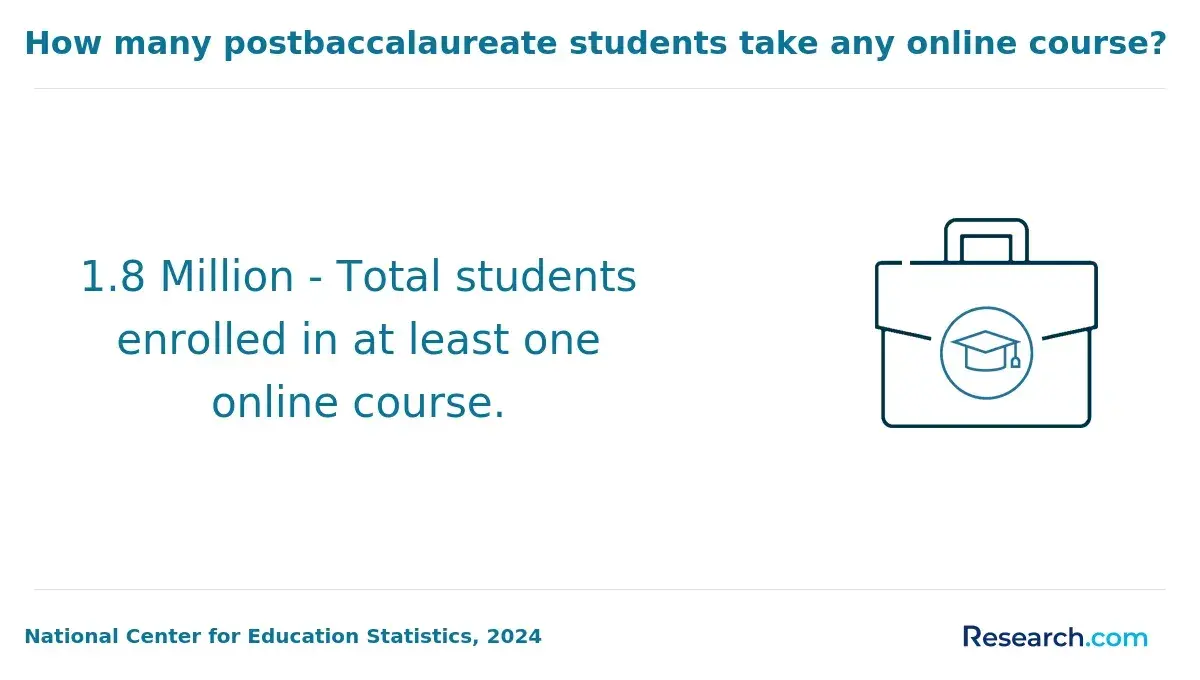
Application fees can make it expensive to compare several online applied psychology master's programs before knowing where admission is realistic. The National Center for Education Statistics reported more than 3 million postbaccalaureate students enrolled in the U.S., underscoring the size of the graduate-school market and the importance of controlling upfront costs.
This guide is for budget-conscious applicants, career changers, military learners, and alumni. It identifies no-fee options, explains waiver routes, and shows how to compare program quality, total cost, and career relevance before applying.
Key Things to Know About Applied Psychology Master's Programs with No Application Fee
- Online psychology master's programs marketed around applied, organizational, behavioral, or workplace psychology may charge $0 to apply, while many traditional universities charge roughly $50-$100 per graduate application.
- No-fee admission does not mean no cost: applicants may still pay for transcripts, credential evaluations, testing when required, tuition, technology, books, and practicum-related expenses.
- Fee-free status is not a measure of selectivity; compare accreditation, curriculum, faculty, licensure alignment, completion support, and total price before choosing where to apply.
How much do application fees typically cost for Applied Psychology master's programs?
Application fees for U.S. applied psychology master's programs commonly fall between $50 and $100, although some institutions charge more and some charge nothing. Because "applied psychology" is often offered under related titles such as psychology, industrial-organizational psychology, organizational psychology, behavioral psychology, or applied behavioral science, applicants should check the fee for the specific graduate application rather than relying on a broad university estimate.
The practical savings can add up quickly. Applying to five programs with an $80 fee would cost $400 before transcript or document expenses. A no-fee program is especially useful when you are still exploring fit, but a fee should not automatically rule out a stronger program with better curriculum alignment, faculty expertise, or career support.
The comparison below shows the typical upfront expenses applicants should budget for. Amounts vary by school and by the applicant's academic history.
| Application-related expense | Typical cost pattern | What applicants should verify |
| Graduate application fee | $0-$100 or more | Whether the program has a permanent no-fee policy or a limited waiver period |
| Official transcripts | Usually charged per sending institution | Whether unofficial transcripts are accepted for initial review |
| International credential evaluation | Separate third-party expense when required | Required evaluator, document format, and translation rules |
| Standardized test score report | Only applies when a test is required or submitted | Whether the program is test-optional or test-free |
| Background check or placement clearance | May apply to practicum-based programs | Whether the program includes a field experience or clinical component |
What does the application fee typically cover for Applied Psychology master's programs?
An application fee generally helps an institution fund application processing, document collection, system administration, and admissions review. It is not tuition, a deposit, or a guarantee that an applicant will receive an individualized faculty review.
At programs that waive the charge, the university may absorb those administrative costs as part of enrollment outreach. Applicants should still read the application instructions carefully, since a waived fee does not usually cover official records, outside credential evaluations, or later enrollment deposits.
For applicants considering a psychology degree alongside healthcare advancement, compare the professional outcome rather than simply the fee. For example, an online DNP serves a distinctly different clinical and leadership pathway than an applied psychology master's degree.
Which online Applied Psychology master's programs have no application fees?
Fully online programs with no application fee are more common at institutions designed for adult, transfer, and working learners than at selective research universities. Degree names and admission charges can change by term, so confirm the policy on the program's official application page before submitting.
The programs below are examples of online graduate psychology options that have publicly promoted no-application-fee enrollment or application processes. Some use broader psychology titles rather than the exact title "applied psychology," so examine concentrations and course descriptions to confirm that the program supports your intended use of psychology in organizations, communities, behavior-change settings, or research.
| Institution | Online graduate option to investigate | Applied-psychology relevance | Fee-check reminder |
| Southern New Hampshire University | MS in Psychology | May include applied areas such as industrial-organizational psychology | Confirm the current graduate application policy for your term |
| Purdue Global | MS in Psychology | Designed for professional application of psychology concepts | Confirm program availability, concentration, and current fee terms |
| Walden University | MS in Psychology | May suit learners seeking applied, workplace, or behavioral perspectives | Verify admission requirements and any document-related costs |
| American Public University System | MA in Psychology | Can fit working adults seeking broad applied psychology knowledge | Confirm current fee-free application status and transfer evaluation rules |
| National University | Graduate psychology options | Relevant for professionals seeking flexible psychology coursework | Verify the exact program title, delivery format, and admissions charge |
A no-fee listing is most useful as a starting point, not a final decision. Contact admissions and ask for written confirmation that the application fee is $0 for your program, degree level, residency category, and intended start date.
Why do some Applied Psychology master's programs forego application fees entirely?
Schools may eliminate graduate application fees to reduce barriers for adult learners, increase the size and diversity of the applicant pool, simplify rolling admissions, and compete for online enrollment. The policy can also reduce friction for applicants who are comparing several programs while working full time or managing family responsibilities.
For institutions, a no-fee policy is a recruitment strategy, not necessarily a signal that admissions standards are lower. Schools still may require a completed application, transcripts, a minimum GPA, résumé, statement of purpose, recommendations, and prerequisite coursework.
Applicants who are weighing several professional routes should keep the academic purpose central. A nursing professional seeking a faster undergraduate completion route, for example, may find that a cheapest fastest RN to BSN online option addresses a different goal than an applied psychology master's program.
Are no-fee Applied Psychology master's programs less competitive than others?
No. A no-application-fee policy alone does not establish that an online applied psychology master's program is easier to enter, less respected, or less rigorous. Selectivity depends on the number and quality of applicants, cohort capacity, academic thresholds, prerequisite expectations, and how closely applicants fit the program's mission.
Some no-fee online programs use rolling admissions and broader access models, which can make the process feel more accessible. Others may still review personal statements, professional experience, undergraduate performance, and readiness for graduate study closely. Conversely, a paid program is not automatically more selective or a better investment.
Use these indicators to assess quality instead of treating the fee as a proxy for competitiveness:
- Institutional accreditation and, where relevant, specialized accreditation or professional alignment
- A curriculum that clearly identifies applied methods, research training, ethics, assessment, and intervention or organizational coursework
- Faculty credentials, availability of advising, and transparent graduation or student-support information
- Clear disclosure of whether the degree leads to licensure, supports a nonclinical career, or requires further education for clinical practice
- Total tuition, required fees, transfer-credit rules, and realistic time-to-completion expectations
A master's in applied psychology usually does not qualify a graduate for independent psychologist licensure. Requirements for licensed psychologist, counselor, behavior analyst, or other regulated roles vary by state and typically require a specific degree, supervised experience, examinations, or doctoral preparation.
Do military members get fee waivers for Applied Psychology master's programs?
Many U.S. colleges offer graduate application-fee waivers to active-duty service members, veterans, reservists, National Guard members, or military spouses, but the policy is institution-specific. A school may waive the fee automatically after military affiliation is indicated, while another may require a request before submission.
Military applicants should ask whether the waiver applies to online graduate programs, whether it is available to spouses and dependents, and whether any documentation must be received before the application is submitted. Waiting until after payment can make reimbursement difficult or impossible.
Prepare the following information before contacting admissions. It helps the school verify eligibility without delaying your application.
- Military status documentation, such as a current military identification record, discharge document, or benefits eligibility record when requested
- The exact program name, intended term, and application account email address
- A written request for confirmation that the fee is waived before payment or submission
- Questions about military tuition rates, transfer-credit review, deployment flexibility, and leave-of-absence policies
Military-affiliated healthcare professionals comparing career paths may also review online medical assistant programs, but these are entry-level clinical training options rather than substitutes for graduate psychology education.
Do alumni receive fee waivers when applying to Applied Psychology master's programs?
Alumni sometimes receive an application-fee waiver when applying to graduate school at the institution where they earned a prior degree. This benefit is more common when a university is encouraging alumni to continue into graduate, certificate, or professional programs, but it should never be assumed.
Ask the graduate admissions office whether the waiver applies to alumni of all campuses and formats, including online undergraduate programs. Also confirm whether it applies only to degree-seeking applicants, whether a code is needed, and whether the waiver can be combined with another promotion.
An alumni waiver can make it reasonable to include a familiar institution in your application list, particularly if you already know its academic calendar and support services. Still, compare the curriculum with outside options. A learner seeking a future counseling research route, for example, should evaluate whether the master's coursework creates a sound foundation for counseling PhD programs rather than choosing solely because an alumni fee is waived.
Can financial need qualify applicants for Applied Psychology master's program fee waivers?
Financial need can qualify an applicant for a graduate application-fee waiver, but eligibility standards differ sharply by institution. Some schools use participation in public-assistance programs, recent unemployment, income information, first-generation status, or participation in recognized pipeline programs as evidence. Others limit need-based waivers to applicants who attended a recruitment event or meet a narrowly defined institutional criterion.
Request the waiver before submitting the application whenever possible. A school may require supporting documentation, a short explanation of need, or a form signed by an advisor. Do not upload sensitive documents unless the institution provides a secure process and specifically asks for them.
These common mistakes can prevent an otherwise eligible applicant from receiving a waiver:
- Paying the fee before asking whether a waiver must be approved in advance
- Assuming a general financial-aid application automatically waives the graduate application fee
- Submitting incomplete income or benefits documentation when the school requests proof
- Missing an event-based waiver deadline or failing to enter a required fee-waiver code
- Applying only to no-fee programs without assessing the long-term tuition and career value of each option
Are fee waivers available for international applicants to Applied Psychology master's programs?
International applicants may be eligible for a fee waiver at some U.S. universities, but availability is less consistent than for domestic applicants. Institutions may offer waivers through recruitment events, graduate-school initiatives, partner universities, or demonstrated financial need; others exclude international applications because of additional document review requirements.
International applicants should not confuse a waived application charge with waived document costs. Transcript translation, credential evaluation, English-language testing when required, visa-related expenses, and financial-certification requirements may still apply. Online enrollment does not automatically eliminate these requirements, particularly if a student may later visit campus, complete a practicum, or change immigration status.
Before starting an application, ask admissions whether the no-fee policy applies to your country of residence and whether the program accepts electronic transcripts from your prior institution. Obtain the answer in writing, because policy wording can differ between the central graduate school and an individual academic department.
What should applicants consider when choosing Applied Psychology master's programs with no application fee?
A no-fee application is worth prioritizing when you need to explore several credible options, have a limited application budget, or are uncertain which applied psychology specialization best supports your goal. It should not outweigh program fit. Paying a reasonable fee can still make sense for a program with distinctive faculty, stronger research or practicum opportunities, better employer relevance, or a curriculum that clearly supports your next credential.
Start by narrowing your list to programs that match the role you want after graduation. Applied psychology can support work in organizational development, human resources, employee experience, behavior-change programs, market research, community services, and research coordination. It is not automatically a clinical or licensure-qualifying degree.
Use this sequence to make a cost-conscious, career-focused choice:
- Define the job function you want and identify whether it requires clinical licensure, a specific certification, research skills, or organizational psychology training.
- Confirm that each program is fully online in practice, including any residency, internship, practicum, or proctored-exam expectations.
- Get written confirmation of the application fee, waiver eligibility, tuition rate, mandatory fees, and whether costs can change during enrollment.
- Compare course titles, faculty expertise, elective options, capstone requirements, and career services against your intended work setting.
- Apply to a balanced group of no-fee and paid programs when a paid option offers a meaningful academic or professional advantage.
The table below highlights the questions that reveal whether a no-fee program is actually the better financial and academic choice.
| Comparison question | Why it matters | Good sign |
| Is the application fee permanently $0 or temporarily waived? | A promotional waiver may expire before a later term | Admissions confirms the policy for your start date in writing |
| What is the total program price, including mandatory fees? | Application savings are small compared with degree-level costs | A transparent tuition and fee schedule is available |
| Does the curriculum match my target role? | Program titles can conceal major differences in training | Required courses build relevant research, analysis, ethics, and applied skills |
| Will the degree meet licensure expectations? | Many applied psychology degrees are non-licensure programs | The school clearly states intended outcomes and limitations |
| What support is available online? | Working learners may need advising, library access, and career help | Support services and response channels are clearly described |
Healthcare workers who want graduate-level leadership or advanced nursing practice should also separate the degree objective from the application fee. A BSN to MSN program is designed for registered nurses moving into advanced nursing education, whereas applied psychology focuses on psychological theory and its use in professional settings.
Other Things You Should Know About Applied Psychology
Often, yes. Many online psychology master's programs have moved to test-optional or test-free admissions, but requirements vary by institution and concentration. Check whether a test score is optional, required below a stated GPA, or useful for strengthening an application.
Many programs are designed for about 18 to 24 months of full-time study, although part-time pacing, transfer credits, course availability, and capstone requirements can extend the timeline. Confirm the published course sequence rather than relying only on an estimated completion time.
Usually not by itself. Psychologist licensure generally requires a doctoral degree, supervised training, examinations, and state-specific approval. Review your state licensing board's requirements before enrolling if independent clinical practice is your goal.
Applying to additional no-fee programs can be sensible if each one fits your academic and career goals. Avoid applying indiscriminately; each application still requires time, transcripts, personal statements, and careful review of tuition, outcomes, and licensure limitations.
References
- Masters in Psychology | Online Masters in Psychology | Direct Assessment | University of Phoenix https://www.phoenix.edu/online-psychology-degrees/psych-masters-competency-based-degree.html
- Shippensburg University - Applied Psychology, MS https://www.ship.edu/programs/applied-psychology-ms/
- Explore Online Masters in Psychology Programs No GRE https://teach.com/online-ed/psychology-degrees/online-masters-in-psychology/
- 2025 Best Master's in Applied Psychology Programs - Online, Low Cost, & Quick Options https://www.counselingpsychology.org/psychology/degrees/applied-psychology/masters/
- Best Online Applied Psychology Master's Degrees Updated for 2026 https://www.psychologydegrees.org/programs/online/applied-psychology-masters
- Best Online Master's & Doctoral Programs In Psychology 2025 https://www.psychology.org/rankings/best-online-graduate-degree-programs/


