2027 Online Applied Psychology Master's Programs With No Letters of Recommendation

Co-Founder and Chief Data Scientist
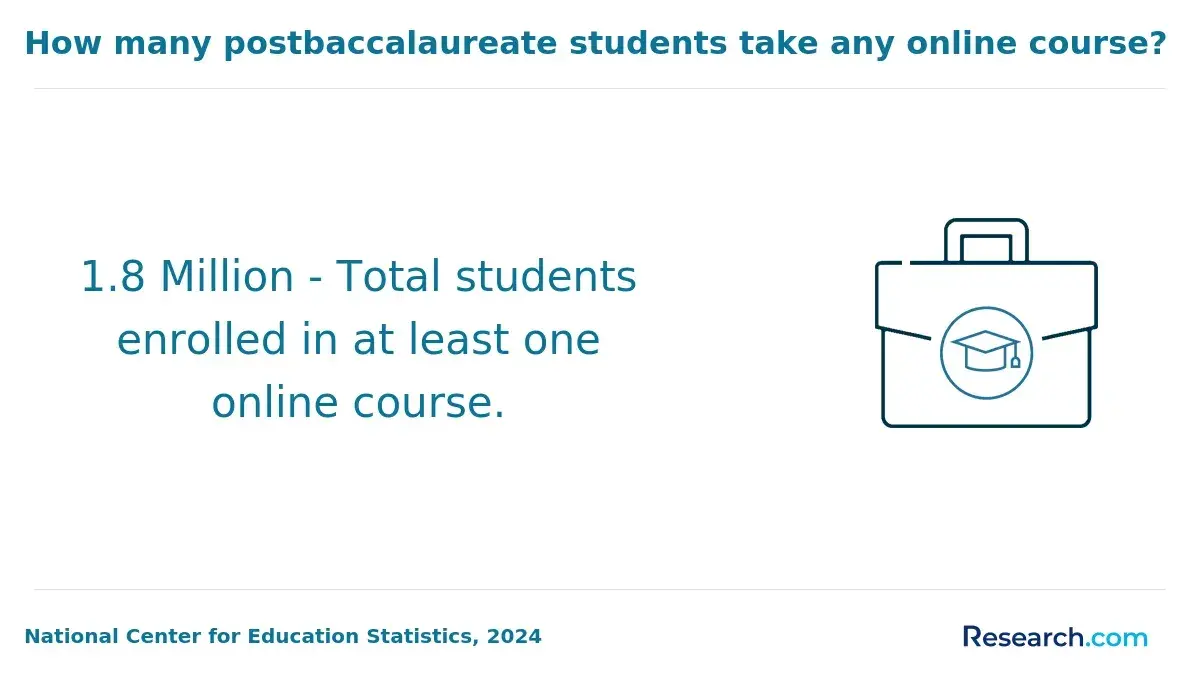
Applicants who cannot ask former professors or supervisors for references may still have viable online applied psychology master's options. The National Center for Education Statistics reported roughly 3.2 million U.S. students enrolled in postbaccalaureate programs in fall 2022, reflecting a large market of graduate applicants with varied academic and work histories. This guide is for career changers, working adults, and recent graduates who need to identify no-letter programs, assess quality, prepare substitute materials, and decide when pursuing a recommendation is still worthwhile.
Key Things to Know About Applied Psychology Master's Programs with No Letters of Recommendation
- Some online applied psychology and closely related psychology master's programs waive recommendation letters, but applicants must verify the requirement for their exact degree, concentration, and admission term.
- A no-letter policy does not mean automatic or lower-standard admission: schools commonly assess GPA, prerequisite coursework, a statement of purpose, résumé, and relevant professional experience instead.
- Apply without letters when the program explicitly does not require them; seek strong references for selective, research-focused, clinical, doctoral-preparation, or scholarship applications where an outside evaluation can add meaningful evidence.
What purpose do letters of recommendation serve in Applied Psychology admissions?
Letters of recommendation traditionally give an admissions committee third-party evidence that a candidate can succeed in graduate-level work. In applied psychology, a strong letter can describe qualities that grades alone do not show: ethical judgment, writing and research ability, interpersonal skill, reliability, cultural awareness, and readiness to work with people or organizational data.
Admissions teams generally use letters to resolve uncertainty rather than to repeat a résumé. A supervisor may confirm how an applicant applies behavioral principles at work, while an instructor may explain the rigor of a research project or statistics course.
Letters matter most when an applicant has a borderline GPA, limited quantitative preparation, an unusual academic record, or ambitions that require faculty mentorship.
The comparison below shows what a useful recommender can validate and why alternative application materials need to be equally specific.
| Admission quality assessed | What a recommendation can show | Best non-letter evidence |
| Academic readiness | Performance in research, writing, or statistics coursework | Transcript, academic writing sample, relevant coursework explanation |
| Professional maturity | Dependability, collaboration, and response to feedback | Detailed résumé with outcomes and a focused statement of purpose |
| Applied skills | Ethical and effective work with clients, teams, or communities | Portfolio, project description, training certificates, work examples where permitted |
| Program fit | Why the applicant is prepared for a particular learning goal | Program-specific essay connecting prior experience to curriculum and career plans |
Does missing a letter of recommendation hurt your admission odds for Applied Psychology programs?
Missing a letter does not hurt admission odds when a program's published policy says recommendations are not required. In that situation, the committee has designed its review process around other evidence, and submitting an unrequested letter may not be possible or useful.
It can matter indirectly when the rest of the file leaves unanswered questions. A low cumulative GPA, a long gap since college, weak prerequisite grades, or a career change is not necessarily disqualifying, but each requires a clear, documented explanation.
A letter can help in a required-letter program because it supplies independent context; in a no-letter program, your statement, résumé, and academic record must do that work.
Do not assume that a school's overall acceptance rate predicts your chances. Many institutions do not publish acceptance rates for individual online applied psychology master's programs, and institution-wide figures can combine undergraduate, doctoral, and other graduate applicants.
Ask admissions whether it can share recent cohort size, typical admitted-student profiles, prerequisite expectations, and whether applications are reviewed holistically.
Applying without a letter makes the most sense when your record already demonstrates readiness. If you have a weak but available recommender, no recommender is often preferable at a program that does not request one; a vague or lukewarm letter can introduce doubt rather than strengthen the file.
Are there Applied Psychology graduate programs that don't require letters of recommendation?
Schools may offer online master's degrees titled applied psychology, industrial-organizational psychology, organizational psychology, positive psychology, psychology, or behavioral science without requiring recommendation letters. Requirements can change by term, degree track, and applicant type, so a search result or an old admissions blog is not enough confirmation.
Requirement-flexible admissions are particularly relevant to professionals whose strongest preparation comes from work rather than recent faculty relationships. They can also help applicants exploring health-related behavior roles; however, an applied psychology master's is not a substitute for clinical licensure, advanced nursing preparation, or a practice doctorate such as an online DNP.
Before paying an application fee, use the school's current graduate catalog and application portal to verify these points:
- The exact degree title and concentration are offered online in your state.
- "No recommendations required" applies to standard admission rather than only to a conditional, expedited, or employer-partnership pathway.
- The school identifies institutional accreditation and clearly explains whether the degree supports any licensure-related goal.
- The curriculum includes the methods, ethics, and specialization courses needed for your intended career.
- Total tuition, mandatory fees, transfer-credit rules, and any residency or practicum requirements are disclosed in writing.
A no-letter policy is an admissions feature, not a quality signal by itself. Treat unclear accreditation claims, pressure to enroll immediately, vague faculty information, and unrealistic career promises as red flags regardless of whether references are required.
What are some online Applied Psychology master's programs that don't require letters of recommendation?
Online programs with no recommendation requirement are most often found by checking each institution's current admissions page for related degree titles rather than relying on a single "applied psychology" label. Because schools revise application requirements, applicants should confirm every item directly with admissions before treating a program as a no-letter option.
The table provides a practical way to compare the types of online programs that may align with applied psychology career goals. It does not certify a particular school's current policy; the final authority is the program's official application checklist.
| Online master's type | Common career focus | What to verify beyond references | Best fit |
| Applied psychology | Behavior change, program evaluation, community or workplace applications | Research-methods requirements, capstone format, faculty expertise | Applicants seeking broad application of psychological science |
| Industrial-organizational psychology | Workplace assessment, talent development, organizational change | Statistics preparation, consulting projects, internship options | HR, people analytics, training, and organizational development professionals |
| Organizational psychology | Leadership, employee behavior, team effectiveness | Whether the curriculum is psychology-based or primarily business-focused | Working professionals aiming for leadership or people-operations roles |
| General psychology with applied electives | Flexible behavioral-science knowledge | Available specialization, research experience, doctoral-preparation value | Applicants who need a broader degree structure |
For applicants considering an allied healthcare pathway instead, compare the credential to the job target. Entry-level clinical support preparation is different from a psychology master's; prospective learners can also review online medical assistant programs when their goal is direct medical assisting rather than behavioral research, workplace psychology, or program evaluation.
When contacting admissions, ask whether recommendations are required, optional, or waived; whether they are requested after initial review; and whether a résumé can substitute for professional references. Save the response with the date and representative's name, since portal requirements control at submission time.
Why are more Applied Psychology programs moving away from requiring recommendation letters?
More graduate programs are reconsidering recommendation requirements because letters can be difficult for working adults, career changers, caregivers, and applicants who completed college years ago to obtain. Online education also serves students who may have built substantial professional experience without maintaining close relationships with faculty members.
Programs can assess readiness through evidence they collect directly: transcripts, prerequisite grades, structured essays, employment history, writing samples, and interviews where used. This approach can make the process more accessible while still allowing a committee to evaluate whether an applicant understands the demands of graduate study.
Recommendation letters have limitations as an assessment tool. Their quality varies widely, applicants may have unequal access to senior professionals or faculty mentors, and a generic letter often adds little information. Schools that waive them are not necessarily reducing expectations; many are shifting emphasis to standardized, verifiable portions of the application.
Applicants should also recognize the trade-off. A flexible application process can increase access, but it may give you fewer opportunities to provide outside validation of leadership, research potential, or interpersonal strengths. For research-intensive programs, a strong letter may remain more informative than a résumé alone.
What documents do Applied Psychology master's programs accept in place of letters of recommendation?
Programs that do not require recommendations commonly ask applicants to demonstrate preparation through documents they can evaluate consistently. The strongest replacements are concrete, relevant, and tailored to the program rather than recycled from a general job application.
The following materials can help an admissions committee see the evidence a recommender might otherwise describe.
| Alternative material | What it can demonstrate | How to make it stronger |
| Statement of purpose | Career direction, program fit, reflection, and writing ability | Name the skills you need and connect them to specific coursework or outcomes |
| Résumé or curriculum vitae | Work history, progression, leadership, and relevant responsibilities | Use accomplishment-focused bullets with scope, methods, and outcomes |
| Official transcript | Academic performance and prerequisite completion | Briefly address a meaningful trend, gap, or isolated low grade when allowed |
| Writing sample or portfolio | Research, analysis, communication, and applied problem-solving | Submit only requested work and remove confidential employer or client information |
| Professional certificate or training record | Recent skill development and subject-matter commitment | Explain how the training relates to graduate study rather than listing credentials without context |
Healthcare professionals moving toward behavioral-health leadership should distinguish education pathways carefully. A nursing bridge credential, such as a BSN to MSN program, serves different academic and professional purposes from an applied psychology master's, even when both address patient behavior or organizational outcomes.
Never upload an employer performance review, client record, or proprietary project merely to compensate for a missing letter. Privacy obligations and application instructions come first. If a work sample is allowed, anonymize it and explain your individual contribution.
Can you get into reputable Applied Psychology programs without a recommendation?
Reputable programs can admit qualified applicants without recommendations when their stated process does not require them. Reputation should be evaluated through institutional accreditation, transparent costs, qualified faculty, curriculum rigor, student-support services, completion policies, and career relevance - not through the presence or absence of one application item.
For a career goal involving independent clinical practice, examine the degree more closely. An applied psychology master's often develops behavioral-science, research, organizational, or community skills, but it may not meet state educational requirements for psychologist, counselor, social worker, or marriage and family therapist licensure.
Applicants whose long-term aim is counselor education, supervision, or research may need to compare the admissions and training expectations of counseling PhD programs as a separate pathway.
A reputable no-letter program should answer straightforward questions about outcomes and requirements. Ask whether the program is designed for licensure, what graduates commonly do, whether practica are required, how online students access academic support, and what total cost applies to your expected completion timeline. If staff cannot clearly answer basic questions or make claims they cannot document, pause before applying.
How can you strengthen your Applied Psychology master's application without recommendation letters?
Without recommendations, build an application that makes your readiness easy to verify. The objective is not to apologize for a missing letter; it is to present a coherent record showing that you can handle graduate reading, writing, analysis, and professional responsibility.
Use these steps to strengthen the parts of your file that admissions reviewers will actually see:
- Read the exact admissions checklist and prioritize required items before adding optional materials.
- Tailor the statement of purpose to the program's applied focus, explaining a specific problem population, workplace, or behavioral question you want to address.
- Translate job duties into evidence by describing projects, responsibilities, tools used, collaboration, and measurable results where appropriate.
- Address material academic concerns briefly and factually, then show recent evidence of readiness such as strong later coursework or relevant training.
- Demonstrate quantitative preparation if the curriculum includes research methods, statistics, assessment, or program evaluation.
- Proofread every document and ask a trusted reader to check whether your career goal and program fit are clear.
Common mistakes include submitting a generic essay, copying a job-description résumé, overlooking prerequisite courses, and choosing a program solely because it skips letters. A polished, specific application to a well-matched program is more valuable than a rushed application to every school with a flexible policy.
Where can you get recommendation letters if your target Applied Psychology program requires it?
If your target program requires references, choose people who have directly observed skills relevant to graduate study. A title alone does not make someone an effective recommender. A current or former supervisor, professor, research adviser, internship coordinator, volunteer manager, or professional mentor may be appropriate depending on what the program requests.
The table can help you match the recommender to the evidence a psychology admissions committee needs.
| Potential recommender | Best able to discuss | Use with caution when |
| Professor or academic adviser | Academic writing, research, analytical ability, and classroom engagement | The instructor barely knows your work or taught you many years ago |
| Current or former supervisor | Professional judgment, leadership, reliability, and applied interpersonal skills | The employer's policy prohibits references beyond employment verification |
| Research or internship supervisor | Data collection, ethics, initiative, and project contribution | The experience was too brief for informed observation |
| Volunteer or community leader | Service, communication, teamwork, and commitment to a population | The role has little connection to the skills the program values |
Ask early and make the request easy to answer. Provide your résumé, unofficial transcript, program description, deadline, submission instructions, and two or three reminders of work the person observed. Ask whether they can write a strong recommendation; if they hesitate, thank them and ask someone else.
Professionals weighing a transition within nursing may also find that supervisors can speak to clinical leadership and academic readiness for the cheapest fastest RN to BSN online options. That reference may be relevant to nursing education, but it should not be repurposed unchanged for applied psychology admissions.
Can you still apply to Applied Psychology programs if you're unable to get a recommendation letter?
You can still apply if you cannot obtain a recommendation, but the best route depends on the policy. If letters are explicitly optional or not required, submit a complete application without them and focus on the materials requested. If letters are required, do not leave the field blank without contacting admissions; an incomplete application may not be reviewed.
Take the following approach before the deadline:
- Contact admissions with a concise explanation of your situation and ask whether a waiver, alternate evaluator, employer verification, or additional written statement is permitted.
- Request written confirmation of any exception and follow the instructions exactly.
- Submit stronger permitted evidence, such as a detailed résumé, recent transcript, prerequisite-course work, or writing sample, but do not assume it automatically replaces a required letter.
- Apply to a balanced group of programs that includes options with published no-letter policies.
- Do not fabricate a reference, ask someone who does not know your work to endorse you, or submit a letter under another person's name.
A waiver request is most reasonable when there is a genuine barrier, such as an employer policy or a long lapse since undergraduate study, and your file otherwise provides clear evidence of readiness.
It is less likely to succeed when made at the last minute or when the program identifies recommendations as central to its selection process. If the answer is no, applying to a transparent no-letter program may be more practical than delaying your education indefinitely.
Other Things You Should Know About Applied Psychology
Yes, many 2027 online applied psychology master’s programs require a practicum or internship, often 100 to 600 supervised hours completed at an approved site. Some programs place students locally, while others require students to secure their own placement before enrollment or by the second term.
Some may not, but recommendation and test policies are separate. Check the current application checklist for GRE requirements, GPA minimums, prerequisites, essays, interviews, and application deadlines.
Program length varies by credit requirements, course schedule, transfer credits, and whether students enroll full time or part time. Review the published curriculum and ask for a realistic completion plan based on your planned course load.
Usually not by itself. Psychologist licensure generally requires a doctoral degree and state-specific supervised training and examination requirements. Confirm requirements with the licensing board in the state where you intend to practice before enrolling.
References
- Compare Online Masters in Psychology https://mastersinpsychologyguide.com/articles/online-psychology-masters-without-gre-requirement/
- 2025's Best Online Master's in Psychology: No GRE Required https://www.onlinemastersdegrees.org/best-programs/psychology/no-gre/
- Preparing for Graduate School | Psychology | Bemidji State University https://www.bemidjistate.edu/academics/psychology/resources/graduate-school/
- Explore Online Masters in Psychology Programs No GRE https://teach.com/online-ed/psychology-degrees/online-masters-in-psychology/
- Financial Aid For Psychology Students | Psychology.org https://www.psychology.org/resources/financial-aid/
- How Much Does a Master's in Psychology Degree Cost? - Psych Degree Starter https://psychdegreestarter.com/resources/how-much-does-masters-in-psychology-cost/
- Compiled Medical School Letter of Recommendation Requirements (2018-2019) | Joel Harris https://joel.vg/medical-school-letter-of-recommendation-requirements-2018-2019/