2027 Observation Unit Nurse Orientation: Training, Competency Reviews, and Support to Compare
Audited and Verified:
Our Editorial and Data Verification Process
Research.com uses government datasets, official education statistics and primary institutional information to support its career and degree guides. Our review process checks factual accuracy, occupational definitions, source dates and the requirements associated with the credentials discussed.
How This Article Was Fact-Checked
Our editorial team verifies salary estimates, employment projections, education requirements and program information against original data providers and official organizations. Salary figures are checked against the relevant occupational definitions and reporting periods. Information about licensure, accreditation and required in-person training is reviewed separately.
Fact-checked and verified on:

Co-Founder and Chief Data Scientist
An observation unit can feel familiar to a nurse with medical-surgical or emergency experience, but its short stays, frequent reassessments, and rapid discharge decisions create a distinct learning curve. For a new graduate or RN changing units, the important question is not simply how long orientation lasts; it is whether training, observed competency, and ongoing support match the patients and assignments you will receive.
This guide explains what a strong observation unit orientation covers, how to compare job offers, and which education requirements matter before - and after - you start.
Key Things You Should Know
- There is no universal observation unit orientation length: compare supervised shifts, patient exposure, competency sign-offs, and the support available after sign-off.
- Orientation should test more than task completion, including recognition of deterioration, time-sensitive reassessment, handoffs, discharge readiness, and escalation within unit policy.
- An active RN license and employer-required preparation matter more for this role than an advanced degree; ADN- and BSN-prepared RNs may both be eligible, depending on the employer.
What Is Observation Unit Nurse Orientation and Why Does It Matter?
Observation unit nurse orientation is an employer-directed transition into caring for patients receiving short-term evaluation, treatment, and reassessment. The unit may be called a clinical decision unit, short-stay unit, or emergency department observation unit. Its patients, admission criteria, monitoring capabilities, and nurse responsibilities vary by hospital.
Compared with a longer inpatient stay, an observation encounter may compress admission, testing, treatment, education, and discharge or transfer into a short window. Orientation therefore needs to establish how the unit recognizes a patient who no longer fits its level of care - not merely how quickly a nurse completes its workflow. Ask whether the unit admits patients with telemetry, serial testing, or other monitoring needs, and what resources are available when a patient deteriorates.
Employer orientation is separate from academic coursework. For an already-licensed RN considering BSN completion programs using workplace-based projects, a project about care transitions may support learning, but it does not replace the employer's observed bedside competency review.
What Training Does an Observation Unit Nurse Complete?
Training generally combines policies and equipment instruction with precepted shifts involving actual unit patients. The exact content depends on the unit's permitted treatments and escalation pathways. A useful program gives a new hire opportunities to practice both routine throughput and less predictable changes in condition under supervision.
Ask the educator which patient types the orientation will cover and how the nurse will learn workflows for admission, medication administration, monitoring, handoff, transfer, and discharge. Simulation can help rehearse an uncommon emergency, but it should be identified as simulation rather than counted as observed care of that patient type.
A hospital preceptor supervises this workplace transition; that arrangement is not interchangeable with a graduate program's approved clinical placement. For example, guide to family NP clinical placement support addresses a different kind of supervised learning, with program and certification requirements that ordinary observation-unit employment does not satisfy automatically.
Which Competencies Are Reviewed During Observation Nurse Orientation?
A competency review should show how the RN performs in the unit's workflow, not just whether a checklist was initialed. The examples below help applicants distinguish an observed assessment from a classroom presentation or a self-reported skill.
| Competency area | Meaningful evidence during orientation |
| Assessment and escalation | Recognizes and communicates a change in condition, then follows the unit's response pathway under supervision. |
| Prioritization | Reassesses multiple patients and adjusts work when a new admission, test result, or transfer changes priorities. |
| Medication and monitoring safety | Uses required checks, equipment, documentation, and monitoring procedures for therapies allowed on the unit. |
| Transitions of care | Provides an accurate handoff and completes appropriate patient education and documentation for discharge or transfer. |
Competencies should match the assignment an RN will receive after orientation. A nurse who has not encountered a permitted but uncommon patient type may need targeted follow-up rather than an assumed sign-off. Ask who can reassess a skill and how a nurse requests additional supervised practice.
An advanced degree has its own admission and academic standards; comparing DNP eligibility requirements is not a substitute for verifying these employer-specific clinical competencies.
Observation unit staff nurses are typically RNs. An applicant must meet the employer's hiring requirements and hold an RN license that authorizes practice in the relevant state. Completing an approved prelicensure nursing program, becoming eligible for the NCLEX-RN, passing the examination, and obtaining a license are distinct steps. An employer may prefer a BSN, accept an ADN or diploma, or require prior acute-care experience; check the actual posting rather than assuming one national rule.
A new graduate should also distinguish eligibility to apply from readiness for a particular assignment. Some units hire into structured new-graduate transitions; others expect nurses who can draw on prior emergency or inpatient experience. An RN-to-BSN or graduate program may serve a longer-term academic goal, but neither substitutes for initial RN licensure or unit orientation. An ADN-prepared RN exploring later advancement can review master's nursing study after an ADN without treating it as a prerequisite for observation-unit bedside practice.
A well-defined orientation has a progression rather than just an end date. It commonly begins with hospital and unit policies, continues through precepted patient assignments, and ends with a documented review of readiness for the planned workload. The preceptor, educator, and manager may have different roles in that decision; ask who makes the final sign-off.
Compare the planned assignment with the supported assignment. Find out whether the nurse begins with a reduced patient load, how complexity increases, whether preceptors remain consistent, and what happens if expected case types do not appear during scheduled shifts. Also ask what support remains after orientation: an accessible charge nurse, an educator, a designated mentor, or a formal check-in can matter when the first independent assignment differs from training.
Not every career-development program is an onboarding program. leadership-focused online DNP program comparisons concern graduate study, not the supervised progression and bedside sign-offs needed for a new observation-unit assignment.
Prelicensure nursing programs provide foundations in assessment, pharmacology, clinical judgment, communication, and supervised patient care. Whether lectures are online or on campus, a program preparing students for initial RN licensure still has required hands-on and supervised learning components. Neither delivery format makes a graduate independently competent in a particular observation unit.
For a student choosing a program, the useful comparison is access to approved clinical experiences, simulation, feedback, and support - not whether a school advertises "observation nursing" as a career outcome. For an existing RN, online postlicensure study may build broader knowledge while the employer supplies unit-specific training. cost-focused MSN pathways for bachelor's-prepared nurses address a later educational decision, rather than the immediate need for a safe transition onto this unit.
There is no separate school admission route for observation-unit nursing. A prospective nurse first qualifies for a prelicensure RN program and, after graduation and licensure, applies to employers offering suitable onboarding. ADN and BSN programs set their own prerequisites, science and laboratory rules, grade thresholds, and clinical-placement conditions; admission to a college does not necessarily mean admission to its nursing sequence.
If you are already an RN, focus instead on the unit's hiring criteria: recent acute-care experience, familiarity with its patient population, and willingness to complete the stated transition program. Graduate admissions are a different decision. For example, accelerated DNP admissions and requirements do not establish eligibility for an observation-unit position or shorten its orientation.
The time and expense depend on the route to RN licensure, prior coursework, school, and local clinical availability. An ADN generally involves a shorter degree route than a traditional BSN, while an accelerated BSN may suit someone who already holds a non-nursing bachelor's degree and meets its prerequisites. Program length on a website may exclude prerequisites, waiting periods, or time needed for licensure.
Compare the full pre-employment budget: tuition and fees, books and equipment, required travel for labs or clinicals, health and background requirements, examination and licensing charges, and earnings forgone while studying. Ask employers whether orientation is paid and whether scheduling or reimbursement terms affect your finances. There is no reason to budget for an NP degree merely to enter this staff RN role; planning the cost of nurse practitioner education becomes relevant only if that separate career goal arises.
An observation unit RN provides assessment, treatment within orders and policy, reassessment, education, documentation, and coordination of discharge or transfer. Depending on the hospital, experienced nurses may later precept colleagues or take charge responsibilities after additional preparation. A short-stay role can offer frequent transitions of care, but it can also involve rapid turnover and competing priorities; ask about staffing, patient mix, shift patterns, and escalation coverage before accepting an offer.
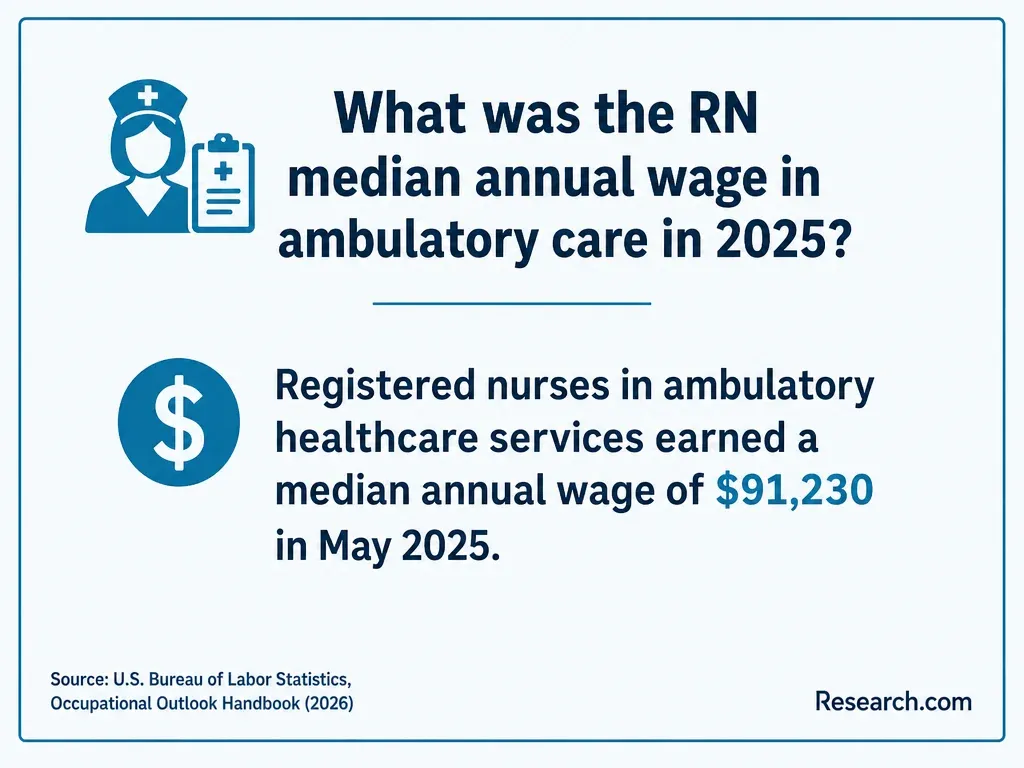
The U.S. Bureau of Labor Statistics reports wages and employment projections for registered nurses, not observation-unit nurses as a separate occupation. An RN-wide median is therefore useful background, not a predicted offer for this unit. Compare actual offers by base pay, shift differentials, benefits, local costs, and the orientation support provided; request the employer's current pay range rather than inferring one from a degree title.
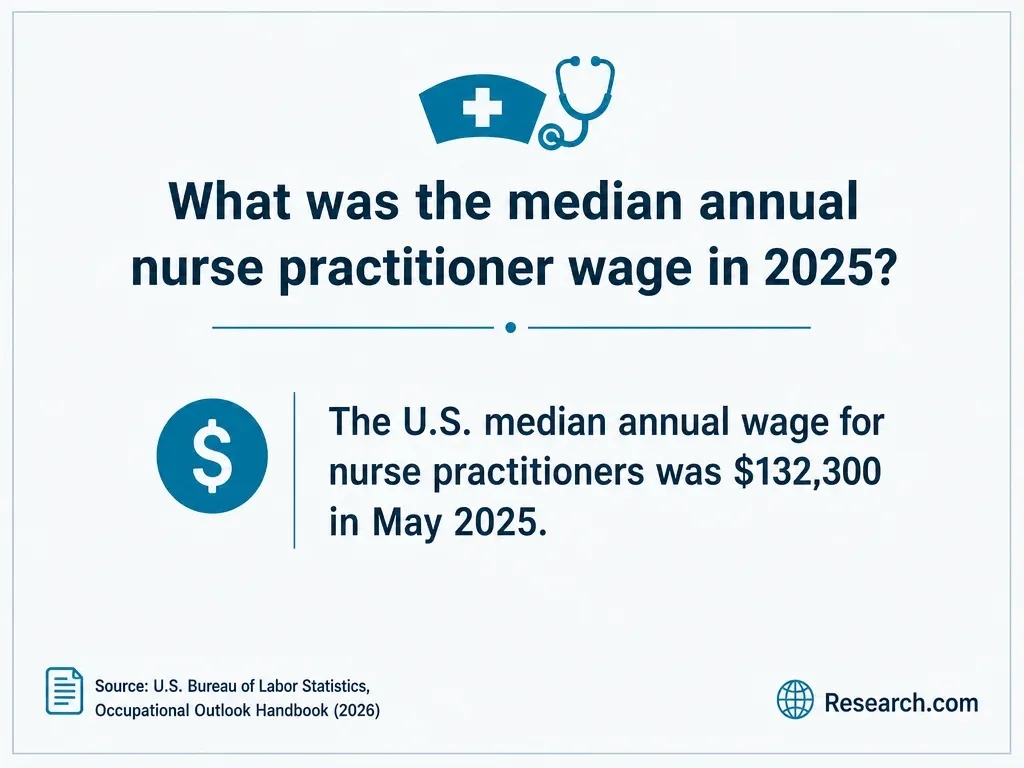
Moving into advanced practice is a separate, regulated career transition. shorter psychiatric-mental health NP certificates are not an observation-unit promotion route unless the nurse independently meets that program's entry requirements and intends to pursue the specified advanced practice role.
How Should Students Choose an Accredited Nursing Program for Observation Practice?
Start with a program that actually prepares you for the credential you need. Confirm its institutional accreditation, applicable nursing program accreditation, state board approval or recognition for initial licensure, and eligibility for the state where you intend to seek licensure. These are different checks; none establishes that a particular hospital will hire you or waive orientation.
Then ask where supervised clinical experiences occur, who arranges placements, how performance is evaluated, and whether graduates receive help preparing for entry-level RN applications. Request published NCLEX results with their reporting year and cohort, and consider completion and total cost alongside them. If you are already licensed, compare the employer's orientation plan directly; another degree may be less useful than a unit with stronger preceptorship and staffing support.
Keep unrelated educational goals separate when comparing prices. planning the cost of PMHNP education concerns advanced practice preparation, not the cost or accreditation checks for an entry-level observation-unit RN pathway.
Other Things You Should Know About Nursing
Ask the hiring manager whether a permitted shadow shift is available. It can clarify patient flow and team communication, but it does not count as orientation or competency validation.
Raise specific gaps with the preceptor and educator before sign-off. Ask for documented goals, appropriate supervised assignments, and a reassessment date rather than assuming an extension is automatic.
No. Staffing policies and any applicable legal requirements vary by jurisdiction and facility. Ask how the hospital adjusts assignments for patient acuity, turnover, and monitoring needs.
Yes, if the employer requests them. Prior training can help tailor your learning plan, but the employer decides which competencies must be demonstrated again under its policies.
- The impact of simulation-based training in medical education | nih.gov https://pmc.ncbi.nlm.nih.gov/articles/PMC11224887/
- Standards & Guidelines | azbn.gov https://azbn.gov/standards-guidelines
- Recognising and Responding to Acute Deterioration Standard | safetyandquality.gov.au https://www.safetyandquality.gov.au/national-standards/nsqhs-standards/recognising-and-responding-acute-deterioration-standard
- Discharge Planning and Transitions of Care | PSNet https://psnet.ahrq.gov/primer/discharge-planning-and-transitions-care
- Mentorship course for nurse mentors - IRIS https://iris.who.int/server/api/core/bitstreams/e968de87-1f26-470e-9f74-82f04e4fba20/content
- Observations Part 1: Enhancing Healthcare Practices | rhrco.org https://rhrco.org/observations-part-1-enhancing-healthcare-practices/
- How to determine appropriate patient status and navigate observation-level care | HFMA https://www.hfma.org/finance-and-business-strategy/how-to-determine-appropriate-patient-status-and-navigate-observation-level-care/
- Pros and Cons of Clinical Observation Units | The Hospitalist https://www.the-hospitalist.org/hospitalist/article/125555/pros-and-cons-clinical-observation-units/