2027 Nursing Competency Checklists vs Performance Reviews: How Employers Assess Practice
Audited and Verified:
Our Editorial and Data Verification Process
Research.com uses government datasets, official education statistics and primary institutional information to support its career and degree guides. Our review process checks factual accuracy, occupational definitions, source dates and the requirements associated with the credentials discussed.
How This Article Was Fact-Checked
Our editorial team verifies salary estimates, employment projections, education requirements and program information against original data providers and official organizations. Salary figures are checked against the relevant occupational definitions and reporting periods. Information about licensure, accreditation and required in-person training is reviewed separately.
Fact-checked and verified on:

Co-Founder and Chief Data Scientist
A new nurse can receive a favorable performance review and still need supervised practice with a particular procedure. Conversely, completing a skills checklist does not settle questions about communication, reliability, or growth over time. For nursing students, new graduates, and RNs changing units, that distinction affects orientation, feedback, and decisions about further training.
This guide explains what each assessment measures, how employers gather evidence, and what to ask before accepting a role or pursuing additional education.
Key Things You Should Know
- A competency checklist records evidence that a nurse can perform a defined task or apply a defined judgment in the required setting; a performance review assesses broader work over an evaluation period.
- Employers commonly draw on three kinds of competency evidence—direct observation, simulation, and review of work such as documentation—but the acceptable method depends on the skill and employer policy.
- Graduation and licensure establish important qualifications, not automatic clearance for every unit-specific duty. Ask how orientation, supervised practice, reassessment, and performance reviews fit together.
How do nursing competency checklists differ from performance reviews?
A competency checklist identifies a specific expectation, the evidence used to assess it, the assessor, and the outcome. A performance review evaluates a nurse's work across a period, often considering patient care, teamwork, accountability, and agreed goals. Employers may use checklist results in a review, but the documents answer different questions.
The comparison below helps distinguish a task-specific sign-off from a broader employment evaluation:
| Feature | Competency checklist | Performance review |
| Main question | Has this nurse demonstrated the specified competency to the required standard? | How has this nurse performed in the role over the review period? |
| Typical evidence | Observed practice, simulation, verbal explanation, or work-product review, as appropriate | Manager observations, examples of work, goals, feedback, and relevant competency records |
| Timing | Often during orientation and when duties, equipment, or practice expectations change | At employer-defined intervals and sometimes during a probationary period |
| Likely next step | Sign-off, supervised practice, remediation, or reassessment | Development goals, recognition, coaching, or an employment decision under policy |
Neither replaces a license nor determines the legal scope of practice. Nurses comparing entry-level nursing degree comparisons should also remember that completing a qualifying program is separate from demonstrating competence in a particular job.
What competencies do employers evaluate in newly licensed nurses?
Employers generally expect a newly licensed RN to practice within their license while developing reliable unit-specific judgment under appropriate support. Assessments often focus on recognizing changes in a patient's condition, prioritizing care, communicating concerns, administering medications safely, preventing infection, documenting accurately, and knowing when to seek help. The precise expectations depend on the unit, patient population, and assigned duties.
For example, an assessor might ask a new nurse to explain an escalation decision, observe a handoff, and check whether the related documentation is timely and complete. This tests more than recall: it connects knowledge to safe practice. A new graduate should ask which competencies require direct observation, who can sign them off, and what happens if patient exposure is insufficient during orientation.
Academic selection is a different evaluation. Comparing nursing application competitiveness may help a prospective student plan admission, but an admissions result cannot predict an employer's competency determination.
How do nursing employers use competency checklists in practice?
Many employers map checklist items to a role, unit, or piece of equipment. A preceptor, educator, or other authorized assessor records the method used, the date, and whether the nurse met the stated standard. A signature should indicate the required evidence was obtained—not merely that the nurse attended training or watched a procedure.
Before accepting a sign-off, clarify the employer's process. These questions reveal whether the checklist supports a safe transition rather than serving as paperwork alone:
- What does "competent" mean for this item, and must it be demonstrated with a patient, or can an approved simulation be used?
- Who is authorized to assess it, and what should happen when the opportunity does not arise during orientation?
- Which duties remain supervised until sign-off, and how are gaps addressed and reassessed?
Checklist completion can show readiness for specified assignments; it does not establish permanent competence in every setting. The same distinction matters to experienced nurses considering short online DNP completion pathways: an advanced degree does not replace an employer's assessment of duties in a new role.
A performance review usually brings together the role description, employer standards, examples from the review period, and progress on prior goals. A manager may gather input from the nurse, colleagues, educators, or other approved sources. The nurse and manager then discuss strengths, concerns, and development goals, documenting the outcome under employer policy.
Good documentation distinguishes an observed event from an interpretation. For instance, a review is more useful when it identifies the communication behavior, its context, and the expected improvement than when it simply says "needs better teamwork." Nurses should correct factual errors through the employer's process, keep their own permitted records of goals and completed training, and avoid retaining patient information or confidential employer material.
A review may inform promotion or education plans, but it cannot establish eligibility for graduate study or a different license. Nurses exploring lower-cost online BSN-to-MSN degree routes should check program admission requirements separately from workplace ratings.
Orientation typically covers skills needed for the assigned setting: patient assessment, medication and treatment workflows, EHR documentation, handoffs, escalation, emergency response responsibilities, and equipment use. A specialty unit may add competencies that a general nursing program could not reasonably validate for every graduate. Employers may assess some skills through observed care and others through approved simulation or records review.
The critical question is not how quickly a checklist can be completed but whether the nurse has had suitable instruction, practice, feedback, and assessment for the assignment. If an item remains incomplete, ask the preceptor or educator what work is permitted meanwhile and how another assessment opportunity will be arranged. Orientation completion and readiness for every possible patient assignment are not necessarily the same thing.
An aspirant considering ADN-prepared RN graduate study options still needs the onboarding required for a new unit; an academic bridge does not substitute for local workflows or specialty validation.
Prelicensure programs build foundations through coursework, skills labs, simulation, and supervised clinical learning. Faculty evaluate whether students meet program outcomes; clinical instructors assess performance within approved learning experiences. Students may practice assessment, medication safety, clinical judgment, documentation, and communication before taking on the responsibilities of a licensed nurse.
That preparation is essential but not identical to employer sign-off. A school evaluates students against educational outcomes, while an employer assesses the duties, patients, equipment, and policies of a particular job. Students can prepare by requesting specific feedback, explaining their reasoning during supervised care, and keeping an accurate record of skills they have practiced without claiming independent competence they have not demonstrated.
Prospective career changers examining career-change nursing routes at the master's level should verify that a program actually provides initial nursing preparation, supervised clinical learning, and a route to the intended licensure eligibility. The degree title alone does not establish any of those outcomes.
They can, but online coursework is not online-only clinical validation. A prelicensure program must provide the clinical and skills preparation required by its program and applicable regulators. A postlicensure program may build on an RN's existing practice while still requiring projects, placements, or on-site activities. In either case, an employer can require separate demonstration of job-specific competence.
When comparing programs, ask where supervised experiences occur, who secures placements, whether simulation or campus visits are required, how performance is assessed, and whether the program can enroll students in your jurisdiction. Flexible lectures do not guarantee flexible clinical shifts.
The distinction is especially important when reviewing online PMHNP tuition and fee considerations: cost and online delivery should be weighed alongside the specific track's supervised clinical arrangements and applicable certification and licensure requirements. None of those replaces employer onboarding.
These safeguards have different authorities. Institutional accreditation concerns the institution; nursing program accreditation, where applicable, evaluates a program against an accreditor's standards; and state board approval or recognition bears on whether a prelicensure program meets a jurisdiction's requirements. The relevant state board determines licensure eligibility and grants licenses. Employers determine whether a licensed nurse meets their job-specific competency standards.
Before enrolling in initial RN preparation, verify the exact program's board status, its applicable accreditation, and your intended state's examination and licensure requirements. Before pursuing an advanced practice track, also check the program's population focus and the relevant certification and state requirements. An RN license does not authorize APRN practice, and an MSN or DNP without the required APRN preparation does not create that authority.
For example, planning a one-year FNP pathway calls for verifying the actual curriculum and supervised clinical preparation—not treating a short advertised timeline as evidence of certification eligibility or clinical competence.
Documented competency can support decisions about assignments, specialty transitions, precepting, or professional development. Performance reviews add evidence about sustained work and leadership behaviors. Neither guarantees promotion: openings, experience requirements, employer policy, and the target role's credentials also matter.
Use assessment results to choose the smallest appropriate next step. A gap in a unit procedure may call for supervised practice and reassessment; a specialty transition may require structured orientation; a regulated advanced practice role requires the specified education, certification, and state authorization. Ask a manager which evidence is needed for the role you want, rather than assuming another degree is the default solution.
An experienced APRN considering short online family nurse practitioner certificates should seek a program's formal review of prior education and clinical preparation. Strong workplace reviews in one population focus do not automatically satisfy another focus's requirements.
What nursing jobs, salaries, and outlook follow competency-based evaluation?
Competency-based evaluation is part of employment, not a separate credential or salary category. It can help an RN move from supervised orientation into assigned practice or demonstrate readiness for a different unit. Moving into education, management, or advanced practice may require additional experience or qualifications beyond a favorable checklist and review.
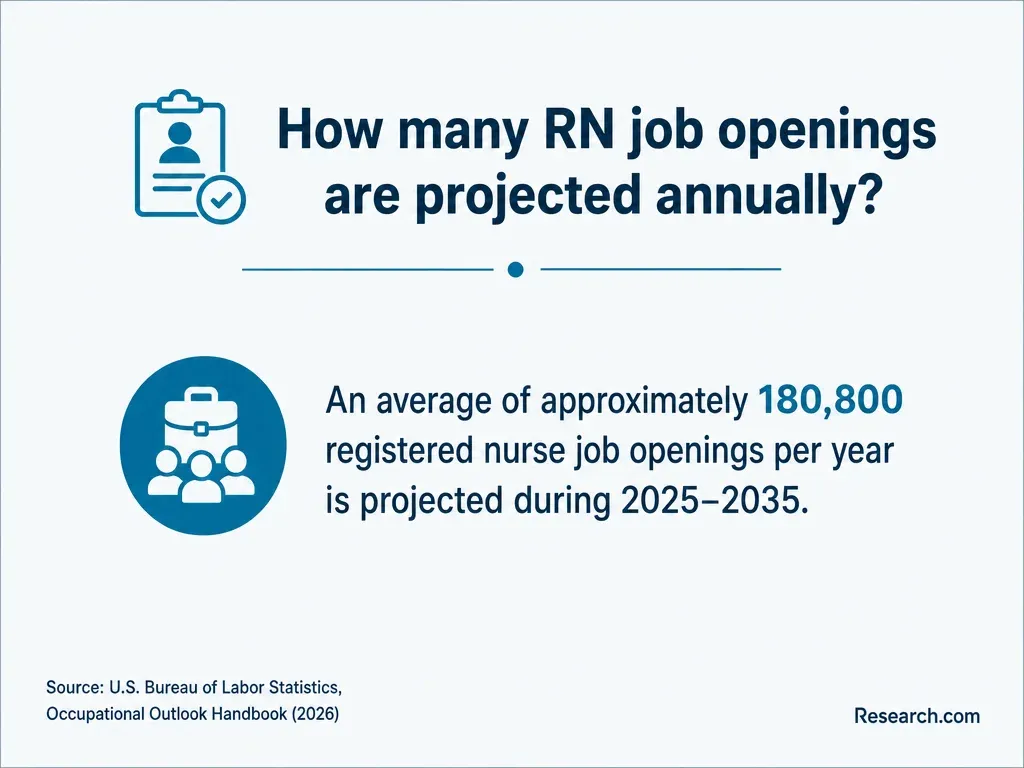
For salary context, the U.S. Bureau of Labor Statistics reported a May 2024 median annual wage of $93,600 for registered nurses and projected 5% RN employment growth from 2024 to 2034. Those occupation-wide figures are older reference points, not a new graduate's offer, a specialty premium, or the pay effect of passing a competency assessment. Compare current local postings by role, shift, location, and experience, and check the latest BLS wage and outlook releases before making a financial decision.
Additional education makes financial sense only if it meets the requirements of a specific target role and its total cost is reasonable for your circumstances. Nurses exploring less expensive nurse practitioner study should compare tuition with fees, clinical-placement obligations, time away from work, and the requirements for the intended APRN role—not assume that a good RN review will lead to NP employment or higher pay.
Other Things You Should Know About Nursing
Ask your educator or manager how to access your completed assessment and request clarification on any item you do not understand. Access and correction procedures depend on employer policy.
State what training or assessment is incomplete, seek appropriate supervision, and follow your employer's escalation process. Do not treat an assignment as a competency sign-off.
It may provide useful evidence of experience, but the new employer decides whether its own training or validation is required. Keep permitted records of training without taking confidential patient or employer information.
No. Needing more practice on a defined skill does not by itself describe your overall performance. Ask for the specific standard, feedback, and a reassessment plan.
- Nursing Professional Development Evidence-Based Practice - NCBI - NIH https://www.ncbi.nlm.nih.gov/books/NBK589676/
- Clinical nurse competence and its effect on patient safety culture | nih.gov https://pmc.ncbi.nlm.nih.gov/articles/PMC10196295/
- Enforcement Guidance on Disability-Related Inquiries and Medical Examinations of Employees under the ADA https://www.eeoc.gov/laws/guidance/enforcement-guidance-disability-related-inquiries-and-medical-examinations-employees
- .03 Standards of Professional Performance. | Library of Maryland Regulations https://regs.maryland.gov/us/md/exec/comar/10.27.09.03
- Performance Reviews | MIT Human Resources https://hr.mit.edu/performance/reviews
- Managing and Evaluating Performance | umn.edu https://hr.umn.edu/supervising/modules/Managing-and-Evaluating-Performance
- Clinical Evaluation Methods | Nurse Key https://nursekey.com/clinical-evaluation-methods/
- AACN Essentials FAQs | aacnnursing.org https://www.aacnnursing.org/essentials/tool-kit/faqs
- Standards of Practice for Nurse Practitioners | American Association of Nurse Practitioners https://www.aanp.org/advocacy/advocacy-resource/position-statements/standards-of-practice-for-nurse-practitioners
- Measuring the 6 Nursing Core Competencies | HealthStream, Inc. https://www.healthstream.com/resources/measuring-the-6-nursing-core-competencies