2027 Nurse Residency Repayment Agreements: Questions to Ask Before Accepting a Position
Audited and Verified:
Our Editorial and Data Verification Process
Research.com uses government datasets, official education statistics and primary institutional information to support its career and degree guides. Our review process checks factual accuracy, occupational definitions, source dates and the requirements associated with the credentials discussed.
How This Article Was Fact-Checked
Our editorial team verifies salary estimates, employment projections, education requirements and program information against original data providers and official organizations. Salary figures are checked against the relevant occupational definitions and reporting periods. Information about licensure, accreditation and required in-person training is reviewed separately.
Fact-checked and verified on:

Co-Founder and Chief Data Scientist
A nurse residency can provide valuable support during the move from nursing school to patient care, but its offer may also require you to repay training costs if you leave early. For a new graduate comparing positions, that obligation can change the value of a higher wage, a preferred specialty, or a shorter commute. This guide explains how repayment terms work, what to request in writing, and how to weigh the agreement against the training and working conditions you will actually receive.
Key Things You Should Know
- A repayment agreement is a financial term of employment, not a standard requirement for becoming an RN; ask for the signed amount, covered costs, and every event that triggers payment.
- Check whether the balance declines with service. For example, a hypothetical $12,000 obligation reduced evenly over 24 months would fall by $500 per completed month; a fixed-balance agreement would not.
- Compare the potential repayment with the offer's pay, schedule, supervised orientation, and unit support. State law and the contract's wording affect whether a particular charge can be enforced.
What is a nurse residency repayment agreement?
A nurse residency repayment agreement is a provision requiring a new-hire nurse to pay an employer under specified circumstances, usually after leaving before a stated service period ends. Employers may describe the charge as reimbursement for education, specialty training, relocation, or a sign-on bonus. Those are different expenses: the agreement should identify which ones it covers rather than combine them into an unexplained total.
A residency is employer-led transition-to-practice training after hiring; it does not replace a nursing degree or grant an RN license. Likewise, RN-to-BSN study without added bedside rotations serves a different purpose from supervised new-hire orientation. Do not assume that paying for either one buys equivalent clinical preparation.
When can an employer require repayment after leaving?
The contract may trigger repayment when a nurse resigns, transfers units, drops below a required work status, or is terminated before completing the commitment. Ask whether the same charge applies if the employer eliminates the position, changes the schedule or worksite, denies a promised placement, or ends employment during orientation. The triggering event matters as much as the amount.
Whether an employer can collect a particular charge depends on the agreement, applicable state law, and circumstances such as wage-payment rules. An employer's ability to demand repayment is not the same as its ability to deduct it from a paycheck. Request the complete agreement before accepting, and seek advice from an employment attorney in the relevant state if the possible balance would be difficult to pay.
Changing training paths does not, by itself, resolve an existing employment obligation. For instance, shorter postgraduate psychiatric nursing routes address later APRN education, not whether an RN residency charge is collectible.
How much can nurse residency repayment cost?
There is no universal nurse residency repayment price. An agreement might specify a fixed charge, itemized actual expenses, an amount that declines over time, or separate obligations for a bonus and training. Get the amount and calculation method in writing; do not rely on a recruiter's estimate.
The comparison below shows why the formula matters. These figures are hypothetical, not typical employer charges.
| Hypothetical term | Balance after six completed months | Balance after 18 completed months |
| $12,000 fixed until a 24-month commitment ends | $12,000 | $12,000 |
| $12,000 reduced by $500 per completed month over 24 months | $9,000 | $3,000 |
Also ask whether repayment is calculated on the gross or after-tax value of a bonus and whether separate charges can be added together. Comparing a residency charge with the tuition for affordable online nurse practitioner programs can help put future education spending in perspective, but it does not establish that the employer's claimed training cost is reasonable.
Proration means the amount owed falls as the nurse completes part of the service commitment. It is generally less financially restrictive than owing the full amount until the final day, but the details determine the benefit. Ask when the clock starts, whether reductions occur monthly or only at milestones, and whether approved leave pauses the clock.
For a proposed $12,000 charge over 24 months, an even monthly reduction would be $500 per completed month. If the agreement instead reduces the balance only at the 12-month mark, leaving just before that date could produce a substantially different bill. Ask HR for a written balance schedule showing what you would owe if you left at six, 12, and 18 months.
A short educational timeline is not the same as a short employment commitment. FNP programs with shorter completion timelines, for example, do not shorten an RN employer's repayment period.
Read the offer letter, repayment agreement, bonus terms, and residency description together. A favorable statement in one document may be narrowed by another. These questions identify the terms worth resolving before you sign:
- What specific expense does each charge cover, and will the employer provide an itemized calculation?
- What starts and ends the service period, and does a unit transfer count as leaving?
- Which resignations or employer-initiated separations trigger repayment?
- Does the balance decline, and how are leave, reduced hours, and delayed residency starts treated?
- How and when would payment be due, and what dispute process applies?
Keep copies of the final signed documents and written answers. If your longer-term plan involves graduate study, evaluate that education separately: accelerated PMHNP master's admissions and requirements do not change the terms of an RN job offer.
Ask whether the specific residency program holds current accreditation and, if so, from which organization and for which sites. Nurse residency accreditation or recognition is distinct from the accreditation of your nursing degree program, state board requirements for licensure, and an employer's own description of its training. A claim that the hospital is accredited does not necessarily mean its residency is.
Accreditation can provide an external point of reference, but it does not guarantee a particular preceptor, staffing level, or outcome on your unit. Request the program's curriculum and evaluation process regardless of its status. This distinction also matters in later education: clinical training support in family NP education concerns graduate clinical placements, not accreditation of an employer's RN residency.
Graduation, NCLEX eligibility, passing the NCLEX, and holding an active RN license are separate steps. Check the hiring state's board of nursing requirements and ask the employer whether you must have an active license before your start date or may begin in a limited, supervised role while an application is pending. Get the policy for a delayed exam result or license decision in writing, including whether it affects your offer or repayment clock.
A residency cannot authorize independent RN practice before licensure. The distinction applies across entry routes: comparing accelerated LPN training schedules concerns preparation for a different license and does not substitute for RN licensure or an RN residency's employment requirements.
Find out what occurs on your unit, not just what appears in the program brochure. Ask for the expected orientation length, protected learning time, preceptor arrangements, simulation or classroom sessions, specialty-specific skills, competency checks, and the process for extending orientation. A calendar of seminars alone does not show when you will receive supervised patient-care experience.
Clarify how patient assignments increase, who evaluates readiness, and whom you can contact if a preceptor is unavailable or you need more support. Completion of a residency is not automatic proof of independent competence in every specialty task. If you are still choosing an entry route into nursing, comparing direct-entry MSN completion times is a separate education decision; ask each prospective employer how it orients newly licensed nurses regardless of degree title.
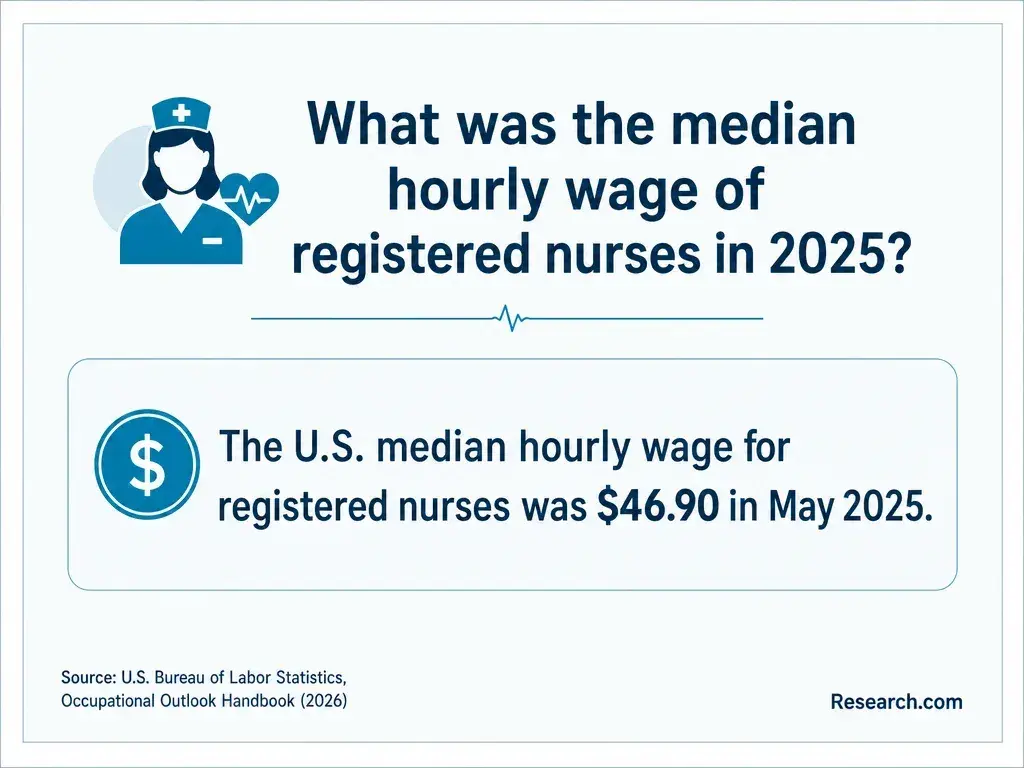
Compare written offers using the same expected hours and shift pattern. Include base pay, shift differentials, overtime rules, benefits, retirement contributions, paid orientation, bonus conditions, commuting costs, and the likely timing of any pay increase. Then consider the largest repayment balance you could realistically owe if the position proves unsuitable. An occupation-wide RN wage figure cannot tell you whether either local offer is better.
A higher-paying offer may be less attractive if its orientation is thin or leaving carries a large fixed charge. Conversely, a well-supported residency with a clearly prorated obligation may be worth considering even if its starting wage is lower. Future costs such as affordable psychiatric-mental health NP pathways belong in a longer-term budget, not in the calculation of the residency's starting pay.
What questions should nurses ask about workplace conditions?
A repayment clause increases the importance of checking whether you can reasonably stay for the required period. Ask the unit manager and, if possible, nurses who recently completed orientation about typical shifts, weekend and holiday expectations, patient assignments, access to experienced colleagues, breaks, and how concerns are escalated. Request specifics for the unit and shift you have been offered; hospital-wide averages may conceal a poor fit.
Ask what happens if your assigned unit, location, or schedule changes and whether you can transfer without restarting orientation or triggering repayment. If the specialty does not fit, an internal move may help - but only if both the employer's policy and your agreement allow it. Later options such as FNP certificate routes for changing advanced practice focus are separate career decisions and should not be treated as a fallback for unsafe or unsustainable first-job conditions.
Other Things You Should Know About Nursing
Yes. Request the complete document and enough time to review it before accepting. Ask for any explanation or proposed change in writing.
You can ask for a lower amount, monthly proration, a shorter commitment, or exceptions for employer-initiated changes. The employer may decline, so confirm any agreed change in the final contract.
Ask whether the obligation transfers to a successor employer and what happens if the new owner changes your role, worksite, or schedule. Do not assume the agreement automatically ends.
Yes. Save the signed terms, your start date, training schedule, completed-service records, and written communications about leave or transfers. They can help you verify a disputed balance later.
- APRN Practice FAQ - Texas Board of Nursing https://www.bon.texas.gov/faq_practice_aprn.asp.html
- The effectiveness of nurse residency programs on new graduate... - PMC https://pmc.ncbi.nlm.nih.gov/articles/PMC10907523/
- Student Loan Repayment | U.S. Office of Personnel Management https://www.opm.gov/policy-data-oversight/pay-leave/student-loan-repayment/
- Deductions From Pay FAQ - Illinois Department of Labor https://labor.illinois.gov/faqs/deductions-from-pay-faq.html
- Best Practices of Repayment Agreements | trcglobalmobility.com https://trcglobalmobility.com/blog/repayment-agreements-todays-best-practices/
- Training Repayment Agreements: An Employer's Guide | Tesseon https://tesseon.com/blog/training-repayment-agreements-an-employers-guide/