2027 Nurse Educator Portfolios: Teaching Evidence, Curriculum Work, and Learner Feedback
Audited and Verified:
Our Editorial and Data Verification Process
Research.com uses government datasets, official education statistics and primary institutional information to support its career and degree guides. Our review process checks factual accuracy, occupational definitions, source dates and the requirements associated with the credentials discussed.
How This Article Was Fact-Checked
Our editorial team verifies salary estimates, employment projections, education requirements and program information against original data providers and official organizations. Salary figures are checked against the relevant occupational definitions and reporting periods. Information about licensure, accreditation and required in-person training is reviewed separately.
Fact-checked and verified on:

Co-Founder and Chief Data Scientist
A nurse educator portfolio needs to show more than a collection of slides and positive student comments. Hiring committees, promotion reviewers, and clinical education leaders need to see what you taught, how you assessed learning, what you changed, and what evidence supports your conclusions.
This guide is for nurses building or updating a teaching portfolio for academic or workplace roles. It explains how to select evidence, document curriculum work, present feedback fairly, and decide whether additional education or certification would strengthen your next application.
Key Things You Should Know
- Organize the portfolio around three evidence streams: teaching and assessment, curriculum contributions, and learner feedback with documented responses.
- For each substantial example, show your role, the learning objective, the artifact, the evidence of learning, and a revision or next step; a course evaluation alone cannot establish teaching effectiveness.
- Use de-identified, shareable materials. Obtain permission before including student work, clinical examples, employer documents, or results drawn from restricted systems.
What Is a Nurse Educator Portfolio?
A nurse educator portfolio is a curated record of teaching practice and professional growth. It connects a brief teaching philosophy to evidence from classroom, clinical, simulation, or staff-development work. Unlike a résumé, it shows the materials you created, the decisions you made, and what you learned from evaluating those decisions.
Build for a specific audience. A faculty search committee may prioritize course design, assessment, advising, and scholarship; a hospital education team may look for onboarding, competency validation, and practice-change education. Use a concise index, date each example, and label whether you designed, co-developed, delivered, or evaluated it. Keep a private master archive and create a smaller, permission-cleared version for each application.
A course assignment can be an appropriate early example, but label it as student work rather than completed faculty practice. Nurses considering exploring RN-to-BSN nontraditional clinical formats should likewise check whether a project produces teaching artifacts they may retain; the absence of traditional clinical rotations does not make every course product suitable for a professional portfolio.
What Evidence Should a Nurse Educator Portfolio Include?
Select artifacts that answer a reviewer's likely questions: What did learners need to achieve, what did you do, how was learning assessed, and what changed afterward? A small set of annotated examples is more useful than an unfiltered file repository.
The following evidence map helps distinguish a teaching activity from evidence that learners met its objective.
| Evidence area | Possible artifact | What it can demonstrate |
| Teaching design | Lesson plan, objectives, or simulation briefing | Alignment between the learning need and instructional approach |
| Assessment | Rubric, de-identified aggregate results, or assessment revision | How performance was judged and where learners needed support |
| Clinical or staff education | Approved orientation outline or skills-teaching plan | Education matched to role, supervision, and local policy |
| Reflection and development | Peer observation, mentoring record, or revision note | How feedback informed subsequent teaching |
Annotate each artifact with its setting, audience, your contribution, date, and limitations. For example, completion of a simulation shows participation; a documented rubric or observed performance may provide stronger evidence of learning, but neither automatically proves independent clinical competence. A prelicensure learner's work should not be presented as licensed educator experience. For nurses using RN bridge programs building on LPN experience, prior precepting can still be labeled accurately as teaching-related experience.
How Do Nurse Educators Document Curriculum Development Work?
Curriculum work includes more than writing a syllabus. It may involve identifying a learning gap, mapping objectives to competencies, choosing teaching and assessment methods, coordinating with faculty or clinical partners, and revising a course or orientation sequence. Document the part you actually controlled; participation on a committee is not proof that you designed the entire curriculum.
A clear curriculum example follows a short sequence. Retain only materials your school or employer permits you to share.
- State the learning need and its source, such as an approved course review, faculty discussion, or aggregate assessment finding.
- Show an objective-to-teaching-to-assessment map and identify the standards or local requirements used.
- Attach a representative, permission-cleared artifact, such as a rubric excerpt or revised lesson outline.
- Describe your contribution, collaborators, approval process, and implementation status.
- Report the available evaluation evidence and a specific revision, without claiming an unmeasured improvement in patient outcomes.
If a proposal was never implemented, call it a proposal. If aggregate results improved, give the cohort and assessment context where disclosure is allowed; a change in scores alone may not establish that the curriculum caused it. An RN comparing ADN-to-MSN education pathways can ask whether the program offers supervised teaching and curriculum-design opportunities that yield usable evidence, rather than judging it by the degree title alone.
Present learner feedback as one source of evidence, not a verdict on teaching quality. State who was invited to respond, the number who did, the question or scale used, and when feedback was collected if those details are available and shareable. A handful of enthusiastic comments without context can mislead reviewers.
Pair feedback with an action: "Learners reported that the case instructions were unclear; I revised the briefing and checked comprehension before the next session." If you have later feedback or assessment results, describe them separately. Do not imply that a revision worked merely because it was made. Include constructive criticism and explain how you responded professionally.
Remove names, identifying details, and comments about patients or clinical sites. Seek permission before reproducing student quotations or institution-owned survey reports; an aggregate summary in your own words may be safer. Feedback from learners entering nursing through online coursework options for aspiring nurses may also reflect differences in prior experience, so interpret comments in the context of the audience rather than treating every cohort as comparable.
Requirements depend on the job, institution, and jurisdiction. Academic faculty appointments often call for an active RN license, relevant nursing experience, and graduate preparation; expectations for full-time faculty, adjunct clinical instructors, simulation educators, and preceptors can differ. Hospital nurse educators and nursing professional development specialists face employer-specific degree, license, and experience requirements. Confirm the exact posting and any applicable state board or school rules before enrolling in a program.
Teaching nursing does not itself create a new scope of practice. In a clinical teaching role, the educator's license, assigned responsibilities, site policies, and supervision arrangements still matter. A graduate nursing education track is generally distinct from advanced practice preparation: short-format family NP certificates for graduate nurses address a different goal and do not substitute for evidence of teaching ability or automatically qualify someone for a faculty appointment.
Choose education by the role you want and the qualifications you lack. An experienced RN seeking a clinical instructor or staff-development role may be able to start with approved teaching assignments, mentoring, or targeted educator training, depending on employer requirements. An MSN with a nursing education focus may be a better fit when a position calls for graduate-level instruction and curriculum preparation. Doctoral study may matter for particular faculty appointments, scholarship, or leadership goals, but it is not a universal requirement for teaching.
Compare programs by their supervised teaching experiences, curriculum and assessment coursework, faculty feedback, placement arrangements, and whether graduates meet the requirements of your target employers. Verify institutional accreditation and applicable nursing program accreditation separately. A non-APRN educator degree does not prepare its graduate for NP licensure.
For an RN with a BSN, affordable graduate study after a nursing bachelor's may be worth comparing with an educator certificate or employer-supported professional development. The lowest advertised tuition is not necessarily the best choice if a program lacks an accessible teaching practicum or the coursework your target role expects.
Online coursework can reduce commuting, while campus study may offer more routine in-person collaboration. Neither format guarantees a useful portfolio. Ask who arranges teaching placements, how teaching is observed, whether simulation or campus visits are required, and how often live classes or group work occur. A working educator should also check whether the program permits approved assignments at their workplace and how conflicts of interest are managed.
Compare the actual weekly schedule, not just the "online" label. Synchronous sessions, local site agreements, faculty observations, and required travel can determine whether a program fits employment and caregiving commitments. Confirm authorization to enroll from your state and any placement restrictions with the institution.
Format alone should not decide specialty direction. For example, short online psychiatric nursing certificates serve an advanced practice objective with different supervised clinical and certification considerations; they are not substitutes for educator coursework simply because both use online classes.
Total cost depends on the credential, credits required after transcript review, tuition and fees, enrollment pace, and any teaching-practicum travel or time away from work. Published tuition rarely captures every expense. Request a term-by-term estimate that includes fees, books, technology, required visits, placement-related costs, and the consequences of taking longer than planned.
Ask whether your employer funds graduate courses, educator certification, or continuing education, and check reimbursement limits and service commitments before relying on that support. Compare programs using the total cost to complete under a realistic schedule, not a per-credit price alone. Nurse practitioner program tuition comparisons can help clarify the cost of a different career path, but NP prices and clinical requirements should not be treated as estimates for an educator track.
Certification can signal sustained educator expertise, but it is not a substitute for an RN license, a required degree, or documented teaching performance. The National League for Nursing's Certified Nurse Educator (CNE) credential is relevant to eligible academic educators. Credentials focused on nursing professional development may better match a workplace education role. Check the awarding organization's current eligibility pathways, examination outline, fees, and renewal rules before applying.
Choose a credential after reviewing actual job postings and your portfolio gaps. If your target employer values curriculum design, a stronger documented course revision may help more immediately than an unrelated certification. Likewise, comparing 12-month family NP programs is relevant to someone pursuing NP practice, not to selecting a nurse educator credential.
What Salary and Job Outlook Can Nurse Educators Expect?
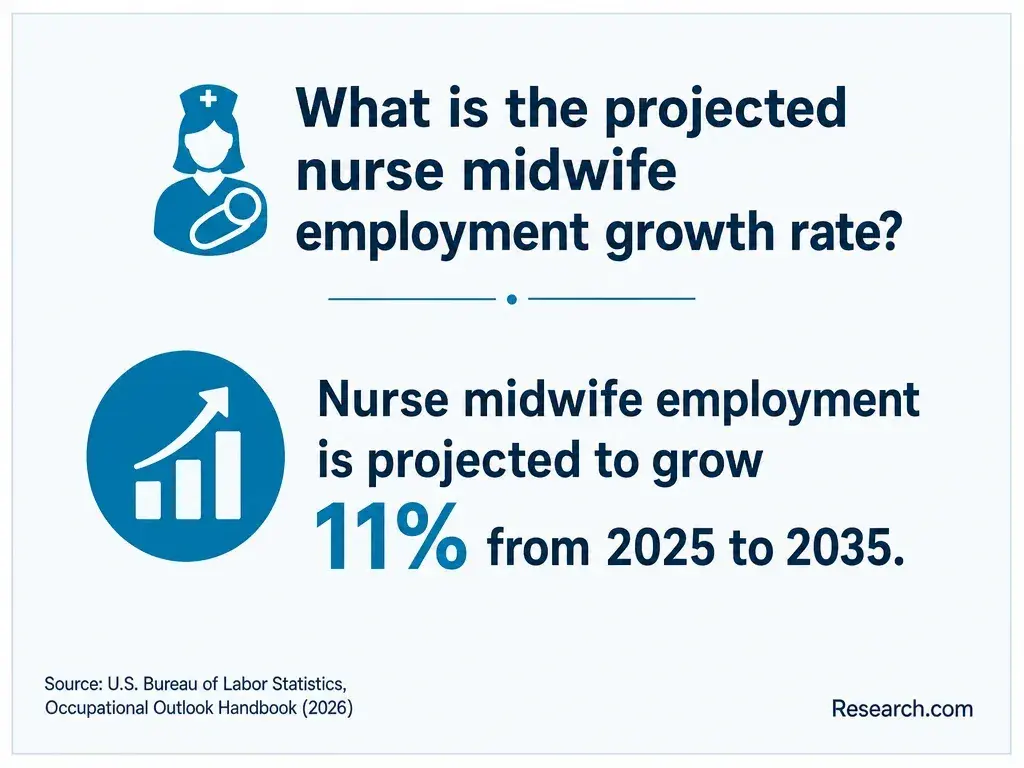
Pay varies substantially by setting, appointment type, location, and responsibilities. The U.S. Bureau of Labor Statistics reports data for nursing instructors and teachers, postsecondary, but that occupation does not represent every hospital educator, preceptor, or professional development specialist. Its occupation-wide median is not a guaranteed offer for an MSN graduate or a prediction of the return on a particular program.
For a useful comparison, review local postings that match your license, degree, and teaching experience. Check whether compensation covers a nine- or twelve-month appointment, clinical supervision, preparation time, and benefits. Advancement may depend as much on documented curriculum leadership and teaching effectiveness as on another credential. Before considering exploring faster online DNP routes, verify that a doctorate is needed for your intended position and that the program's focus supports it; a shorter route alone does not establish a financial return.
Other Things You Should Know About Nursing
No. Keep a master collection, then select examples that match each employer's teaching setting, responsibilities, and requested submission format.
Yes, if you identify your contribution and obtain any needed permission. Do not present a team-designed course as solely your work.
Follow the application instructions. Favor recent, relevant work, and retain an older example when it shows a skill or progression that newer artifacts do not.
Document approved teaching responsibilities, the learners and objectives involved, and any shareable assessment or reflection. Describe the role as precepting rather than claiming a faculty appointment.
- Privacy and Data Sharing | ed.gov https://studentprivacy.ed.gov/privacy-and-data-sharing
- Simulation in Clinical Nursing Education - PMC - NIH https://pmc.ncbi.nlm.nih.gov/articles/PMC8116070/
- Nurse educator core competencies | who.int https://www.who.int/publications/i/item/nurse-educator-core-competencies
- 1 EDUCATOR PORTFOLIO TEMPLATE Authors | chp.edu https://www.chp.edu/~/media/chp/healthcare-professionals/documents/faculty-development/educator-portfolio.ashx
- Article - School of Nursing: Standard... - UNC Policies https://policies.unc.edu/TDClient/2833/Portal/KB/Article/132400/School-of-Nursing-Standard-for-Preparing-a-Promotion-Portfolio-for-Review-by-Appointment-Promotion-a
- Revisiting "The Power of Feedback" from the perspective of the learner - ScienceDirect https://www.sciencedirect.com/science/article/abs/pii/S0959475222001396
- Core Competencies for Academic Nurse Educators | nln.org https://www.nln.org/education/nursing-education-competencies/core-competencies-for-academic-nurse-educators