2027 NCLEX-RN vs NCLEX-PN: Which Exam Fits Your Nursing Path
Audited and Verified:
Our Editorial and Data Verification Process
Research.com uses government datasets, official education statistics and primary institutional information to support its career and degree guides. Our review process checks factual accuracy, occupational definitions, source dates and the requirements associated with the credentials discussed.
How This Article Was Fact-Checked
Our editorial team verifies salary estimates, employment projections, education requirements and program information against original data providers and official organizations. Salary figures are checked against the relevant occupational definitions and reporting periods. Information about licensure, accreditation and required in-person training is reviewed separately.
Fact-checked and verified on:

Co-Founder and Chief Data Scientist
Choosing between the NCLEX-RN and NCLEX-PN is really a decision about which nursing license and role you want to pursue. The exams assess different levels of entry-level practice, and neither is a shortcut to the other license. If you are considering nursing school or planning a career change, this guide compares exam expectations, education, state licensure, program logistics, and job prospects so you can choose a route that fits your goals and circumstances.
Key Things You Should Know
- Choose the NCLEX-RN route for registered nurse practice; choose the NCLEX-PN route for licensed practical or vocational nurse practice. You generally must complete an eligible program and receive authorization to test before taking either exam.
- Practical nursing programs commonly take about one year; associate-degree RN programs commonly take about two years, and traditional BSN programs about four.
- Prerequisites, waitlists, and part-time study can extend either timeline. Passing either exam does not itself issue a license. Your state nursing board determines licensure, scope of practice, and whether you may begin working.
What is the difference between the NCLEX-RN and NCLEX-PN exams?
Both National Council Licensure Examinations use computer-adaptive testing to assess whether a candidate can practice safely at the entry level. Both test clinical judgment through questions about patient care, safety, and decision-making. The distinction is the role each exam evaluates: the NCLEX-RN targets entry-level registered nursing, while the NCLEX-PN targets entry-level practical or vocational nursing.
This comparison focuses on what each exam prepares you to seek - not which test seems easier. Your education and the licensing board's eligibility decision determine which exam you can take.
| Comparison | NCLEX-RN | NCLEX-PN |
| License sought | Registered nurse (RN) | Licensed practical nurse (LPN) or licensed vocational nurse (LVN) |
| Entry-level emphasis | Comprehensive assessment, care planning, clinical judgment, and management of care | Safe practical nursing care, monitoring, and participation in care within the practical nurse's scope |
| Typical education route | Eligible prelicensure RN program, such as an ADN/ASN, diploma, or BSN program | Eligible practical or vocational nursing program |
| Result | A required examination result for RN licensure, not a license by itself | A required examination result for LPN/LVN licensure, not a license by itself |
Use the current official NCLEX test plan for your exam when preparing. It identifies the content and clinical judgment expectations being assessed; a school's practice questions should support, not replace, that blueprint.
A nurse exploring the possibility of advancing their career as a psychiatric nurse should look into short online psychiatric nursing certificates.
Which nursing career path is right for you: RN or LPN?
Choose the RN path if your goal requires registered nursing responsibilities, such as comprehensive assessment and care planning, or if you want access to the broader range of RN positions. Consider the LPN/LVN path if a shorter initial program better fits your finances or schedule and the practical nursing roles available in your area match the work you want to do.
The shorter route is not automatically the faster route to your long-term goal. If you already know you want an RN-only position, compare the total time and cost of entering an RN program directly with completing practical nursing school, obtaining an LPN/LVN license, and later entering an LPN-to-RN bridge. Bridge admission, credit awards, and clinical requirements vary; the PN license does not convert into an RN license.
A prelicensure BSN and an associate-degree RN program can both lead toward NCLEX-RN eligibility when they meet the applicable requirements. By contrast, flexible BSN completion routes for licensed RNs are for nurses who already hold an RN license; they are not an initial NCLEX-RN pathway.
What education is required to qualify for the NCLEX-RN or NCLEX-PN?
For initial licensure, candidates generally complete a nursing program that satisfies the requirements of the state board where they apply. The RN route typically involves a qualifying associate-degree, diploma, or bachelor's prelicensure program. The PN route typically involves a qualifying practical or vocational nursing program. A nursing assistant course, a non-nursing degree, or an RN-to-BSN completion program alone does not substitute for initial prelicensure preparation.
Do not rely on a school's degree title alone. Ask its nursing office and your intended licensing board whether the specific program and campus or delivery format meet that board's education requirements. Your eligibility may also depend on submitting transcripts and satisfying the board's other application conditions. If selective admission is a concern, comparing entry barriers at nursing schools can help you identify questions to ask, but admission and eventual NCLEX eligibility are separate decisions.
The exams are national, but nursing licenses are issued by states. Each board sets or applies its jurisdiction's rules for acceptable education, applications, background checks, fees, and authorization to test. States also define RN and LPN/LVN scopes of practice, including how practical nursing responsibilities and supervision work. California and Texas use the title LVN; other states generally use LPN.
Before enrolling, identify the state where you intend to seek your first license and check that board's published requirements for your license type. This matters especially if your school is in another state: a program's acceptance of out-of-state students does not, by itself, establish that its graduates satisfy your board's rules.
The sequence matters: complete an eligible program, apply to the board, register for the appropriate NCLEX, receive authorization to test, pass, and meet any remaining board requirements. Confirm that your license has been issued before practicing. If you later want to work elsewhere, check that jurisdiction's licensure-by-endorsement or applicable Nurse Licensure Compact rules rather than assuming an exam pass authorizes practice everywhere.
Advanced roles require further education and authorization; comparisons of family NP programs organized by duration is a good resource for those who are looking to become family nurse practitioners.
Both routes teach foundations such as anatomy and physiology, medication safety, infection prevention, communication, documentation, and supervised patient care. Students practice applying knowledge in skills labs, simulation, and clinical settings; classroom completion is not proof of independent clinical competence.
RN programs generally develop broader preparation in comprehensive assessment, clinical judgment, care planning, and coordinating care for patients with complex needs. PN programs focus on safe practical nursing care, recognizing changes in condition, communicating findings, and carrying out responsibilities within the LPN/LVN scope. Actual courses and clinical experiences differ by school, and neither curriculum overrides state law or an employer's competency requirements.
Additional NP study makes way for an RN to follow a good progression career-wise. So nurses considering expanded practice can assess cost-focused nurse practitioner study options.
A practical nursing program often takes about one year. An associate-degree RN program commonly takes about two years, while a traditional BSN commonly takes about four. These are broad program-length comparisons, not promises of time to licensure: prerequisites, admission cycles, course sequencing, clinical availability, and the time needed to test and obtain a license can add months.
Ask schools for a term-by-term plan based on your completed courses, including the earliest available nursing start date. When reviewing short-format LPN coursework and clinical requirements, check the complete schedule rather than the advertised classroom duration. An accelerated pace may compress coursework without reducing required on-site learning or making clinical shifts flexible.
Some prelicensure programs deliver lectures or other coursework online, but RN and PN students still need program-required hands-on labs, simulation, and supervised clinical learning. A program described as "online" may require scheduled campus visits and in-person clinical shifts. Online coursework may also include live sessions or fixed deadlines.
Before applying, get written answers about campus attendance, clinical-site locations, who arranges placements, typical shift times, and whether the program enrolls students in your state. If you work or provide care for family members, compare those fixed commitments with your actual weekly availability - not just the number of online courses.
Already-licensed associate degree RNs who are considering earning a bachelor of science degree can look into RN-to-BSN project-based learning options.
Requirements vary by school and track. RN applicants may need specified science and general-education prerequisites; PN applicants may have a different prerequisite sequence. Either route may involve minimum grades, an entrance assessment, immunization documentation, a background check, and clinical-site clearance. Ask whether admission to the college also admits you to the nursing program, and whether previous science courses meet its grade, lab, and recency policies.
For cost, compare the full path to a license, not tuition alone. Request a written estimate that includes fees, books, equipment, uniforms, health and background requirements, travel to clinical sites, and exam and license charges. Add the income you may forgo if the schedule reduces your working hours. A lower-priced PN program followed by an RN bridge can cost more overall than direct RN entry if it requires repeated courses or extra terms; a direct RN program can be less feasible if its schedule prevents you from earning needed income.
For applicants with a prior non-nursing degree, understanding ABSN admission barriers can help with selecting academic paths.
After licensure and employer onboarding, RNs may work in hospitals, outpatient settings, home health, long-term care, and other settings. LPNs/LVNs commonly work in long-term care, outpatient care, home health, and related settings; available duties and jobs depend on state scope rules and employer needs. A new graduate should also evaluate orientation, supervision, staffing, and opportunities to build competence - not just the job title.
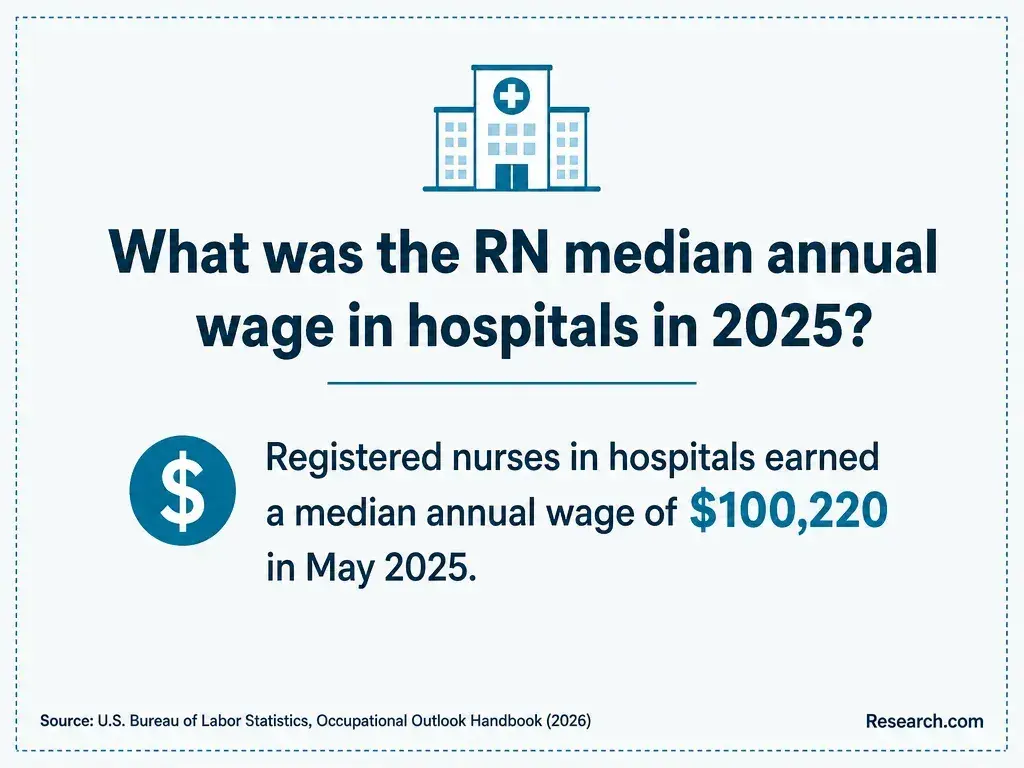
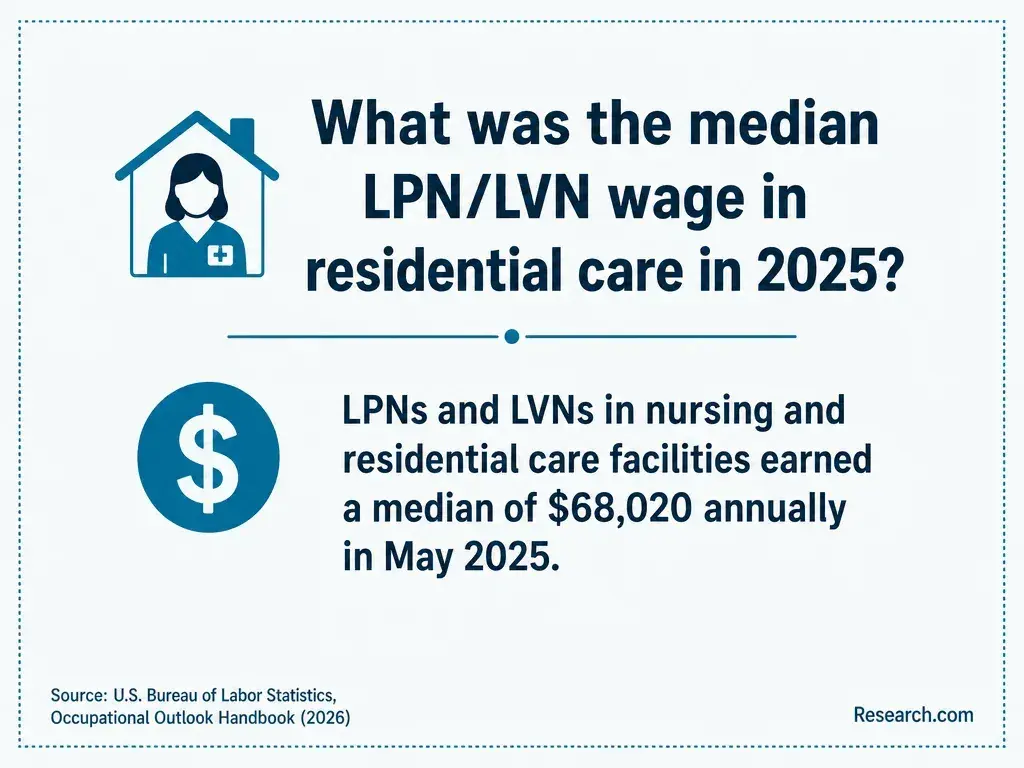
For scale, U.S. Bureau of Labor Statistics Occupational Outlook Handbook figures for May 2024 put the median annual wage at $93,600 for registered nurses and $62,340 for licensed practical and licensed vocational nurses. These are occupation-wide medians, not starting salaries or earnings guaranteed by a particular program. Compare local entry-level postings, shift expectations, and benefits before estimating what either path would pay you.
Thinking of starting your nursing career as an LPN? When reviewing online coursework formats in practical nursing programs, keep in mind that online classes do not remove required in-person preparation or change the LPN/LVN scope of practice.
How can you choose an accredited nursing program?
Check three distinct things: the institution's accreditation, any applicable nursing program accreditation, and whether the program satisfies the state board requirements for your intended license. Organizations such as ACEN and CCNE accredit nursing programs within their respective scopes; accreditation is not the same as a board's decision about an individual applicant's NCLEX or license eligibility.
For each school on your shortlist, confirm the exact prelicensure track and location, your target board's education rules, clinical placement arrangements, total estimated cost, and published NCLEX outcomes. When comparing pass rates, look for the reporting year and number of test-takers; a high rate from a small or older cohort is less informative than it may appear. The best fit is a program you can realistically complete and use to pursue the license and role you want.
Listings of accessible nursing practice doctorate pathways is a good resource for RNs or NPs who want to pursue a nursing doctorate.
Other Things You Should Know About Nursing
Yes, subject to NCSBN retake rules and any additional limits imposed by your licensing board. Check your candidate performance report and the current test plan before scheduling another attempt.
Eligible candidates can request accommodations through the process specified by their licensing board and the examination program. Apply early and submit the required documentation before scheduling; approval is not automatic.
Your nursing board provides the official result and makes the licensure decision. Any optional early result service is unofficial and does not authorize you to practice.
Not generally as a universal exam requirement. Start with the current official test plan and your school's performance feedback, then decide whether structured practice or a review course addresses your specific gaps.
- SCOPE OF PRACTICE - Nursing Fundamentals - NCBI - NIH https://www.ncbi.nlm.nih.gov/books/NBK610819/
- Nursing (RN & LPN) | Florida Board of Nursing https://floridasnursing.gov/nurse-rn-lpn/
- GAC - Chapter 490-3 EVALUATION OF EXAMINATIONS https://rules.sos.ga.gov/gac/490-3
- What Is the NCLEX-RN? Exam Format, Requirements, and Passing | University of Saint Mary https://stmary.edu/traditional-bsn/what-is-nclex
- NCLEX Exam Requirements: What You Need to Know Before You Test | Rockhurst University https://onlinedegrees.rockhurst.edu/blog/nclex-exam-requirements
- Nurse Licensure Guidance | NCSBN https://www.ncsbn.org/nursing-regulation/licensure/nurse-licensure-guidance.page
- Frequently Asked Questions | NCLEX https://www.nclex.com/faqs.page
- Registered Nurse vs. Licensed Practical Nurse (RN vs. LPN) | allnursingschools.com https://www.allnursingschools.com/articles/registered-nurse-vs-licensed-practical-nurse/
- Nursing Scope and Standards of Practice | ANA https://www.nursingworld.org/practice-policy/scope-of-practice/
- NCLEX-PN vs. NCLEX-RN: Key Differences You Need to Know in 2025 | Lecturio https://www.lecturio.com/blog/nclex-pn-vs-nclex-rn-key-differences-you-need-to-know-in-2025/