2027 Most In-Demand Nurse Educator Master's Specializations

Co-Founder and Chief Data Scientist
Shifts in healthcare delivery and evolving credentialing requirements complicate how prospective graduate students evaluate nurse educator master's specializations. Demand fluctuates by region, regulatory environment, and employer expectations, reflecting more than surface-level hiring surges. Specializations differ in their alignment with certification pathways, curriculum rigor, and applied experiences like internships and capstones, all impacting skill transferability and career adaptability.
Long-term career resilience depends on a specialization's ability to integrate technical and managerial competencies while enabling mobility across healthcare sectors. This analysis examines the nurse educator master's concentrations that show durable labor-market relevance, emphasizing strategic decision factors beyond salary or job-posting counts.
Key Things to Know About the Most In-Demand Nurse Educator Master's Specializations
- Specializations in simulation-based education lead to higher employer demand due to growing reliance on tech-driven training; however, they require significant upfront investment in equipment, limiting access for some students.
- Programs focused on clinical practice integration align closely with healthcare systems' needs for educators adept in hands-on mentorship, increasing job placement but often demanding substantial field experience.
- Leadership and curriculum design specializations reflect a rising market shift toward administrative educator roles; workforce data indicate these graduates adapt more flexibly to evolving education regulations and institutional changes.
What makes a nurse educator master's specialization "in demand"?
What makes a nurse educator master's specialization genuinely in demand often hinges on a blend of labor-market need, the cultivation of specialized skills, and its alignment with emerging or enduring roles in the field. Demand fluctuates widely depending on factors such as geographic region, employer type, healthcare sector, regulatory environment, and the pace of technology adoption.
A specialization that prepares graduates for positions reflecting sustained healthcare priorities-rather than transient hiring surges-more accurately signals strategic value. Key areas demonstrating this include those addressing workforce shortages and skill gaps identified in high-growth nurse educator career specializations tied to industry evolution.
Relying solely on demand as a decision metric carries inherent tradeoffs. Job-posting volume, program enrollment trends, or broad salary generalizations often fail to capture curriculum quality or real-world applicability. Marketing driven by fleeting trends can exaggerate the appeal of certain concentrations without reflecting their long-term career relevance.
Prospective students benefit most by assessing dimensions such as the depth of experiential training, alignment with certification or licensure standards, faculty expertise, and documented alumni employment outcomes. Equally critical is considering how transferable the acquired skills are across diverse roles within nursing education and related leadership positions.
Highly demanded specializations tend to offer the clearest pathway for working professionals, career changers, or those focused on advancement to meet evolving employer expectations with targeted competencies. Understanding how these specializations intersect with credential requirements and measurable labor-market outcomes enhances decision making beyond superficial popularity.
Those balancing practical constraints with ambitions for sustainable career trajectories should examine offerings that integrate evidence-based curriculum development and competency assessment. For tailored guidance on integrating academic progression with real-world applicability, exploring resources like MSN to DNP programs online may provide additional context specific to such advanced educational pathways.
The 10 Most In-Demand Nurse Educator Master's Specializations
The choice of a master's specialization in nurse educator roles directly influences employability and career resilience amid ongoing workforce shifts. Demand drivers range from faculty shortages and demographic changes to technological adoption and public health priorities, prompting nuanced evaluation beyond surface-level growth statistics.
Prospective nurse educators must consider how each concentration aligns with evolving clinical practices, certification standards, and institutional hiring patterns to ensure sustained relevance and impact.
Educational Leadership with Clinical Expertise Addresses the critical scarcity of qualified nurse faculty by equipping educators with curriculum development and administrative skills. Institutional bottlenecks in nursing education create persistent openings for those who can lead programs effectively, supporting nearly 15% projected employment growth through 2030 according to U.S. Bureau of Labor Statistics.
Gerontological Nursing Education Driven by an aging population's complex care needs, this specialization prepares educators to teach elder care, chronic disease, and palliative protocols. Workforce readiness for doubling geriatric patients by 2050, as highlighted by the National Institute on Aging, emphasizes this area's strategic importance.
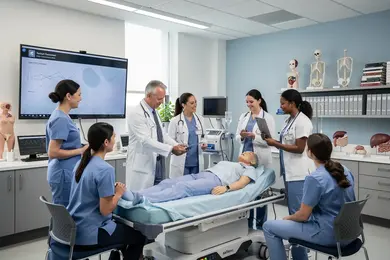
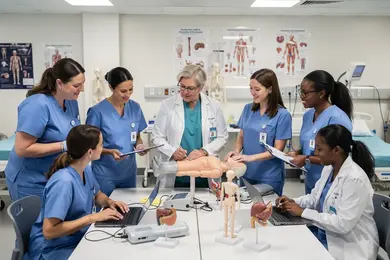
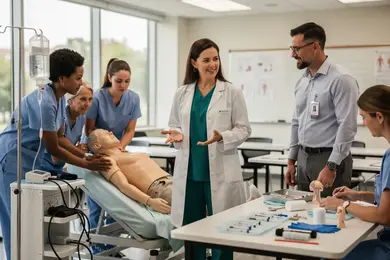
Simulation and Technology Integration With rapid incorporation of virtual simulation tools, educators skilled in tech-driven pedagogy meet evolving competency standards. The Healthcare Simulation Industry Association reports a 20% yearly increase in simulation staffing, reflecting expanding institutional reliance on immersive learning methods.
Infection Control Nurse Education Ongoing infection prevention challenges sustain demand for educators who can translate dynamic clinical guidelines into effective staff training. This specialization plays a non-negotiable role where institutional accountability for healthcare-associated infection rates remains high.
Mental Health Nursing Education Rising behavioral health concerns and the blending of psychiatric content into general curricula necessitate nurse educators comfortable with both mental health expertise and community health contexts. This intersection addresses an often underserved educational niche.
Pediatric Nurse Education Focused on child health trends and developmental considerations, pediatric nurse educators cater to specialized clinical environments where tailored teaching directly impacts patient outcomes and policy implementation.
Critical Care Nurse Education Responds to ICU staffing pressures by preparing educators who can train nurses in high-acuity settings. Certifications and practical skills aligned with critical care best practices enhance job market alignment.
Community Health Nursing Education Supports preventive care models and public health initiatives, reflecting healthcare's broader shift toward population health management. Educators here require interdisciplinary knowledge and cultural competence.
Culturally Competent Care Education Institutional emphasis on health equity makes this specialization vital. Nurse educators trained in cultural awareness address disparities through curriculum tailored to diverse patient populations and social determinants of health.
Interprofessional Education and Collaboration Growing interdisciplinary care models create demand for educators who can integrate nursing education with other health professions, facilitating team-based patient management and communication skills development.
A nurse educator master's candidate recounts evaluating several specializations amid job market uncertainty. Initially drawn to simulation due to technological appeal, they hesitated after noticing limited faculty support and practicum challenges. Weighing this against the steady demand in infection control and educational leadership, they scrutinized current job postings and alumni career paths. Ultimately, their choice balanced employer demand, certification compatibility, and personal teaching style, revealing the complexity behind selecting a specialization not solely defined by trending popularity but by operational fit and long-term viability.
Which nurse educator master's specializations lead to the highest-paying careers?
Within a Master of Science in Nursing (MSN) with a Nurse Educator track, the specializations and target career pathways that yield the highest financial returns are Nursing Education Administration and Program Leadership, High-Acuity or Advanced Clinical Education, and Healthcare Technology and Simulation Informatics. While traditional academic faculty roles in colleges provide stable schedules, specializing in macro-level administrative operations, corporate medical training, or complex high-fidelity tech tracking allows educators to access significantly larger corporate and institutional budgets.
A specialization in Nursing Education Administration and Leadership transitions educators away from general classroom teaching and places them into macro-level program management. This concentration prepares graduates for high-earning positions such as Nursing Program Director, Director of Nursing Education, or Academic Dean.
The curriculum highlights essential organizational skills, including curriculum design framework optimization, national accreditation compliance, multi-million dollar institutional budget management, and workforce strategic planning. Because these leaders are responsible for the compliance, funding, and operational execution of entire educational divisions or large-scale clinical hospital training programs, they command the top salary bracket within nursing education.
A track in High-Acuity, Specialized Clinical Education, or Corporate Medical Education targets advanced workforce training within high-revenue hospital ecosystems, medical device corporations, and pharmaceutical companies. This concentration equips educators with advanced pedagogical strategies to train frontline staff in high-stakes environments like the intensive care unit (ICU), emergency departments, or complex surgical suites.
Graduates advance into lucrative roles such as Advanced Clinical Nurse Educator, Lead Staff Development Specialist, or Corporate Clinical Liaison. Operating within major medical networks and private-sector corporations—where training personnel on sophisticated treatment protocols directly impacts patient risk management and product commercialization—allows these specialists to secure premium salaries that outpace general university faculty tracks.
A specialization in Healthcare Technology and Simulation Informatics addresses the intersection of digital technology, advanced analytics, and clinical competency training. This concentration targets the design, installation, and management of high-fidelity computer simulation labs, virtual reality medical modules, and advanced electronic medical record training frameworks.
Graduates qualify for premium positions like Nurse Simulation Educator, Clinical Informatics Educator, or Simulation Lab Director. As healthcare systems and universities increasingly allocate substantial funding to tech-driven learning spaces to mitigate patient safety risks before bedside care begins, specialists who can engineer these complex technological platforms secure a significant wage premium.
Which nurse educator master's specializations offer the best job growth?
Assessing nurse educator master's specializations for job growth requires evaluating more than popularity; it involves examining employment projections, employer demand, and shifts in healthcare education. Specializations intersecting with clinical shortages, such as geriatrics or psychiatric-mental health, benefit from labor-market pressures driven by patient complexity and workforce gaps.
Additionally, emerging roles involving educational technology and interprofessional training align with accreditation standards and institutional priorities, enhancing the transferability of these skills across educational settings. The 2024 U.S. Bureau of Labor Statistics reports a 23% growth rate for nurse educators, indicating enduring expansion fueled by evolving healthcare demands and pedagogical innovation, which is particularly relevant for those considering the most in-demand nurse educator master's concentrations with strong career prospects.
However, relying solely on job growth data has limitations due to regional disparities, certification hurdles, and hiring cycles that affect entry and advancement. Role saturation in saturated markets may limit opportunities despite national growth, while credential requirements and practicum or portfolio components can delay workforce entry.
Prospective students should consider whether a specialization supports immediate employment and sustained career progression based on local healthcare system needs and educational institution expectations. For those balancing commitments, understanding these factors alongside clinical background and realistic program demands is essential, especially when exploring options like affordable RN to BSN online programs that integrate flexible learning with practical pathways.
Which nurse educator master's specializations are best for career changers?
Specializations in nurse educator master's programs that prioritize pedagogical skills, adult learning theory, and curriculum development tend to offer more accessible pathways for career changers. Programs that integrate bridge coursework and flexible prerequisite requirements, particularly those without demanding clinical hour mandates, facilitate smoother transitions from diverse professional backgrounds.
Applied components like supervised teaching practicums, simulation labs, and capstone projects not only build practical skills but also strengthen resumes for entry-level or mid-career educator roles. According to the National Workforce Reskilling Coalition's 2024 report, nurse educator tracks aligned with nationally recognized certification credentials experience about 15% higher employment growth, underscoring the importance of credential-focused specializations for those shifting career fields.
Choosing a specialization solely due to current market demand carries inherent tradeoffs for career changers. Steep learning curves in highly technical or specialized clinical tracks can overwhelm candidates lacking prior direct experience, increasing the risk of longer time-to-completion or lower performance.
Credentialing barriers and the need to build professional networks from scratch against candidates with clinical backgrounds may limit immediate employability. Moreover, selecting a specialization misaligned with one's existing skills might result in a disconnect between academic outcomes and employer expectations, reducing long-term career sustainability despite apparent job market growth.
One graduate who moved from healthcare administration into nurse education initially hesitated between specialties emphasizing clinical expertise versus educational methodology. After comparing her transferable skills in training design with the prerequisite demands of each track, she chose a specialization focusing on adult learning and curriculum development with embedded teaching practicums.
This decision required navigating some uncertainty about employer perceptions and networking gaps but ultimately provided practical internship opportunities that bridged her background with classroom teaching roles. The graduate reflected that aligning the specialization with both her experience and realistic employer criteria was essential to overcoming early doubts and establishing credibility in the nurse educator workforce.
Which nurse educator master's specializations are best for working professionals?
Working professionals selecting master's specializations for nurse educators must weigh employer demand, schedule flexibility, and direct application to current or targeted roles. Specializations that deepen practical skills in clinical teaching, curriculum design, or staff development demonstrate immediate workplace relevance. In addition, the ability to maintain employment while upgrading expertise hinges on program schedules that fit working nurses' realities, such as part-time or online formats.
According to a 2024 report by the American Association of Colleges of Nursing, 68% of nurse educators rated program flexibility as a decisive factor, underscoring the importance of aligning course delivery with ongoing job commitments while advancing skill sets valued by employers and recruiters in nursing education.
Specializations most compatible with working professionals often feature asynchronous coursework, hybrid learning models, or project-based assignments that integrate with current job roles, reducing the need for time-intensive clinical placements or field experience. Programs that align with certification or licensure requirements and allow credit for professional work experience tend to facilitate smoother transitions.
These factors are crucial for those exploring the best nurse educator graduate programs for working professionals, as they provide a pathway to marketable expertise without disrupting career trajectories. Careful evaluation of workload expectations and practicum arrangements can reveal which specializations realistically accommodate ongoing employment while supporting advancement or career shifts.
Trade-offs exist when pursuing highly technical or research-intensive specializations in nurse educator master's programs, where intensive clinical practice or internships may conflict with work schedules. Such tracks, while often offering strong labor-market value and paths to leadership, require substantial time investment beyond regular coursework.
Balancing these demands against professional and personal obligations is essential to avoid jeopardizing job stability. For some, pursuing broader interdisciplinary opportunities, such as a PhD in healthcare management, might complement nurse educator roles by expanding policy and administration competencies that also benefit from flexible learning models.
How do online and flexible nurse educator master's specializations compare?
Online and flexible nurse educator master's specializations differ considerably in their instructional design and academic sequencing, impacting student engagement and career alignment. Fully online programs often blend asynchronous learning with periodic synchronous sessions, which can limit real-time peer collaboration but offer scheduling adaptability.
Hybrid models incorporate in-person practicums or clinical experiences essential for applied skill development, making them better suited for those targeting roles requiring hands-on training. Course pacing-accelerated, part-time, or traditional-further influences cohort dynamics and faculty access, affecting the depth of mentoring and networking opportunities critical to career advancement in nurse education.
Flexibility in delivery does not inherently equate to program quality or employer recognition. Critical factors such as curriculum rigor, accreditation status, and integration of experiential learning components fundamentally shape graduate preparedness and marketability. Some flexible programs emphasize virtual support and tailored career services, while others may lack robust guidance or technology infrastructure, which can hinder skill acquisition relevant to high-demand nurse educator positions.
Employers increasingly seek candidates with demonstrable practice-based competencies and accredited credentials, underscoring the importance of evaluating whether online or hybrid formats substantively support these expectations beyond convenience alone.
For working professionals and career changers, flexible nurse educator specializations enable continued employment but require careful assessment of workload balance and long-term value. The National Council of State Boards of Nursing's 2024 report reveals that graduates from well-structured online or hybrid programs achieve nearly comparable full-time teaching role placement rates within a year as traditional on-campus counterparts, highlighting that outcome depends on program design rather than format alone.
Students must weigh factors such as pacing, networking opportunities, and practicum accessibility against personal circumstances to select pathways that sustain professional growth without compromising educational depth or employer relevance.
What skills do students learn in in-demand nurse educator master's specializations?
In-demand nurse educator master's specializations are structured around a complex skill set that reflects evolving workforce demands, curriculum innovations, and employer expectations. These programs extend beyond nominal concentrations, equipping students with competencies directly relevant to diverse clinical education roles and advancing healthcare settings.
The focus lies on integrating practical, analytical, leadership, and communication proficiencies that contribute to sustained career viability and responsiveness to workplace complexities.
- Advanced Clinical and Pedagogical Expertise: Students gain hands-on experience in translating intricate nursing theories and clinical knowledge into effective teaching methods. This skill is typically developed through simulation labs, curriculum design projects, and clinical practicum, ensuring educators can deliver content adapted to varied learner needs and evolving healthcare technologies.
- Analytical and Outcome Assessment Skills: Courses emphasize data-driven evaluation of educational programs, including quantitative and qualitative research methods. Mastery of these skills enables nurse educators to critically assess student performance and educational effectiveness, an essential competency as employers value continuous improvement aligned with evidence-based standards.
- Leadership and Team Collaboration Capabilities: Preparing to manage interdisciplinary teams and address conflict resolution, students engage in leadership development embedded within capstone projects and collaborative initiatives. These abilities support programmatic enhancements and foster environments conducive to lifelong learning, aligning with increasingly complex healthcare education ecosystems.
- Research Literacy and Practical Inquiry: Training in research methodologies-both qualitative and quantitative-equips students to contribute meaningfully to scholarly discourse and practical innovations. This dual focus bolsters adaptability and empowers nurse educators to drive curriculum advancements grounded in rigorous inquiry.
- Effective, Culturally Competent Communication: Emphasizing empathetic interaction and cultural competence, programs address communication challenges across diverse learner populations and clinical stakeholders. This focus supports inclusivity and responsiveness, critical in healthcare environments shaped by demographic shifts and equity priorities.
According to a 2024 report from the National Healthcare Education Association, 72% of healthcare employers specifically identify curriculum development and proficiency in educational technology as pivotal. This statistic underscores the importance of integrating digital literacy and adaptive teaching skills into nurse educator training to meet current and future demands within academic and clinical settings.
What are the admissions requirements for popular nurse educator master's specializations?
Admissions requirements for popular nurse educator master's specializations serve not only as eligibility filters but also as indicators of how closely each program aligns with specific career trajectories and skill demands. These entrance criteria vary, reflecting differences in program focus, rigor, and the professional roles graduates are expected to fulfill.
Understanding these nuances allows applicants to better navigate their options within the nurse educator master's specializations.
- Academic Prerequisites and GPA Expectations: Most programs require a Bachelor of Science in Nursing (BSN) or a related health science degree, though some accept non-nursing backgrounds with added nursing coursework. GPA thresholds commonly range from 3.0 to 3.5, but competitive tracks focused on curriculum development or simulation education may demand higher, emphasizing an applicant's academic aptitude to handle complex content and teaching methodologies.
- Relevant Clinical and Educational Experience: Work history is heavily weighted, with a general requirement of one to two years of clinical nursing practice. Programs may prioritize candidates who have held leadership or educational roles, underscoring the emphasis on real-world applicability and preparedness to teach healthcare professionals effectively.
- Licensure and Certification Requirements: A current registered nurse (RN) license is universally required, ensuring clinical credibility. Some programs may expect or prefer certifications like Certified Nurse Educator (CNE), aligning with specialization demands and signaling advanced competence to employers.
- Assessments Beyond Academic Records: While GRE or other standardized tests are increasingly waived post-2022, select institutions retain assessments or require portfolios that demonstrate teaching proficiency, clinical expertise, and reflective professional philosophy. Letters of recommendation and interviews further gauge candidates' communication skills and fit with program culture.
Applicants considering these programs should note that data from 2024 shows a 15% rise in enrollment for nurse educator specializations emphasizing simulation-based pedagogy, reflecting employer demand for educators skilled in technology-enhanced learning. This shift directly informs admissions criteria that favor technical competence and experience with digital education tools.
For those navigating the diverse entrance criteria for nurse educator master's specializations, reviewing comparative program requirements such as those found in BCBA accredited programs can provide additional insights into how accreditation and specialization-specific standards shape admissions decisions.
How should students compare cost, financial aid, and roi by nurse educator specialization?
Evaluating cost, financial aid, and return on investment (ROI) for nurse educator master's specializations requires attention to how program design interacts with labor-market alignment and a student's career phase. Rather than a simple tuition-versus-income comparison, prospective students should consider specialization-specific variables that influence total expense, debt exposure, and time to career impact.
- Tuition and Fee Structures: Different specializations may impose varied tuition rates, additional fees, or costs tied to specialized course materials and technology. These distinctions directly affect affordability and can sway overall debt levels beyond sticker price comparisons.
- Practicum and Internship Expenses: Applied learning requirements differ by specialization and may require travel, certification fees, or unpaid hours. These opportunity costs and out-of-pocket expenses often elevate the total investment for fields emphasizing hands-on experience.
- Certification Preparation and Credentialing: Programs aligned with specific nurse educator roles might embed exam prep or require costly credentials. Such expenses can create hidden financial burdens but also enhance employer appeal and salary potential.
- Employer Tuition Assistance Limits: Working professionals should evaluate how their employer's reimbursement policies intersect with their specialization choice. Not all specializations or associated costs are uniformly supported, influencing net program cost.
- Time-to-Completion Variability: Flexible pacing or accelerated tracks can vary by specialization, impacting how quickly students enter or advance within the workforce. Extended timelines raise indirect costs, affecting ROI calculations that factor in lost earnings or career delays.
When reviewing nurse educator specialization cost and financial aid comparison, these factors highlight why a nuanced analysis is essential for long-term program fit and sustainable career mobility.
When comparing online nurse educator master's curricula, prospective students need a multidimensional approach to evaluate program quality and career relevance. First, curriculum alignment with in-demand specializations is critical. Programs should clearly map their courses to key nurse educator roles addressing areas like clinical nursing education, curriculum development, or simulation training. Given a 2024 workforce survey by the National League for Nursing indicating a 15% annual growth in demand for nurse educators skilled in digital learning platforms, course offerings that emphasize educational technology are increasingly pivotal.
Course sequencing and integration matter as well. Curricula that progressively build from foundational teaching principles to advanced practicum experiences tend to better prepare students. Applied learning opportunities, such as virtual simulations or community teaching practicums, are essential for translating theory into practice, especially in an online setting where hands-on experience risks being limited.
Faculty expertise should also factor into assessments. Programs employing seasoned nurse educators with current clinical and teaching experience tend to deliver content aligned with real-world employer expectations. Accreditation by recognized bodies ensures adherence to professional standards and helps with certification or licensure preparation, which remains a major factor for job placement and credibility.
Finally, student decision-making should weigh curriculum flexibility against long-term career adaptability. Curricula emphasizing emerging skills-such as interprofessional collaboration and leadership in healthcare education-better position graduates for evolving roles. In summary, evaluating the depth of specialization, practical exposure, faculty qualifications, accreditation status, and forward-looking skill sets offers the most comprehensive basis for comparing online nurse educator master's programs. For broader context on graduate acceptance dynamics and program selectivity, consider reviewing SLP grad school acceptance rate.
What Do Graduates Say About Their Nurse Educator Master's Specializations?
- Tristan: "After completing my nurse educator master's with a focus on clinical teaching, I realized employers often valued my portfolio and real-world internship experience more than just the licensure. Navigating job offers, I found that having tangible proof of curriculum development and hands-on student engagement made a significant difference, especially in competitive academic environments."
- Jesiah: "The flexibility that came with specializing as a nurse educator in online program development was a major draw, especially since it allowed me to work remotely. However, I quickly learned that salary growth can plateau unless you pursue additional certifications or administrative roles, so I'm considering a leadership track to balance career advancement with my current lifestyle."
- Christopher: "Completing the nurse educator master's program led me to rethink the typical workflow; many institutions look for candidates with both teaching experience and clinical licenses, which made early job searches challenging. I ended up pivoting to a hybrid role where I could leverage my teaching skills while gaining more clinical hours, a practical compromise that's helping me advance steadily."
Other Things You Should Know About Nurse Educator Degrees
Many specializations emphasize didactic instruction over hands-on clinical teaching, but employers increasingly value faculty who blend both. Choosing a specialization with robust clinical practicum components enhances real-world readiness and signals practical expertise to academic programs seeking instructors. Prioritizing programs that balance theory and clinical education training may improve employability and teaching effectiveness, especially in institutions with a strong focus on practice-based learning.
Yes, workload expectations vary notably; specializations in advanced practice education often demand higher preparation time due to complex content and clinical supervision requirements. Those focusing on specialty populations or settings may face variable schedules tied to clinical rotations or simulation labs. Selecting a specialization aligned with your capacity to manage intensive academic and clinical responsibilities can prevent burnout and support sustained career progression.
In 2027, employer expectations significantly influence the value of certifications within nurse educator specializations. As healthcare settings increasingly demand specialized knowledge, certifications showcasing expertise in areas like simulation or public health become crucial. These credentials enhance job prospects, and employers often prefer candidates with distinct certifications that verify proficiency in niche educational skills.
References
- Money matters: How to fund your nursing education https://www.myamericannurse.com/money-matters-how-to-fund-your-nursing-education-2/
- QUIZ: What Master in Nursing (MSN) Specialty is Right for Me? https://www.herzing.edu/blog/quiz-what-master-nursing-msn-specialty-right-me
- Master of Science in Nursing – Nurse Educator https://www.usuniversity.edu/degrees/master-of-science-in-nursing-nurse-educator
- Online Master in Nurse Educator (MSN) Degree | South University https://www.southuniversity.edu/online/degrees-programs/nursing/nurse-educator-msn
- Highest Paid Nursing Positions https://onlineprograms.sacredheart.edu/resources/article/highest-paying-career-paths-for-msn-graduates/
- Master of Science in Nursing: Nurse Educator Specialization https://catalog.worcester.edu/graduate/programs/msn-educator-specialization/
- What Can You Do With an MSN Degree? | Check 11 Career Options https://nursinglicensemap.com/nursing-degrees/masters-in-nursing/what-can-you-do-with-msn/
- 21 Highest-Paying Nursing Careers in the U.S. (2025 Edition) https://nurseslabs.com/highest-paying-nursing-careers/
- Masters in Nursing, Nurse Educator Specialization https://www.chamberlain.edu/academics/nursing-school/graduate-programs/msn-nurse-educator