2027 Medication Reconciliation vs Medication Administration: Nursing Role Terminology
Audited and Verified:
Our Editorial and Data Verification Process
Research.com uses government datasets, official education statistics and primary institutional information to support its career and degree guides. Our review process checks factual accuracy, occupational definitions, source dates and the requirements associated with the credentials discussed.
How This Article Was Fact-Checked
Our editorial team verifies salary estimates, employment projections, education requirements and program information against original data providers and official organizations. Salary figures are checked against the relevant occupational definitions and reporting periods. Information about licensure, accreditation and required in-person training is reviewed separately.
Fact-checked and verified on:

Co-Founder and Chief Data Scientist
Medication reconciliation and medication administration both involve a patient's medicines, but they describe different nursing work. Confusing them can obscure who verifies a medication list, who gives a dose, and what a student is prepared to do under supervision.
This guide is for nursing students, prospective students, and new nurses who want to use the terms accurately. It explains the workflows, the education and licensing behind them, and what to check before choosing a program or accepting medication-related responsibilities.
Key Things You Should Know
- Reconciliation identifies and resolves medication-list discrepancies, administration is the process of giving an authorized medication dose to a patient. Neither task makes the other automatic.
- Coursework, skills or simulation practice, and supervised clinical care. Completion of a course alone does not establish independent competence.
- RN and LPN/LVN practice, student supervision, employer policy, and any permitted delegation are distinct from earning a nursing degree.
What is the difference between medication reconciliation and medication administration?
Medication reconciliation is the process of establishing the best possible account of what a patient takes, comparing it with medications ordered at a care transition, and addressing unexplained differences. Medication administration is giving a medication under an authorized order while assessing the patient, following applicable safety procedures, documenting the dose, and monitoring the response. Reconciliation may lead to a changed order, but a reconciled list is not itself an order to give every listed drug.
The comparison below separates the purpose and output of each process. It also shows why an accurate list and a correctly administered dose are both necessary, but not interchangeable.
| Question | Medication reconciliation | Medication administration |
| What is the immediate goal? | Identify what the patient actually takes and resolve differences with the intended treatment plan. | Give a specific authorized medication safely to the appropriate patient. |
| What information matters most? | Patient and caregiver reports, available records, medication containers, pharmacy information, and current orders. | The current order, patient assessment, medication record, drug information, and applicable policy. |
| What is the result? | A documented medication history and discrepancies that are clarified or escalated. | A documented administration or a documented reason a dose was withheld or delayed, with appropriate follow-up. |
Both processes call for clinical judgment. For example, a patient may report taking a drug differently from the prescription on file. That difference belongs in reconciliation; it does not authorize a nurse to alter an order independently. An RN considering DNP program options beyond new clinical licensure may study reconciliation as a quality-improvement problem, but that graduate work is distinct from learning hands-on administration.
What role do nurses play in medication reconciliation and administration?
Nurses often collect or verify medication histories at admission, transfer, and discharge; compare reported use with orders; identify discrepancies; and communicate concerns to the prescriber and pharmacist. The organization's workflow determines who enters information, who resolves each discrepancy, and who confirms the final list. A nurse should distinguish a patient's report from a verified order rather than silently treating them as the same thing.
When administering medication, the nurse checks the order and relevant patient information, follows required identification and medication-safety procedures, evaluates whether it is appropriate to proceed, documents accurately, and watches for the intended or an adverse response. If information is missing or an order appears unsafe, the appropriate action is to clarify and escalate under policy - not to guess. Students perform these activities only within their approved clinical role and supervision.
Advanced practice preparation adds responsibilities that depend on the role and state law; it does not erase the need for supervised learning. A licensed RN considering an NP pathway can examine family NP placement policies before enrollment to understand how the program arranges the clinical experiences required for that new role.
How do nursing programs teach medication safety and reconciliation?
Prelicensure programs typically connect pharmacology and dosage calculations to patient assessment, skills-lab practice, simulation, and supervised medication encounters. A student may be asked to obtain a medication history, spot a discrepancy in a simulated chart, explain a concern to an instructor or prescriber, and document according to the exercise. Clinical faculty and placement-site rules govern what the student may do with actual patients.
Evaluation is more than recalling medication facts. Faculty may assess whether students recognize an incomplete history, check relevant information before a dose, communicate a concern, and document without implying an unverified medication is an active order. Simulation is useful for practicing those decisions, but it does not by itself prove competence in a new workplace.
Already-licensed nurses may encounter reconciliation again in graduate courses on informatics or quality improvement. For an RN exploring less competitive DNP admissions, admissions accessibility should not be mistaken for evidence that a program teaches a particular medication-safety workflow; the curriculum and intended role matter more.
Online coursework can teach pharmacology, medication calculations, documentation, and reconciliation concepts. It cannot turn medication administration into an entirely online skill: prelicensure students need the labs, assessments, and supervised clinical experiences required by their program and applicable regulator. "Online" may describe lectures while leaving fixed on-site schedules for skills checks or clinical shifts.
When comparing online prelicensure nursing pathways, ask where students practice and are assessed on medication administration, who arranges clinical sites, and which states the program can serve. An already-licensed RN taking an online completion program should instead check which advanced or systems-level medication topics it covers; the program may assume foundational administration skills were learned previously.
Medication reconciliation rarely belongs to a single course. Pharmacology helps students understand drugs and interactions; health assessment and communication courses develop medication-history interviewing; fundamentals and adult-health nursing connect the list to orders and patient care. Informatics, community health, and transition-of-care exercises may address records, discharge instructions, and handoffs. Course names and sequencing vary by school.
If you are preparing to apply, review the actual course descriptions and ask where students practice identifying discrepancies and communicating them. Exploring nursing admission without these entrance exams may narrow application options, but an entrance-exam policy tells you little about how thoroughly the curriculum assesses medication safety.
A nursing student's permission to administer medication comes through the approved educational experience and its supervision rules. After graduation, lawful practice depends on the applicable state license and scope-of-practice rules. RN candidates generally complete an eligible prelicensure program, meet board requirements, and pass the NCLEX-RN; LPN/LVN candidates follow the applicable practical-nursing and NCLEX-PN route. Graduation or exam passage alone is not an active license.
Employers may require additional orientation, medication-safety checks, or unit-specific competency validation. LPN/LVN responsibilities, RN responsibilities, and delegation to other personnel vary by state and setting; a job title or school skills check does not override those limits. Nurses entering advanced practice must also meet the education, certification, and state requirements for their specific role. For example, post-master's FNP certificate completion timelines concern a distinct NP pathway, not a quicker way to obtain initial RN authority to administer medications.
Program length and total cost depend on entry route, prerequisites, enrollment pace, clinical scheduling, and local tuition. An ADN/ASN commonly takes about two academic years of nursing study after admission, while a traditional BSN commonly takes about four years overall; prerequisites, wait times, repeats, or part-time enrollment can extend either path. Accelerated options may shorten the calendar for eligible applicants but can make employment during training harder.
Compare the total cost to become eligible for the intended license, not tuition alone. Include required sciences, program fees, books, equipment, screening and health requirements, travel to clinical sites, exam and licensing charges, and income you may forgo. Obtain a school-specific cost and course plan before borrowing or leaving a job.
Graduate study is a separate financial decision for an already-licensed nurse. An RN comparing accelerated DNP programs should assess the full price and schedule against the intended advanced role; a shorter DNP does not replace prelicensure education or employer medication-administration training.
Hospital and ambulatory RNs commonly participate in both medication reconciliation and administration, though the frequency and workflow differ. An admission or discharge-focused RN may spend substantial time clarifying lists and handoffs; a bedside RN also administers and monitors ordered doses. LPNs/LVNs may administer medications and contribute to medication histories within state scope and workplace policy. Pharmacists and pharmacy technicians may participate in obtaining or checking histories, but their responsibilities are not identical to nursing responsibilities.
For a new graduate, the best first-job question is not simply whether the unit "does med rec." Ask how new hires are taught its EHR workflow, who resolves discrepancies, how medication-administration competence is checked, and whom to contact when an order and patient report conflict. Specialty transitions require their own orientation. An experienced RN considering shorter MSN routes to psychiatric NP preparation should evaluate the new role's supervised clinical preparation rather than assume bedside medication experience covers prescribing and reconciliation responsibilities.
What salary and job outlook can nurses expect after graduation?
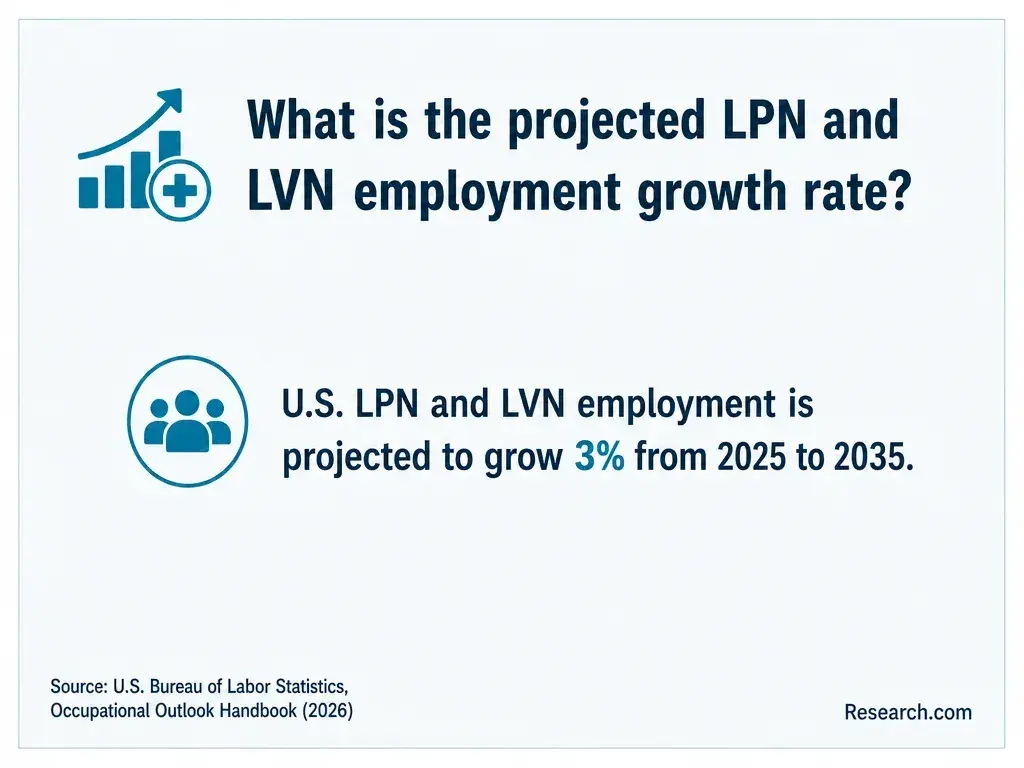
The appropriate labor-market comparison depends on the license and job, not whether a course included medication reconciliation. The U.S. Bureau of Labor Statistics reports wages and projected employment for occupations such as registered nurses and licensed practical or vocational nurses; it does not report a separate wage for "medication reconciliation nurse." Occupation-wide figures combine workers with different experience, settings, locations, and schedules, so they cannot predict a new graduate's offer.
Compare local openings for the license you expect to hold, then examine orientation, shift differentials, benefits, and advancement opportunities alongside pay. If considering an advanced practice role, use data for that occupation rather than treating RN earnings as a proxy. An online PMHNP certificate program guide can help identify educational options, but neither a certificate nor an occupation-wide wage figure guarantees an individual salary or job.
Other Things You Should Know About Nursing
No. It is evidence of reported medication use. Compare it with available records and current orders, and clarify differences through the organization's process before treating a medication as ordered.
Document what is known and what remains uncertain. Follow policy for seeking other reliable sources, such as an authorized caregiver, available records, or pharmacy information, and escalate unresolved discrepancies.
Medication review is a broader assessment of a patient's medicines for concerns such as appropriateness or adherence. Reconciliation specifically compares medication information across a transition and addresses discrepancies; the processes can overlap.
Yes, when permitted by the record system and policy, using an appropriate correction or addendum that preserves an accurate audit trail. A nurse should not backdate an entry or conceal an earlier error.
- Practice - Texas Board of Nursing Position Statements https://www.bon.texas.gov/practice_bon_position_statements_content.asp
- Medication Reconciliation - Oregon Board of Pharmacy https://www.oregon.gov/pharmacy/pages/medication-reconciliation.aspx
- RN and LPN FAQs - Ohio Board of Nursing https://nursing.ohio.gov/education-and-practice/rn-and-lpn-faqs
- SCOPE OF PRACTICE - Nursing Fundamentals - NCBI - NIH https://www.ncbi.nlm.nih.gov/books/NBK610819/
- Designing the Medication Reconciliation Process | Agency for Healthcare Research and Quality https://www.ahrq.gov/patient-safety/settings/hospital/match/chapter-3.html
- Medication Reconciliation | AHRQ https://digital.ahrq.gov/medication-reconciliation
- A Guide to UAPs in Nursing | NSO https://www.nso.com/Learning/Artifacts/Articles/UAPs-in-Nursing-Who-They-Are,-What-They-Do,-and-Why-It-Matters
- Medical Reconciliation/Hand-offs Care | PM&R KnowledgeNow https://now.aapmr.org/transition-of-care-and-medication-reconciliation/
- 15.2 Basic Concepts of Administering Medications | Nursing Skills 2e https://wtcs.pressbooks.pub/nursingskills/chapter/15-2-basic-concepts-of-administering-medications/
- 6.2 Safe Medication Administration - Clinical Procedures for Safer Patient Care https://opentextbc.ca/clinicalskills/chapter/6-1-safe-medication-adminstration/