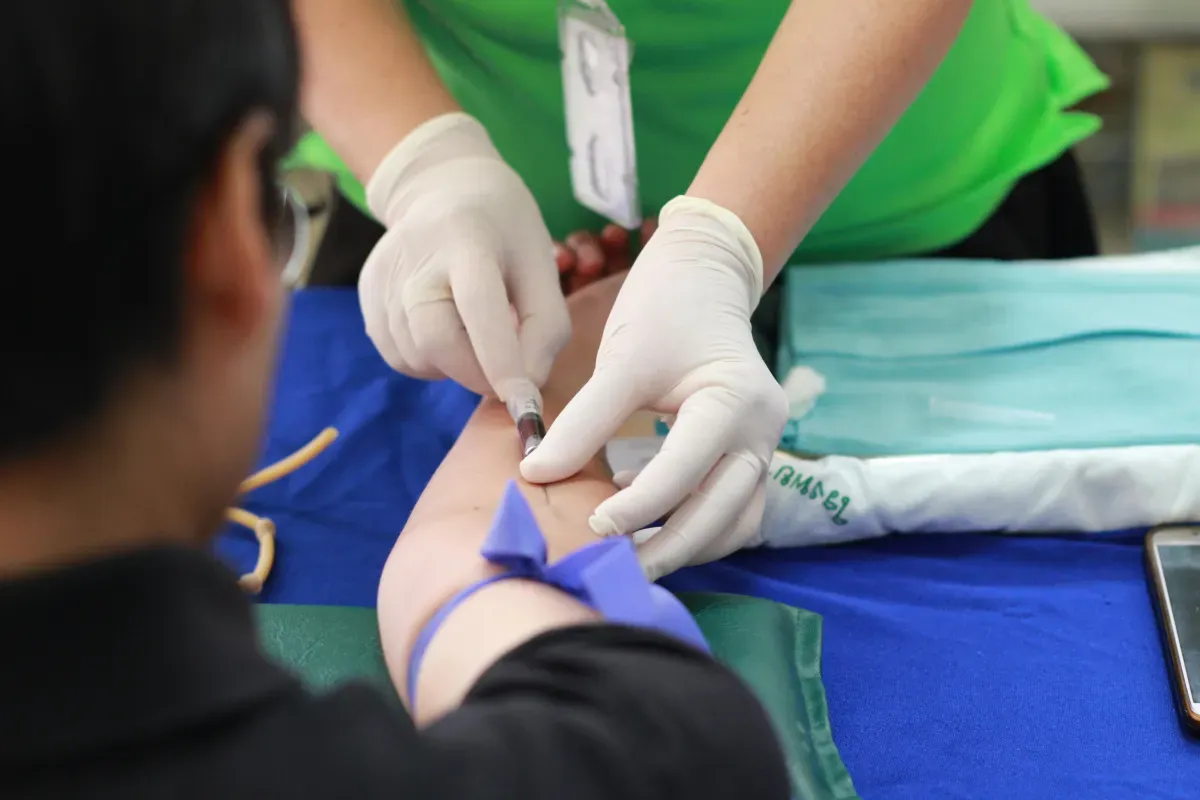
2027 Hospital vs Outpatient First Nursing Jobs: Comparing Available Support and Development
Audited and Verified:
Our Editorial and Data Verification Process
Research.com uses government datasets, official education statistics and primary institutional information to support its career and degree guides. Our review process checks factual accuracy, occupational definitions, source dates and the requirements associated with the credentials discussed.
How This Article Was Fact-Checked
Our editorial team verifies salary estimates, employment projections, education requirements and program information against original data providers and official organizations. Salary figures are checked against the relevant occupational definitions and reporting periods. Information about licensure, accreditation and required in-person training is reviewed separately.
Fact-checked and verified on:

Co-Founder and Chief Data Scientist
Your first RN job determines more than where you work: it shapes how you move from supervised student practice to accountable patient care. Hospitals often offer formal new-graduate programs and exposure to acute illness; outpatient employers may offer focused mentorship, continuity with patients, and more predictable hours. Neither setting guarantees a safe transition. This guide helps nursing students and newly licensed RNs compare the support, development, workload, and compensation behind actual offers - and identify the questions that matter before accepting one.
Key Things You Should Know
- Choose the orientation, not just the setting: Ask who precepts you, how your patient assignment increases, and what happens when you need help after orientation.
- Hospital experience is not a universal prerequisite: An outpatient first job can build strong assessment, education, and care-coordination skills, but may not provide the acute-care experience required for some later roles.
- Compare total offers: An 8-, 10-, or 12-hour shift pattern can affect your life as much as base pay; review differentials, benefits, staffing, and training time together.
What Are Hospital and Outpatient Nursing Jobs for New Graduates?
A hospital RN may work on a medical-surgical, telemetry, emergency, perioperative, behavioral health, or other unit. Duties depend on the unit but can include repeated assessments, medication administration, monitoring for deterioration, coordinating with an interprofessional team, and preparing patients for discharge. "Hospital job" does not describe a single workload or level of support.
Outpatient nursing includes primary and specialty clinics, ambulatory surgery, infusion centers, dialysis facilities, and other sites where patients generally do not stay overnight. Work may emphasize telephone or in-person triage, procedures, patient education, chronic-condition follow-up, and coordination across visits. Some positions involve high-acuity patients and rapid escalation; others have a narrower clinical scope. Check the job posting carefully: an ambulatory employer may advertise RN, LPN/LVN, and medical assistant positions with different responsibilities.
These are employment choices after nursing preparation and licensure, not two separate RN degrees. If you are still deciding how to enter nursing, compare program requirements separately; nursing programs with broader admission pathways address entry to school, not the quality of a future employer's orientation.
Which Setting Offers Better Support for a First Nursing Job?
Neither setting reliably wins. A hospital with a dedicated educator, protected preceptor time, and a gradual increase in patient responsibility may provide excellent support. A small clinic with a consistent mentor and accessible clinician can do the same. Conversely, a formal residency is of limited value if the new nurse routinely works without timely help.
The comparison below separates the support you can verify from assumptions based on an employer's name or size.
| Support question | Hospital offer | Outpatient offer |
| Who teaches the work? | May include a unit preceptor, educator, and residency cohort | May include a designated RN mentor, clinician, or site lead |
| How is independence assessed? | Ask about observed skills, patient-load progression, and unit-specific checks | Ask about observed triage, procedures, documentation, and escalation decisions |
| Who helps after orientation? | Verify charge-nurse coverage and experienced staff on each assigned shift | Verify who is available during busy clinic sessions and at satellite sites |
| What could limit support? | Frequent preceptor changes or pressure to take a full assignment early | Being the only RN on site or having little protected teaching time |
Ask to speak with a nurse hired recently into the same role. Find out whether orientation was extended when competencies were not yet met and whether questions remained welcome afterward. School clinical policies are a different issue: even online BSN completion clinical policies do not tell you what supervised onboarding an employer will provide.
How Do Hospital and Outpatient Jobs Compare for Nursing Career Development?
Hospitals can offer exposure to multiple specialties, educators, internal transfers, and higher-acuity situations. That breadth may help a new RN who wants to explore inpatient specialties. Outpatient practice can build depth in a patient population, long-term relationships, prevention, education, and referral systems - valuable preparation for ambulatory leadership and care coordination.
The important distinction is transferability, not prestige. A hospital nurse moving into a clinic may need to learn longitudinal follow-up and telephone triage. A clinic nurse moving into an ICU may need substantial acute-care onboarding, even after years of excellent outpatient practice. Ask prospective employers what experience they require for the specific next role you have in mind.
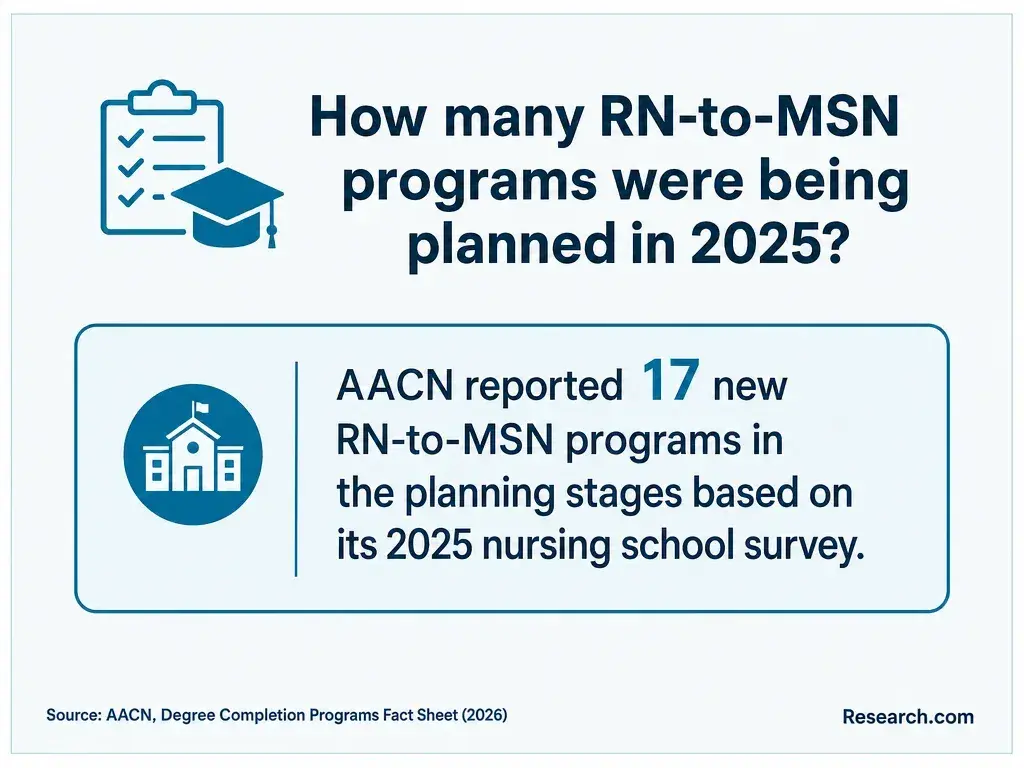
Further education can support a later goal, but it does not replace role-specific experience. If graduate study becomes relevant, compare its cost and credential outcome - for example, affordable nursing master's study for BSN graduates - against opportunities available through employer training, internal mobility, or continuing education.
For an RN position in either setting, you need an active RN license that authorizes practice in the relevant state; employers may also specify degree and experience requirements. An eligible graduate of an approved prelicensure nursing program must meet the state board's requirements, including the applicable NCLEX-RN process, before practicing as an RN. Graduation, exam eligibility, passing the exam, and holding an active license are distinct steps. An ADN- or BSN-prepared RN may be eligible for many entry-level roles, but individual employers can prefer or require a BSN.
Job-specific training comes next. Basic life support, specialty courses, or other credentials may be required by an employer, but a certificate does not substitute for an RN license or demonstrated competence. New graduates should confirm whether a posting accepts applicants awaiting licensure and the date by which an active license is required.
People entering nursing with a prior non-nursing degree may consider accelerated direct-entry nursing master's pathways, among other prelicensure routes. They should verify that the particular program prepares them for initial RN licensure in their intended state; the degree title alone does not establish eligibility.
A nurse residency is an employer's structured transition-to-practice program, not a nursing degree or a license. Hospital systems commonly use cohort learning alongside unit orientation, simulation, education sessions, and precepted shifts. Outpatient systems may offer an ambulatory residency, a smaller cohort, or individualized onboarding without calling it a residency. Availability and content vary by employer.
Compare the components rather than the label. Request a written outline showing the length of precepted work, expected patient-load progression, specialty training, competency assessments, educator access, and any schedule or employment commitment. Also ask what happens if you need additional supervised time. Residency participation does not itself prove readiness to manage every assignment independently.
Do not confuse a first-job residency with prelicensure study. A career changer comparing second-bachelor's nursing program entry comparisons is evaluating how to qualify for RN licensure; an employer residency addresses the separate transition after hiring.
Hospital nurses often practice prioritizing several changing patient needs, recognizing deterioration, coordinating handoffs, administering medications, and planning discharge. Exposure depends heavily on unit and assignment: a new nurse on a general medical unit does not automatically gain critical-care competence.
Outpatient nurses may repeatedly practice focused assessment, triage, procedure preparation and recovery, patient teaching, symptom follow-up, and coordination with pharmacies and other services. Repetition can build expertise, but a narrowly defined clinic role may offer limited exposure to certain procedures or emergencies. Ask what you will personally perform, observe, and have assessed - not just what services the organization offers.
Experience at work and supervised hours required for a later credential are not interchangeable. For example, online PMHNP certificate clinical requirements concern formal advanced-practice education; working in an outpatient behavioral health clinic does not automatically satisfy them.
Hospital units commonly require coverage at night, on weekends, and on holidays, often through longer shifts. Many clinics operate primarily during business hours, but ambulatory surgery, dialysis, infusion, and urgent care can have early starts, evenings, weekends, or on-call duties. Neither "three shifts a week" nor "no weekends" should be assumed without a written schedule.
Workload also takes different forms. In a hospital, ask about the number and acuity of assigned patients, admissions and discharges, support staff, and coverage during breaks. Outpatient nurses should ask about daily visit volume, triage messages, procedures, documentation, and whether unfinished work carries into the next day. A predictable schedule can still be demanding if appointment volume leaves little time for safe follow-up.
If you may return to school, compare the actual shifts with required classes and clinical placements rather than assuming outpatient hours will always fit. Even shorter psychiatric-mental health nursing master's pathways can require scheduled supervised clinical experiences that conflict with either job.
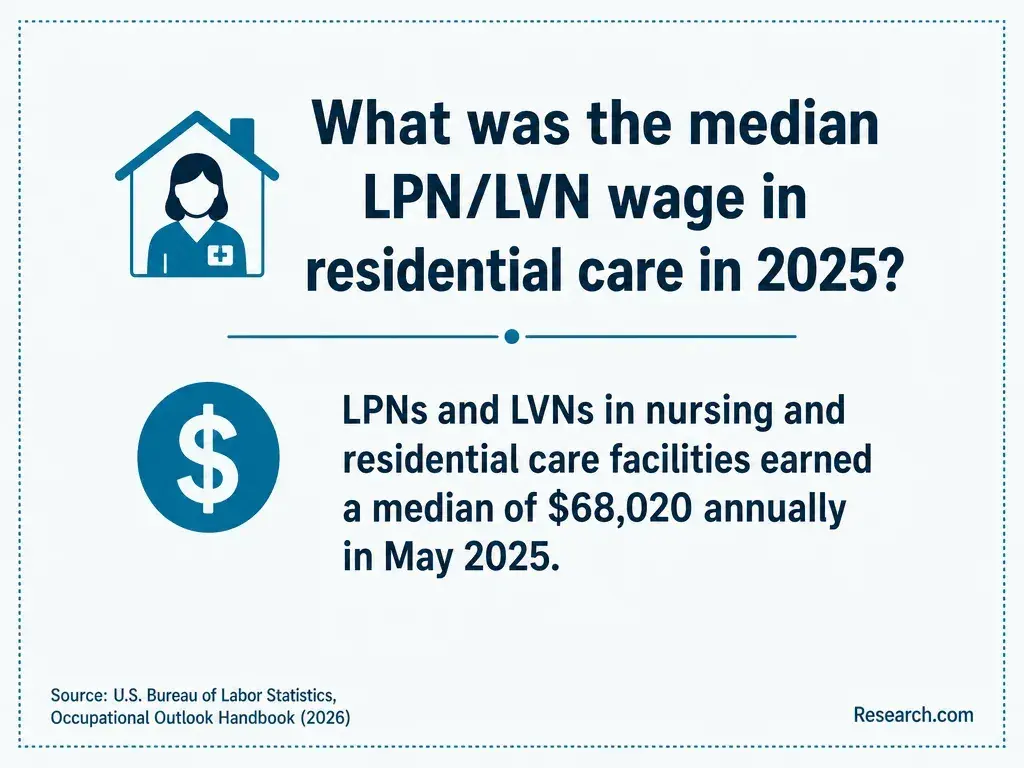
There is no dependable national pay rule that says a new RN will earn more in a hospital than in an outpatient job. The U.S. Bureau of Labor Statistics reports RN wages across workers with different experience levels and reports industry data for broad employer categories. Its May 2025 wage reference is useful for labor-market context, but neither an occupation-wide median nor an industry figure predicts a particular new graduate's offer. "Outpatient" also covers employers with substantially different pay structures.
Compare written offers using annualized expected earnings, not hourly base rates alone. Check scheduled hours, night and weekend differentials, overtime rules, bonuses and repayment terms, health insurance, retirement contributions, paid leave, parking or commuting costs, and whether education time is paid. A higher differential may matter less if the schedule is unsustainable; a lower base rate may be offset by benefits or a better-supported transition.
Keep future education costs separate from first-job wages. If you eventually pursue advanced practice, resources on PMHNP programs compared by tuition can inform that later financial decision, but anticipated earnings from another role should not be treated as guaranteed repayment for today's costs.
A hospital first job can provide a starting point for inpatient specialties such as medical-surgical, perioperative, emergency, or critical care, subject to each employer's hiring and training standards. Outpatient practice can lead toward ambulatory care, infusion, primary care, specialty clinics, care coordination, or community-facing roles. Some specialties hire new graduates directly; others seek prior experience. An internal transfer is not automatic.
Choose an initial job that develops skills your target employers actually request. For example, a nurse aiming for emergency care should ask whether a hospital offer includes appropriate emergency-department onboarding; taking an unrelated inpatient job solely because it is "hospital experience" may be less direct. Likewise, an outpatient specialty clinic can be a strong start for someone committed to that patient population.
RN specialty experience is different from advanced practice preparation. A later family nurse practitioner role requires appropriate graduate population-focus education, certification, and state authorization. Exploring accelerated family NP certificates after a master's is relevant only if your prior education and the program's eligibility requirements support that route.
How Can You Choose the Best First Nursing Job for Your Career Goals?
Start with the role you can safely learn now and the direction you may want to take next. Then compare offers using evidence from the specific unit or clinic, not a general claim that hospitals offer better training or outpatient jobs offer better balance.
Use these questions in interviews and request a follow-up conversation with a prospective preceptor or educator when possible:
- Clarify supervision: Who will precept me, on which shifts, and who is available when that person is absent?
- Check progression: What assignments will I take at the start, how will responsibility increase, and which competencies must I demonstrate?
- Test the workload: What are the typical patient or visit volumes, staffing arrangements, documentation expectations, and escalation routes?
- Compare the full offer: What schedule, differentials, benefits, training time, and employment commitments are in writing?
- Check your next step: Does this experience meet the stated preferences or requirements of employers in the specialty you hope to enter?
Choose the better-supported offer if both settings meet your goals. If one position offers the schedule you need but little supervised onboarding, ask whether the employer can strengthen the plan before you accept. You do not need a graduate degree to solve an inadequate first-job orientation. Later, an associate-degree RN considering graduate study can examine graduate nursing routes for associate-degree nurses once a specific career goal makes that education worthwhile.
Other Things You Should Know About Nursing
Some employers accept applications or make conditional offers before licensure. Ask when the active license must be verified; do not perform RN duties until you are authorized to practice.
Read the amount, repayment triggers, time period, and exceptions before signing. Compare the agreement with the training you will actually receive, and seek qualified advice if its terms are unclear.
Tell your preceptor or educator promptly and describe the specific assignments or skills that need more supervised practice. Ask for a documented development plan rather than quietly accepting work beyond your current competence.
No. It is RN experience, but its relevance depends on the next position's duties and hiring criteria. Describe the assessments, decisions, procedures, and coordination you performed rather than relying on the setting alone.
- Support Experiences for Novice Nurses in the Workplace - PMC https://pmc.ncbi.nlm.nih.gov/articles/PMC10176594/
- Nursing Practice FAQ - Texas Board of Nursing - Texas.gov https://www.bon.texas.gov/faq_nursing_practice.asp.html
- Nursing and Patient Safety | PSNet https://psnet.ahrq.gov/primer/nursing-and-patient-safety
- New Graduate Orientation Evaluation - DUNE https://dune.une.edu/cgi/viewcontent.cgi
- What is a Telephone Triage Nurse? | Western Governors University https://www.wgu.edu/career-guide/healthcare/telephone-triage-nurse-career.html
- Staffing, Acuity, and Workload: A Data-Driven Approach for Unit Leaders | IWU https://www.indwes.edu/articles/2026/04/staffing-acuity-workload-data-driven-approach-unit-leaders
- Nurse Career Paths: 10 Types of Nursing Jobs You Can Pursue as an RN and Beyond | Elmhurst University https://onlinedegrees.elmhurst.edu/blog/10-nursing-jobs-nursing-career-path
- Nurse - Explore Healthcare Careers | Mayo Clinic College of Medicine and Science https://college.mayo.edu/academics/explore-health-care-careers/careers-a-z/nurse/
- Components of an Effective Nurse Orientation Pathway | American Association of Critical-Care Nurses https://solutions.aacn.org/blog/components-of-an-effective-nurse-orientation-pathway
- Nurse Orientation and Onboarding: A Make or Break! | AMSN https://amsn.org/Practice-Resources/Medical-Surgical-Monitor/Article/nurse-orientation-and-onboarding-a-make-or-break