2027 Graduation Rates for Online Communication Master's Programs: Completion Statistics

Co-Founder and Chief Data Scientist
Balancing a full-time job, family obligations, and financial strain while pursuing an online communication master's can quickly overwhelm even the most motivated student. With 2024 studies showing that fewer than 55% of online master's candidates complete their degrees within the expected timeframe, it's clear that initial enrollment alone does not guarantee timely graduation.
This attrition reflects not just academic challenges but also factors like program flexibility, institutional support, and the competing demands on adult learners' time. Understanding these dynamics is crucial, as degree completion directly affects career advancement opportunities and return on educational investment for prospective students.
This article examines graduation rates, completion statistics, and the key factors shaping student success in online communication master's programs.
Key Things to Know About Graduation Rates for Online Communication Master's Programs
- Online communication master's programs report average graduation rates near 55% within six years; this slower pace highlights a tradeoff where program accessibility can extend time-to-degree, increasing total educational costs.
- Employers increasingly review graduation consistency in communication fields as an indicator of candidate persistence and project management skills, signaling that completion patterns affect workforce credibility beyond the credential itself.
- Programs with structured cohort models yield up to 20% higher retention rates by fostering peer accountability, suggesting that prospective students weigh program format when assessing realistic completion timelines and personal time management demands.
What Are the Graduation Rates for Online Communication Master's Programs?
Graduation rates for online communication master's programs often reflect complex tradeoffs between flexibility and structure rather than purely academic quality. For example, a working professional balancing a full-time job and family caregiving may extend their program participation beyond traditional timelines, lowering immediate completion statistics despite eventual degree attainment.
According to recent data from the Integrated Postsecondary Education Data System (IPEDS), the average six-year completion rate for primarily online graduate programs sits around 58%, a figure that must be considered alongside part-time enrollment patterns and varied student responsibilities common within communication graduate populations.
Completion statistics for online communication graduate degrees underscore the importance of program design elements such as advising quality, cohort models, and pacing flexibility in improving graduation outcomes. Programs offering strong support systems report completion rates exceeding 70% within 3 to 5 years, highlighting how institutional engagement can mitigate challenges inherent to self-directed learning.
Prospective students should weigh these rates against time-to-degree expectations and cost implications, as extended enrollment can elevate cumulative expenses and delay workforce reentry. Those interested in accelerated pathways may also explore options like fast-track MSW programs online, which illustrate the spectrum of program pacing available across disciplines with comparable demands on time and commitment.
How Do Graduation Rates Compare Among Online Communication Master's Programs?
Graduation rates among online communication master's programs reveal significant variation largely driven by program structure and student demographics rather than simple academic quality. For instance, programs emphasizing cohort-based learning with consistent, advisor-led engagement tend to report graduation rates up to 20% higher than those with open enrollment and fully self-paced formats, according to a 2024 study by the Online Learning Consortium.
This difference stems from the fact that working professionals and adult learners balancing jobs and family obligations often delay or pause their studies, which is more common in programs that allow flexible pacing or rolling admissions. Therefore, lower on-time completion rates may reflect increased accessibility and accommodation rather than inferior education, which is critical for prospective students to understand when comparing programs.
Admissions selectivity and program policies, such as transfer credits acceptance and policies on stopping out, also heavily influence graduation statistics. Programs admitting students with strong academic backgrounds and clear career goals usually see higher completion percentages but may present additional challenges for career changers or those returning to academics after a gap.
Graduates should interpret published graduation rates cautiously, considering how part-time study norms and institutional support services affect timelines. Persistence risks and degree completion chances are not uniform, making it vital for candidates to evaluate how well a program's structure and resources align with their professional commitments and pacing preferences.
One graduate recounted weighing two programs that appeared similar in curriculum but differed notably in graduation rate reporting. The first advertised a 65% six-year completion rate but allowed entirely self-paced enrollment, which felt risky given her full-time job and family demands.
The second, with a 50% rate, required cohort participation and provided dedicated advisors, offering stronger guidance but less scheduling flexibility. After speaking with admissions about how graduation rates accounted for stop-outs and part-time students, she realized the second program's metric better reflected students balancing complex personal schedules and ultimately chose it despite the lower completion statistic, appreciating the clearer roadmap and support network it offered.
How Do Online Communication Master's Program Graduation Rates Compare to On-Campus Programs?
Graduation rates for online communication master's programs often appear lower than their on-campus equivalents at first glance, but these comparisons can obscure critical contextual differences. Online students frequently juggle employment, family duties, and part-time enrollment, extending their time to degree beyond the traditional two years common among campus-based cohorts.
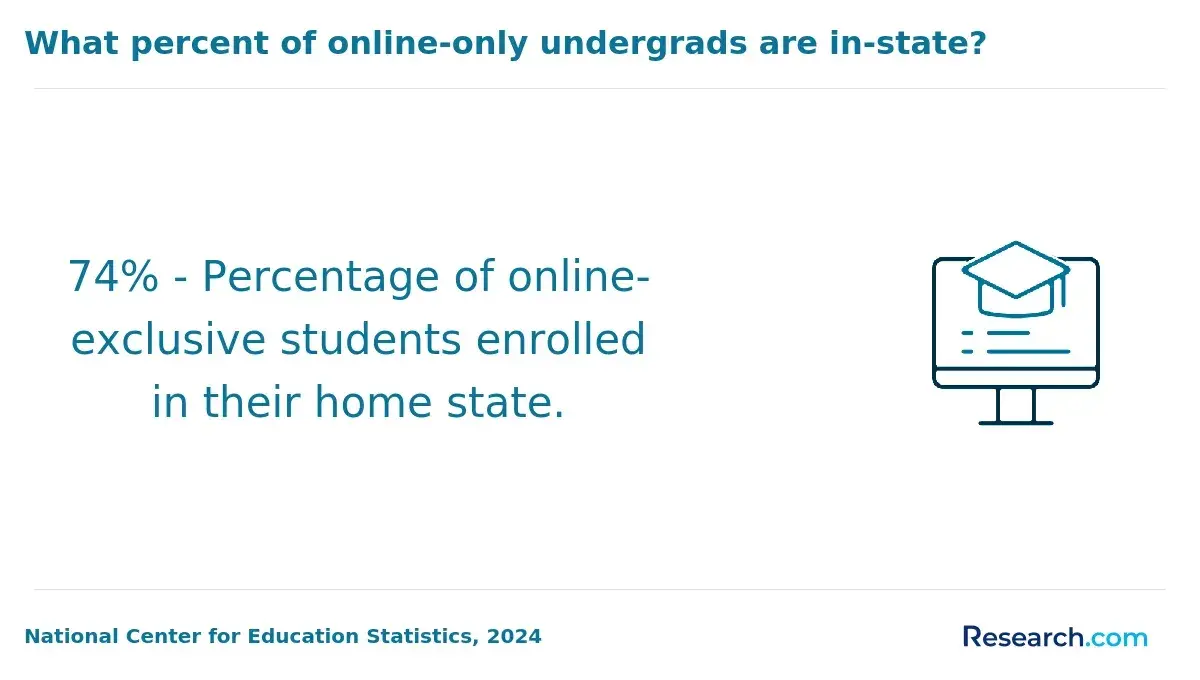
According to 2024 data from the National Center for Education Statistics, online programs average graduation rates between 50% and 65%, while many on-campus programs range from 60% to 75%. This gap primarily reflects variations in student demographics and enrollment patterns rather than program quality or effectiveness.
Institutional support plays a decisive role in bridging these differences. Programs that offer strong online advising, tutoring, and community engagement tend to see improved completion rates, highlighting the importance of proactive academic infrastructure.
Additionally, more selective institutions with rigorous admissions often report higher graduation outcomes across both modalities, as their student bodies enter graduate study better positioned to meet its demands. For working professionals weighing flexibility against accelerated progression, understanding that online program completion timelines might be longer but not necessarily indicative of lower ultimate success is key to aligning educational choices with career and life circumstances.
Graduation rates in online communication master's programs often hinge on enrollment status and institutional support. Full-time students tend to maintain momentum and graduate more quickly, while part-time enrollment increases stop-out risk and extends completion timelines. Programs with effective academic advising that guides course sequencing and prerequisite fulfillment reduce delays from unnecessary classes.
This dynamic reflects in data from the National Center for Education Statistics, which shows that programs with higher full-time enrollment report up to a 15% increase in on-time graduation rates. Incorporating cohort-based structures also improves persistence by fostering peer accountability, a factor that may outweigh the convenience of transfer credits, which can cause administrative delays despite shortening time-to-degree.
The balance between flexibility and structure significantly affects student retention and academic support in communication graduate programs. Adult learners juggling jobs and caregiving often benefit from asynchronous course options, but excessive flexibility without systematic milestones risks procrastination and attrition.
For those working over 30 hours weekly or managing family responsibilities, program designs that accommodate life commitments without sacrificing academic rigor are crucial. Prospective students seeking practical pathways will also find that programs with clear support systems, including tailored advising and faculty engagement, better sustain academic progress than those relying heavily on transfer credits or loosely structured pacing.
For those exploring options, evaluating how these factors interact is as important as comparing graduation statistics, which can be misleading without considering student demographics and program format. Those interested in related fields may also explore online mental health counseling programs (CACREP-accredited) as an alternative based on workforce demand and program design.
Student support infrastructure materially shapes graduation outcomes for online Communication master's programs, particularly for adult learners juggling job demands and personal responsibilities. Evidence from the 2024 Online Learning Consortium study shows programs with integrated advising, tutoring, and proactive outreach achieve 15% higher rates of on-time degree completion.
These services influence course sequencing decisions, enabling students to balance workload and avoid withdrawals, while faculty accessibility helps resolve academic uncertainties promptly, reducing dropout risks. Programs that layer cohort models and regular progress monitoring cultivate peer accountability and institutional responsiveness, which counteract the isolation common in remote learning environments and support re-enrollment after interruptions.
The presence of support services is only one dimension; their effective integration and timeliness often determine whether students maintain momentum or delay completion. For working professionals and career changers, quick access to tailored advising can clarify elective choices aligned with evolving career goals, while mental health resources help manage stress that might otherwise cause temporary or permanent disengagement.
Technical support prevents platform issues from becoming barriers to participation, underscoring that these resources collectively function as a network rather than isolated amenities. Institutions lacking cohesive support risk increased attrition despite nominal service offerings, making service quality a critical decision factor.
One recent online Communication master's graduate described how academic advising and tutoring sessions proved essential when they unexpectedly had to reduce their course load due to family obligations. The advisor quickly mapped an adjusted plan that kept program requirements aligned with graduation timelines, while faculty and tutors provided targeted help during condensed study periods.
This combination of proactive outreach and flexible support fostered confidence and persistence, allowing the student to complete the degree on schedule despite significant external pressures.
Completion timelines for online communication master's programs frequently extend beyond the nominal two-year full-time plan due to the complex realities faced by working adults balancing academic, professional, and personal responsibilities. Most students enroll part-time, taking one or two courses per semester, which lengthens time to degree but allows steady progress without overwhelming their schedules.
Additional factors such as practicum or capstone sequencing, institutional pacing rules, and stop-out events-when students pause their studies temporarily-significantly affect graduation rates and the average completion time. For instance, a student juggling a demanding job and family might stretch a program over four years, foregoing accelerated paths in favor of sustainable pacing that facilitates persistence without burnout.
Understanding the average time to graduate from an online communication master's degree is crucial for effective planning and aligning educational goals with workforce dynamics. National data indicates a median completion time around 3.2 years, reflecting the predominance of part-time enrollment and the high incidence of stop-outs, which can reach up to 20% among online graduate students.
Students who receive employer support and have clear post-degree objectives tend to complete on schedule, highlighting the importance of external incentives. Prospective learners should carefully evaluate program flexibility, support services, and institutional pacing alongside their personal constraints to optimize their likelihood of finishing.
Those weighing the choice between accelerating their studies or adopting a measured approach must recognize that extended duration may offer parallel benefits, such as accumulating work experience, a factor critical to long-term employability in communication fields.
Prospective students comparing online communication master's degrees should also consider how program structure and completion timelines intersect with financial and lifestyle tradeoffs. While accelerating coursework can shorten time-to-degree, it risks overextension and lower persistence, potentially leading to stop-outs or withdrawal.
Conversely, a strategic part-time approach, supported by flexible scheduling and asynchronous coursework, enables manageable integration of study and work commitments, ultimately enhancing graduation rates. This balancing act also impacts career progression and earning potential, so learners might benefit from exploring related fields or alternative advanced degrees, including online master's data science, where different completion pacing might align better with workforce demands.
Employer Confidence in Online vs. In-Person Degree Skills, Global 2024

Graduation rates in online communication master's programs reflect distinct challenges tied to enrollment status and work commitments, directly shaping student progression and completion timelines. Full-time students generally maintain higher on-time graduation rates-often between 60% and 75%-due to their capacity to engage consistently and move swiftly through course sequences.
In contrast, part-time students and working professionals face slower pacing and elevated risks of interruptions, as most juggle job demands, family responsibilities, and academic deadlines, which can extend time-to-degree substantially.
This disparity has practical implications for academic planning: for instance, a full-time student might complete their degree in two to three years by following a structured, cohort-based curriculum with regular advising support.
Meanwhile, working professionals commonly require four to six years, relying heavily on program flexibility such as asynchronous classes and tailored advising to manage stop-outs or temporary withdrawals. Reports indicate that nearly 30% of employed graduate students in communication fields encounter disruptions that delay completion beyond six years, highlighting the critical role of employer support and institutional responsiveness to nontraditional needs.
Choosing between part-time and full-time enrollment demands careful consideration of these tradeoffs. While full-time study accelerates graduation and better aligns with continuous academic momentum, part-time or flexible options accommodate career stability but necessitate longer persistence and self-directed time management.
Prospective students should evaluate how these factors influence their ability to access timely mentoring, sequence courses effectively, and sustain progress-decisions that ultimately affect not only graduation rates but the alignment of educational outcomes with professional advancement within communication-related roles.
Retention rates in online Communication master's programs often exceed 70% after the first year, but this early persistence does not directly translate into graduation within a typical timeframe. Many students pause their studies due to competing priorities such as work or family, creating stop-out patterns that complicate the path to degree completion.
A prospective student evaluating programs should consider how each uses retention data-not simply as a snapshot of enrollment continuity, but as a predictor of structured support mechanisms like milestone tracking, advising frequency, and flexible course sequencing that can accommodate these interruptions without derailing progress.
Programs that implement clear academic scaffolding, virtual advising, and pacing aligned with part-time enrollment realities tend to see better graduation outcomes. According to the National Center for Education Statistics, these programs typically achieve graduation rates of around 50-60% within six years.
This gap between retention and graduation underscores a key decision-making tradeoff. Faster on-time completion rates often align with full-time study and stronger institutional guidance, whereas extended completion windows reflect the lived realities of most online learners balancing multiple roles.
Understanding these nuances helps students assess whether a program's design realistically fits their personal and professional responsibilities rather than relying solely on first-year retention figures as indicators of eventual degree attainment.
Graduation rates directly influence whether students can translate their tuition, time, and opportunity costs into a completed online communication master's degree that holds real workforce value. For instance, a student who extends their program well beyond the expected timeframe may face mounting tuition fees alongside lost earnings potential, effectively diminishing the return on investment.
Delayed completion postpones entry into roles that typically require graduate credentials, meaning the financial benefits linked to advanced qualifications are deferred or reduced. This dynamic is particularly critical for career changers and working professionals, for whom the balance between academic progress and income interruption can determine the net advantage of pursuing such a degree.
Student persistence and institutional support are key factors that shape these outcomes. Programs offering flexible pacing options and targeted academic advising can reduce attrition and help maintain progression momentum, positively impacting both graduation rates and long-term financial returns.
Conversely, stop-outs or program changes often introduce hidden costs that compound the economic risk. Considering how graduation rates influence return on investment in online communication master's programs is essential for prospective students who must weigh whether the institution's resources and design align with their personal and professional constraints.
Assessing graduation rates alongside individual circumstances enhances how students evaluate program completion rates and financial outcomes for online communication degrees. Since timely degree attainment correlates with increased earning capacity-highlighted in research showing higher median incomes post-graduation-understanding these metrics helps refine expectations.
For example, referencing labor market data such as the SLP salary landscape underscores the importance of completing a degree within a standard timeframe to capitalize on enhanced career opportunities.
Graduation rates for online communication master's programs provide critical insight into how well these programs accommodate the realities of non-traditional students, such as working professionals and adult learners balancing multiple responsibilities. Comparing completion statistics alongside factors like program flexibility, retention patterns, and academic support resources enables a more nuanced assessment of student success beyond surface-level percentages.
For example, a program with a 55% graduation rate within six years-a figure consistent with National Center for Education Statistics data-may still offer superior advising and flexible pacing that benefit those unable to enroll full-time, unlike a program with a higher rate but less adaptability.
Using completion statistics to assess online communication program quality helps prospective students set realistic expectations for degree timelines and persistence challenges based on their individual circumstances.
Further, understanding graduation rates in context allows candidates to evaluate how institutional support translates into timely completion, which directly impacts long-term career and financial planning. These rates also reflect employment market signals, where many employers value completed degrees as tangible proof of perseverance and capability. This dynamic is increasingly relevant for career changers assessing whether to pursue advanced degrees or alternatives with shorter paths.
For insights into career alignment based on education and job outlooks, exploring resources such as how to become a profiler can offer practical guidance on matching academic programs with workforce demands. Prospective students should incorporate graduation rate data thoughtfully rather than relying solely on raw numbers, tailoring decisions to their learning styles, schedules, and professional goals.
What Do Graduates Say About Graduation Rates for Online Communication Master's Programs?
- Armando: "The graduation rates provided at the start gave me a rough benchmark, but they didn't reflect my personal juggling act. Balancing a full-time job and family commitments extended my timeline beyond what most completion stats suggested. The online program's academic advisors were essential in helping me adjust expectations and stay motivated, especially because pacing isn't a one-size-fits-all scenario."
- Damien: "I studied the published completion percentages closely before enrolling, but what struck me was how those numbers didn't capture the nuances of course sequencing or cohort dynamics. In my program, faculty responsiveness and the structured timeline for part-time learners really influenced persistence more than raw graduation rates. So while the stats helped frame my commitment, the real challenge was managing the workload alongside unpredictable personal demands."
- Aiden: "From my experience, graduation rates served as a useful comparative tool but couldn't guarantee an easy path to the degree. Time-to-degree expectations shifted when I realized part-time enrollment changed the pace drastically. I learned practical lessons about proactively using faculty support and planning semesters carefully to navigate the workload and avoid burnout, which I now see as more telling than mere completion statistics."
Other Things You Should Know About Communication Degrees
Programs with more demanding curricula or intensive capstone projects often see lower graduation rates due to their high workload and skill expectations. However, these programs may better develop critical thinking and applied communication skills that employers value.
Prospective students should consider whether graduating from a less rigorous program with a higher completion rate translates to equal career readiness or if the extra challenges in tougher programs justify the potentially tougher path to completion.
While employers may notice the reputation of the institution, they rarely scrutinize graduation rates themselves. Instead, employer focus rests on the skills graduates demonstrate and relevant experience gained. That means a program with a moderate graduation rate but strong practical components and connections to industry can hold as much or more weight than one with high graduation rates but weaker applied learning opportunities.
Most programs report completion against a 150% time-to-degree benchmark, meaning students are counted as graduates if they finish within 1.5 times the normal program length. For a 36-credit master’s, that usually means completion within about three years for full-time students.
- Most Affordable Online Master’s In Communication Programs | Grad School Hub https://www.gradschoolhub.com/affordable/online/masters/communications/
- Is a master's in communication worth it | edX https://www.edx.org/resources/is-a-masters-in-communication-worth-it
- The Voice of the Online Student Framework – Recommendations for Student Support - OJDLA https://ojdla.com/articles/the-voice-of-the-online-student-framework-recommendations-for-student-support
- Factors influencing a student's decision to pursue a communications degree in Spain https://www.intangiblecapital.org/index.php/ic/article/view/277/239
- Study: Online learning improves retention, graduation rates https://www.highereddive.com/news/study-online-learning-improves-retention-graduation-rates/521271/
- Master’s in Communication in Texas https://www.mastersincommunications.org/state/texas/
- How Long is a Master’s in Communication Program? Full-Time vs Part-Time https://www.mastersincommunications.com/faqs/length-of-masters-in-communication-programs
- How Student Support Services Create a Stronger Workforce https://skillpointe.com/news-and-advice/how-student-support-services-create-stronger-workforce
- Mastering Online Student Support for Better Learning https://lakewood.edu/online-student-support-tips-2/
- Is College Worth it? | Return on Investment Analysis of College Degree https://educationdata.org/college-degree-roi