2027 Fastest Accredited Online Technical Communication Master's Programs With No Thesis Requirement

Co-Founder and Chief Data Scientist
Choosing between a fast professional master's and a thesis track can affect both your timeline and future academic options. Accredited online technical communication master's programs commonly replace a thesis with a portfolio, capstone, or applied project.
The U.S. Bureau of Labor Statistics projects about 4,500 technical writer openings annually through 2033, largely from replacement needs. This guide helps working professionals compare legitimate no-thesis options, assess program speed and rigor, and decide whether an applied pathway supports their career plans.
Key Things to Know About the Fastest Accredited Online Technical Communication Master's Programs
- Legitimate no-thesis online technical communication master's programs are usually institutionally accredited, require roughly 30 to 36 graduate credits, and substitute a capstone, portfolio, report, or comprehensive assessment for a traditional thesis.
- The quickest realistic path is generally 12 to 18 months of continuous full-time study, but advertised speed depends on course availability, transfer-credit rules, prerequisite requirements, and whether the final project can be completed on schedule.
- A no-thesis degree can fit technical writing, content design, documentation, UX writing, and communication-management goals; students considering a PhD should select a research-heavy capstone or add independent research experience.
Are there accredited Technical Communication master's programs that don't require a thesis?
Yes. Accredited universities may offer a professional or non-thesis technical communication master's pathway online, although the degree title varies. Common titles include Master of Science in Technical Communication, Master of Arts in Technical Communication, and master's programs in professional writing or rhetoric with a technical communication concentration.
"No thesis" does not mean "no culminating work." It means the program does not require the extended original research manuscript traditionally defended before a faculty committee. Instead, students usually complete applied coursework and a final assessment designed to demonstrate professional competence.
The comparison below clarifies the practical difference between a thesis and non-thesis route. Requirements vary by catalog year, so applicants should confirm the current degree plan in writing before enrolling.
| Feature | Thesis track | No-thesis or professional track |
| Primary emphasis | Original research and scholarly argument | Applied communication work and professional deliverables |
| Typical final requirement | Thesis, faculty supervision, and defense or review | Capstone, portfolio, client project, report, or comprehensive exam |
| Best fit | Students considering doctoral research or academic careers | Working professionals seeking advanced workplace skills |
| Scheduling flexibility | Can be extended by research and approval timelines | Often more predictable when capstone courses are scheduled regularly |
| Research preparation | Usually deeper and more independent | Depends substantially on methods coursework and project design |
For students comparing condensed graduate options across fields, this overview of an online master can help put one-year and accelerated pacing claims in context. A short timeline is meaningful only when the institution can show that required courses, advising, and the final assessment are available in sequence.
What replaces thesis requirements in fast-track Technical Communication master's programs?
Fast-track programs generally replace the thesis with an assessment that applies technical communication theory to a realistic workplace problem. The alternative should still require planning, revision, evidence-based decisions, and faculty evaluation; a capstone is not automatically easier than a thesis.
Before applying, ask which culminating requirement is used and how it is evaluated. The most common substitutes include the following.
- Professional portfolio: A curated collection of documentation, usability deliverables, content strategies, editing samples, and reflective explanations of design choices.
- Applied capstone: A substantial project such as a documentation system, content audit, accessibility plan, information architecture proposal, or user-research-informed communication solution.
- Client or workplace project: Faculty-supervised work for an employer, nonprofit, government unit, or simulated client, often with a formal report and presentation.
- Research report: A shorter, bounded study using methods such as interviews, surveys, content analysis, or usability testing without the full scope of a thesis.
- Comprehensive examination: A written, oral, or take-home assessment testing command of core concepts and professional practice.
A strong applied requirement produces evidence you can discuss in interviews. Ask whether the project is individual or group-based, whether it includes user research or testing, who owns the resulting work, and whether confidential employer material can be adapted for a portfolio.
How rigorous are Technical Communication master's programs without thesis requirements?
A no-thesis program can be academically rigorous when it maintains graduate-level reading, research, analysis, revision, and faculty feedback. Rigor comes from the curriculum and assessment standards, not from the presence of the word "thesis" on a degree plan.
Program intensity is especially important in accelerated formats. A 30-credit degree completed in 12 months compresses the same broad credit load that many students spread across several terms, leaving less room to recover from a difficult course, work deadline, or delayed capstone approval.
Use these indicators to separate an efficient professional pathway from a thin credential.
- Look for a coherent sequence in rhetoric, research methods, usability, information design, content strategy, editing, accessibility, and digital communication.
- Check whether courses are taught by graduate faculty with relevant professional or scholarly expertise rather than relying mainly on self-paced modules.
- Confirm that the final project receives documented faculty feedback, formal evaluation criteria, and more than a simple completion grade.
- Ask about class meeting patterns, peer-review expectations, group work, and the estimated weekly workload during compressed terms.
- Review whether students have access to library databases, writing support, career services, and faculty office hours comparable to on-campus graduate students.
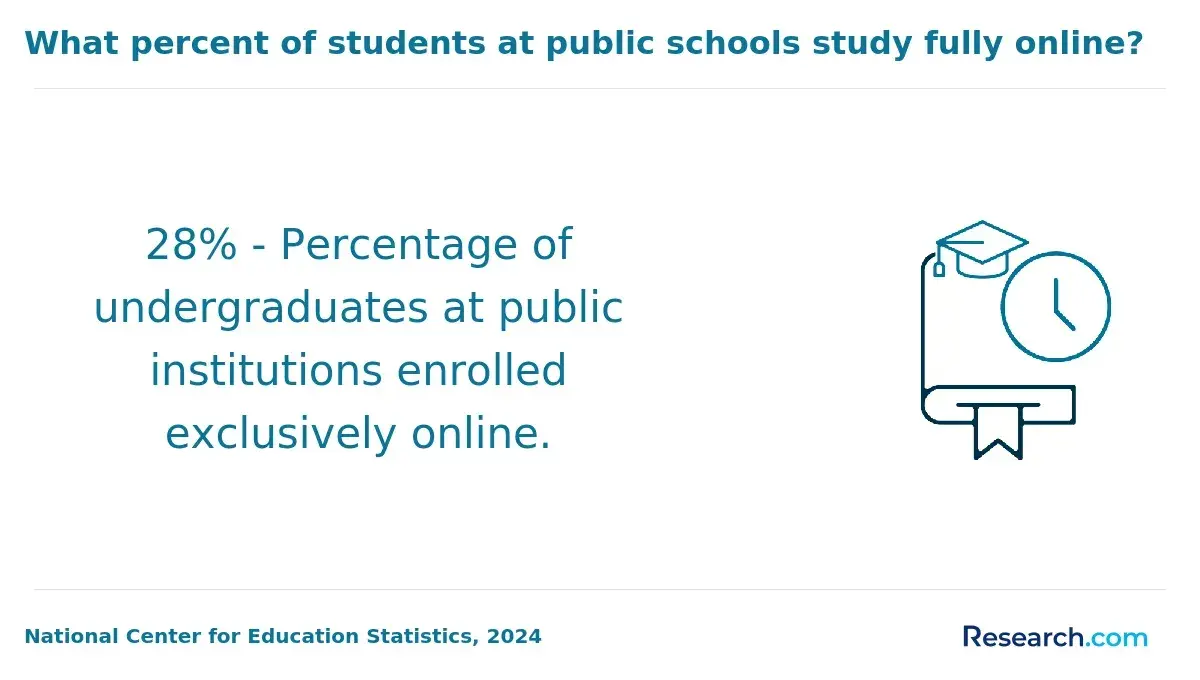
A common mistake is assuming asynchronous delivery means low workload. Online graduate courses can offer scheduling flexibility while still requiring substantial reading, drafting, peer response, research, and project management each week.
What are the fastest accredited online Technical Communication master's programs?
The fastest credible programs are usually those with a 30-credit curriculum, year-round terms, predictable course rotation, and a capstone integrated into the final term. Exact completion time is not guaranteed: personal course load, transfer-credit evaluation, electives, and final-project requirements can lengthen the path.
The programs below are examples of online or online-accessible technical communication master's options at institutionally accredited U.S. universities. Applicants should verify the current online availability, thesis policy, credit total, residency expectations, and start dates directly with each school because catalogs can change.
| University and program | Published degree structure to verify | Why it may suit a faster path | Key question for admissions |
| University of Central Florida, MA in Technical Communication | Graduate technical communication curriculum with online study options and a culminating experience | A 30-credit master's structure can support a compact full-time schedule when courses are available | Is a thesis optional, and what is the current online capstone or portfolio requirement? |
| Arizona State University, MS in Technical Communication | Online graduate program focused on technical communication and applied professional practice | Online course sequencing may be suitable for students able to study continuously | What is the shortest published completion plan for a student entering without transfer credit? |
| Texas Tech University, MS in Technical Communication | Graduate technical communication study with degree-plan options that should be confirmed by catalog year | Established technical communication faculty and advanced coursework may appeal to students seeking depth with flexibility | Which non-thesis option is available online, and does it require a report, portfolio, or examination? |
| East Carolina University, MS in Technical and Professional Communication | Graduate technical and professional communication curriculum with online delivery options | Professional orientation can align with portfolio-building and workplace advancement goals | Can all required courses and the culminating requirement be completed fully online on your intended timeline? |
Do not choose solely from a "fastest" label. Request a term-by-term plan showing every required course, the final requirement, expected faculty approvals, and the latest realistic completion term. This prevents the common problem of discovering that one required elective or capstone is offered only once a year.
If you are considering adjacent technical fields, an engineering online degree may be worth comparing when your target role requires deeper engineering or scientific specialization alongside communication skills.
What accreditation should you verify for no-thesis Technical Communication master's programs?
For a U.S. technical communication master's program, the essential credential is institutional accreditation from an accreditor recognized by the U.S. Department of Education and the Council for Higher Education Accreditation. Technical communication does not generally have a single field-specific programmatic accreditor equivalent to those used in some licensed professions.
Institutional accreditation matters because it supports the degree's legitimacy for employers, transfer-credit review, federal aid eligibility where applicable, and future graduate admission. Accreditation does not, however, prove that a particular online concentration is well designed or that it has a no-thesis option.
Use this verification sequence before paying an application fee or deposit.
- Confirm the university's institutional accreditation through the accreditor and the U.S. Department of Education database, not only through marketing language on the program page.
- Read the current graduate catalog for the exact degree title, required credits, online delivery status, and thesis or capstone rules.
- Ask admissions to identify the final requirement in writing and explain whether it can be completed remotely.
- Verify that the institution, not an unaccredited partner or third-party provider, awards the degree and issues the transcript.
- Compare the stated curriculum, faculty directory, tuition disclosures, and student-support services before committing.
Red flags include vague claims of "international accreditation" without a recognized U.S. institutional accreditor, promises of a master's degree in only a few months, no published faculty information, or an unclear answer about who awards the degree. Fast completion should come from a deliberate academic calendar, not from missing graduate-level assessment.
What skills might you miss without Technical Communication thesis requirements?
Students in no-thesis pathways may receive less sustained practice in independently formulating a research question, conducting a literature review, managing a long research timeline, and writing for a scholarly audience. Those skills matter most for doctoral study, academic publishing, research-intensive UX work, and roles that regularly require formal evaluation studies.
That gap is not inevitable. A rigorous capstone can develop many of the same abilities when it includes a focused research question, appropriate methods, ethical data handling, analysis, and a defensible interpretation of findings.
The table shows how applicants can evaluate what their chosen final requirement develops and what they may need to build elsewhere.
| Capability | Often emphasized in a thesis | How a no-thesis student can build it |
| Literature review | Extensive synthesis of prior scholarship | Choose research-methods courses and create evidence-based project rationales |
| Research design | Independent question development and methodology selection | Complete usability studies, content audits, or supervised applied research |
| Long-form academic writing | Extended scholarly manuscript development | Produce a research report, conference paper, or substantial capstone analysis |
| Workplace deliverables | May be secondary to scholarly contribution | Build documentation, content, accessibility, and design artifacts for a portfolio |
| Project management | Managing a multi-stage research timeline | Lead a client-facing capstone with milestones, revisions, and stakeholder feedback |
Students who want research preparation without a full thesis can ask to complete an independent study, take an advanced methods elective, work with a faculty member on a study, or write a capstone in article-style format. These choices create tangible evidence of research readiness without changing to a thesis track.
How do employers view Technical Communication master's programs without thesis requirements?
Employers typically evaluate a technical communication candidate through a combination of degree level, relevant experience, portfolio quality, domain knowledge, writing clarity, and ability to work with subject-matter experts. Most job postings do not distinguish between thesis and non-thesis master's degrees; they are more likely to ask for demonstrated documentation, editing, content-management, usability, or communication skills.
The U.S. Bureau of Labor Statistics reports that technical writers had a median annual wage of $79,960. This national occupation figure is not a salary promise for master's graduates, and technical communication roles vary substantially by industry, location, clearance requirements, and technical specialization.
A no-thesis program is strongest in employer-facing terms when its final work becomes portfolio evidence. For example, a candidate might present a documentation redesign, a user-testing report, a content governance plan, accessible templates, or an information architecture rationale while protecting confidential information.
To improve the return on a fast degree, prioritize these employment signals alongside the credential itself.
- Build a portfolio that explains the audience, purpose, constraints, process, revisions, and outcome of each artifact.
- Develop domain fluency in areas relevant to your target market, such as software, health care, manufacturing, finance, government, or engineering.
- Practice interviewing subject-matter experts and translating complex material into usable content for defined audiences.
- Seek internships, freelance projects, internal workplace assignments, or volunteer client work when professional experience is limited.
- Use electives strategically for content strategy, UX research, accessibility, data visualization, or digital publishing rather than choosing only the shortest available courses.
Career changers should also compare the required time and portfolio value of a graduate degree against targeted alternatives. For instance, an short certificate programs guide can help frame whether a shorter skills credential might be a useful first step before committing to graduate tuition.
Will skipping thesis requirements limit PhD options in Technical Communication?
Skipping a thesis can make PhD admission more challenging at research-intensive programs, but it does not automatically close the door. Doctoral committees generally look for evidence that an applicant can conduct sustained independent research, write analytically, work with faculty, and articulate a feasible research agenda.
A thesis provides a clear, familiar signal of that preparation. A capstone can provide a comparable signal only if it is genuinely research-based and supported by strong faculty recommendations. Admissions practices differ widely by department, and there is no universal rule requiring a master's thesis for doctoral entry in rhetoric, writing studies, communication, information science, or related fields.
If you may pursue a PhD, take deliberate steps during the master's program rather than waiting until you apply.
- Choose a capstone topic that poses a focused research problem rather than only producing a workplace artifact.
- Take graduate research-methods and theory courses, even when they are not required for the professional pathway.
- Ask a faculty member to supervise an independent study, research report, or conference proposal.
- Preserve writing samples that show scholarly argument, literature engagement, methods, analysis, and limitations.
- Discuss doctoral goals early with faculty so they can advise on coursework and later write informed recommendations.
The biggest mistake is treating a no-thesis path as interchangeable with a research track while applying to highly research-focused doctoral programs. If a PhD is a near-term, central goal, a thesis option or a slower research-oriented master's is usually the safer investment.
What advantages come with finishing Technical Communication master's programs faster?
Finishing faster can reduce the time spent balancing graduate school with career progression and can allow students to apply new skills in the workplace sooner. For professionals whose employer offers tuition assistance or whose target role values a portfolio more than a research credential, an accelerated no-thesis format can be a practical choice.
The main benefits are most meaningful when the program's pace fits your actual capacity. A compressed degree may reduce indirect costs such as delayed advancement, but it can also limit time for internships, networking, revision, and deeper specialization.
Fast completion tends to work best for applicants who already have strong writing foundations, reliable weekly study time, comfort with online learning, and a clear target role. It is less attractive for students entering a new field without portfolio material, those who need extensive quantitative or research-methods preparation, or applicants uncertain about eventual doctoral study.
Before committing, calculate the full investment: tuition and fees, technology needs, reduced work hours if applicable, employer reimbursement conditions, and the opportunity to build experience while enrolled. Avoid assuming that a shorter program is automatically less expensive; tuition is often charged per credit, and accelerated terms can require a heavier credit load at once.
Professionals considering an intensive career pivot can also learn from other condensed pathways, such as an accelerated paralegal program, where schedule feasibility and practical experience similarly matter as much as the advertised finish date.
Are Technical Communication master's programs without thesis requirements right for you?
A no-thesis online technical communication master's is likely a good fit if you want advanced applied skills, need schedule flexibility, intend to remain employed, and value a portfolio-ready capstone. It can be a particularly sensible option for experienced writers, editors, trainers, content specialists, and subject-matter professionals moving into documentation or content design.
A thesis or research-focused pathway is usually better if you want to pursue a PhD soon, teach or research in higher education, produce publishable scholarship, or need intensive preparation in research design. Students who are unsure should favor programs that allow a choice between thesis and capstone after completing foundational coursework.
Use the following final screening questions to make a decision based on outcomes rather than marketing.
- Can you name the target job and identify the portfolio artifacts that would strengthen your candidacy?
- Does the university hold recognized institutional accreditation, and does the current catalog clearly describe the degree requirements?
- Can you complete every required course and the culminating project online within the timeline you need?
- Will the curriculum add missing skills in research, usability, accessibility, content strategy, or technical subject matter?
- Do faculty advising, career support, and portfolio expectations match the support you need as an online student?
- If your goals change, can you document enough research experience for future doctoral applications?
Applicants changing professional direction should be especially candid about transferable skills and the amount of retraining required. The planning considerations in a transition such as teacher to speech pathologist illustrate why a defined end goal, prerequisite review, and realistic timeline are essential before investing in a new credential.
The best program is not necessarily the shortest one. It is the accredited program whose curriculum, culminating work, pacing, cost, and career relevance match what you need to do next.
Other Things You Should Know About Technical Communication
Possibly, but it depends on the credit load and course design. Ask for the expected weekly workload per course and a sample accelerated-term schedule. Many full-time employees choose a slower part-time sequence even when a faster option exists.
Requirements vary by institution and can change by admission cycle. Many programs have test-optional or no-GRE policies, but applicants should review the current graduate admissions page and ask whether professional experience, writing samples, or prerequisite coursework are considered.
Some universities accept a limited number of relevant graduate transfer credits, subject to grade, recency, equivalency, and residency rules. Obtain a written transfer evaluation before assuming that prior coursework will shorten the degree.
Submit the strongest permitted example of clear audience-focused writing. A useful sample demonstrates organization, evidence use, editing control, and the ability to explain complex information. Follow the program's length, format, and confidentiality instructions exactly.
References
- Thesis vs. Non-Thesis Master's Programs: Which is Right for You? https://potomac.edu/thesis-vs-non-thesis-masters/
- Online Master's in Technical Communication Programs in 2025 https://www.mastersincommunications.org/online-technical-communication/
- Master's Degree Programs for Working Adults | OEd https://oed.com.ph/studying-while-working/masters-degree-for-working-adults/
- MSE - Technical Communication Management | Program Requirements https://engineering.mercer.edu/academic-programs/graduate-programs/technical-communication-management-ms/program-requirements/
- Admissions Requirements for Master's in Communication Programs (Campus, Online) https://www.mastersincommunications.com/faqs/admissions-requirements
- 2025 Most Affordable Online Master's Programs https://www.onlineu.com/most-affordable-colleges/masters-degrees
- 2025's Best Online Master's Programs: No GRE Required https://www.onlinemastersdegrees.org/best-programs/no-gre/