2027 Fastest Accredited Online Psychopharmacology Degree Programs That Accept Transfer Credits

Co-Founder and Chief Data Scientist
Transfer credits can turn a long psychopharmacology degree plan into a shorter, more affordable route, but only if the credits actually apply to the program. That matters because the National Student Clearinghouse Research Center reported that U.S. transfer enrollment increased 4.4% in fall 2024, showing renewed demand for credit mobility.
This guide is for transfer students, licensed clinicians, and degree completers who want the fastest legitimate online path. You will learn how to compare accredited programs, transfer rules, residency requirements, costs, and realistic graduation timelines.
Key Things You Should Know
- The fastest legitimate online psychopharmacology degree options are usually 30-credit graduate or postdoctoral clinical psychopharmacology programs, with approved graduate transfer credits, some students may reduce coursework, but cohort sequencing can still keep completion near 18 to 24 months.
- Transfer-friendly does not mean unlimited, many accredited graduate programs cap transfer credit around 6 to 9 credits, and the more important question is whether those credits satisfy required psychopharmacology, neuroscience, assessment, ethics, or clinical sequence courses.
- The strongest choices are regionally accredited programs with transparent transfer reviews, clear residency requirements, and licensure-aligned curricula; avoid any school that promises prescriptive authority from the degree alone without state-specific eligibility review.
What Are the Fastest Accredited Online Psychopharmacology Degree Programs That Accept Transfer Credits?
The fastest accredited online psychopharmacology degree programs are typically graduate-level clinical psychopharmacology programs designed for licensed psychologists, doctoral-level behavioral health professionals, or advanced clinicians who already hold substantial prior education. Psychopharmacology is the study of how medications affect mood, cognition, behavior, and psychiatric symptoms; in clinical programs, it usually includes neuroscience, pharmacokinetics, pathophysiology, clinical assessment, ethics, and medication management concepts.
Because this is a specialized field, there are fewer true degree programs than in broader psychology or nursing areas. The table below highlights U.S. options that are commonly relevant to online or low-residency psychopharmacology study and that operate under institutional accreditation. Always confirm current delivery mode, transfer limits, and state licensure alignment before applying.
| Program type | Examples of accredited U.S. options to investigate | Typical credit load | Fastest realistic fit | Transfer-credit caution |
| Master's or postdoctoral master's in clinical psychopharmacology | New Mexico State University, The Chicago School, Fairleigh Dickinson University, Drake University, Idaho State University, Alliant International University | Often about 30 graduate credits | Licensed psychologists or doctoral-level clinicians who already meet admission prerequisites | Transfer credit is usually limited and must closely match required graduate coursework |
| Online psychology degree with psychopharmacology coursework | Accredited psychology, behavioral health, or neuroscience programs with elective psychopharmacology courses | Varies by degree level | Students still building toward graduate study or research roles | May not meet prescribing-psychologist or advanced clinical requirements |
| Advanced nursing or psychiatric mental health pathway | MSN, DNP, or post-master's psychiatric mental health nurse practitioner tracks | Varies widely by prior license and degree | Registered nurses seeking prescriber preparation through nursing licensure | Psychopharmacology courses may transfer poorly if they lack clinical-practicum alignment |
The fastest program for you is not automatically the one with the shortest advertised timeline. A 30-credit program that accepts 6 relevant transfer credits but requires sequential fall-spring courses may take longer than a program that accepts fewer credits but offers more frequent starts, summer terms, and asynchronous coursework.
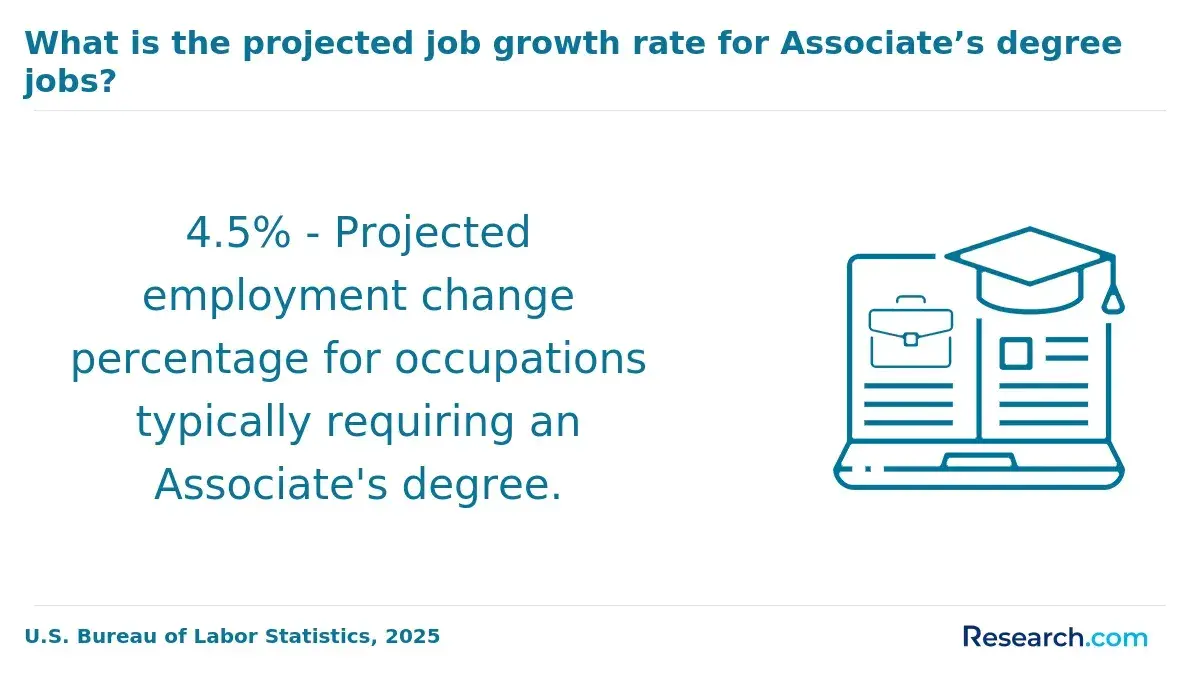
These programs are best for students who already have a clinical or science background, can study year-round, and need a recognized credential for licensure, role expansion, or graduate preparation. Students who are starting from an associate degree or unfinished bachelor's degree may need a broader degree-completion route first, then a specialized graduate program.
How Fast Can You Complete an Online Psychopharmacology Degree With Transfer Credits?
Most online clinical psychopharmacology master's programs are built around a two-year academic plan, but transfer credits, summer enrollment, and course availability can change the actual pace. The biggest timeline factor is usually not the number of credits accepted by the university; it is the number of required courses you can skip without disrupting prerequisites or clinical sequencing.
The table below shows realistic completion scenarios for a 30-credit graduate psychopharmacology program. Use it as a planning tool rather than a guarantee, because individual evaluations depend on syllabi, grades, course age, and program rules.
| Approved applicable transfer credits | Credits still needed in a 30-credit program | Realistic online completion timeline | Who this usually fits |
| 0 credits | 30 credits | About 20 to 24 months | Students new to graduate psychopharmacology coursework |
| 3 credits | 27 credits | About 18 to 24 months | Students with one closely matched graduate pharmacology or neuroscience course |
| 6 credits | 24 credits | About 16 to 22 months | Students whose prior coursework satisfies two required courses |
| 9 credits | 21 credits | About 12 to 20 months, if course sequencing allows | Students transferring from a related accredited graduate program |
Students still completing the scientific foundation for graduate psychopharmacology may need to fill prerequisite gaps before they can benefit from an accelerated master's plan. If your prior credits are mainly biology, neuroscience, or pre-health coursework, comparing a biology bachelor degree online can help you understand whether a degree-completion pathway is the faster first step.
To estimate your own timeline, ask each school for a degree audit before enrollment. A useful audit should show which credits transfer, which requirements they satisfy, what courses remain, and whether any remaining courses are offered only once per year.
How Many Transfer Credits Can You Apply Toward an Online Psychopharmacology Degree?
At the graduate level, transfer-credit allowances are usually modest. A school may accept prior graduate coursework institutionally, but the program director can still reject credits that do not match the psychopharmacology curriculum closely enough.
The table below explains how common transfer-credit categories affect speed. It distinguishes credits that may be accepted by the institution from credits that actually shorten the psychopharmacology degree.
| Transfer-credit policy factor | What it means | How it affects speed | What to verify |
| Maximum transfer allowance | The highest number of credits the school may accept | Sets the outer limit but does not guarantee reduced time | Whether the cap applies to the whole degree, only electives, or only non-core courses |
| Course equivalency | Prior course must match a required course in level, content, and rigor | Can remove a required course if the match is approved | Syllabus, textbook, learning outcomes, contact hours, and grade requirement |
| Course age limit | Some programs restrict older science or clinical credits | May prevent older pharmacology or physiology credits from applying | Whether the program has a recency rule for clinical content |
| Residency requirement | Minimum credits that must be completed at the awarding school | Can override a generous transfer policy | Number of credits, specific courses, and whether capstone or practicum must be in residence |
| Licensure alignment | Courses must meet state or professional expectations | May require retaking content even if a similar course was completed | State prescribing-psychologist rules, board expectations, and supervised experience requirements |
A practical rule is to focus on "applicable credits," not "accepted credits." If a school accepts 9 credits as electives but your psychopharmacology degree has no free electives, those credits may appear on your transcript without reducing your required coursework.
Before you apply, request a preliminary transfer evaluation and provide complete documentation. Strong documentation usually includes an official transcript, graduate catalog description, full syllabus, course objectives, credit hours, faculty credentials if available, and evidence that the course came from an accredited institution.
How Can You Verify Accreditation for Fast Online Psychopharmacology Degree Programs?
Accreditation is the first screen for any fast online psychopharmacology program. A program that is quick but not properly accredited can create problems with transferability, financial aid, employer recognition, graduate admission, and licensure review.
Use the following steps before you submit an application or pay a deposit. This process helps you separate legitimate accelerated programs from schools that use speed as a marketing hook.
- Confirm institutional accreditation through the U.S. Department of Education's Database of Accredited Postsecondary Institutions and Programs or the Council for Higher Education Accreditation database.
- Check that the accredited institution is the same legal entity awarding the degree, not just a similarly named partner, continuing-education provider, or certificate vendor.
- Review the program page and academic catalog for degree name, credit requirements, admissions standards, delivery mode, transfer policy, residency requirements, and graduation requirements.
- Ask whether the program has any specialized recognition relevant to prescribing psychologists, psychology boards, nursing boards, or clinical training expectations in your state.
- Contact the state licensing board or professional board tied to your intended role, especially if you hope to use the degree for prescriptive authority, advanced practice, or supervised clinical eligibility.
A red flag is a program that claims national licensure eligibility without explaining state-by-state differences. Psychopharmacology education can support career growth, but prescriptive authority is controlled by state law and professional licensure rules, not by the degree title alone.
Which Types of Transfer Credits Can Count Toward an Online Psychopharmacology Degree?
Transferable credits usually need to be graduate-level, clinically relevant, and completed at an accredited institution. For psychopharmacology, schools look closely at whether prior coursework covers medication mechanisms, neurobiology, assessment, differential diagnosis, ethics, and patient safety at the right level.
The credits most likely to help are those that map directly to required courses. These are the categories to ask about during a formal credit review.
- Graduate pharmacology or advanced psychopharmacology courses completed in a psychology, nursing, medical, pharmacy, or behavioral health program.
- Neuroscience, neuroanatomy, physiology, or pathophysiology courses that match required biological foundations.
- Clinical assessment, psychopathology, or differential diagnosis courses that meet the program's clinical decision-making standards.
- Statistics, research methods, or evidence-based practice courses if the degree includes research-focused requirements.
- Ethics, law, or professional practice courses when the prior course specifically addresses medication-related clinical responsibility.
Credits are less likely to transfer if they are undergraduate-level, continuing-education-only, pass/fail without graduate equivalency, too old for the program's recency rules, or unrelated to the required curriculum. A general psychology course may be useful background, but it usually will not replace a graduate clinical psychopharmacology requirement.
Students coming from nursing should also compare whether a psychopharmacology degree or an advanced practice nursing route better matches their prescribing goals. For example, nurses who want family primary care authority may need to review FNP programs instead of a psychology-based psychopharmacology curriculum.
How Do Residency and Major Requirements Affect Transfer Credits for an Online Psychopharmacology Degree?
Residency requirements determine the minimum amount of coursework you must complete through the school that awards the degree. In a fast online program, residency rules often matter more than the headline transfer-credit maximum because they set a floor on how many credits you cannot transfer away.
Major requirements add another layer. Even if a school accepts transfer credits broadly, the psychopharmacology program may require students to complete core medication, assessment, ethics, or capstone courses in-house to protect curriculum integrity and licensure alignment.
When comparing programs, ask these questions in writing so you can evaluate speed accurately.
- How many credits must be completed at your institution to graduate?
- Are core psychopharmacology courses eligible for transfer, or only electives?
- Can transfer credits replace sequenced courses, or will I still need to follow the full cohort calendar?
- Are capstone, practicum, clinical seminar, or case-based courses required in residence?
- Does the program require synchronous sessions, short residencies, or campus visits that could affect my schedule?
- Will transferred credits appear as specific course equivalents or as general graduate credit?
A common mistake is assuming that a 9-credit transfer approval automatically removes one semester. If the remaining courses are offered in a fixed order, those 9 credits may reduce workload but not shorten the calendar. The best programs will explain this clearly before enrollment.
Can Prior Learning, CLEP, Military Training, or Certifications Help You Finish an Online Psychopharmacology Degree Faster?
Prior learning credit can be valuable in undergraduate degree completion, but it is usually less powerful in graduate psychopharmacology programs. Clinical graduate programs often restrict credit for experience because medication-related education must be documented, assessed, and aligned with professional standards.
Still, certain nontraditional credits may help if you are completing prerequisites, finishing a bachelor's degree, or entering a related graduate pathway. The key is to ask whether the credit applies to your current degree level and whether it reduces required coursework.
- CLEP exams may help with undergraduate general education requirements, but they rarely replace graduate psychopharmacology courses.
- Military training may be evaluated through the American Council on Education credit recommendations, especially for undergraduate health science, psychology, or leadership credits.
- Professional certifications may support admission strength or elective credit, but graduate programs usually require formal academic equivalency.
- Portfolio-based prior learning assessments may help adult degree completers, but they are uncommon for advanced clinical medication courses.
- Continuing education units can show professional development, but they generally do not carry graduate credit unless offered through an accredited credit-bearing course.
The best use of prior learning is strategic. If you lack a bachelor's degree, prior learning credit may shorten the undergraduate stage. If you already have a doctorate or master's, it may strengthen your application but may not remove many specialized graduate requirements.
How Much Does a Fast Online Psychopharmacology Degree Cost After Transfer Credits and Financial Aid?
The real cost of a fast online psychopharmacology degree depends on tuition per credit, required fees, transfer credits, books, travel for any residencies, and borrowing costs. A shorter program can still be expensive if tuition is high, while a lower-cost program may take longer if it accepts fewer applicable credits or offers courses less frequently.
The table below shows the main cost drivers to compare. It is more useful than comparing tuition alone because transfer students often pay different totals depending on how many credits actually apply.
| Cost factor | Why it matters | How transfer credits change the cost |
| Tuition per credit | Graduate programs usually price by credit hour | Each approved applicable credit can remove one credit of tuition |
| Program fees | Online, technology, clinical, graduation, or student service fees can add to total cost | Some fees remain even if credits transfer |
| Residency or travel costs | Low-residency programs may require short campus or clinical sessions | Transfer credits may not remove required residencies |
| Books and clinical resources | Medication references and assessment materials can be costly | Costs may fall if courses are waived, but core resources may still be required |
| Loan interest | Borrowing can increase the final repayment cost | Fewer credits may reduce borrowing, but repayment depends on loan amount and terms |
For federal loans first disbursed during the 2024-25 award year, the Direct Unsubsidized Loan interest rate for graduate and professional students was 8.08%. That rate makes credit transfer financially meaningful: every credit you do not need to borrow for can reduce both tuition paid and interest accrued, although exact savings depend on your school's tuition and repayment plan.
If your long-term goal is healthcare leadership rather than medication-focused clinical practice, a degree in healthcare administration may produce a better cost-to-purpose fit. Choosing the wrong degree can be more expensive than choosing a slightly longer but better-aligned program.
Before enrolling, ask the financial aid office for a total program cost estimate based on your transfer evaluation. Also ask whether institutional scholarships, employer tuition assistance, veterans benefits, payment plans, or part-time enrollment will affect eligibility or pacing.
How Do Accelerated, Competency-Based, and Self-Paced Online Psychopharmacology Degree Programs Compare?
Fast online programs use different academic models, and the fastest model depends on how much relevant knowledge you already have. Psychopharmacology programs are often structured because medication education must build from biological foundations to clinical application, but some programs still offer accelerated terms, asynchronous coursework, or flexible pacing.
The table below compares common online formats. Use it to identify which structure fits your learning style, schedule, and need for transfer credit.
| Format | How it works | Best for | Main trade-off |
| Accelerated term-based | Courses run in shorter sessions, often with year-round enrollment | Students who can handle a heavier weekly workload | Fast pace can be difficult with full-time clinical work |
| Cohort-based online | Students move through a set sequence together | Students who want structure and predictable progression | Transfer credits may reduce workload without shortening the calendar |
| Competency-based | Students progress by demonstrating mastery | Experienced professionals with strong prior knowledge | Less common for specialized clinical psychopharmacology degrees |
| Self-paced online | Students complete work within flexible course windows | Independent learners with unpredictable schedules | May lack the clinical sequencing needed for advanced medication training |
| Low-residency hybrid | Mostly online with occasional in-person sessions | Students needing clinical intensives or licensure-aligned experiences | Travel time and cost can reduce convenience |
Students comparing advanced clinical credentials should not assume that "easiest" and "fastest" mean the same thing. For example, guides to the easiest online DNP programs can help nurses understand workload and admission flexibility, but psychopharmacology degree selection still needs a separate review of licensure fit, course equivalency, and clinical scope.
The best accelerated option is one that lets you move quickly without skipping essential medication-safety content. If you are working full time, a slightly slower part-time plan may be safer and more sustainable than an overloaded schedule that risks withdrawal, lower grades, or delayed completion.
Are Fast Accredited Online Psychopharmacology Degrees Respected by Employers and Graduate Schools?
A fast online psychopharmacology degree can be respected when it comes from an accredited institution, has rigorous admissions standards, uses qualified faculty, and aligns with the student's professional goal. Employers and graduate schools usually care less about whether courses were online and more about accreditation, transcript quality, clinical relevance, supervised experience, and licensure eligibility.
Career outcomes vary because psychopharmacology is used in different ways. Licensed psychologists may use the education for prescribing-psychologist pathways in states where that role exists, nurses may need advanced practice credentials, and researchers may use psychopharmacology training in academic, pharmaceutical, behavioral health, or neuroscience settings.
Recent labor-market data shows why credential alignment matters. The U.S. Bureau of Labor Statistics reported a 2024 median annual wage of $132,050 for nurse practitioners, while clinical and counseling psychologists had a 2024 median annual wage of $95,830; those figures describe occupations, not outcomes from a psychopharmacology degree alone. Use salary data to understand the broader market, then verify which credential and license your target role requires.
If you want academic research, faculty work, or high-level scholarship, a nursing PhD or psychology doctorate may be more relevant than a standalone psychopharmacology master's. If you want medication management authority, your path depends on your base profession, state law, supervised clinical requirements, and board rules.
Strong programs are transparent about these limits. Be cautious if a school implies that an online psychopharmacology degree by itself will make you a prescriber, qualify you for every state, or guarantee a specific job title or income.
Other Things You Should Know About Psychopharmacology
Not by itself. Prescriptive authority depends on your existing profession, state law, licensure status, supervised clinical training, and board approval. The degree may be one required component in some pathways, but it is not a universal license.
Some programs are fully online for didactic coursework, while others require case seminars, clinical experiences, supervised practice, or short residencies. Ask whether any in-person or supervised components are required before assuming the program is completely remote.
Often no. Graduate programs commonly require a minimum grade for transfer credit, and clinical programs may set higher standards for core science or medication-related courses. Always confirm the minimum grade and whether pass/fail coursework is eligible.
Ask for transfer guidance before applying if possible, but many schools complete official evaluations only after admission and receipt of official transcripts. To reduce risk, request a written preliminary review and keep copies of all course syllabi.
References
- Clinical Psychopharmacology MS https://www.fdu.edu/program/ms-clinical-psychopharmacology-post-doctoral/
- Student Portal https://onestop.fulbright.edu.vn/s/article/Procedures-Transfer-Credit
- Fastest Online Master's In Counseling Programs https://www.psychology.org/counseling/fastest-online-degrees/
- Credit Transfer - Procedures https://www.unisc.edu.au/about/policies-and-procedures/credit-transfer-procedures
- Transferology https://www.transferology.com/
- What is the Master Psychopharmacology Program? https://www.neiglobal.com/Members/MPP/MPPOverview/tabid/307/Default.aspx
- How the College Credit Transfer Process Works and How it Can Be Improved | ACE Blog https://ace.edu/blog/how-the-college-credit-transfer-process-works-and-how-it-can-be-improved/
- Transferring Credit https://www.fielding.edu/admissions/transferring-credit/
- Explore One Year Psychology Master's Programs Online https://www.onlinemastersdegrees.org/best-programs/psychology/1-year-accelerated/
- The Importance of Understanding Transfer Credit Policies https://www.sophia.org/blog/higher-education/understanding-transfer-credit-policies/