2027 Fastest Accredited Online Cinematography Degree Programs That Accept Transfer Credits

Co-Founder and Chief Data Scientist
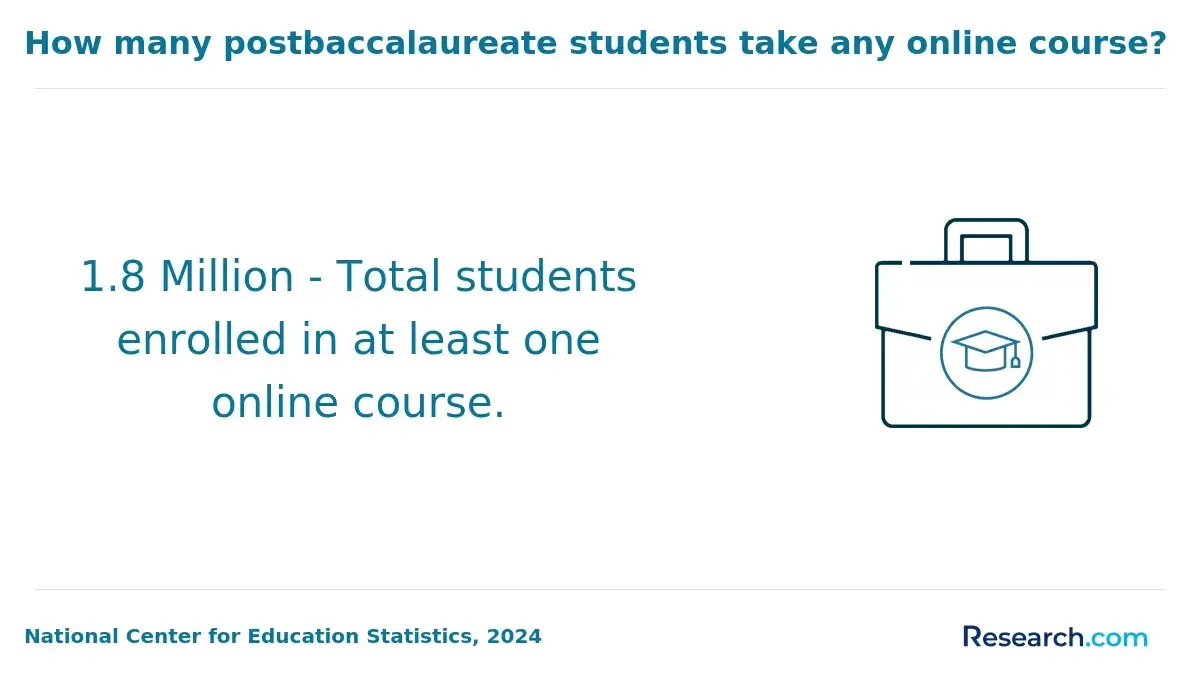
Choosing the fastest online cinematography degree is really a transfer-credit decision: the more usable credits you bring in, the fewer production, film studies, and general education courses remain. NCES reported in 2024 that 53% of U.S. undergraduates took at least one distance education course in fall 2022, making online degree completion a mainstream path.
This guide is for transfer students, working creatives, military learners, and degree completers who want the quickest legitimate route to an accredited credential while understanding completion time, accreditation, cost, and transfer-policy limits.
Key Things You Should Know
- The fastest realistic path is usually a transfer-friendly online bachelor's program in digital cinematography, digital filmmaking, film production, or film and media studies where 60 to 90 applicable semester credits can reduce a 120-credit degree to roughly 12 to 24 months.
- Most transfer-friendly candidates include regionally accredited options such as Academy of Art University, Arizona State University Online, and National University, plus nationally accredited production-focused schools such as Full Sail University and The Los Angeles Film School; the best choice depends on whether accepted credits actually apply to the major.
- A high transfer ceiling is not enough: many bachelor's programs still require about 30 semester credits, 45 quarter credits, or 25% of the degree in residence, and upper-division cinematography, directing, editing, lighting, and capstone courses often must be completed at the degree-granting school.
What Are the Fastest Accredited Online Cinematography Degree Programs That Accept Transfer Credits?
The fastest accredited online cinematography degree programs are usually not labeled simply "cinematography." In the U.S., fully online options more commonly use titles such as digital cinematography, digital filmmaking, motion pictures and television, film and media studies, digital media, or film production.
For transfer students, the best programs combine recognized accreditation, online delivery, a clear transfer-credit review, and enough open electives or general education requirements to absorb previously earned credits.
Because true online cinematography degrees are limited, the table below compares realistic accredited options and near-equivalent pathways that can support camera, lighting, editing, visual storytelling, and production careers. Use it as a shortlist, not as a substitute for a written transfer evaluation from each school:
| School or program type | Online degree fit | Accreditation type to verify | Why it may be fast for transfer students | Best fit |
| Academy of Art University | Online BFA in Motion Pictures & Television with production-related coursework | WSCUC regional accreditation | Offers online creative arts degrees and evaluates prior college coursework; transfer students may be able to apply substantial lower-division credits if they match degree requirements. | Students who want a production-oriented art school path with regional accreditation. |
| Arizona State University Online | Online BA in Film and Media Studies | HLC regional accreditation | Transfer pathways are structured, especially for community college students, but the degree is more analytical and media-studies focused than camera-production focused. | Students who want a recognized university degree and may pursue producing, media, writing, graduate study, or film analysis roles. |
| National University | Online digital media or film-adjacent bachelor's options, depending on current catalog availability | WSCUC regional accreditation | Adult-focused scheduling and quarter-credit transfer policies can help degree completers move quickly when prior credits align. | Working adults with many prior credits who want a flexible, regionally accredited completion route. |
| Full Sail University | Online BS in Digital Cinematography | ACCSC national accreditation | Accelerated production-oriented calendar can shorten the program for eligible students, though transfer applicability depends heavily on course match and institutional review. | Students focused on hands-on digital production who are comfortable with a nationally accredited career-school model. |
| The Los Angeles Film School | Online BS in Digital Filmmaking | ACCSC national accreditation | Online production curriculum may allow transfer evaluation, but students should confirm the minimum institutional-credit requirement and portfolio expectations. | Students seeking a filmmaking-specific online pathway with a production portfolio emphasis. |
For the fastest legitimate route, prioritize the program that accepts the most applicable credits, not simply the school with the largest advertised transfer maximum.
If your credits are mostly general education courses, a film and media studies program may absorb them efficiently; if your credits include camera, editing, screenwriting, production sound, or lighting courses, a digital cinematography or digital filmmaking program may be a better match.
Students comparing film degrees with other career-focused majors may also benefit from looking at broader labor-market guides such as top degrees in demand for the future, especially if they are weighing creative work against business, technology, or healthcare pathways.
How Fast Can You Complete an Online Cinematography Degree With Transfer Credits?
With no transfer credits, most bachelor's degrees require about 120 semester credits and take four academic years at a traditional pace. A transfer student who enters with 60 applicable credits may have only half the degree left, while a student with 90 applicable credits may mainly need upper-division major courses, residency credits, and a capstone or portfolio sequence.
The estimates below show how transfer credits can change the timeline in a 120-credit bachelor's degree. These are planning ranges; the actual speed depends on course availability, term length, prerequisites, production course sequencing, and whether you study full time:
| Applicable transfer credits | Remaining credits | Typical fastest full-time timeline | What usually determines the final pace |
| 0 to 30 | 90 to 120 | 3 to 4 years, or less in an accelerated calendar | General education load, introductory production sequence, and year-round enrollment. |
| 45 to 60 | 60 to 75 | 18 to 30 months | Whether lower-division film, media, and general education credits satisfy the degree map. |
| 75 to 90 | 30 to 45 | 12 to 18 months | Residency requirement, upper-division major courses, capstone, and portfolio production work. |
| More than 90 | Often still 30 or more | Usually not less than 9 to 12 months | Most schools require a final block of credits completed through the institution awarding the degree. |
The main mistake is assuming that 90 accepted credits automatically means only 30 credits remain. A school may accept old credits to your transcript but apply only some of them to the cinematography degree if they duplicate courses, do not meet grade rules, exceed lower-division limits, or do not match required major outcomes.
Accelerated online degree planning is not unique to film. Students who want to understand how compressed online formats work across fields can compare examples such as accelerated psychology programs online, where transfer credits, short terms, and year-round enrollment similarly shape the real completion timeline.
How Many Transfer Credits Can You Apply Toward an Online Cinematography Degree?
Most bachelor's programs allow transfer credits from accredited colleges, but the usable amount varies by institution, degree level, and course fit. In cinematography-related programs, electives and general education requirements are often easier to transfer than upper-division production courses because schools want to verify that graduates meet their own technical and creative standards.
The table below summarizes the transfer-credit rules you are most likely to encounter when comparing online film, digital cinematography, and digital media bachelor's programs:
| Policy area | Common range or rule | Why it matters for speed |
| Maximum transfer credits | Often up to 60 to 90 semester credits in a 120-credit bachelor's degree, depending on the school | A higher maximum can shorten the degree only if the credits apply to required categories. |
| Community college transfer limit | Frequently capped around lower-division credit limits | Many production majors still require upper-division coursework after transfer. |
| Minimum grade | Often C or higher, though some programs require higher grades for major courses | Courses below the grade threshold may not reduce remaining requirements. |
| Age of credits | General education credits may remain usable longer than technology-heavy production courses | Older camera, editing, or software courses may be rejected or counted only as electives. |
| Residency requirement | Commonly about 30 semester credits, 45 quarter credits, or 25% of the program | This creates a floor on how fast you can finish, even with many prior credits. |
Before enrolling, ask each school for a degree audit that separates accepted credits from applied credits. Accepted credits appear on your record; applied credits actually reduce the courses required for graduation. For a fast program, the second number is the one that matters.
A practical transfer review should include these checkpoints before you commit to a school.
- Send official transcripts from every college you attended, even if you completed only one course.
- Request a written preliminary transfer evaluation before paying nonrefundable fees when possible.
- Ask which credits satisfy general education, major core, production electives, upper-division requirements, and free electives.
- Confirm whether any film, editing, or media courses are too old to count toward the major.
- Ask for a term-by-term remaining-course plan that shows the earliest possible graduation date.
Accreditation is the quality-control step that protects transferability, federal financial aid eligibility, employer recognition, and graduate-school options. For online cinematography programs, you will usually see institutional accreditation rather than a separate programmatic accreditor for cinematography itself.
Use a direct verification process instead of relying only on marketing language. The safest approach is to confirm the school's status in official accreditation databases and then check whether the exact online degree is listed in the current catalog:
- Search the school in the U.S. Department of Education's Database of Accredited Postsecondary Institutions and Programs.
- Confirm the accreditor is recognized by the U.S. Department of Education or the Council for Higher Education Accreditation.
- Check whether the institution is regionally accredited, nationally accredited, or both, because transfer acceptance may differ later.
- Open the current academic catalog and verify the exact degree name, modality, credit total, and graduation requirements.
- Ask admissions whether online students receive the same degree notation as campus students, if the school has both formats.
- Confirm that the program is eligible for federal financial aid if you plan to use grants or loans.
Regional accreditation is often the safest choice for students who may transfer again, apply to graduate school, or move into teaching, management, or interdisciplinary media roles. National accreditation can still be legitimate, especially for career-focused institutions, but credits from nationally accredited schools may be less portable to some regionally accredited colleges.
Red flags include vague claims such as "internationally accredited" without a recognized U.S. accreditor, pressure to enroll before receiving a transfer evaluation, unclear graduation requirements, or a refusal to explain whether credits will apply to your degree plan.
Online cinematography programs may count several types of prior coursework, but each category has different limits. General education credits are usually the easiest to apply, while studio-based or production-intensive courses are more likely to require syllabus review because schools need to confirm equipment, workflow, and learning outcomes.
The list below explains the transfer categories most relevant to cinematography and film production students:
- General education credits: English composition, humanities, social science, math, communication, and natural science courses often apply broadly and can remove a large part of the degree's non-major requirements.
- Film and media studies credits: Courses in film history, screen studies, media theory, visual culture, and genre studies may satisfy major support or elective requirements.
- Production credits: Camera operation, lighting, editing, sound, directing, producing, and screenwriting courses may count if the level, contact hours, software, and outcomes match the receiving program.
- Digital media and design credits: Courses in motion graphics, color correction, visual effects, animation, photography, or digital storytelling may apply to electives or related major requirements.
- Free electives: Credits that do not match specific requirements may still reduce total credits needed if the degree has room for open electives.
For students with older credits, the strongest strategy is to gather syllabi, course descriptions, sample projects, and software lists before requesting evaluation. A cinematography department may be more willing to apply production credits if you can document that the course covered comparable technical and creative outcomes.
Residency requirements are the biggest reason a student with many credits may still need a year or more to graduate. "Residency" does not usually mean living on campus; it means completing a minimum number of credits through the institution that will award the degree. Major requirements can further slow the timeline if key upper-division film courses must be taken in sequence.
The table below shows how residency and major rules can affect transfer-heavy students who are trying to finish quickly:
| Requirement | How it affects transfer students | What to ask before enrolling |
| Institutional residency | Creates a minimum number of credits you must complete at the new school. | What is the exact minimum number of credits I must take here? |
| Upper-division credit minimum | May require junior- and senior-level courses even if you have many lower-division credits. | How many upper-division credits remain after my transfer evaluation? |
| Major core requirements | Camera, lighting, directing, editing, and production management courses may not be waived. | Which major courses cannot be transferred under any circumstances? |
| Prerequisite sequence | A capstone may require earlier production courses completed first. | Can I take prerequisites concurrently, or must they be completed in order? |
| Portfolio or thesis project | May require multiple terms for planning, production, editing, and faculty review. | How many terms does the final film, reel, or portfolio sequence require? |
A strong program advisor should be able to show you the bottlenecks. If your remaining courses are offered only once per year, a program with generous transfer credits may still be slower than a school with fewer accepted credits but more frequent online course starts.
Students comparing creative degree completion with design-related alternatives can also review how studio requirements affect an architecture online degree, since both fields rely on sequenced project work, faculty critique, and portfolio development.
Prior learning credit can help some students finish faster, but it is not a universal shortcut. In cinematography, schools may be cautious about awarding credit for experience because the degree must document academic learning, not just time spent on sets, YouTube projects, freelance gigs, or software use.
The most common nontraditional credit options are listed below. Ask each school which options it accepts and whether those credits can apply to the major or only to electives:
- Portfolio assessment: You may submit a reel, scripts, shot lists, production documents, editing samples, or reflective essays to demonstrate college-level learning.
- CLEP or DSST exams: These are more likely to satisfy general education requirements than cinematography-specific courses.
- Military training: Joint Services Transcript credits may apply to communication, leadership, technical, or elective requirements after review.
- Professional certifications: Software or production certifications may support elective credit, but many schools treat them as supplemental rather than automatic academic credit.
- Credit by exam or challenge exam: Some institutions allow students to test out of introductory courses, though production courses may still require faculty evaluation.
The best use of prior learning credit is often to clear electives or general education requirements so you can focus your remaining time on upper-division production work. It is less reliable as a substitute for advanced cinematography, directing, capstone, or collaborative production courses.
Common mistakes include assuming professional experience will automatically count for credit, submitting a reel without written learning documentation, or choosing a school before confirming whether prior learning credits reduce tuition and time rather than merely adding elective credits beyond the degree plan.
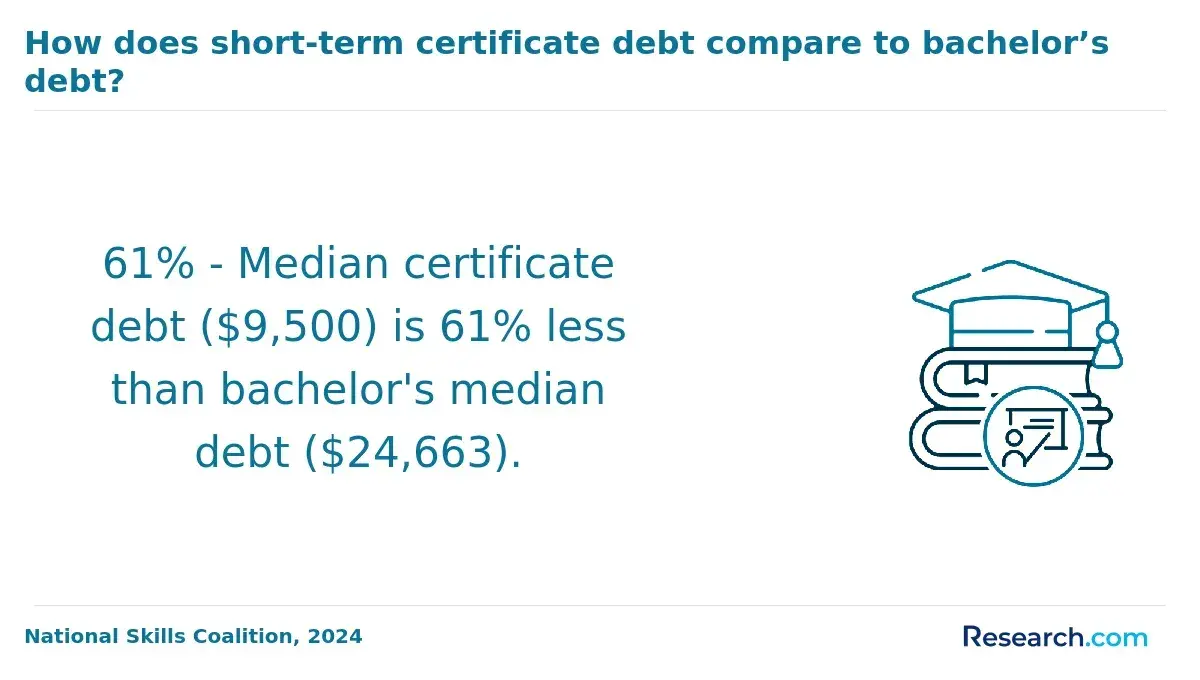
The cost of a fast online cinematography degree depends on tuition per credit, remaining credits after transfer, technology fees, production equipment, software subscriptions, books, and financial aid eligibility. Transfer credits can reduce total tuition dramatically, but only if they replace required credits rather than unused electives.
For cost context, the College Board's 2024 pricing report listed average published tuition and fees for full-time undergraduates at $11,610 for in-state public four-year institutions and $43,350 for private nonprofit four-year institutions for 2024-25.
Online film programs may price differently, but this benchmark shows why reducing even one year of enrollment can matter.
The table below uses a simple remaining-credit model to show why transfer evaluation has a direct financial impact. Replace the sample tuition with each school's actual per-credit or term-based price before making a decision:
| Remaining credits after transfer | Cost at $400 per credit | Cost at $700 per credit | Cost at $1,000 per credit |
| 90 credits | $36,000 | $63,000 | $90,000 |
| 60 credits | $24,000 | $42,000 | $60,000 |
| 45 credits | $18,000 | $31,500 | $45,000 |
| 30 credits | $12,000 | $21,000 | $30,000 |
To compare programs fairly, calculate total remaining cost rather than published annual tuition. A school with higher per-credit tuition may be cheaper overall if it applies more of your credits and lets you graduate sooner, while a low-tuition school may cost more in time and money if many credits do not apply.
Use this checklist before accepting an offer of admission:
- Request the total number of remaining credits required for graduation in writing.
- Ask for a full fee list, including online fees, technology fees, graduation fees, software, camera kits, storage, and required subscriptions.
- Confirm whether transfer credits reduce tuition directly or whether the program uses flat-rate terms that change the calculation.
- Compare federal aid eligibility, institutional scholarships, employer tuition assistance, veterans benefits, and payment plans.
- Estimate opportunity cost if one program lets you finish six to twelve months faster than another.
Students weighing cost against speed may find similar trade-offs in other accelerated professional degrees, such as an accelerated MBA, where the fastest option is not always the lowest-priced option on a per-credit basis.
Accelerated, competency-based, and self-paced programs all promise flexibility, but they work differently. In cinematography, the fastest format is the one that fits both your schedule and the course type: lecture-based film studies courses can often move quickly online, while production courses may require more time for shooting, editing, critique, and revision.
The comparison below helps you understand which format is most likely to shorten your degree without weakening the learning experience:
| Format | How it works | Speed advantage | Potential drawback | Best fit |
| Accelerated terms | Courses run in shorter sessions, often with year-round starts. | Good for students who can handle intensive deadlines. | Production projects can feel compressed. | Organized students with predictable weekly study and filming time. |
| Competency-based education | Students progress by demonstrating mastery rather than only by seat time. | Can be fast for learners with strong prior knowledge. | Less common in cinematography-specific bachelor's programs. | Experienced adults with documented skills and strong self-direction. |
| Self-paced online courses | Students control some pacing within academic limits. | Useful for completing general education or media theory requirements quickly. | Major projects may still require fixed critique or submission dates. | Students balancing work, family, and freelance production schedules. |
| Traditional online semesters | Courses follow standard 15- or 16-week calendars. | Less intense and often easier for portfolio development. | Usually slower if you need many credits. | Students who want more time for feedback, collaboration, and creative revision. |
For transfer students, the winning combination is often accelerated terms plus a strong transfer evaluation. Competency-based formats may be faster in fields with standardized outcomes, but cinematography programs often require project-based evidence that cannot always be rushed.
Students interested in how adult-focused online formats work in advanced professional education can compare models used in an EdD program, where cohort pacing, dissertation or capstone sequencing, and institutional residency rules similarly influence time to completion.
Are Fast Accredited Online Cinematography Degrees Respected by Employers and Graduate Schools?
Employers in cinematography and film production usually care about your reel, technical skill, reliability, collaboration, and credits on real projects. That said, an accredited degree can still matter for internships, corporate media roles, teaching-adjacent work, graduate school, visa or HR screening, and jobs that require a bachelor's degree in any field.
The labor market is competitive and portfolio-driven. The BLS reported a May 2024 median annual wage of $70,570 for film and video editors and camera operators, but that figure covers a wide range of roles, locations, employers, and experience levels. Use it as context, not as a salary promise.
Graduate schools generally focus on accreditation, transcripts, GPA, portfolio, statement of purpose, recommendations, and fit with the program. A regionally accredited online bachelor's degree is typically the most portable option for graduate study, while nationally accredited degrees may be acceptable at some institutions but should be checked school by school.
To make an online cinematography degree more respected in practice, build evidence alongside the credential:
- Graduate with a polished reel that shows camera movement, lighting control, composition, color, continuity, and storytelling judgment.
- Complete collaborative projects where you can explain your exact role, workflow, constraints, and creative decisions.
- Learn current production tools, including nonlinear editing, color grading, sound workflow, file management, and virtual collaboration platforms.
- Seek internships, freelance assignments, student productions, local commercial work, or documentary projects while enrolled.
- Keep documentation of your accredited degree, transfer evaluation, syllabi, and capstone work in case employers or graduate schools ask for details.
AI tools are also changing expectations in preproduction, editing, metadata, rough-cut workflows, localization, and visual planning. A strong program should teach students how to use emerging tools ethically while still developing core cinematography judgment: light, lens choice, framing, movement, collaboration, and story.
Other Things You Should Know About Cinematography
Not always. Some programs design assignments around accessible DSLR, mirrorless, cinema, or even approved mobile-camera workflows, while others require specific kits or software. Ask for the current equipment list before enrolling so you can include gear in your total cost estimate.
Usually, yes, but you will need reliable access to locations, basic lighting, sound tools, editing software, and collaborators or actors. Programs vary in how much they require crew-based work, so ask whether solo projects are allowed and how remote critique is handled.
A BFA is often more studio- and portfolio-intensive, a BS may emphasize technical production workflows, and a BA may include more theory, writing, and general education flexibility. Transfer students should choose the degree structure that applies the most useful credits while supporting their career goal.
Collect official transcripts, course descriptions, syllabi, project samples, software lists, and your current reel if you have production experience. The more documentation you provide, the easier it is for a school to determine whether prior film or media coursework matches its requirements.
- Academic Policies & Procedures - The Los Angeles Film School - Catalog https://catalog.lafilm.edu/016-academic-policies-procedures/
- Best Film Schools in Canada of 2026 | CourseCompare.ca https://www.coursecompare.ca/the-best-film-schools-in-canada/
- How College Credit Transfer Really Works: A Practical Guide https://www.straighterline.com/blog/transfer-how-college-credit-transfer-really-works-a-practical-guide
- EditMentor - Best Universities for Learning Filmmaking https://editmentor.com/blog/best-universities-for-learning-filmmaking/
- Scholarships, Tuition, & Student Loans - InFocus Film School - Finances https://infocusfilmschool.com/finances/
- Online Film School Programs https://www.affordablecollegesonline.org/degrees/best-online-bachelors-in-film-programs/
- Tuition, Bursaries and Financial Aid Programs | Toronto Film School https://www.torontofilmschool.ca/admissions/tuition/
- Online Degrees https://www.nyfa.edu/online-degrees/
- Image Arts: Film - BFA https://www.torontomu.ca/programs/undergraduate/film/
- The 25 Best U.S. Film Schools in 2026 https://www.hollywoodreporter.com/lists/best-film-schools-2026-u-s/