2027 Online Cinematography Degree Programs With No Letters of Recommendation Required

Co-Founder and Chief Data Scientist
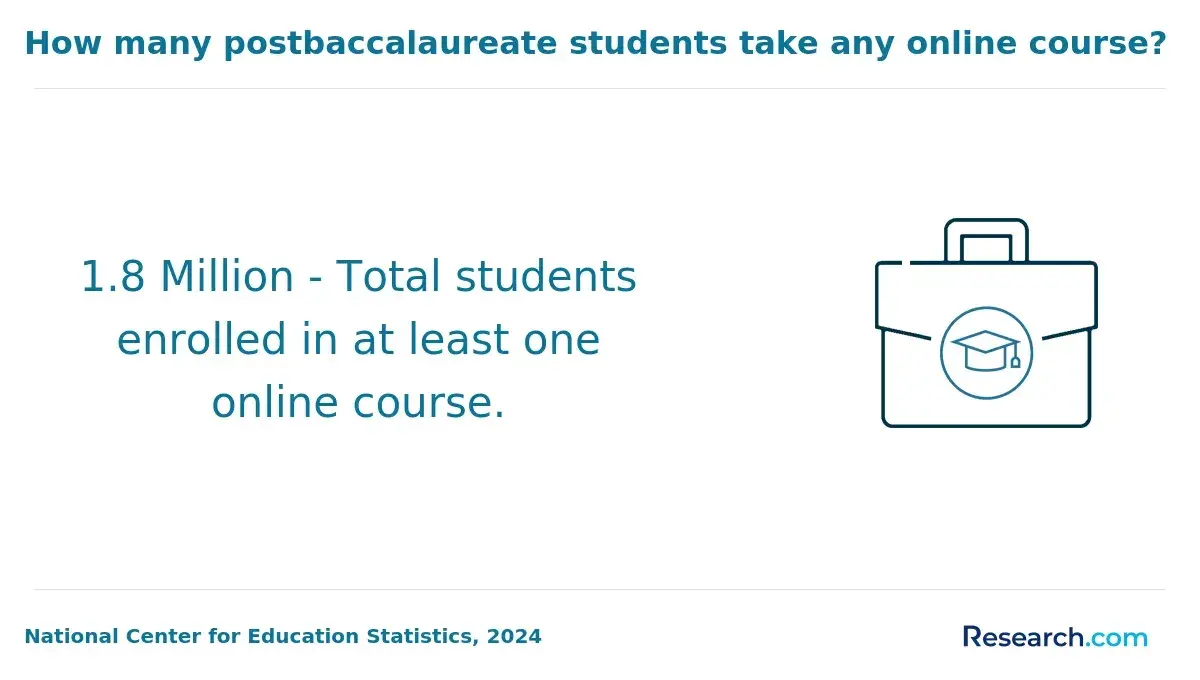
Applicants interested in cinematography may want a portfolio-focused education without the delay of finding academic or workplace references. This matters as online learning remains common: the National Center for Education Statistics reported in 2024 that 53.5% of U.S. postsecondary students took at least one distance-education course in fall 2022.
This guide helps aspiring camera operators, directors of photography, and content creators identify online programs that truly do not require recommendation letters, understand what replaces them, and verify cost, quality, and career fit before applying.
Key Things You Should Know
- "No letters of recommendation required" means the published application checklist does not require references for that specific program; it does not mean transcripts, identity verification, a portfolio, or other admissions materials are waived.
- Online bachelor's options related to cinematography commonly use high school or college transcripts, a personal statement, and sometimes creative samples instead; always confirm the requirement for your entry term because policies can change.
- Program quality matters more than streamlined admissions: compare institutional accreditation, hands-on production requirements, equipment access, total tuition, and career support. For context, the BLS reported a $68,010 median annual wage for film and video editors and camera operators in 2024.
Which Online Cinematography Degree Programs Require No Letters of Recommendation?
Fully online degrees titled exactly "cinematography" are less common than online film production, digital cinematography, motion pictures, media production, and film-and-media degrees. At the undergraduate level, several schools have published application processes that do not list recommendation letters as a standard requirement, but applicants should treat this as a starting point rather than a permanent guarantee.
The comparison below identifies examples of online or substantially online degree paths that have been advertised with streamlined undergraduate admissions. Confirm the current checklist directly with each institution before paying an application fee, especially if applying as a transfer, international, or graduate student.
| Institution and online program | Relevant focus | Recommendation-letter position | What to verify before applying |
| Full Sail University, BS in Digital Cinematography | Camera operation, lighting, editing, and digital production | Undergraduate admissions materials have generally emphasized an application and education records rather than letters | Current portfolio expectations, technology costs, transfer-credit rules, and state authorization |
| Academy of Art University, BFA in Motion Pictures & Television online | Film production with cinematography-related coursework | Undergraduate application materials have generally not listed recommendation letters as a standard item | Online production format, required on-campus intensives if any, equipment access, and total credit requirements |
| Arizona State University Online, BA in Film and Media Production | Film, media production, and storytelling foundations | Standard undergraduate admission processes have generally not required recommendations | Whether the current online pathway includes the cinematography courses and production experiences you need |
A program may be a strong match if you need a degree completion route, work full time, have been out of school for several years, or cannot reasonably ask former instructors for references. It may be a weaker fit if your goal requires extensive supervised camera work, access to professional lighting and grip equipment, or a local production network that the online format cannot provide.
Also distinguish a degree from a short course or certificate. A short online cinematography course can build a reel, but it may not provide general-education credits, federal-aid eligibility, or the breadth of a bachelor's degree. Students exploring adjacent creative fields can also compare an architecture online degree when their interests center on visual design, spatial composition, and digital visualization rather than film production.
What Are the Admission Requirements for Online Cinematography Degree Programs With No Recommendation Letters?
No-recommendation admissions usually remove one document, not the institution's academic review. Bachelor's programs commonly request official high school transcripts or GED documentation, while transfer applicants normally submit college transcripts. Graduate film programs are more likely to request a portfolio, résumé, statement of purpose, and sometimes recommendations, so do not assume that an undergraduate policy applies to a master's program.
The materials below are common replacements or supporting evidence. They help an admissions office assess academic preparation, motivation, and readiness for project-based online learning without third-party references.
- Completed application with accurate education, residency, and contact information
- Official or unofficial transcripts during initial review, followed by official records before enrollment when required
- Personal statement or short responses explaining creative interests, goals, and relevant experience
- Portfolio, reel, screenplay excerpt, photography samples, or creative assignment when the program requests one
- Résumé documenting production work, freelance projects, military experience, employment, or technical skills
- English-language proficiency documentation for applicants who must meet that requirement
- Technology-readiness confirmation, including a computer capable of editing video and adequate internet access
Many undergraduate programs use GPA or course completion as an initial academic screen, but the minimum varies by institution and applicant type. Test-optional policies do not necessarily eliminate all academic standards; a school may still evaluate grades in English, math, arts, or college-preparatory coursework.
Before applying, download or save the program-specific admissions page, ask whether letters are not required versus merely optional, and request confirmation in writing if the answer is unclear. This is especially important for applicants changing majors, seeking readmission, or applying through an accelerated or graduate pathway. Similar streamlined application structures appear in other disciplines, including some accelerated psychology programs online, but requirements must always be checked degree by degree.
Are Online Cinematography Programs With No Letters of Recommendation Easier to Get Into?
Not necessarily. A program without recommendation letters can be easier to apply to because it reduces administrative work and avoids reliance on former teachers or supervisors. It is not automatically less selective, less rigorous, or more likely to admit every qualified applicant.
Admissions offices can assess readiness through transcripts, prerequisite courses, written responses, portfolios, and capacity limits in production classes. A selective creative program may place substantial weight on artistic work even when it does not ask for references. Conversely, a broad-access institution may focus primarily on whether applicants meet baseline academic and documentation requirements.
Use the absence of letters as an access feature, not as the main quality signal. Applicants should avoid assuming admission is guaranteed, submitting a rushed statement because no references are needed, or choosing a school solely because its application looks simple. A better comparison asks whether the curriculum develops lighting, camera movement, visual storytelling, production management, editing literacy, and a demonstrable reel.
Career outcomes also depend on experience beyond the credential. Camera operators and cinematographers often build opportunities through student productions, independent sets, internships, freelance projects, and relationships with directors and producers. Online students should therefore confirm how the program supports collaboration, feedback, and production practice.
Without letters, schools generally rely more directly on evidence supplied by the applicant. The goal is not to recreate a reference letter; it is to determine whether you can succeed academically, communicate professionally, and participate responsibly in collaborative creative work.
This table shows how common admissions materials can demonstrate qualities that recommendations might otherwise address.
| Application material | What it may show | How to make it stronger |
| Transcript | Academic consistency, completed prerequisites, and ability to manage coursework | Explain significant gaps or grade changes briefly and factually if the application allows it |
| Personal statement | Career direction, communication skills, and reasons for choosing cinematography | Connect specific experiences to concrete learning goals, such as lighting interviews or operating a camera on narrative sets |
| Portfolio or reel | Visual judgment, technical experimentation, storytelling, and creative potential | Label your role on each project and use only work you have permission to share |
| Résumé | Reliability, work history, production exposure, and transferable skills | Include relevant roles such as production assistant, photographer, editor, livestream technician, or content creator |
| Interview or admissions conversation | Goals, availability, and understanding of online learning expectations | Prepare specific questions about production assignments, equipment, and feedback methods |
For a portfolio, polished work is helpful, but clarity matters more than pretending to have a professional credit list. A concise reel can include a short scene, documentary coverage, a lighting exercise, or still images that show framing and exposure choices. If a program does not require samples, submitting unsolicited files may not help; follow its instructions exactly.
Artificial intelligence tools are changing media workflows, including preproduction planning, transcription, logging, and some editing tasks. Students should seek programs that teach ethical production practice, copyright awareness, consent, and human creative judgment rather than treating automation as a substitute for camera, lighting, and storytelling skills.
Start with institutional accreditation recognized by the U.S. Department of Education and the Council for Higher Education Accreditation. Institutional accreditation matters because it supports transferability, federal financial-aid eligibility when other requirements are met, and confidence that the school is subject to external academic review. Cinematography itself does not generally require a separate professional license in the way that nursing or teaching does.
Use these steps to verify a school before enrolling. They can help you separate a legitimate streamlined application process from a program that provides little evidence of academic quality or student support.
- Search the institution in the U.S. Department of Education's Database of Accredited Postsecondary Institutions and Programs and confirm that the accreditor is recognized.
- Check the school's own accreditation statement, including the accreditor's name and current status, rather than relying on vague claims such as "internationally accredited."
- Confirm that the exact degree, delivery format, and your state of residence are authorized for online enrollment.
- Review the curriculum for production courses, faculty credentials, equipment expectations, assessment methods, and opportunities to create portfolio work.
- Ask for written disclosure of tuition, fees, refund rules, graduation requirements, transfer policies, and career-services support.
- Investigate complaints, pressure-based enrollment tactics, and promises of guaranteed jobs or income; these are meaningful red flags.
Programmatic recognition can be useful in film and media education, but it is not a universal requirement for employment as a cinematographer. Employers typically evaluate demonstrated skill, credits, professional conduct, and a reel alongside education. Accreditation is still an essential baseline when a degree is the goal.
Be cautious if an institution will not identify its accreditor, refuses to provide a catalog, demands immediate payment, or markets "no references" as proof that no academic work is expected. A legitimate school should be able to explain its standards clearly.
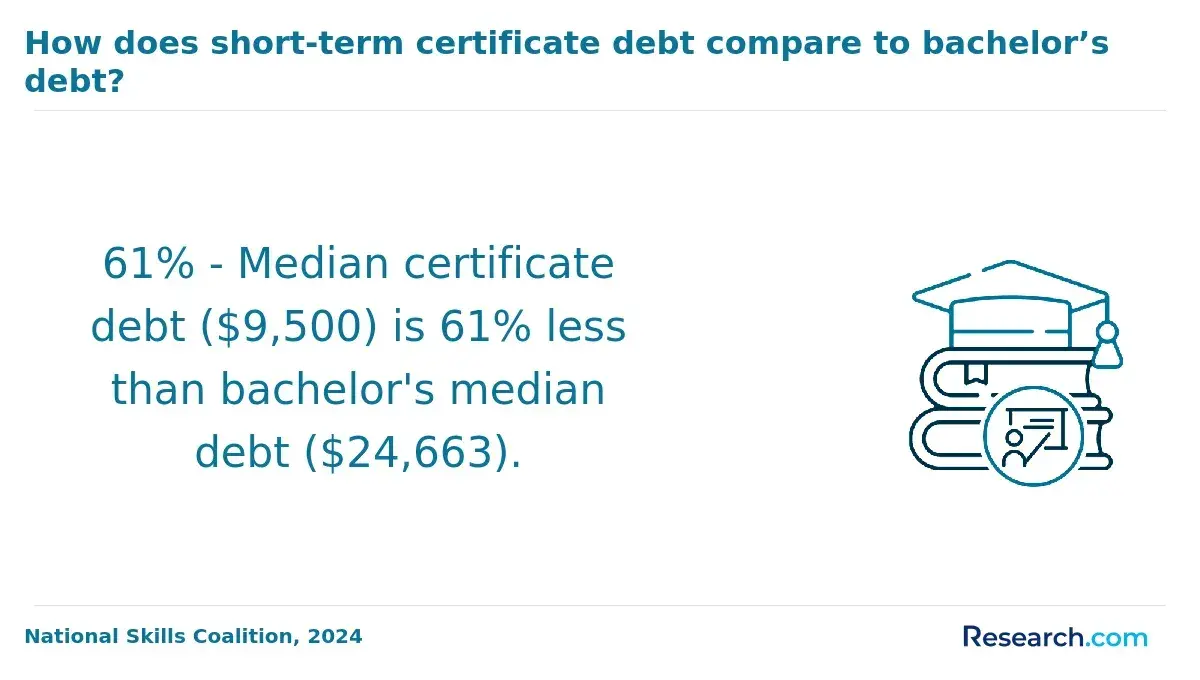
Admission requirements do not determine price. Costs vary substantially by institution type, residency rules, transfer credits, pace of study, and whether students must purchase cameras, lenses, audio gear, lighting, storage, editing software, or insurance for projects. Online delivery can reduce commuting and housing costs, but hands-on film work can add significant expenses.
As a broad U.S. benchmark, College Board reported average published tuition and fees for 2024-25 of $11,610 at public four-year institutions for in-state students and $43,350 at private nonprofit four-year institutions. These figures are not cinematography-program prices and exclude many living and production costs, but they illustrate why applicants should request a program-specific estimate.
The following cost categories should appear in your comparison, even when a school advertises a single tuition rate.
| Cost category | Why it matters for cinematography students | What to ask |
| Tuition per credit or term | Determines the core academic cost and may change with course load | Is the rate fixed for continuing students, and how many credits are required? |
| Mandatory institutional fees | Technology, graduation, distance-learning, and student-service fees can affect the total | Which fees are charged each term and which are one-time charges? |
| Production equipment | Cameras, lighting, tripods, storage, and editing hardware may be required | What equipment is mandatory, what can be rented, and are student discounts available? |
| Software and media storage | Editing applications, plug-ins, cloud storage, and backup drives are recurring expenses | Are licenses included, discounted, or the student's responsibility? |
| Travel or residencies | Some online programs require on-site workshops, shoots, or intensives | Are travel, lodging, and local production expenses included in the published estimate? |
Compare net cost, not only tuition. Subtract grants and scholarships that do not need repayment, then consider realistic equipment, transportation, and living costs. Students evaluating the financial return of creative degrees may also find it useful to review top degrees in demand for the future alongside their own interest in film production and local job opportunities.
Yes, an online format and no-recommendation admissions policy do not by themselves prevent financial-aid eligibility. Students attending an eligible accredited institution may be able to use federal aid if they meet U.S. Department of Education requirements, complete the Free Application for Federal Student Aid (FAFSA), and remain enrolled in an eligible program. State aid, institutional grants, employer assistance, scholarships, and private loans have separate rules.
Financial aid is based on eligibility and program participation, not on whether the school asks for recommendation letters. Submit the FAFSA early, review the aid offer line by line, and distinguish grants and scholarships from loans and work-study. Do not assume that an offer covers equipment or all indirect costs; schools may include estimated allowances, but actual reimbursement rules vary.
Before accepting loans, ask the financial-aid office whether your online enrollment level affects aid, whether transfer credits change your remaining eligibility, and whether repeated or withdrawn courses have consequences. Maintain satisfactory academic progress, since federal-aid recipients generally must meet the institution's academic-progress standards.
Applicants should also ask whether cameras and other required materials can be covered through a cost-of-attendance adjustment or emergency funding process. Policies vary, and approval is not automatic. Keep receipts and the course requirement documentation if equipment is required for enrollment.
Program length depends on the credential, the number of transfer credits accepted, course sequencing, and whether a student attends full time. A bachelor's degree generally requires about 120 credits and commonly takes about four years at a traditional full-time pace. An associate degree often requires about 60 credits, while certificates may take substantially less time but do not carry the same breadth or degree status.
Online programs may use asynchronous courses, scheduled virtual sessions, accelerated terms, or a mix of formats. Accelerated calendars can shorten the time between course starts, but they do not reduce the workload required to learn camera operation, lighting, editing, and production planning. Students balancing employment should calculate weekly hours for coursework, shoots, revisions, group meetings, and technical troubleshooting.
The table below provides planning ranges rather than promises. Actual completion time can increase when courses are offered in sequence, students pause enrollment, or production assignments require additional time.
| Credential path | Typical academic scope | Common completion pattern | Best suited for |
| Certificate | Focused technical or creative coursework | Often months to about one year | Students testing the field or building a targeted skill set |
| Associate degree | General education plus introductory production coursework | Commonly about two years full time | Students seeking an entry-level foundation or transfer pathway |
| Bachelor's degree | General education, production, theory, and portfolio development | Commonly about four years full time; less with accepted transfer credit | Students seeking a comprehensive undergraduate credential |
| Master's degree | Advanced creative, technical, or leadership study | Often one to three years, depending on format | Applicants with a prior bachelor's degree and a clearly defined advanced goal |
Choose pace based on sustainable capacity, not marketing language. Students who want an intensive management-oriented degree in another field can compare an accelerated MBA, but cinematography training should still leave adequate time for original production practice and a strong reel.
Many online bachelor's programs accept transfer credit, and a no-recommendation policy usually does not change that process. Transfer review is separate from admissions review: the school evaluates prior coursework for equivalency, grade minimums, recency, institutional accreditation, and fit with degree requirements.
General education courses such as composition, history, math, and social science may transfer more readily than specialized film courses. Production courses can require syllabi, project samples, or faculty review because schools need to determine whether prior work matches their camera, lighting, editing, or storytelling outcomes.
Take these actions before committing to a program:
- Request an official transfer evaluation before enrolling whenever possible.
- Ask for a written degree plan showing accepted credits, remaining credits, and the expected completion path.
- Save course descriptions, syllabi, and major project documentation from previous media classes.
- Confirm the maximum number of transfer credits and whether credits from certificates, military training, or prior learning may count.
- Check whether transferred credits affect financial aid, full-time status, course sequencing, or eligibility for a final portfolio project.
A school that accepts many credits is not automatically the least expensive option. Compare the remaining tuition, required equipment, and time to completion after evaluation. Also avoid withdrawing from a current institution until the receiving school confirms how credits will apply.
How Should You Compare Online Cinematography Degree Programs That Do Not Require Letters of Recommendation?
Compare programs by fit and evidence, not by the shortest application alone. The best choice aligns with your desired role: a director of photography needs deep camera and lighting practice, while an editor, producer, or digital content specialist may prioritize a different course mix. The Bureau of Labor Statistics projects 3% employment growth for film and video editors and camera operators from 2024 to 2034, indicating a field where technical adaptability and a portfolio remain important.
Use the criteria below to conduct a consistent comparison across schools. These questions reveal whether the online experience will help you create credible work samples and manage the financial commitment.
| Comparison factor | What a strong answer looks like | Potential concern |
| Admissions policy | The exact program page clearly states that letters are not required for your applicant type | Staff provide only verbal assurances or confuse optional letters with waived letters |
| Accreditation and authorization | Recognized institutional accreditation and confirmation that the school can enroll students in your state | No named accreditor, unclear status, or no state-authorization information |
| Curriculum | Courses cover cinematography, lighting, camera systems, visual storytelling, editing, and production workflow | Course titles are vague or focus mainly on software without production fundamentals |
| Hands-on learning | Clear projects, critique, collaboration, and realistic guidance on equipment and shooting requirements | No explanation of how practical camera skills are taught online |
| Faculty and support | Faculty credits or relevant professional experience, accessible advising, and technical support | Little information about instructors, feedback, or student services |
| Cost and aid | A written total-cost estimate, transparent fees, and understandable aid guidance | High-pressure financing, hidden fees, or job promises tied to borrowing |
| Outcomes | Portfolio expectations, internship support, alumni examples, and realistic career guidance | Guaranteed-employment claims or no evidence of student work |
Ask admissions representatives for the current catalog, sample degree plan, equipment list, transfer policy, and a written answer about recommendations. If you want a leadership-oriented education path rather than production work, an online EdD program may be more appropriate for education administration or organizational learning goals.
A no-recommendation online cinematography degree is most appropriate when you value accessible application logistics but are prepared to show academic readiness and invest consistently in creative practice. Avoid choosing one if the school cannot document accreditation, costs, practical learning methods, or how students produce a portfolio.
Other Things You Should Know About Cinematography
Most undergraduate online programs do not use a traditional performance-style audition. Some may request a portfolio, creative samples, or a short statement instead. A portfolio requirement is different from a recommendation letter because it shows your work directly rather than another person's evaluation of you.
Often, yes. Entry-level bachelor's and associate programs may accept beginners who meet academic admissions requirements. Review the curriculum to make sure it starts with foundational production skills, and be ready to learn basic camera, editing, lighting, and collaborative workflow concepts.
Ask whether letters are required, optional, or waived only for certain applicant groups; whether the policy applies to your exact degree and start term; and whether a portfolio, résumé, essay, or interview is required instead. Request the answer by email and keep it with your application records.
Potential paths include camera operator, videographer, assistant camera operator, lighting technician, editor, production assistant, content producer, and freelance filmmaker. Job titles and hiring standards vary widely by employer and market, and a portfolio, technical skills, collaboration, and production experience are often as important as the degree itself.
- Cinematography School https://www.nyfa.edu/cinematography-school/
- Film Schools & Careers | How To Become A Filmmaker https://www.learnhowtobecome.org/arts-humanities-careers/film/
- Recommendation Letters - Non-Film Background https://www.filmschool.org/threads/recommendation-letters-non-film-background.31419/
- How a Filmmaking Diploma Helps You Find Work https://collegeforartsandtech.com/how-filmmaking-diploma-help-job-hunting/
- Everything you need to know about applying to film school - ARTriculate - College Consulting for Creative Students https://www.artriculate.com/blog/applying-to-film-school
- Admissions Requirements | AFI CONSERVATORY https://conservatory.afi.com/admissions-requirements/
- BACK TO THE CHALKBOARD: How to Apply to Film School https://scriptmag.com/features/back-chalkboard-apply-to-film-school
- Film School or No Film School? (Part One) - DIRECTING CLASSES WITH PETER MARKHAM https://www.filmdirectingclass.com/blog/film-school-or-no-film-school-part-one
- Your Chances of Getting a Job After Film School - San Francisco Film School https://www.sanfranciscofilmschool.edu/your-chances-of-getting-a-job-after-film-school/