2027 Cheapest Accredited Online Cinematography Degree Programs That Accept FAFSA

Co-Founder and Chief Data Scientist
Finding a low-cost online cinematography degree is harder than it looks because many film programs are campus-based, portfolio-heavy, or not eligible for federal aid. Cost matters: College Board's latest tuition data shows published tuition and fees at public four-year colleges average $11,610 for in-state students, while private nonprofit colleges average $43,350. This guide is for students who want a film, digital cinematography, or video production degree online and need FAFSA access. You'll learn how to compare real net cost, accreditation, federal aid, transfer credits, and career value before enrolling.
Key Things You Should Know
- The lowest published online tuition among relevant FAFSA-eligible options is often found in broader video production or digital media degrees, with some full-time online undergraduate rates around $390 to $485 per credit before aid.
- FAFSA participation does not mean a program is free; the maximum Federal Pell Grant for the 2024-25 award year is $7,395, and remaining costs may require scholarships, work income, payment plans, or loans.
- For career ROI, compare total borrowing against realistic media wages: the BLS reports a 2024 median wage of $70,630 for film and video editors and camera operators, but entry-level and freelance earnings can vary widely.
Which Are the Cheapest Accredited Online Cinematography Degree Programs That Accept FAFSA?
The cheapest accredited online cinematography degree is usually not labeled only "cinematography." Many lower-cost FAFSA-eligible options are online bachelor's programs in digital media, film and media studies, video production, digital filmmaking, or film production with cinematography coursework. The table below compares programs that are institutionally accredited, have online delivery, and are commonly positioned for students interested in cinematography, camera work, editing, visual storytelling, or production.
| School | Relevant online degree path | Accreditation type | FAFSA participation | Published tuition indicator before aid | Best fit |
| Liberty University | BS in Digital Media and Journalism: Video Production | Regional institutional accreditation | Yes | About $390 per credit for full-time online undergraduate study | Students who want one of the lower-cost online video production routes with Christian university context |
| Grand Canyon University | BA in Digital Film with production-focused coursework | Regional institutional accreditation | Yes | About $485 per credit for many online undergraduate courses | Students seeking film production coursework in a large online university format |
| Full Sail University | BS in Digital Cinematography | National institutional accreditation recognized for federal aid purposes | Yes | Program-level tuition is typically higher than the lowest per-credit options | Students who specifically want "digital cinematography" in the degree title and an accelerated production-focused model |
| Arizona State University Online | BA in Film and Media Studies | Regional institutional accreditation | Yes | Online undergraduate tuition is commonly published as a per-credit range | Students who want film analysis, media theory, screen industries, and a respected public university brand |
| Academy of Art University | BFA in Motion Pictures and Television or related online production pathways | Regional institutional accreditation | Yes | Typically higher per-unit tuition than public or broad online universities | Students prioritizing a portfolio-driven art school model over lowest tuition |
The practical takeaway is that the "cheapest" program depends on whether you require a dedicated cinematography title or can accept a broader production degree. If your long-term goal is camera operation, lighting, editing, branded video, or freelance production, a lower-cost video production degree may provide better value than a more expensive film-school-branded option.
Students who are still comparing creative majors against other career paths may also want to review top degrees in demand for the future to understand how film-related degrees compare with fields that have broader employer demand.
How Does FAFSA Eligibility Work for Online Cinematography Degree Programs?
FAFSA eligibility means the school participates in federal student aid programs and the student meets federal and institutional requirements. It does not automatically mean every online program, every enrollment pattern, or every student qualifies for the same aid amount.
Before you apply, separate three ideas that are often confused: the school's Title IV participation, the specific program's aid eligibility, and your personal aid eligibility. A school can accept FAFSA, but you still need to be admitted into an eligible degree program and maintain satisfactory academic progress.
Use this sequence to confirm eligibility before paying enrollment fees or borrowing money:
- Confirm that the institution is listed as eligible for federal student aid and has a valid federal school code.
- Ask whether the exact online cinematography, digital filmmaking, film studies, or video production degree is Title IV eligible.
- Verify whether your intended enrollment level, such as full-time, half-time, or accelerated terms, changes grant or loan amounts.
- Request a written financial aid estimate that separates grants, scholarships, subsidized loans, unsubsidized loans, and out-of-pocket costs.
- Ask what GPA, completion pace, and credit-completion standards you must meet to renew aid.
A common mistake is assuming FAFSA acceptance equals full funding. FAFSA is only the application; the aid package depends on federal formulas, school cost of attendance, dependency status, enrollment intensity, prior aid usage, and institutional policies.
How Much Does an Online Cinematography Degree Cost After Financial Aid?
The cost after financial aid is the number that matters most. Published tuition tells you what the school charges, but net price reflects grants, scholarships, transfer credits, fees, books, equipment, housing if applicable, and borrowing.
The following table shows how affordability can change when aid and credits are applied. These are decision scenarios, not promises, because aid awards vary by student and school.
| Cost scenario | What it means | Why it matters |
| Low tuition, low grants | The school charges less per credit, but the student receives limited gift aid | This may still be affordable if the student transfers many credits or pays as they go |
| Higher tuition, stronger institutional aid | The school costs more on paper but offers scholarships or grants | The net price may beat a cheaper published rate |
| Low tuition, high fees or equipment costs | Technology fees, camera kits, editing software, hard drives, and production supplies add cost | Film programs can become expensive even when tuition looks manageable |
| Higher tuition, generous transfer policy | The per-credit price is higher, but fewer credits must be completed at the school | Total program cost may fall if many prior credits are accepted |
For many online cinematography students, the largest hidden costs are production equipment and software. Ask whether the school provides access to editing platforms, cloud storage, stock media, production labs, or equipment discounts, and whether those costs are included in tuition or billed separately.
A simple way to estimate cost is to multiply credits still needed by the per-credit tuition, then add required fees and subtract grants and scholarships. Do not subtract loans when calculating affordability; loans reduce what you pay now but increase what you repay later.
The best value program is not always the one with the lowest tuition. In cinematography and film production, value comes from a combination of net cost, portfolio development, faculty feedback, production assignments, software access, alumni network, internship support, and flexibility for working students.
Use the table below to compare value factors that are especially important for online film and cinematography students.
| Value factor | Why it affects affordability | What to ask the school |
| Portfolio-based curriculum | A stronger reel can matter more than the degree title in entry-level production work | How many completed projects will I have by graduation? |
| Transfer credit acceptance | Every accepted credit can reduce tuition and time | How many credits can I transfer, and how many major credits must be completed here? |
| Included software or equipment | Bundled tools can reduce out-of-pocket costs | Are editing software, storage, or production kits included in tuition or fees? |
| Career services for creative roles | Film careers often rely on networking, freelance work, and project experience | Do career services support reels, freelance contracts, internships, and production resumes? |
| Flexible pacing | Working students may avoid extra borrowing if they can study part time | Can I slow down without losing aid eligibility? |
A more expensive program can be worth considering if it reduces time to graduation, includes costly production resources, or helps you build a stronger portfolio. However, if a program costs substantially more and does not offer better project work, transfer efficiency, or career support, the cheaper FAFSA-eligible option may be the smarter choice.
Creative students comparing different design-oriented online degrees can apply similar value questions when reviewing an architecture online degree, especially around accreditation, software access, studio-style feedback, and portfolio outcomes.
Accreditation is essential because it affects federal aid eligibility, transferability, graduate school options, and employer confidence. For online cinematography degrees, the main issue is usually institutional accreditation rather than programmatic accreditation, because specialized cinematography accreditation is not as standardized as accreditation in fields like nursing, counseling, or engineering.
There are two checks students should make. First, confirm that the school is institutionally accredited by an agency recognized by the U.S. Department of Education or the Council for Higher Education Accreditation. Second, confirm that the institution participates in Title IV federal student aid programs if you plan to use FAFSA.
Watch for these accreditation red flags before enrolling:
- The school uses vague language such as "licensed," "approved," or "registered" but does not clearly identify a recognized accreditor.
- The program advertises FAFSA access, but the financial aid office will not confirm the exact online degree's eligibility in writing.
- Credits are unlikely to transfer because the institution lacks recognized accreditation or has unclear transfer agreements.
- The program emphasizes celebrity names, gear, or lifestyle marketing more than curriculum, faculty qualifications, completion expectations, and student outcomes.
Regional institutional accreditation is common among public and nonprofit universities, while some career-focused film schools hold national institutional accreditation recognized for federal aid purposes. Neither category automatically proves quality or affordability, so compare accreditation together with cost, curriculum, student support, and outcomes.
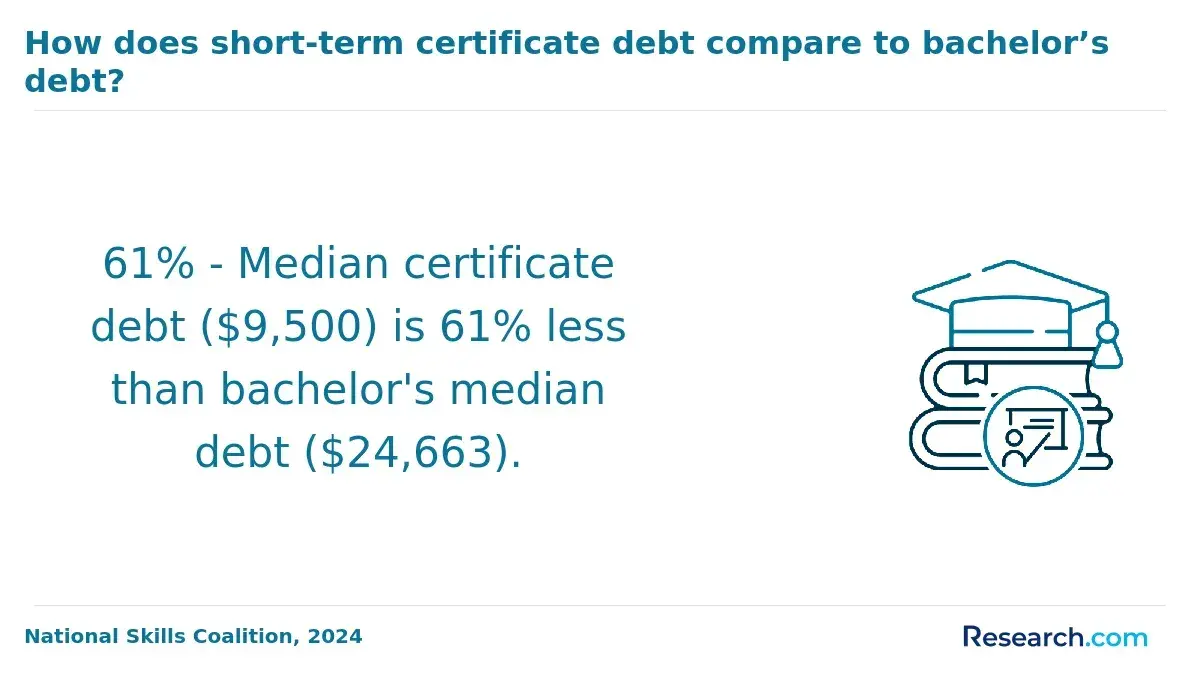
Federal aid can make an online cinematography degree more affordable, but students should treat grants and loans differently. Grants and scholarships reduce cost directly, while loans must be repaid with interest and should be used carefully in a field where early-career income can be uneven.
The main federal aid types for eligible undergraduate students include:
- Federal Pell Grant: Need-based grant aid that does not usually need to be repaid if eligibility rules are met.
- Federal Supplemental Educational Opportunity Grant: Additional need-based grant aid offered by participating schools with limited funding.
- Direct Subsidized Loan: Need-based loan where the government pays interest during qualifying in-school periods.
- Direct Unsubsidized Loan: Federal loan available without a financial-need requirement, but interest begins accumulating immediately.
- Federal Work-Study: Part-time work funding offered through participating schools, although availability for online students can vary.
For the 2024-25 award year, the maximum Federal Pell Grant is $7,395. That amount can make a meaningful difference at a lower-tuition online program, but it may cover only a small share of a high-cost private film school. This is why net price, not FAFSA participation alone, should drive your decision.
Also ask about school-based scholarships for transfer students, adult learners, military students, first-generation students, and creative portfolios. Some institutional scholarships require full-time enrollment, minimum GPA renewal, or continuous attendance, so confirm the rules before counting the award in your budget.
Transfer credits can be one of the fastest ways to lower the cost of an online cinematography degree. Because most bachelor's degrees require about 120 credits, students who transfer general education, elective, or lower-division media courses may reduce both tuition and time to graduation.
Before choosing a school, ask for a formal transfer evaluation rather than relying on a general estimate. The most important questions are:
- How many total transfer credits can be applied toward the degree?
- How many credits must be completed at the school to meet residency requirements?
- Will prior film, photography, communication, journalism, or media production courses count toward the major or only as electives?
- Does the school award credit for military training, professional certifications, portfolio review, or prior learning assessment?
- Will transfer credits reduce the cost of required production equipment or only tuition?
A lower per-credit school is not always cheaper if it accepts fewer credits. For example, a school charging more per credit may cost less overall if it accepts an associate degree block transfer and allows you to complete only upper-division production courses.
Adult learners comparing time-saving online pathways may see similar credit-efficiency logic in accelerated psychology programs online, where transfer policy and pacing can matter as much as advertised tuition.
A low-cost FAFSA-eligible online cinematography degree is most useful for students who need flexibility and want to limit debt while building a portfolio. It can be a strong fit for working adults, community college transfers, military-affiliated students, parents, and learners who already have access to local production opportunities.
This kind of program may be a good match if you:
- Want a bachelor's credential but cannot relocate to a traditional film school city.
- Can complete projects using local locations, collaborators, or personal equipment.
- Need federal grants or loans to make enrollment possible.
- Already have credits from community college or another accredited institution.
- Prefer digital video, editing, branded content, YouTube production, documentary work, or corporate media over a highly specialized studio-track film conservatory experience.
It may not be the best fit if you need intensive on-campus studio access, large crew productions, union-connected networking, or hands-on instruction with high-end cinema cameras every week. In those cases, a campus-based film program, certificate, apprenticeship, or local production experience may offer stronger practical training even if it is less convenient.
Students who are comparing low-cost online degrees across fields should remember that flexibility alone is not enough. A program must also match the student's career goal, learning style, and tolerance for freelance or project-based work.
Career ROI depends on how much you pay, how much you borrow, how quickly you finish, and whether the program helps you build marketable work. Cinematography-related careers often value a reel, technical skills, reliability, and professional network as much as the degree itself.
The BLS reports a 2024 median wage of $70,630 for film and video editors and camera operators. That figure is useful as a benchmark, but it should not be treated as an entry-level promise because many graduates begin in assistant, freelance, content production, wedding video, social media, or local media roles before moving into higher-paying production work.
To evaluate ROI, compare the degree's total expected cost against realistic outcomes:
- Total debt at graduation, including federal loans and any private loans.
- Monthly loan payment under standard and income-driven repayment options.
- Portfolio strength, including completed reels, edited scenes, lighting projects, and client-style assignments.
- Local and remote job opportunities in video production, advertising, education, corporate media, streaming content, live events, and nonprofit media.
- Potential to work while enrolled so you can reduce borrowing and gain experience.
A low-cost degree can improve ROI because it lowers the income needed to justify the investment. A higher-cost program needs a stronger reason: faster completion, better portfolio output, stronger industry access, specialized equipment, or measurable career support.
The ROI calculation is different from management-focused degrees such as an accelerated MBA, where employer reimbursement, promotion pathways, and salary progression may be easier to quantify. Film students should place more weight on portfolio evidence and debt control.
How Should Students Choose the Cheapest FAFSA-Eligible Online Cinematography Degree?
Choosing the cheapest FAFSA-eligible online cinematography degree requires more than sorting by tuition. The best decision is the program that gives you an acceptable credential, usable production skills, a portfolio, manageable debt, and enough flexibility to finish.
Use this checklist before committing to a program:
- Verify institutional accreditation through recognized accreditation sources, not only the school's marketing page.
- Confirm that the exact online degree is eligible for federal student aid.
- Request a net price estimate that includes tuition, fees, equipment, software, books, and expected aid.
- Get a written transfer credit evaluation before enrolling.
- Ask how many production projects, reels, scripts, edits, or camera assignments you will complete.
- Compare career services for film-specific needs, including portfolio review, internship support, freelance guidance, and networking.
- Calculate expected borrowing for each year, not just the first term.
- Ask what happens to aid if you study part time, stop out, fail a course, or change programs.
The biggest red flag is pressure to enroll before you understand the total cost. A reputable school should be able to explain accreditation, FAFSA participation, transfer credit, program requirements, and financial aid renewal rules clearly.
The same screening process applies when comparing other advanced or online credentials, including an EdD program: verify accreditation, confirm aid eligibility, compare net cost, and decide whether the credential supports your actual career goal.
Other Things You Should Know About Cinematography
Online cinematography programs typically require a computer with a high-speed internet connection, video editing software like Adobe Premiere Pro, and a digital camera. Some programs may also necessitate specific hardware like external hard drives for storing large video files and raw footage.
Online cinematography degree programs in 2027 often emphasize software skills such as Adobe Premiere Pro, Final Cut Pro, and DaVinci Resolve. Mastery of these tools is crucial for editing and post-production work in the film industry.
They can be, especially when the school is accredited and the student has a strong portfolio. Employers in media production usually care about demonstrated skills, reliability, software fluency, storytelling ability, and project experience in addition to education.
An associate degree can be a lower-cost starting point for technical skills or transfer. A bachelor's degree may be better if you want broader production training, general education, internship access, or jobs that prefer a four-year credential.
- ACCSC – The Los Angeles Film School https://www.lafilm.edu/disclosures/accsc/
- Film School Alumni: Take Our Survey on Employment and Success Outcomes https://www.filmschool.org/threads/film-school-alumni-take-our-survey-on-employment-and-success-outcomes.31899/
- The 4 Best Online Colleges that Accept FAFSA https://joinjuno.com/financial-literacy/financial-aid/online-colleges-accept-fafsa
- Graduation & Employment Statistics https://mediatech.edu/consumer-info/graduation-employment-statistics/
- Admissions : Online Tuition | Full Sail University https://www.fullsail.edu/admissions/tuition-online
- Your Chances of Getting a Job After Film School - San Francisco Film School https://www.sanfranciscofilmschool.edu/your-chances-of-getting-a-job-after-film-school/
- Online Degree Programs - The Los Angeles Film School - Catalog https://catalog.lafilm.edu/007-online-degree-programs/
- Best Film Schools in Canada of 2026 | CourseCompare.ca https://www.coursecompare.ca/the-best-film-schools-in-canada/
- Life After Film School: What to Expect As Graduates https://collegeforartsandtech.com/life-after-film-school/
- Film Making Courses After 12th: Degrees, Fees & Careers https://www.pearlacademy.com/blog/film/filmmaking-course-after-12th