2027 Evaluating a Simulation Nurse Educator Job: Workload, Performance Measures, Schedule, and Support
Audited and Verified:
Our Editorial and Data Verification Process
Research.com uses government datasets, official education statistics and primary institutional information to support its career and degree guides. Our review process checks factual accuracy, occupational definitions, source dates and the requirements associated with the credentials discussed.
How This Article Was Fact-Checked
Our editorial team verifies salary estimates, employment projections, education requirements and program information against original data providers and official organizations. Salary figures are checked against the relevant occupational definitions and reporting periods. Information about licensure, accreditation and required in-person training is reviewed separately.
Fact-checked and verified on:

Co-Founder and Chief Data Scientist
A simulation nurse educator offer can look like a predictable teaching job until you account for scenario design, equipment setup, debriefing, assessment, and last-minute lab changes. For an experienced RN considering a move from clinical practice - or an educator comparing employers - the job description alone rarely shows how much time and support those responsibilities receive.
This guide explains what the role involves, which qualifications matter, and how to test whether the proposed workload, schedule, performance measures, and compensation make the position sustainable.
Key Things You Should Know
- A 40-hour appointment is not 40 hours of instruction: ask how many hours are protected for preparation, setup, debriefing, assessment, and equipment work.
- Separate educational outcomes you can influence - such as scenario quality and documented learner feedback - from licensure pass rates or clinical outcomes you cannot control alone.
- Before accepting, confirm the actual evening and weekend schedule, technician coverage, orientation, equipment budget, and who can cancel an unsafe or unworkable session.
What does a simulation nurse educator do in a typical job?
A simulation nurse educator designs and facilitates structured learning experiences in which nursing students or practicing clinicians respond to realistic care situations. The educator identifies learning objectives, prepares a scenario and prebrief, observes performance, leads a debrief, and uses an assessment method appropriate to the learners' level. Depending on the employer, the role may also include curriculum mapping, faculty coaching, standardized-patient coordination, audiovisual recording, and equipment maintenance.
Titles conceal important differences. At a nursing school, the educator may work with prelicensure students and coordinate with course faculty. In a hospital, the focus may be staff development, team communication, or unit-specific competencies. A simulation operations specialist may handle programming and equipment while a nurse educator owns clinical and teaching decisions; elsewhere, one person does both. Ask which tasks belong to this position and which have dedicated support.
This is an education role, not an advanced practice nursing role. If your goal is to diagnose and treat patients as an NP, exploring less expensive nurse practitioner study addresses a different career decision; simulation-teaching experience does not substitute for NP preparation or authorization.
What education and nursing license are required for simulation nurse educators?
Requirements depend on whether the employer is hiring faculty, a hospital-based educator, or a simulation specialist. Nurse educator positions commonly seek an RN license, relevant clinical experience, and a BSN or graduate nursing education; faculty appointments may require a master's degree under institutional or applicable state rules. A technical simulation position may emphasize operations expertise and need not have identical nursing-license requirements. Read the duties and the employer's minimum qualifications rather than relying on the title.
For an experienced RN without a graduate degree, the immediate gap may be teaching experience rather than another credential. If a particular faculty opening does require graduate study, an ADN-prepared RN can investigate ADN-prepared RN graduate study options, but should first confirm that the degree and educator preparation satisfy that employer's requirements. An MSN in nursing education does not confer APRN authority.
How demanding is a simulation nurse educator's workload?
The central workload question is not how many sessions appear on the calendar; it is how much work each session creates. A familiar scenario with technician support may require substantially less educator time than a new interprofessional exercise requiring programming, faculty alignment, assessment tools, and multiple debriefs. Reset time, learner volume, equipment failures, and revisions can make back-to-back bookings especially demanding.
Use a recent, ordinary workweek - not the employer's idealized schedule - to test the offer. Request the number and length of sessions, learners and facilitators per session, preparation expectations, protected nonteaching time, and responsibility for setup and troubleshooting. Also ask what gets deferred when a vacancy or urgent training request increases demand. These answers matter more than a stated full-time hour count.
If a posting requires a BSN but the work itself does not require new supervised clinical placements, the guide to RN-to-BSN programs with no clinicals may help an ADN-prepared RN explore an educational route. Verify each program's actual requirements and the employer's degree policy before spending money; degree completion will not fix inadequate staffing.
A fair evaluation separates the educator's work from results influenced by the curriculum, learner preparation, staffing, and clinical placement. Useful evidence includes whether scenarios meet stated objectives, whether facilitators use a consistent debriefing approach, whether assessments are documented reliably, and whether feedback leads to revisions. Learner satisfaction can identify problems, but favorable ratings alone do not establish clinical competence.
The distinction below helps reveal whether a proposed performance review matches the authority and resources of the job.
| Measure | What it can show | Important limitation |
| Scenario and debriefing review | Alignment with objectives and quality of facilitation | Needs agreed criteria and trained reviewers |
| Learner assessment results | Performance on defined tasks in a particular exercise | Simulation performance is not proof of independent clinical competence |
| Session volume and utilization | How extensively the lab is scheduled | More sessions do not necessarily mean better learning |
| Program-wide outcomes | Potential signals for curriculum review | Licensure pass rates and patient outcomes cannot fairly be attributed to one educator alone |
Ask who chooses the measures, how often they are reviewed, and whether you have time and authority to improve a weak result. A position judged mainly on throughput while also promising individualized debriefing may have conflicting expectations. Likewise, comparing 12-month family NP programs involves program and advanced-practice outcomes, not a suitable shortcut for judging a simulation educator's individual teaching.
Academic appointments may follow course timetables and semester peaks; hospital appointments may need to reach staff on nights, weekends, or rotating shifts. Either setting can require early setup, late reset, meetings outside teaching blocks, and occasional on-site troubleshooting. A posted weekday schedule therefore may not describe the hours actually worked.
Ask for the last term's or quarter's session calendar and the expected hours for the next one. Confirm how far ahead schedules are released, who covers absences, whether evening sessions rotate, whether preparation can be done remotely, and how extra hours are handled under the position's employment classification. These details are particularly important if you are coordinating the job with caregiving or another clinical position.
If you are comparing this schedule with an advanced-practice career change, planning the cost of PMHNP education is a separate calculation that must include required learning and supervised clinical commitments. An online label does not make those commitments automatically compatible with full-time simulation work.
The Society for Simulation in Healthcare offers the Certified Healthcare Simulation Educator (CHSE) credential, and the International Nursing Association for Clinical Simulation and Learning publishes Healthcare Simulation Standards of Best Practice. These can guide professional development, scenario design, facilitation, debriefing, and evaluation. Check the credentialing organization's current eligibility and renewal rules before treating certification as an immediate option.
Certification is not an RN license, an employer competency assessment, or a substitute for orientation to the institution's equipment and curriculum. Ask whether certification is required at hire, expected later, or merely preferred - and whether the employer pays for preparation, examination, renewal, and protected development time. Similarly, shorter psychiatric-mental health NP certificates prepare eligible nurses for a different professional pathway; they are not simulation educator credentials.
The most useful preparation combines teaching methods with hands-on simulation practice. Look for instruction in learning objectives, adult learning, scenario design, prebriefing, facilitation, debriefing, assessment and rubric design, and evaluation of an educational activity. Clinical expertise matters, but being an experienced bedside nurse does not automatically prepare someone to facilitate a psychologically safe debrief or assess learners consistently.
A nursing education course, employer workshop, mentored facilitation, or graduate educator track may each close a different gap. Ask whether a course includes observed facilitation and feedback, rather than only written assignments. If a graduate degree is necessary for your target faculty jobs, a BSN-to-MSN program affordability guide can inform cost comparisons; then verify that the specific track includes the educator competencies and practical experience you need. An additional degree is not the default answer to every skills gap.
There is no single reliable national wage figure for the job title "simulation nurse educator." A college faculty position may be classified with nursing instructors and teachers, postsecondary, while a hospital educator may be classified differently. U.S. Bureau of Labor Statistics occupation-wide medians can provide context only after you identify the closest match to the actual duties; they are not a salary quote for this specialty or an individual offer.
Compare written offers using base pay, appointment length, expected weekly and annual hours, paid time off, retirement benefits, continuing-education support, and any additional compensation for evenings or weekends. For an academic offer, confirm whether pay covers a nine-, ten-, or twelve-month appointment and whether summer work is separate. Calculate the effective hourly value using realistic preparation and off-calendar work, not just scheduled lab hours.
Do not assume a doctorate will produce a raise that repays its cost. Short online Doctor of Nursing Practice degrees may be worth examining for a separately defined leadership or academic goal, but first ask whether the employer's pay scale actually rewards that qualification.
Potential employers include nursing schools, health systems, residency and staff-development programs, and simulation centers. Experienced educators may move into curriculum leadership, faculty development, simulation center management, or broader nursing professional development. Advancement depends on demonstrated teaching and operational skills as well as the employer's degree and leadership requirements.
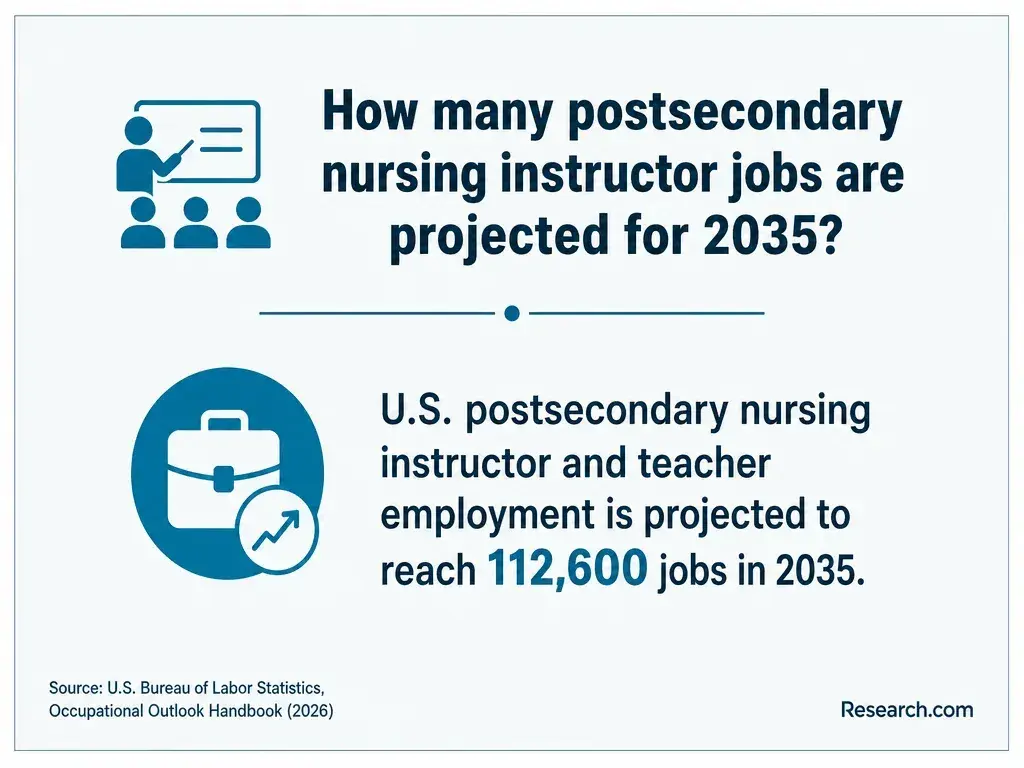
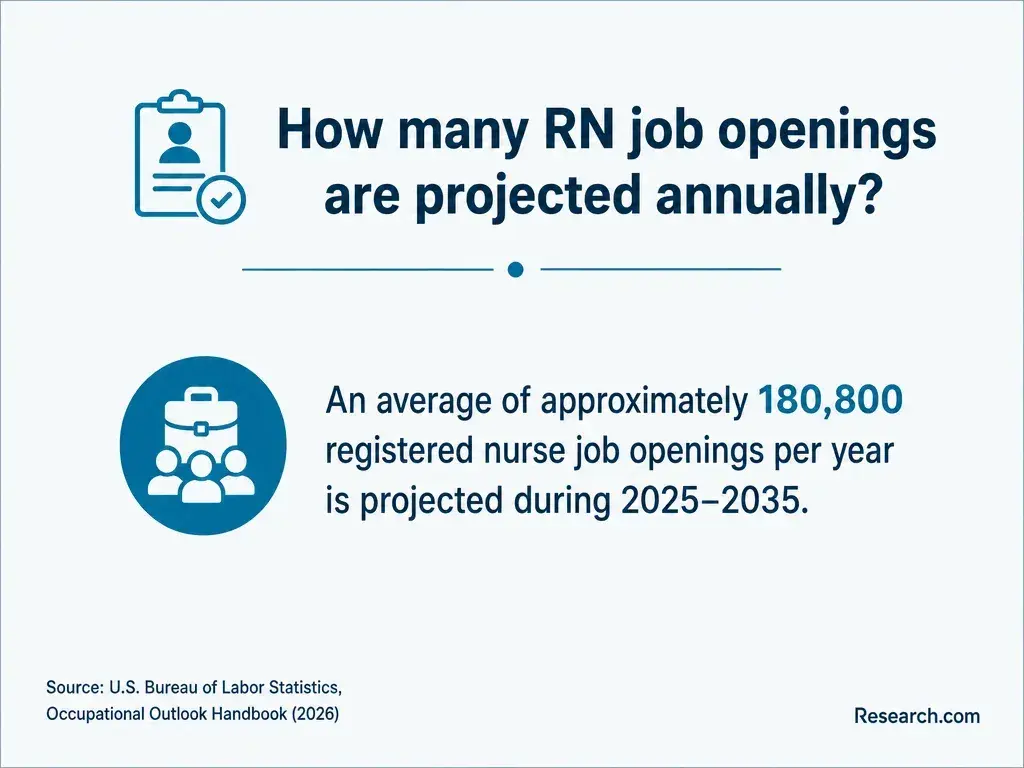
Because simulation educator is not a distinct BLS occupation, no occupation-specific national growth projection should be presented as its job outlook. Broader projections for postsecondary nursing instructors or related education roles may offer context, but local budgets, faculty vacancies, and simulation-center staffing determine actual openings. Search recent postings in your region and compare their duties and minimum qualifications before investing in training.
For an educator who instead wants direct-care advanced practice, post-master's FNP certificate completion timelines address a different transition. Prior teaching experience does not replace the population-focused preparation, supervised clinical education, certification, and state authorization applicable to that role.
How can you evaluate a reputable nursing simulation educator program?
Start by matching the training to the job gap you identified. A short course may suit an experienced faculty member learning debriefing; a graduate nursing education track may make more sense when target employers require a master's degree. For a degree program, verify institutional accreditation, applicable nursing program accreditation, the exact educator track, costs, and required in-person work. An educational certificate should not be mistaken for CHSE certification.
Request a syllabus and speak with someone who has facilitated the practical component. The following checks show whether the program can build usable teaching skills rather than simply add a credential:
- Confirm that you will design or revise a scenario and receive feedback on observed facilitation or debriefing.
- Check who arranges simulation access, mentoring, and any required practicum, and whether your workplace can be used.
- Compare total tuition, fees, travel, equipment, and time away from work with the qualifications in actual job postings.
- Ask how learners are assessed and what evidence of your work you may retain without disclosing patient, learner, or employer information.
If your intended advancement is systems leadership rather than simulation teaching, post-MSN DNP pathways in systems leadership warrant a separate comparison. Choose the program for the position you intend to hold, not for the highest available degree title.
Other Things You Should Know About Nursing
Only with the institution's permission and applicable learner-consent and privacy safeguards. A de-identified scenario plan or assessment rubric may be a safer example of your work.
It can involve prolonged standing, moving supplies, and resetting rooms. Ask which equipment handling is yours and what accessibility accommodations and technician assistance are available.
Some do. Standardized patients are trained people portraying a patient or another participant; the educator may help design the encounter and prepare raters or facilitators.
Do not assume it can. The school must follow applicable board requirements, program policies, and accreditor expectations when determining how simulation counts toward a particular course or program.
- Validating Assessment Tools in Simulation - StatPearls - NCBI https://www.ncbi.nlm.nih.gov/books/NBK560531/
- Simulation in Clinical Nursing Education - PMC - NIH https://pmc.ncbi.nlm.nih.gov/articles/PMC8116070/
- Healthcare Simulation Operations Specialist | psu.edu https://app.ohr.psu.edu/JobCatalog/job/view/jobCode/PSU2505
- Evaluation in Simulation-Based Education - The Nurse Educators' Guide to Simulation-Based Education https://pressbooks.montgomerycollege.edu/simulationeducationresources/chapter/evaluation-in-simulation-education/
- Simulation Operations Manager (Academic Affairs) | The Chronicle of Higher Education Jobs https://jobs.chronicle.com/job/38012216/simulation-operations-manager-academic-affairs-/
- George Washington Employment Site | Dedicated Simulation Educator https://www.gwu.jobs/postings/129163