2027 DNP Psychiatric-Mental Health NP Programs for Nurses in Virginia: BSN and MSN Entry Routes and Clinical Training
Audited and Verified:
Our Editorial and Data Verification Process
Research.com uses government datasets, official education statistics and primary institutional information to support its career and degree guides. Our review process checks factual accuracy, occupational definitions, source dates and the requirements associated with the credentials discussed.
How This Article Was Fact-Checked
Our editorial team verifies salary estimates, employment projections, education requirements and program information against original data providers and official organizations. Salary figures are checked against the relevant occupational definitions and reporting periods. Information about licensure, accreditation and required in-person training is reviewed separately.
Fact-checked and verified on:

Co-Founder and Chief Data Scientist
A Virginia nurse considering psychiatric-mental health nurse practitioner practice needs more than a doctoral degree: the program must provide the right population-focused education and supervised clinical training. The best route depends on whether you hold a BSN, an MSN in another specialty, or existing PMHNP certification. This guide compares those entry points, explains what online study still requires in person, and identifies the academic, financial, and licensing details to verify before applying. It is designed to help you avoid paying for coursework that does not advance your intended practice.
Key Things You Should Know
- A BSN-to-DNP PMHNP track combines initial NP preparation with doctoral study; an MSN-to-DNP track qualifies you for PMHNP practice only if it includes any PMHNP education and supervised clinical work you still need.
- Compare supervised psychiatric clinical hours separately from doctoral practice hours: DNP programs generally plan for at least 1,000 post-baccalaureate practice hours, but schools determine whether documented prior hours count.
- Before enrolling, obtain written answers on your specific entry route, Virginia clinical placements, total remaining credits and costs, PMHNP certification eligibility, and required campus visits.
What are DNP psychiatric-mental health nurse practitioner programs in Virginia?
A Doctor of Nursing Practice (DNP) psychiatric-mental health nurse practitioner (PMHNP) program prepares nurses for advanced psychiatric assessment and treatment across the lifespan while developing doctoral-level skills in evidence-based practice and healthcare improvement. The PMHNP track, not the letters "DNP" alone, is what matters for a nurse seeking initial preparation in this NP population focus.
Virginia applicants may encounter BSN-to-DNP tracks, post-master's pathways that add PMHNP preparation, and DNP completion options for nurses who are already PMHNPs. These are not interchangeable. A nurse seeking psychiatric practice should not substitute accelerated FNP education comparisons for a review of PMHNP tracks: family and psychiatric-mental health NP preparation lead to different population-focus competencies and certifications.
Program offerings, entry points, and enrollment states can change. Treat a school as a candidate only after its current catalog confirms a PMHNP track for your entry credential and intended start term.
What are the BSN and MSN entry routes for Virginia DNP PMHNP programs?
Your present graduate preparation determines whether you need the full NP curriculum or primarily doctoral coursework. The comparison below separates the academic award from the preparation required for initial PMHNP certification.
| Starting point | Route to investigate | Critical question |
| RN with a BSN | BSN-to-DNP with a PMHNP track | Does the sequence include all required PMHNP coursework and supervised experiences? |
| RN with a non-APRN MSN | Post-master's PMHNP preparation plus a DNP, whether integrated or separately sequenced | Which previous courses and hours will the school accept after a formal review? |
| APRN certified in another population focus | PMHNP post-graduate preparation, potentially followed by or combined with a DNP | What new psychiatric clinical experiences are required despite existing APRN practice? |
| Already-certified PMHNP with an MSN | Post-master's DNP completion | Can documented prior graduate practice hours count toward the school's doctoral requirements? |
For an RN whose immediate goal is PMHNP practice, an eligible PMHNP MSN or post-graduate certificate may be more direct than a DNP; the doctorate is a separate decision about doctoral practice preparation. A nurse still completing the bachelor's degree should also distinguish BSN completion programs using workplace-based projects from graduate PMHNP clinical training. An RN-to-BSN project does not replace supervised NP experiences.
What are the admission requirements for Virginia DNP PMHNP programs?
Expect a current RN license, an eligible nursing degree, transcripts, recommendations, a statement of goals, and evidence of readiness for graduate study. Schools may also specify a GPA, statistics preparation, nursing experience, an interview, or requirements for admission to the PMHNP track beyond admission to the university. Clinical sites may impose separate background, immunization, and onboarding conditions.
MSN applicants should submit course descriptions and records of supervised graduate clinical hours, not just a diploma. A non-APRN MSN does not establish PMHNP competency, and an APRN license in another population focus does not automatically waive psychiatric coursework. Ask the program for a written assessment of remaining courses and clinical experiences before relying on an abbreviated timeline.
Entrance-exam advice for prelicensure nursing schools may not apply here. For example, no-HESI nursing school application pathways address a different admissions stage; check each DNP program's own graduate requirements rather than assuming it uses - or waives - the same exam.
Online delivery changes where much of the coursework occurs, not the need for supervised psychiatric care. An online or hybrid student may still need scheduled live classes, campus intensives, simulation, local clinical shifts, and in-person project meetings. A campus-based student may have more routine access to faculty and local partners but face a longer commute and less control over class days.
The practical distinction is who secures an approved site and preceptor. "Placement assistance" might mean a list of contacts rather than a confirmed placement. Although comparing FNP preceptor placement policies concerns another specialty, it illustrates a question PMHNP applicants should ask directly: what will the school do if an approved psychiatric site or preceptor is unavailable in your area?
If you work or care for family, request a sample clinical-term schedule - not only the usual weekly coursework estimate. Verify whether placements can occur near home, whether evening or weekend hours are possible, which campus visits are mandatory, and whether your state of residence is eligible for enrollment and clinical placement.
Initial PMHNP preparation typically integrates advanced health assessment, pathophysiology, pharmacology, psychiatric assessment and diagnosis, psychotherapy, psychopharmacologic management, and care across age groups. DNP study adds evidence appraisal, systems leadership, population health, and an applied practice-improvement project. Exact course titles and sequencing vary.
Supervised psychiatric experiences should expose students to appropriate patients, settings, and treatment approaches under qualified preceptors and faculty oversight. Ask how the program documents direct-care encounters, assesses competencies, handles limited access to child or older-adult populations, and distinguishes simulation from patient-care hours. Paid RN work at a psychiatric facility is valuable experience, but it counts toward program clinical requirements only if the school approves the arrangement and its supervision.
Doctoral practice hours and hours needed for initial PMHNP preparation serve related but distinct purposes. A school may review documented prior graduate hours for its DNP total while still requiring new PMHNP-specific clinical work. Likewise, short online family nurse practitioner certificates illustrate a different population-focus route, not a shortcut around psychiatric clinical competencies.
For the DNP project, ask when a site and organizational sponsor are needed and who decides whether the proposed work requires institutional or ethics review. Access to patient information, employer data, or a clinical site must be approved; a project proposal alone is not evidence of patient outcomes.
A BSN-to-DNP route generally requires more terms than a post-master's DNP because it includes initial graduate NP preparation. An MSN applicant's timeline depends especially on whether the prior degree included PMHNP preparation and how the school evaluates earlier coursework and practice hours. Clinical-site delays, part-time enrollment, and project approval can extend either route; advertised minimum completion times are not individualized plans.
No single Virginia price accurately represents all entry routes. Request a term-by-term estimate for your evaluated plan, including these charges and potential expenses:
- Tuition: published per-credit or per-term charges multiplied by the credits you must actually complete.
- Required fees: university, course, technology, clinical, and continuing-enrollment charges, where applicable.
- Other costs: books, screening and onboarding, travel or lodging for campus visits, clinical travel, certification and licensing applications, and reduced work hours.
Compare total remaining cost rather than tuition per credit alone. Exploring affordable PMHNP education pathways can help identify alternatives, but confirm that any lower-cost option includes the degree level and PMHNP preparation you need. Ask employers whether tuition assistance covers doctoral study and what repayment conditions apply.
Check the university's institutional accreditation and the nursing program's accreditation separately. Nursing programs commonly identify accreditation by the Commission on Collegiate Nursing Education (CCNE) or the Accreditation Commission for Education in Nursing (ACEN); verify the accreditor's listed institution, degree level, status, and effective dates. Also confirm the school's authority to enroll you and arrange clinical learning in the jurisdiction where you will study.
Accreditation is not a substitute for checking whether the specific PMHNP curriculum meets the applicable certification eligibility requirements. Nor does a fast completion claim establish regulatory fit. When considering shorter routes to a DNP degree, first determine whether the route offers initial PMHNP preparation or only doctoral completion for someone already prepared as an APRN.
Graduation does not itself authorize NP practice. A prospective Virginia PMHNP must maintain an appropriate RN license, meet the American Nurses Credentialing Center's eligibility requirements for PMHNP-BC certification and pass its examination, then satisfy the Virginia Board of Nursing's requirements for nurse practitioner licensure. Verify the board's current application, documentation, and practice requirements before accepting a job or beginning care.
Initial RN preparation is a separate step. Online direct-entry MSN program comparisons concern routes for people without an RN license; they should not be confused with postlicensure DNP PMHNP tracks. Similarly, an RN multistate practice privilege does not by itself establish NP authority in another jurisdiction. A graduate planning to see patients across state lines should check each relevant state's NP and telehealth rules.
With the required credentials, PMHNPs may work in outpatient behavioral health, integrated primary care, hospitals, community mental health, or other settings serving patients with psychiatric and substance-use needs. Roles can combine assessment, treatment planning, medication management, psychotherapy within preparation and scope, consultation, and care coordination. A DNP may also support practice-improvement or leadership work, but neither the degree nor certification guarantees a leadership appointment.
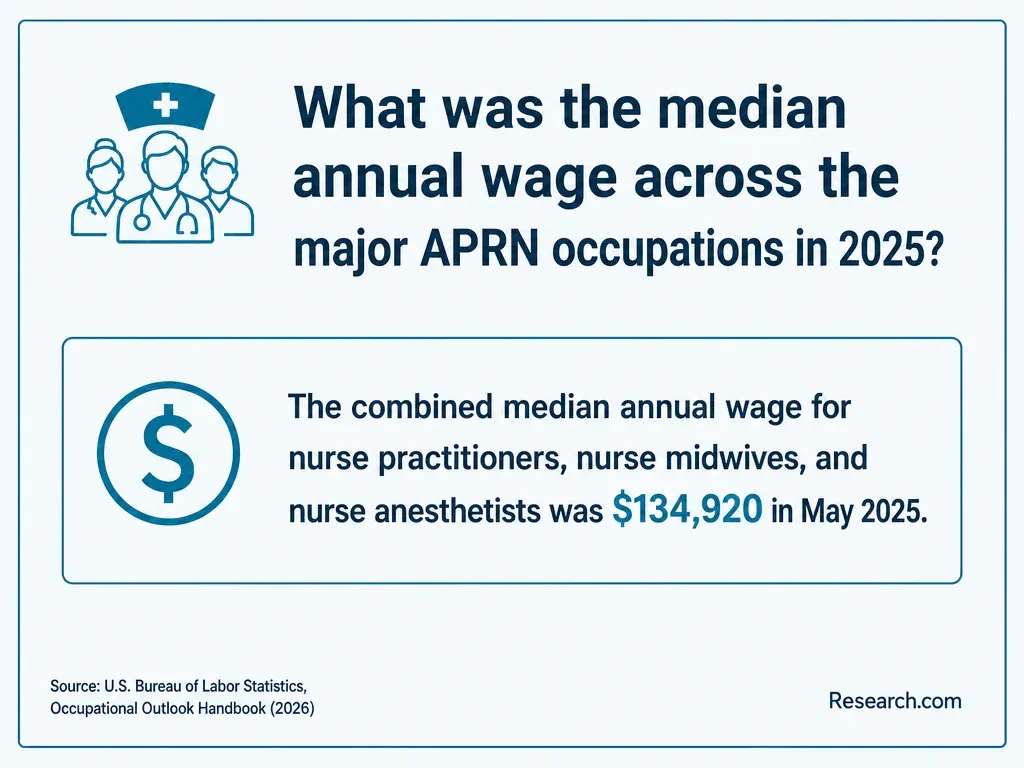
For pay comparisons, use the U.S. Bureau of Labor Statistics' nurse practitioner occupation data and Virginia-area wage estimates as a starting point, then examine actual PMHNP job offers. Occupational medians are not PMHNP-only figures or predicted salaries for DNP graduates. An offer's clinical support, patient load, call duties, benefits, and supervision or collaboration arrangements may matter as much as its base pay.
Before paying for another degree primarily to increase earnings, compare the complete cost with realistic local offers and your current compensation. Exploring less expensive nurse practitioner study may be useful if an MSN-level PMHNP route meets your practice goal and doctoral preparation is not required for the work you want.
How should students choose a reputable Virginia DNP PMHNP program?
Start with your intended outcome: initial PMHNP certification, a change from another APRN population focus, or doctoral completion as an existing PMHNP. Then ask each school to evaluate the same information about your degree, licenses, graduate courses, and documented clinical hours. This makes its proposed curriculum, schedule, and price meaningfully comparable.
A useful final check is to request written answers to the questions most likely to change your decision:
- Which exact PMHNP track admits someone with my credentials, and what courses and supervised experiences remain after review?
- Who approves and helps secure Virginia psychiatric clinical sites and preceptors, and what happens if a placement falls through?
- Which live sessions, campus visits, clinical shifts, and project milestones are required during each term?
- Does the current curriculum support ANCC PMHNP certification eligibility and my intended Virginia licensing application?
- What is my estimated total cost through graduation, including likely fees and any terms needed for project completion?
Compare answers with published policies and ask for clarification when an admissions statement conflicts with a catalog or clinical-placement agreement. A nursing program admission accessibility guide may help frame application planning, but an easier admission process is not evidence that a DNP PMHNP track meets your clinical, certification, or scheduling needs.
Other Things You Should Know About Nursing
Psychotherapy can be part of PMHNP practice when the clinician has appropriate education, demonstrated competence, and authority under applicable law and employer policy. Ask prospective programs how psychotherapy is taught and supervised rather than assuming every graduate receives identical experience.
Do not assume so. The patient's location can trigger that state's NP licensure and telehealth requirements. Check the relevant board and employer policies before scheduling interstate care.
Possibly, if your school and employer approve the project, site access, data use, and required oversight. Employment alone does not grant permission to use patient records or publish organizational results.
A DNP can support teaching opportunities, but qualifications depend on the course, institution, clinical specialty, and faculty role. Review actual job requirements; some positions expect teaching experience or additional educator preparation.
- 18VAC90-27-100. Curriculum for direct client care. | virginia.gov https://law.lis.virginia.gov/admincode/title18/agency90/chapter27/section100/
- Cost of Attendance (Budget) | 2025-2026 Federal Student Aid Handbook https://fsapartners.ed.gov/knowledge-center/fsa-handbook/2025-2026/vol3/ch2-cost-attendance-budget
- Virginia Board of Nursing - Criminal Background Checks https://www.dhp.virginia.gov/Boards/Nursing/ApplicantResources/CriminalBackgroundChecks/
- Tuition and Fees | University of Maryland School of Nursing https://www.nursing.umaryland.edu/admissions/tuition/
- Psychiatric Mental Health Nurse Practitioner Program (PMHNP) | OHSU Admission Requirements and Application Process https://www.ohsu.edu/school-of-nursing/psych-mental-health-nurse-practitioner
- Psychiatric Mental Health Nurse Practitioner MSN | ODUGlobal https://online.odu.edu/academics/programs/nursing-psychiatric-mental-health
- Psychiatric Mental Health Nurse Practitioner (PMHNP) | UVA School of Nursing https://nursing.virginia.edu/academics/dnp/pmhnp/
- Financing Your Education - Nursing, MSN | University of San Francisco https://www.usfca.edu/nursing/programs/graduate/masters/financing-your-education
- Psychiatric Mental Health Nurse Practitioner Concentration | Virginia Commonwealth University https://nursing.vcu.edu/academics/dnp/psychiatric-mental-health-nurse-practitioner/