2027 DNP Pediatric Primary Care NP Programs for Nurses in Maine: BSN and MSN Entry Routes and Clinical Training
Audited and Verified:
Our Editorial and Data Verification Process
Research.com uses government datasets, official education statistics and primary institutional information to support its career and degree guides. Our review process checks factual accuracy, occupational definitions, source dates and the requirements associated with the credentials discussed.
How This Article Was Fact-Checked
Our editorial team verifies salary estimates, employment projections, education requirements and program information against original data providers and official organizations. Salary figures are checked against the relevant occupational definitions and reporting periods. Information about licensure, accreditation and required in-person training is reviewed separately.
Fact-checked and verified on:

Co-Founder and Chief Data Scientist
Maine nurses interested in pediatric primary care face a specific program-selection challenge: a DNP must include the right nurse practitioner population focus, not merely a pediatric course or a general doctoral curriculum. That distinction matters before committing to tuition, travel, and supervised clinical placements. This guide compares BSN- and MSN-entry routes, explains what can and cannot be confirmed about Maine-based options, and shows how to check clinical training, certification eligibility, and career fit before applying.
Key Things You Should Know
- There are two principal entry points: a BSN-to-DNP route for RNs who still need pediatric NP preparation, and an MSN-to-DNP route whose requirements depend on the nurse's existing specialty.
- No Maine-based DNP pediatric primary care NP track is confirmed here; a school's general DNP or family NP offering is not evidence that it offers this population focus.
- A practice-focused DNP commonly plans for at least 1,000 post-baccalaureate practice hours across qualifying preparation, but a school must determine which prior hours count and which pediatric clinical experiences remain.
What are DNP pediatric primary care nurse practitioner programs in Maine?
A pediatric primary care nurse practitioner, or PNP-PC, is prepared to provide advanced assessment and ongoing care for children and adolescents in settings such as pediatric practices and community clinics. A qualifying DNP pathway combines that specific NP preparation with practice-focused doctoral work. The degree title alone does not establish PNP-PC eligibility: a leadership DNP, family NP track, pediatric acute care track, and pediatric primary care track prepare nurses for different purposes.
For a nurse living in Maine, the practical choice may be between a verified Maine-based track and an out-of-state program that accepts Maine students and approves their local clinical sites. If an MSN is an acceptable starting credential for the intended NP role, compare affordable graduate pathways to NP preparation before assuming a DNP is necessary. Confirm that any less expensive option actually prepares graduates for pediatric primary care certification.
What are the BSN and MSN entry routes for pediatric primary care DNP programs?
The decisive question is not simply whether you hold an MSN. It is whether your prior graduate education already includes an NP population focus - and whether that focus is pediatric primary care. The comparison below shows how that changes the remaining work.
| Starting point | Likely educational route | Critical check |
| BSN-prepared RN without NP preparation | BSN-to-DNP program with a named PNP-PC track | Does the curriculum include the full pediatric primary care NP course and supervised clinical sequence? |
| MSN-prepared RN without NP preparation | PNP-PC graduate track or post-master's certificate, potentially followed by a DNP | Will the school evaluate previous coursework without waiving necessary pediatric competencies? |
| Already-certified PNP-PC with an MSN | Practice-focused post-master's DNP | Which documented practice hours and courses will the school accept? |
| NP certified in another population focus | Formal PNP-PC education and clinical gap analysis, with a DNP if desired | What new pediatric primary care coursework and supervised encounters are required? |
For a BSN-prepared RN, lower-cost online BSN-to-MSN degree routes can provide a cost comparison, but only a route with the appropriate PNP-PC preparation serves this goal. An existing MSN, pediatric RN employment, or another NP certification does not automatically replace that preparation.
Which Maine schools offer accredited pediatric primary care NP programs?
No Maine-based school can be identified here with sufficient confidence as currently offering a DNP pediatric primary care NP track. That is a verification limit, not proof that no such option exists. The University of Southern Maine, the University of Maine, and Husson University are Maine institutions whose graduate nursing offerings a prospective student could investigate; none should be treated as a confirmed PNP-PC DNP option without a current track listing and written confirmation from the school.
Ask each program for the exact degree and track name, the applicable nursing-program accreditation scope, its PNP-PC certification-eligibility statement, and its policy for Maine clinical placements. Check nursing-program accreditation separately from institutional accreditation. If the track is unavailable locally, ask out-of-state schools whether they are authorized to enroll Maine residents and support Maine clinical experiences. DNP application options by selectivity may help frame an admissions search, but admission accessibility cannot substitute for a verified pediatric track.
Requirements depend on the admitting school and entry route. A BSN-entry applicant generally needs an active RN license, an eligible nursing bachelor's degree, transcripts, and evidence of readiness for graduate study. An MSN-entry applicant may also need graduate course descriptions, specialty certification records, and documented supervised hours so faculty can evaluate prior preparation. Schools may set their own GPA, experience, reference, interview, and background-check policies.
Before applying, request a written answer to three questions: whether admission is to the PNP-PC track rather than the DNP generally; what prior courses and hours will apply; and what clinical-site clearances must be completed before placement. An RN whose highest nursing qualification is an ADN can explore master's nursing study after an ADN, but should not assume an ADN grants direct entry to a BSN-to-DNP pediatric track.
No single Maine-specific completion time can be stated without a confirmed track and study plan. A BSN-entry student must complete graduate NP preparation as well as doctoral requirements, so this route generally takes longer than a post-master's DNP for someone already prepared as a PNP-PC. An MSN in a different specialty may shorten some coursework while still leaving a substantial pediatric clinical sequence.
Request a term-by-term plan for full-time and part-time enrollment, including when pediatric courses run, when placements begin, and whether project work can overlap with clinical training. A postponed placement or infrequently offered course can matter more than the advertised minimum duration. One-year family nurse practitioner pathways should not be used as a timing estimate for a PNP-PC DNP: both the population focus and doctoral requirements differ.
Expect advanced pathophysiology, pharmacology, and health assessment alongside pediatric growth and development, health promotion, diagnosis, and management of common primary care concerns. Supervised clinical learning must give students appropriate pediatric patient encounters, feedback, and competency evaluation. DNP study also commonly includes evidence appraisal, quality improvement, systems leadership, and a practice-focused project rather than a PhD-style research dissertation.
The American Association of Colleges of Nursing's DNP framework describes at least 1,000 post-baccalaureate practice hours. That figure is not permission to count every hour worked as an RN or APRN: the school evaluates documented prior graduate hours and specifies the remaining activities. Ask how many direct pediatric primary care hours the track requires, who finds and approves preceptors, what patient populations and sites qualify, and whether simulation counts toward any stated requirement. Post-master's DNP programs without traditional clinical rotations may suit an already-prepared APRN's doctoral goal; they should not be mistaken for a way to obtain initial PNP-PC preparation without supervised pediatric care.
An online classroom does not make pediatric clinical training remote. A suitable out-of-state program might deliver lectures online while requiring live sessions, campus intensives, simulation, and approved in-person clinical work. Its ability to enroll a Maine resident is separate from its ability to arrange - or approve student-arranged - Maine preceptors.
Ask for the number and dates of campus visits, live-class times, clinical scheduling expectations, placement deadlines, and any travel costs before paying a deposit. This matters especially for nurses coordinating shifts or caregiving. Comparing another specialty's format, such as accelerated PMHNP master's admissions and requirements, can reveal useful scheduling questions, but it cannot establish that a pediatric program uses the same delivery model.
A graduate seeking to practice as a pediatric NP in Maine must satisfy the Maine State Board of Nursing's advanced practice requirements and the applicable national certification requirements. The Pediatric Nursing Certification Board offers the primary care pediatric nurse practitioner credential, commonly identified as PNP-BC. Eligibility depends on qualifying education and supervised preparation in that population focus; graduation does not itself confer certification or Maine practice authority.
Before enrollment, obtain the program's written confirmation of its intended certification pathway and check the board's requirements for the role, license application, and prescribing authority. A shorter credential in another focus is not an equivalent shortcut: shorter postgraduate psychiatric nursing routes prepare for a different patient population and certification. Confirm requirements again when applying for certification and state authorization, because policies can change during a multiyear program.
With the required certification and Maine authority to practice, a PNP-PC may seek roles in pediatric primary care practices, community health centers, or other outpatient services for children and families. Work can include preventive visits, assessment of common conditions, family education, referrals, and care coordination within the practitioner's authorized scope. A DNP may also support practice-improvement responsibilities, but it does not guarantee a leadership position.
The U.S. Bureau of Labor Statistics reports nurse practitioner wages as an occupation-wide measure, not a Maine PNP-PC salary or a DNP graduate's starting offer. For a useful comparison, examine Maine-area NP wage data alongside actual pediatric job postings and ask employers about base pay, call, patient schedule, benefits, and onboarding. A short-format family NP certificate for graduate nurses might fit someone who wants broader family-population preparation, but its scope and employment fit should not be confused with PNP-PC preparation.
How strong is demand for pediatric primary care nurse practitioners in Maine?
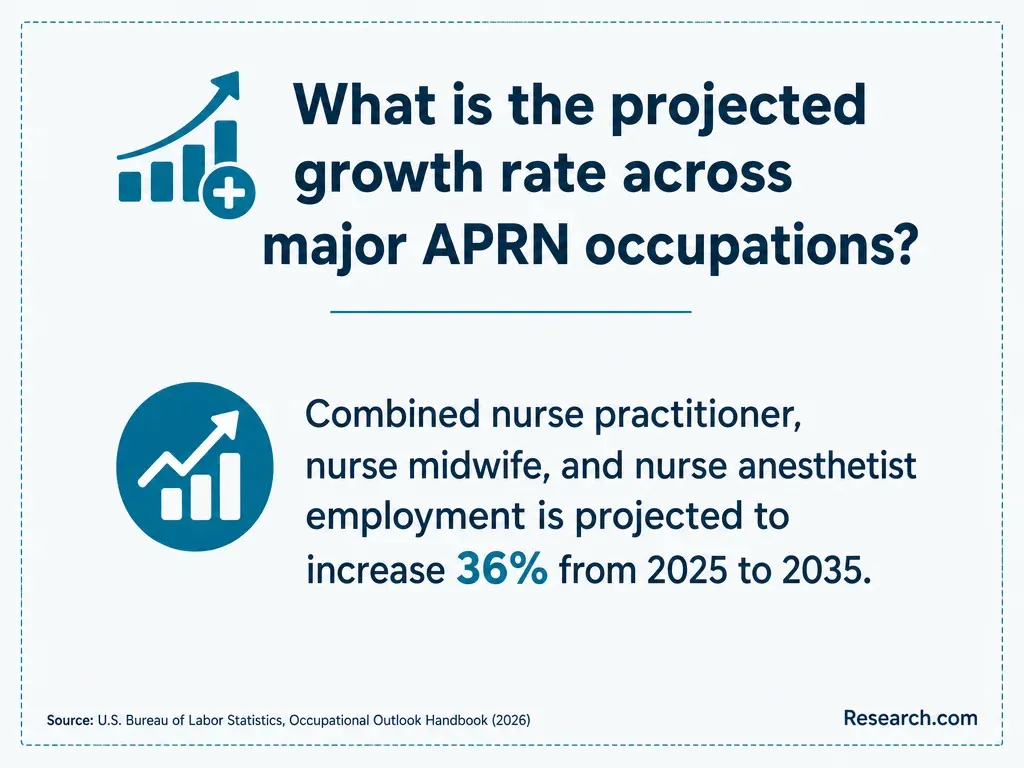
National nurse practitioner growth projections describe the occupation as a whole; they do not isolate pediatric primary care positions in Maine. Local opportunity depends on employers' pediatric service lines, location, staffing, and whether a vacancy calls for a PNP-PC rather than an FNP or another clinician. Rural access needs can be important, but they do not establish that a particular community has an open PNP-PC position or an available clinical preceptor.
Before choosing a program around expected demand, review recent Maine pediatric postings, note their certification requirements, and speak with potential clinical sites about both placements and hiring patterns. Compare the positions with your preferred patients and work setting. Lower-cost mental health advanced practice study is a separate career investment; demand for psychiatric care should not be counted as evidence of pediatric primary care openings.
Other Things You Should Know About Nursing
Possibly. Ask whether tuition assistance covers doctoral study, whether part-time enrollment qualifies, and whether repayment is required if you leave the job. Also budget for expenses the benefit may exclude, such as travel and certification fees.
Tell the program before relocating. A move can change enrollment authorization, approved clinical sites, preceptor arrangements, and eventual licensure plans, even if coursework is online.
Not necessarily. The program must approve the project setting and oversight. Employer permission may be needed for workplace data or workflow changes, and patient information must be handled under applicable privacy rules.
Coverage requirements vary by school and site. Ask who provides student clinical coverage, what documentation the site needs, and whether your employment policy excludes activities performed as a student.
- Advanced Practice Registered Nurse (APRN) FAQs | maine.gov https://www.maine.gov/boardofnursing/licensure/advanced-practice-registered-nurse-aprn-faqs
- DNP: Pediatric Primary Care Nurse Practitioner | University of Maryland School of Nursing https://www.nursing.umaryland.edu/academics/doctoral/dnp/pediatric-nurse-practitioner-primary/
- Pediatric Primary Care Nurse Practitioner | Nell Hodgson Woodruff School of Nursing https://www.nursing.emory.edu/degrees-programs/nursing/pediatric-primary-care-nurse-practitioner
- Pediatric Primary Care Nurse Practitioner Advanced Certificate Program | Stony Brook School of Nursing https://nursing.stonybrookmedicine.edu/childAdvanced
- BSN to MSN - Pediatric Primary Care Nurse Practitioner | Herzing University https://www.herzing.edu/nursing/msn-pnp-program
- Experiential Learning - School of Nursing https://usm.maine.edu/school-nursing/experiential-learning/
- Dual Pediatric Primary/Acute Care Nurse Practitioner (DNP) | Rutgers Nursing https://nursing.rutgers.edu/pediatric/dual-pediatric-acute-primary-care-nurse-practitioner/
- Pediatric Nurse Practitioner - Primary Care Graduate Certificate https://health-education-human-services.wright.edu/nursing/pediatric-nurse-practitioner-primary-care-graduate-certificate
- Pediatric Nurse Practitioner Primary Care | UW School of Nursing https://nursing.uw.edu/academics/dnp/pnp-pc/