2027 DNP Adult-Gerontology Acute Care NP Programs for Nurses in Virginia: BSN and MSN Entry Routes and Clinical Training
Audited and Verified:
Our Editorial and Data Verification Process
Research.com uses government datasets, official education statistics and primary institutional information to support its career and degree guides. Our review process checks factual accuracy, occupational definitions, source dates and the requirements associated with the credentials discussed.
How This Article Was Fact-Checked
Our editorial team verifies salary estimates, employment projections, education requirements and program information against original data providers and official organizations. Salary figures are checked against the relevant occupational definitions and reporting periods. Information about licensure, accreditation and required in-person training is reviewed separately.
Fact-checked and verified on:

Co-Founder and Chief Data Scientist
A Virginia nurse considering adult-gerontology acute care nurse practitioner practice needs more than a DNP program with a convenient schedule. The track must match the nurse's prior education, provide supervised care of acutely ill adults, and support the intended certification and state licensure.
This guide compares BSN- and MSN-entry routes, explains what to verify about clinical placements and costs, and shows when a shorter specialty pathway may be the better choice. It is for licensed RNs and graduate-prepared nurses deciding how to reach an AGACNP role without repeating unnecessary coursework - or overlooking required preparation.
Key Things You Should Know
- BSN-entry AGACNP DNP study combines initial NP preparation with doctoral coursework; MSN-entry study may be shorter, but only if the program accepts prior graduate work and addresses any AGACNP competency gaps.
- A DNP commonly incorporates at least 1,000 post-baccalaureate practice hours under doctoral education standards; ask how a school counts prior hours and separates direct AGACNP patient care from DNP project work.
- Graduation does not grant an NP license: graduates must meet a qualifying national AGACNP certification body's requirements and obtain Virginia authorization before practicing as an NP in the state.
What are DNP adult-gerontology acute care NP programs in Virginia?
A Doctor of Nursing Practice (DNP) adult-gerontology acute care nurse practitioner (AGACNP) track prepares an already licensed RN for advanced assessment, diagnosis, and management of adolescents and adults with complex acute, critical, or chronic illness.
The DNP adds practice-focused scholarship, systems leadership, and an improvement project. An AGACNP track is distinct from a general DNP in leadership or education: the latter does not, by itself, provide initial NP preparation.
For a Virginia-based nurse, "in Virginia" should describe more than a school's mailing address. Confirm that the school enrolls students living in Virginia, can support approved Virginia clinical sites, awards the advertised AGACNP qualification, and identifies the certification examination for which its graduates are prepared.
Nurses seeking doctoral leadership rather than a new patient-care role can compare nonclinical DNP specialization options instead of paying for an AGACNP track they do not need.
What are the BSN and MSN entry routes for Virginia AGACNP DNP programs?
The decisive distinction is whether the applicant already has graduate-level AGACNP preparation, not simply whether they hold an MSN. The following comparison shows what each route must accomplish; a school's transcript and competency review determines an individual study plan:
| Starting point | Likely route | Critical question |
| BSN and active RN license | BSN-to-DNP AGACNP with initial NP coursework and supervised specialty care | Does the track lead to AGACNP certification eligibility at graduation? |
| MSN in AGACNP, with appropriate certification | Post-master's DNP, potentially without repeating initial NP preparation | How many prior practice hours and graduate credits will the program accept? |
| MSN in another NP population focus or a non-APRN field | AGACNP preparation plus any remaining DNP requirements, if the school offers that combination | Which specialty courses and direct-care hours remain after a formal gap analysis? |
An RN with an associate degree should not assume direct entry into a BSN-to-DNP track; the school must specify whether it offers an eligible bridge. ADN-to-MSN program planning may help establish a graduate entry credential, but an MSN bridge alone does not establish AGACNP preparation. Likewise, an MSN-prepared family NP cannot replace adult-gerontology acute care education with years of ICU employment.
Which accreditation and licensing requirements apply to Virginia AGACNP programs?
Check three separate matters: the institution's recognized accreditation, the nursing program's applicable accreditation and scope, and the track's ability to meet the requirements for the intended AGACNP certification and Virginia NP licensure.
CCNE and ACEN are nursing program accreditors, not state licensing boards; an institution's accreditation alone does not confirm that a particular specialty track qualifies graduates for certification.
Ask the program to identify its nursing accreditor, the degree and AGACNP track covered, its graduates' intended certification examination, and any enrollment or placement limits for your state of residence. The Virginia Board of Nursing determines Virginia licensing requirements; certification organizations determine examination eligibility.
If you expect to practice elsewhere, check that jurisdiction separately before enrolling. Guides to comparing DNP eligibility requirements can help frame admissions questions, but an easier admission process is not evidence of AGACNP certification eligibility.
Initial AGACNP preparation generally integrates advanced pathophysiology, pharmacology, and health assessment with diagnosis and management of acute and complex conditions.
Specialty work emphasizes clinical judgment, interpreting diagnostic findings, stabilizing and coordinating care, communicating with interprofessional teams, and planning safe transitions. DNP coursework adds evidence appraisal, quality improvement, population-level thinking, and evaluation of a practice-focused project.
Review the published course sequence rather than assuming a DNP label guarantees the same clinical emphasis at every school. For example, planning a faster MSN-PMHNP pathway concerns a different NP population focus and cannot substitute for AGACNP specialty courses.
Ask how the curriculum assesses acute-care decisions through supervised encounters, simulation, and faculty evaluation - not just online examinations.
Online usually describes where didactic courses are delivered, not where clinical training occurs. A hybrid program may add scheduled campus skills sessions or intensives; a campus-based program may offer more face-to-face instruction but still require travel to assigned clinical sites.
In every format, AGACNP patient-care experiences need approved sites and qualified supervision.
Before comparing tuition, request the number, location, and duration of required visits; whether classes meet live; and whether clinical schedules can accommodate employment. This matters especially to nurses balancing shifts or caregiving.
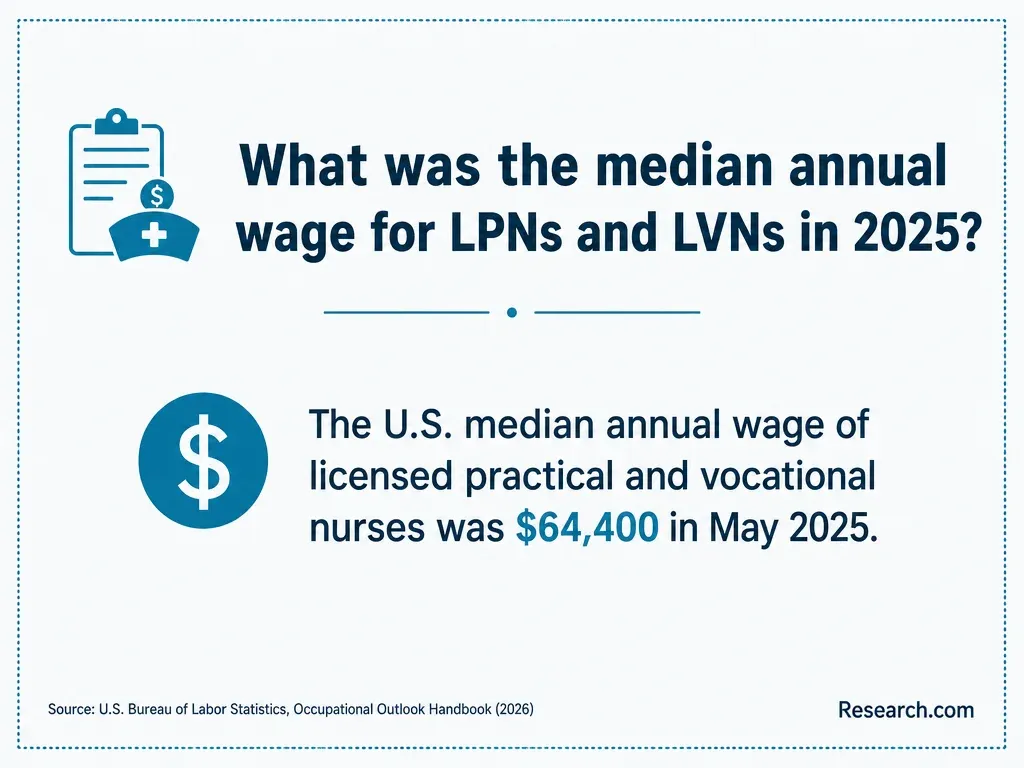
Even short-format LPN coursework and clinical requirements illustrate the broader distinction between remote lessons and hands-on nursing education, although LPN training is not an alternative route to AGACNP practice.
Expect schools to evaluate the applicant's RN license, qualifying nursing degree, transcripts, graduate academic record when applicable, and professional references.
Programs may also request a résumé, statement of purpose, interview, and evidence of relevant acute or critical care experience. Clinical-site onboarding can separately require background checks, immunization documentation, and other site-specific clearances.
Ask admissions for two written answers: whether your credentials qualify you for the AGACNP track, and which previous graduate courses or supervised hours apply to that track and the DNP. An MSN outside acute care warrants particular scrutiny.
A guide to accelerated post-master's FNP study describes another population focus; a similarly short AGACNP option is appropriate only if its own required specialty competencies and clinical experiences are met.
BSN-entry study generally takes longer than a post-master's DNP because it includes initial NP preparation. An MSN does not guarantee a short route: a graduate without AGACNP education may need substantial additional specialty coursework and direct-care hours.
Published timelines also depend on full- or part-time enrollment, clinical-site availability, course sequencing, and project completion.
Request a personalized degree audit and a term-by-term cost estimate before comparing offers. Include tuition charged per credit or term, mandatory fees, travel and lodging for campus visits, clinical travel, compliance expenses, certification and licensing fees, and any reduction in paid work.
BSN-to-MSN tuition comparisons can provide context for a shorter degree route, but their prices should not be treated as DNP or AGACNP totals. If an MSN AGACNP meets your professional goal, compare its full cost with the DNP rather than assuming the doctorate is required.
Students need supervised experiences with patients and conditions appropriate to adult-gerontology acute care, potentially across hospital and other high-acuity settings. Schools determine the approved sites, preceptor qualifications, faculty oversight, case mix, and competency assessments.
Doctoral practice hours may also include approved DNP project activities; those hours should not be mistaken for direct AGACNP patient-care encounters.
Doctoral education standards commonly use at least 1,000 post-baccalaureate practice hours as a DNP expectation, but the school must explain how prior graduate hours are documented and counted. Certification eligibility can impose its own specialty-specific requirements.
Ask who secures and approves preceptors, what happens if a site falls through, and whether your workplace can be used. Family NP programs that help arrange clinical placements offer a useful comparison of placement-support policies, not proof that an AGACNP school will place you. Employment hours and simulation are not automatically substitutes for approved supervised clinical hours.
After completing a qualifying AGACNP track, graduates can pursue the applicable adult-gerontology acute care NP certification through the American Nurses Credentialing Center or AACN Certification Corporation, subject to each organization's eligibility rules.
They must then meet Virginia Board of Nursing requirements for NP licensure before practicing in that role. School completion, national certification, state licensure, and employer credentialing are separate steps.
Confirm the exact examination and required school documentation well before graduation, particularly if transferring credits or entering with an MSN in another specialty.
One-year family nurse practitioner pathways do not confer AGACNP certification eligibility merely because both tracks prepare nurse practitioners. Authorization to practice in another state, including through telehealth, also requires a separate review of that state's rules.
What careers, salaries, and job outlook can Virginia AGACNP graduates expect?
AGACNPs may seek roles with hospital medicine, critical care, specialty consultation, or other services caring for acutely or complexly ill adults. Actual duties depend on Virginia law, employer privileges, the patient population, and demonstrated competencies.
A newly certified AGACNP should evaluate orientation, specialist support, patient acuity, and escalation procedures alongside compensation.
The U.S. Bureau of Labor Statistics reports wages and employment projections for nurse practitioners, not a separate Virginia AGACNP or DNP-graduate category. Its occupation-wide figures are useful market context but cannot predict an individual offer or establish that a DNP commands a premium over an MSN.
Compare local positions by duties, shift and call expectations, benefits, and training support. An online nurse practitioner affordability guide can inform the education-cost side of that decision; use your own likely costs and actual job offers to assess the return.
Other Things You Should Know About Nursing
Not universally. Some schools value critical-care experience or certification, but check the specific AGACNP track's admission criteria rather than treating CCRN as a statewide requirement.
Possibly, if the school permits a track change and has capacity. Expect a new review of specialty courses, supervised experiences, and your graduation plan; a track change can extend study.
Usually it includes a practice-focused DNP project rather than a PhD-style research dissertation. Ask the school about its project format, site permissions, data access, and completion milestones.
Do not assume so. A residency or fellowship may offer structured specialty onboarding, while employers can have their own orientation and credentialing requirements. Confirm the requirements of any position you are considering.
- Advanced Practice Registered Nurse (APRN) | Virginia Board of Nursing https://www.dhp.virginia.gov/Boards/Nursing/PractitionerResources/AdvancedPracticeRegisteredNurse/
- 4.1.21 Instructional Modalities and Distance Education | Illinois State https://policy.illinoisstate.edu/academic/4-1-21
- DNP: Adult-Gerontology Acute Care Nurse Practitioner | gwu.edu https://nursing.gwu.edu/programs/dnp/adult-gerontology-acute-care-nurse-practitioner
- Trinity Policies for Online Teaching and Learning | trinitydc.edu https://discover.trinitydc.edu/catalog-25-26/online-teaching-and-learning-policy/
- Tuition Rates & Fees | Blue Ridge Community College in Weyers Cave, Virginia https://www.brcc.edu/tuition-financial-aid/tuition/tuition-rates/
- Clinical Site Selection and Preceptor Qualifications | University of Portland https://nursing.up.edu/clinical-site-and-preceptor-selection.html
- Course Modalities: University of Dayton, Ohio https://udayton.edu/academics/modalities.php
- BSN to DNP vs. MSN to DNP: Which Pathway Works for You? | Herzing University https://www.herzing.edu/blog/bsn-dnp-vs-msn-dnp-which-pathway-works-you
- Nursing Field Experience: Find a Preceptor and Site | Academics at Walden University https://academicguides.waldenu.edu/nursing-field/find-preceptor
- The Complete Guide to Nurse Practitioner Clinicals | Wilkes University Online https://onlinenursingdegrees.wilkes.edu/blog/nurse-practitioner-clinicals-guide