2027 DNP Adult-Gerontology Primary Care NP Programs for Nurses in New Mexico: BSN and MSN Entry Routes and Clinical Training
Audited and Verified:
Our Editorial and Data Verification Process
Research.com uses government datasets, official education statistics and primary institutional information to support its career and degree guides. Our review process checks factual accuracy, occupational definitions, source dates and the requirements associated with the credentials discussed.
How This Article Was Fact-Checked
Our editorial team verifies salary estimates, employment projections, education requirements and program information against original data providers and official organizations. Salary figures are checked against the relevant occupational definitions and reporting periods. Information about licensure, accreditation and required in-person training is reviewed separately.
Fact-checked and verified on:

Co-Founder and Chief Data Scientist
If you want to become an adult-gerontology primary care nurse practitioner (AGPCNP) in New Mexico, the first challenge is finding a DNP track that actually prepares you for that population focus.
A school may offer a DNP without offering AGPCNP preparation, and an existing MSN may or may not shorten the route. This guide helps BSN-prepared RNs and experienced graduate nurses assess in-state options, compare entry routes, plan supervised clinical training, and check the steps between graduation and New Mexico practice.
Key Things You Should Know
- Confirm the AGPCNP track, not just the DNP degree: a leadership DNP, acute care NP track, or family NP track is a different pathway.
- AGPCNP certification pathways generally require at least 500 supervised specialty clinical hours; DNP programs also assess doctoral practice-hour requirements, so ask how each school counts prior hours.
- Do not assume New Mexico has an active, in-state AGPCNP DNP cohort. Verify the exact track, entry route, clinical-placement rules, and enrollment term directly with each school before budgeting for it.
What are DNP adult-gerontology primary care NP programs in New Mexico?
An AGPCNP Doctor of Nursing Practice program combines graduate preparation for primary care of adults across the adult lifespan with practice-focused doctoral study. The NP portion develops skills in assessment, diagnosis, treatment, prevention, and management of common and chronic conditions. The DNP portion adds advanced evidence appraisal, systems improvement, and an applied scholarly project.
Population focus matters. AGPCNP preparation centers on adults and older adults in settings such as ambulatory clinics and long-term care. It is not adult-gerontology acute care preparation and does not provide the across-the-lifespan pediatric preparation of a family nurse practitioner (FNP) track.
If your intended job requires caring for children as well as adults, compare the population focus before choosing a degree; MSN pathways that accept ADN-prepared nurses may also be relevant if you have an associate degree rather than the BSN assumed by many DNP entry routes.
What are the BSN and MSN entry routes for an adult-gerontology primary care DNP?
Your current credential determines whether the program must teach the NP specialty or primarily build on specialty preparation you already have. The distinctions below prevent a costly mistake: a post-master's DNP is not automatically a second NP program.
| Starting point | Route to examine | Critical eligibility question |
| RN with a BSN; not an NP | BSN-to-DNP with an explicit AGPCNP track | Does the curriculum include AGPCNP coursework and supervised direct-care clinicals? |
| RN with a non-APRN MSN | AGPCNP-focused graduate route, potentially followed by a DNP | Will the school evaluate prior coursework while still providing all required NP preparation? |
| Certified NP in another population focus | AGPCNP post-graduate certificate or specialty preparation, with a DNP if desired | What new courses and adult-gerontology primary care clinical hours does a formal gap analysis require? |
| Already certified as an AGPCNP | Post-master's or post-APRN DNP | Does the DNP meet your leadership or improvement goal without duplicating NP training? |
For a BSN-prepared RN, an MSN-level NP route can be more direct than a DNP when the immediate goal is AGPCNP practice. Compare the full cost and sequence - not just advertised tuition - when reviewing BSN-to-MSN bridge cost comparisons. An MSN in education or leadership, however, does not by itself make its holder eligible for AGPCNP certification.
Which New Mexico schools offer DNP adult-gerontology primary care NP programs?
No specific New Mexico school should be treated as a confirmed AGPCNP DNP option without an active track listing for your intended entry term. The University of New Mexico and New Mexico State University are sensible places to check because they offer graduate nursing education, but the existence of a DNP - or of another NP population focus - does not establish that either currently admits AGPCNP DNP students. Track offerings and cohorts can change.
Ask each nursing school for the degree-plan name, whether it admits BSN and/or MSN applicants into AGPCNP, its next cohort date, and written confirmation that its graduates meet the educational requirements for the intended certification exam.
If neither offers the exact track, consider an appropriately authorized out-of-state program that can support approved New Mexico clinical placements. An FNP track is an alternative only if its broader population focus suits your intended practice; short family nurse practitioner program options are not substitutes for AGPCNP preparation when the job or credential specifically calls for AGPCNP.
Check three separate questions:
1. Verify if the university has recognized institutional accreditation. 2. Determine if its nursing program has applicable accreditation from the Commission on Collegiate Nursing Education (CCNE) or Accreditation Commission for Education in Nursing (ACEN). 3. Ensure the specific AGPCNP curriculum supports the certification and New Mexico APRN pathway you intend to pursue.
For each question, confirm the accreditor's current listing and the scope it covers. A school-wide accreditation statement is not enough.
A DNP can be accredited yet contain no NP specialty preparation. That distinction is especially important when evaluating a guide to DNP programs without traditional clinicals: such programs may serve already-qualified clinicians or non-APRN leaders, but they should not be mistaken for a first AGPCNP qualification. Out-of-state applicants should also obtain written confirmation that the school may enroll them where they live and can arrange or approve their clinical education there.
AGPCNP coursework ordinarily builds on advanced physiology and pathophysiology, health assessment, and pharmacology. Specialty study applies those foundations to adult and older-adult primary care: preventive screening, chronic-condition management, medication decisions, diagnostic reasoning, patient education, and coordination with other clinicians. Programs should teach students to recognize when a patient's needs exceed the primary care setting.
Doctoral coursework adds evidence appraisal, population health, quality improvement, informatics, and organizational change. A DNP project applies an evidence-informed improvement approach in an approved practice setting; it is not the same as a PhD dissertation.
Compare project expectations and clinical sequences before assuming that accelerated DNP admissions and requirements will produce a shorter route to initial AGPCNP eligibility. Prior doctoral or graduate credits help only when the receiving program accepts them toward its actual requirements.
Students need faculty-supervised, documented clinical experiences appropriate to adult-gerontology primary care. Certification eligibility generally calls for at least 500 supervised specialty clinical hours; a DNP may require additional documented practice hours under the school's doctoral requirements. Ask for a written breakdown of direct patient care hours, other doctoral practice hours, and any prior hours the program will accept.
Employment as an RN, simulation, and an earlier APRN rotation do not automatically replace new AGPCNP clinical experiences.
For nurses in New Mexico, placement logistics can determine whether an otherwise attractive program is workable. Confirm who finds sites and preceptors, who approves them, whether adult and older-adult patient encounters are available, and whether rural travel or weekday clinic hours are likely.
Faculty, the school, and the clinical site must approve the experience before hours are counted. If placement support is a deciding factor, preceptor-provided FNP program comparisons illustrate a useful question to ask - but their FNP placements and population focus do not establish AGPCNP suitability.
Online coursework and part-time pacing may be available, but neither makes NP training entirely remote or self-scheduled. Approved patient-care hours occur at clinical sites, and a program may require live classes, simulations, campus visits, or project meetings. Before accepting a place, ask for the expected weekly clinical commitment in each term and whether students can complete it while maintaining their current work schedule.
For an already-certified APRN, the most efficient route depends on the new population focus needed. For example, time-efficient PMHNP certificate pathways address psychiatric-mental health preparation, not AGPCNP preparation. A change of focus still requires the receiving school's competency review and the supervised experiences applicable to that new focus.
Expect the school to review your RN license, prior nursing degrees, transcripts, academic record, recommendations, and readiness for graduate study. An MSN-entry applicant may also need certification records, graduate course descriptions, and verified prior clinical hours for a formal gap analysis. Requirements, cohort schedules, and completion times vary substantially by route; request the degree plan for your exact starting credential rather than relying on a generic DNP timeline.
Compare a written total-cost estimate that includes tuition by credit, program fees, books, technology, travel for clinicals or campus visits, clinical compliance costs, certification and licensure fees, and potential reductions in work hours. An advertised low per-credit price does not settle the total.
When considering lower-cost online NP degree options, check whether the listed price applies to your residency, entry route, and required number of credits.
Graduation, national certification, and state authorization are separate steps. After completing an eligible AGPCNP curriculum and its required supervised experiences, a graduate applies to an applicable national certifier - such as the American Nurses Credentialing Center or the American Association of Nurse Practitioners Certification Board - under that organization's current eligibility rules.
The nurse then applies to the New Mexico Board of Nursing for APRN authority and meets its current license, certification, and application requirements before practicing as an APRN in the state.
Confirm exam eligibility with the certifier and New Mexico practice eligibility with the board before enrolling, particularly if your school is out of state. An already-certified NP adding another population focus should obtain a school-approved gap analysis; online FNP certificate routes after an MSN prepare for FNP rather than AGPCNP certification and do not make those credentials interchangeable.
What salaries and career opportunities do adult-gerontology primary care NPs have?
AGPCNPs may work in adult primary care, geriatrics, specialty ambulatory practices, long-term care, and community-based services. The fit depends on the employer's patient population, practice model, experience expectations, and available onboarding - not the DNP title alone. Ask prospective employers whether they seek AGPCNP certification specifically or accept another NP population focus.
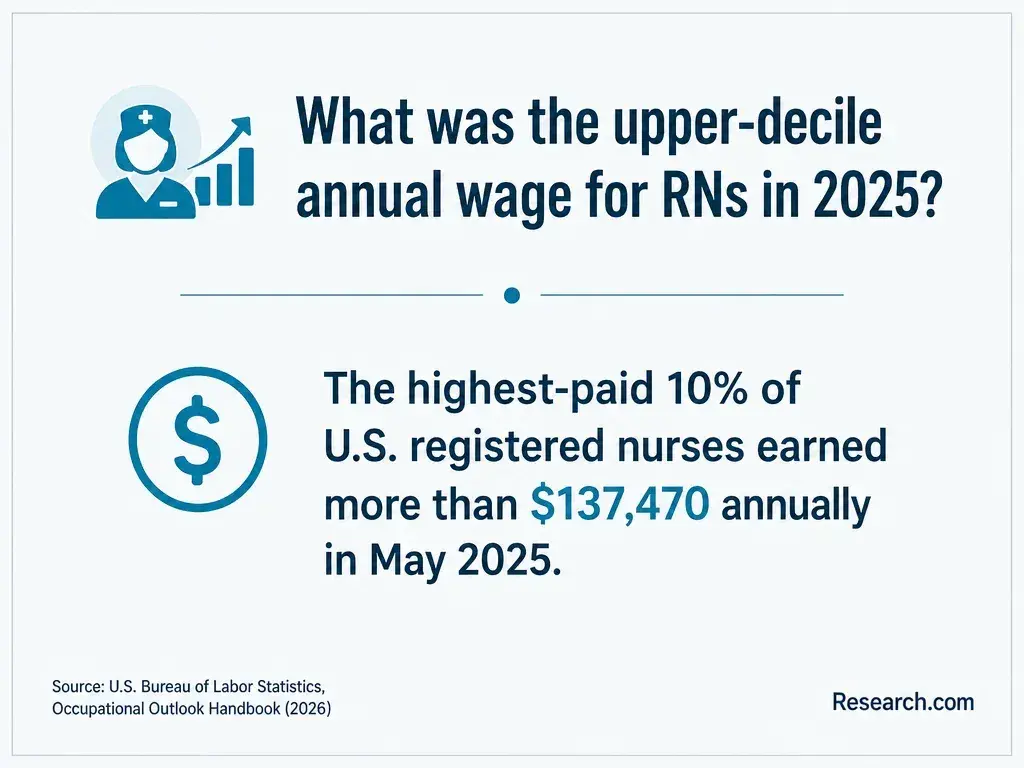
The U.S. Bureau of Labor Statistics reports wages and employment projections for nurse practitioners as an occupation, not a separate AGPCNP or DNP-graduate salary. An occupation-wide median cannot predict a New Mexico offer: location, employer, schedule, experience, and specialty duties matter.
For a financial comparison, estimate the earnings you may forgo during clinical terms and compare local job requirements with the full price of the DNP. If an MSN-level AGPCNP route meets your intended job's qualification requirements, additional doctoral study may be a professional choice rather than the quickest route into practice.
Graduate NP admission should not be confused with entry into prelicensure nursing school. Lists of nursing admissions without TEAS testing address a different admissions issue; ask an AGPCNP program directly which graduate application requirements apply to you.
Other Things You Should Know About Nursing
Not solely because they hold New Mexico APRN authority. Check the laws and licensing requirements where the patient is located, along with employer policy, before providing interstate telehealth.
AGPCNP national certification covers the adult-gerontology primary care population focus. An employer may value additional training, but a separate gerontology credential is not automatically required for every role.
Yes, through appropriate adult-gerontology acute care education, supervised clinical preparation, certification, and state authorization. Primary care experience alone does not confer acute care NP credentials.
Not necessarily. A practice-focused DNP suits applied clinical and systems improvement; a research-focused PhD is generally the closer fit for a career centered on designing and conducting original research.
- APRN Certified Nurse Practitioner - NM Board of Nursing https://www.bon.nm.gov/cnp/
- Key Differences Between Regional and National Accreditation of Nursing Schools | Saint Joseph's College of Maine https://studyonline.sjcme.edu/blog/key-differences-between-regional-and-national-accreditation-nursing-schools
- Family Nurse Practitioner Specialty in the DNP Degree Program | nmsu.edu https://schoolofnursing.nmsu.edu/graduate-program/family-nurse-practitioner.html
- MSN to DNP: How the post-master's path works and how long it takes | Chamberlain University https://www.chamberlain.edu/blog/msn-to-dnp-how-the-post-masters-path-works-how-long-it-takes-and-what-to-check
- MSN APRN Admissions Requirements - UVA School of Nursing https://nursing.virginia.edu/admissions/grad-admissions/
- N.M. Admin. Code § 16.12.2.12 - ADVANCED PRACTICE... - LII | LII / Legal Information Institute https://www.law.cornell.edu/regulations/new-mexico/N-M-Admin-Code-SS-16.12.2.12
- BSN to DNP Program Length: Timelines & What to Expect | STU https://online.stu.edu/degrees/healthcare/bsn-to-dnp/how-long-does-it-take/
- MS Adult-Gerontology Primary Care Nurse Practitioner | CU Anschutz Nursing https://nursing.cuanschutz.edu/degrees-programs/graduate-programs/ms/ag-pcnp
- BSN to DNP vs. MSN to DNP: Which Pathway Works for You? | Herzing University https://www.herzing.edu/blog/bsn-dnp-vs-msn-dnp-which-pathway-works-you