2027 Cleaning, Disinfection, and Sterilization: Different Processes in Healthcare Settings
Audited and Verified:
Our Editorial and Data Verification Process
Research.com uses government datasets, official education statistics and primary institutional information to support its career and degree guides. Our review process checks factual accuracy, occupational definitions, source dates and the requirements associated with the credentials discussed.
How This Article Was Fact-Checked
Our editorial team verifies salary estimates, employment projections, education requirements and program information against original data providers and official organizations. Salary figures are checked against the relevant occupational definitions and reporting periods. Information about licensure, accreditation and required in-person training is reviewed separately.
Fact-checked and verified on:

Co-Founder and Chief Data Scientist
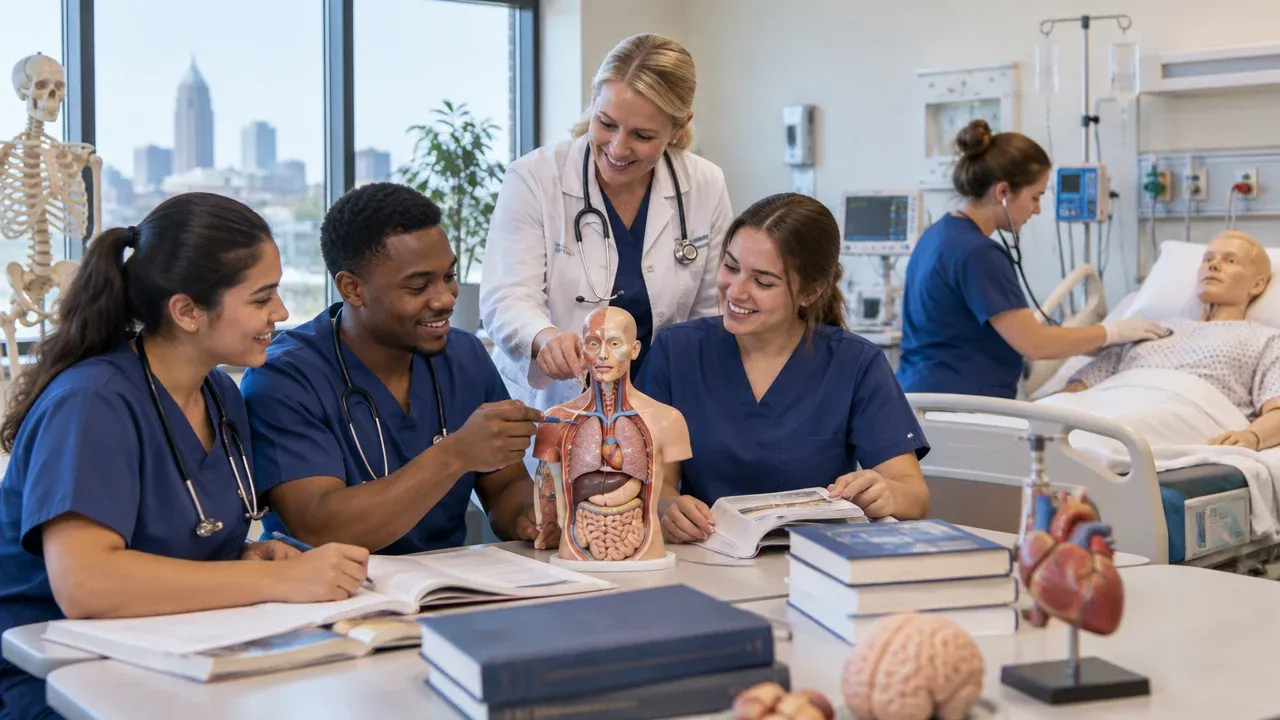
A reusable instrument cannot be made safe simply by wiping it down, and a clean-looking patient-care surface may still need disinfection. For nursing students, new nurses, and people considering sterile processing work, the distinction affects patient safety and career preparation.
This guide explains what each process accomplishes, how facilities select and verify the right method, and where nursing responsibilities differ from sterile processing duties. It also helps you decide whether you need nursing education, focused workplace training, or a sterile processing pathway.
Key Things You Should Know
- Cleaning removes soil; disinfection kills many or nearly all specified microorganisms; sterilization destroys all forms of microbial life, including bacterial spores, when a validated process is completed. Cleaning normally comes before either of the other two processes.
- Three device-risk categories guide the minimum process. Critical items generally require sterilization, semicritical items require at least high-level disinfection, and noncritical items usually require cleaning followed by appropriate low-level disinfection.
- A nursing degree is not required for most sterile processing technician jobs. Nurses need infection-prevention and device-use competence within their roles; technicians need hands-on reprocessing training and may need certification under employer or state rules.
What are the differences between cleaning, disinfection, and sterilization?
Cleaning physically removes visible soil and organic material using water, detergent or enzymatic products, and mechanical action. It reduces contamination but does not reliably kill every microorganism. Residual soil can prevent a disinfectant or sterilizing process from reaching a device's surfaces.
Disinfection uses a chemical or physical process to destroy specified microorganisms on inanimate objects. Low-, intermediate-, and high-level disinfection are not interchangeable: the required level depends on how the item will contact the patient and on its manufacturer's instructions for use. High-level disinfection destroys all microorganisms except large numbers of bacterial spores. Sterilization is a validated process intended to destroy all microbial life, including spores. Neither term means that a poorly cleaned instrument can skip preparation.
The comparison below applies primarily to reusable devices. Product labels, device instructions, and facility policy determine the actual workflow.
| Process | What it accomplishes | Typical application |
| Cleaning | Removes soil and reduces the microbial burden | First step for reusable instruments and soiled surfaces |
| Disinfection | Destroys microorganisms to the level specified by the method | Patient-care surfaces or devices that do not require sterilization |
| Sterilization | Destroys all forms of microbial life through a validated cycle | Compatible instruments entering sterile tissue or the vascular system |
Mastering these core infection-control distinctions early on—even before exploring a guide to nursing schools with no TEAS or HESI—helps build a strong foundation, though product labels, device instructions, and facility policy ultimately determine the actual workflow.
When is each healthcare decontamination process required?
The CDC's Spaulding classification provides a starting point: classify a reusable device by its intended patient contact, then check its instructions for use and the facility's approved procedure. The same instrument can have components with different reprocessing requirements.
This table shows the minimum process commonly associated with each risk category, not permission to override device-specific instructions.
| Device category | Patient contact | Usual minimum after cleaning | Example |
| Critical | Enters sterile tissue or the vascular system | Sterilization | Reusable surgical instrument |
| Semicritical | Contacts mucous membranes or nonintact skin | High-level disinfection; sterilization when indicated and feasible | Certain reusable endoscopes |
| Noncritical | Contacts intact skin but not mucous membranes | Appropriate low-level disinfection, with a higher level when indicated | Reusable blood-pressure cuff |
Environmental surfaces are assessed separately from reusable medical devices. A frequently touched surface may need cleaning and disinfection even though it never contacts a patient directly. Blood or other contamination, isolation precautions, and the disinfectant's label can change the required method.
Just as applicants carefully weigh program requirements when comparing nursing application competitiveness, students should not select a chemical or reprocess an unfamiliar device solely from its risk category; instead, they should rely on current facility procedures and escalate unclear instructions.
How does the cleaning and sterilization process work in healthcare?
Reusable instrument processing is a controlled sequence, not one sterilizer cycle. Staff follow the device, cleaning-product, packaging, and sterilizer manufacturers' instructions for use, along with facility policy. A typical sequence is:
- At the point of use: Remove gross soil as directed and prevent debris from drying; contain and transport used items safely to the designated decontamination area.
- Clean and inspect: Wear required protective equipment, disassemble the device when instructed, clean every accessible surface and channel, rinse and dry as directed, then check for residual soil, damage, and function.
- Prepare the load: Assemble and package compatible items so the sterilizing agent can reach required surfaces; place chemical indicators according to policy.
- Run and monitor the cycle: Select an approved cycle for the device and load, and assess the required physical, chemical, and biological monitoring results.
- Release, document, and store: Follow the facility's criteria for releasing a load, retain traceability records, and protect processed packages from damage or contamination.
A failed indicator, incorrect cycle, wet package, visible soil, or damaged wrapper requires action under the facility's recall and reprocessing policy. Nurses receiving instruments—whether seasoned clinicians or graduates of accelerated nursing programs with broader entry criteria—should check package integrity, labeling, and indicators required at the point of use; they should not assume that an item is safe because it came from a processing area.
Steam sterilization is commonly used for heat- and moisture-tolerant instruments. Some heat-sensitive devices require a compatible low-temperature method, such as vaporized hydrogen peroxide or ethylene oxide. A facility's available equipment does not determine whether a device is compatible: its instructions for use must identify an appropriate validated method and cycle.
The table distinguishes methods and monitoring tools that students—including those enrolled in RN-to-BSN pathways without standard hospital rotations—may encounter; none substitutes for device-specific training.
| Equipment or method | Main purpose | Important limitation |
| Steam sterilizer | Sterilizes compatible loads using a validated steam cycle | Not suitable for every heat- or moisture-sensitive device |
| Low-temperature sterilizer | Processes certain compatible heat-sensitive devices | Device materials, packaging, and channel dimensions may restrict use |
| Automated washer or ultrasonic cleaner | Assists the cleaning stage | Does not itself establish that an item is sterile |
| Mechanical, chemical, and biological monitors | Provide different evidence about cycle conditions and process performance | No single indicator excuses inadequate cleaning or an incorrect cycle |
High-level disinfection equipment, including automated endoscope reprocessors, serves a different purpose from a sterilizer. Staff must also verify that an endoscope's channels and accessories can be processed using the chosen system and instructions.
Prelicensure nursing programs commonly introduce the chain of infection, standard and transmission-based precautions, aseptic technique, environmental cleaning, and safe handling of patient-care equipment in fundamentals or health assessment coursework. Microbiology helps explain why organisms and spores respond differently to reprocessing methods. Skills laboratories and supervised clinical experiences then connect these concepts to hand hygiene, sterile-field maintenance, device checks, and escalation when supplies appear compromised.
Perioperative coursework or an employer's specialty orientation may go further into instrument handling and coordination with sterile processing. Curricula vary, and a classroom lesson on sterilization does not qualify a student to select sterilizer cycles or release processed loads. Anyone exploring a guide to nursing degrees without an RN background and aiming for bedside nursing should prioritize a program that prepares graduates for the intended nursing license, then ask how infection-prevention skills are taught and assessed in lab and clinical settings.
There is no single national cleaning or sterilization certification required of every nurse. RNs and LPNs/LVNs—even those navigating LPN-to-RN bridge completion timelines—must hold the license required for their nursing role, follow applicable scope-of-practice rules, and complete employer training and competency checks for the tasks they perform. A perioperative nurse may need additional orientation or specialty preparation, but a professional certification is not a substitute for licensure or demonstrated workplace competence.
Sterile processing has separate credentials, including the Healthcare Sterile Processing Association's Certified Registered Central Service Technician (CRCST) and the Certification Board for Sterile Processing and Distribution's Certified Sterile Processing and Distribution Technician (CSPDT). Their eligibility and renewal rules differ. Some employers or states impose additional requirements, so a prospective technician should check local job postings, state rules, and the awarding organization's current requirements before paying for a course or exam.
Sterile processing is a nursing-adjacent technical career, not a nursing license pathway. Entry requirements vary: employers may hire and train candidates with a high school diploma or equivalent, while others prefer a sterile processing certificate, relevant experience, or professional certification. Training should cover microbiology fundamentals, instrument identification, decontamination, assembly and packaging, sterilization monitoring, documentation, and hands-on work under supervision.
For a career changer, the decisive question is which work you want to do. If the goal is to prepare and track reusable instruments, compare technician training with actual sterile processing job requirements before committing to a nursing degree. If the goal is direct patient care under a nursing license, examine that separate pathway; LPN education options with distance coursework still require approved practical training and applicable licensure steps.
Before enrolling in technician training, ask whether the program arranges practical experience, what equipment students use, which certification requirements its curriculum supports, and what additional exam, travel, or placement costs you would bear. A school-issued certificate of completion is not automatically a professional certification.
For infection-control learning, online coursework can teach terminology, microbiology, policies, and case-based judgment. It cannot by itself demonstrate that a learner can maintain a sterile field, clean a complex device, or respond correctly to a failed indicator. Prelicensure nursing programs therefore require approved in-person skills and clinical learning even when lectures are online. Sterile processing programs likewise need credible access to equipment and supervised practice if they promise job-ready technical training.
A campus-based format may make scheduled labs and equipment access easier, while a hybrid format may reduce commuting for theory classes. Neither is automatically more flexible: clinical placements, simulations, lab sessions, and employer shifts may occur at fixed times. Whether you are mapping out direct-entry MSN admission planning or evaluating a technician track, compare the actual weekly timetable, required on-site visits, placement responsibility, and costs of travel and missed work—not just the word "online" in a program description.
Common titles include sterile processing technician, central service technician, instrument technician, and, with experience, lead technician or supervisor. Duties can include decontaminating instruments, assembling procedure trays, operating approved equipment, tracking loads, and investigating processing problems.
Hospitals, surgery centers, and other facilities may organize these duties differently; supervisory roles generally require proven technical and operational competence rather than a nursing degree. For national wage research, the closest U.S. Bureau of Labor Statistics occupation is medical equipment preparers, not registered nurses.
Occupation-wide pay figures can provide a benchmark, but they also include workers whose duties and experience differ from a particular sterile processing opening. Compare local posted pay, shift differentials, benefits, certification expectations, and advancement opportunities before estimating your earnings. Do not treat a nursing salary—or the earning potential tied to associate-degree RN to MSN options—or a training provider's advertised graduate pay as a technician salary.
How can students choose an accredited infection-control program?
First identify the credential you actually need. Someone seeking RN or LPN/LVN licensure must check the nursing program's state-board approval and applicable accreditation and eligibility requirements—just as someone researching affordable nursing master's study for BSN graduates must verify graduate-level accreditation and clinical placement rules.
Someone seeking sterile processing work should evaluate technician training against employer expectations and the chosen professional certification's requirements. Institutional accreditation, nursing program accreditation, state approval, and certification-exam eligibility answer different questions; none should be inferred from a program's name.
Use the following checks before making a deposit. They are especially important when a program advertises online convenience or certification preparation.
- Confirm the institution's accreditation with its accreditor and ask whether the exact program has any additional approval or accreditation relevant to your goal.
- Ask the certifying organization and prospective employers whether the training, practical experience, and documentation will meet their requirements.
- Request a written breakdown of tuition, equipment, exam fees, required on-site sessions, placement arrangements, and refund terms.
- Ask how students practice and are evaluated on cleaning, device inspection, packaging, monitoring, and response to processing failures.
A focused sterile processing program or employer-supported training may be the more direct choice if instrument reprocessing - not licensed nursing practice - is your goal.
Other Things You Should Know About Nursing
Not necessarily. The surface must remain wet for the product's labeled contact time, and the product must be appropriate for that surface and the organisms of concern. Follow the label and facility policy.
It can. For organisms such as Clostridioides difficile, facilities may require an appropriately labeled sporicidal disinfectant and specific isolation procedures. Follow the current facility protocol rather than assuming every routine wipe is effective.
No. It requires an approved process and should not replace adequate instrument inventory and planned reprocessing. Staff must follow facility policy, device instructions, and applicable standards.
Do not assume so. Reprocessing a single-use device in the United States is subject to FDA requirements and must occur through an authorized process. Follow the device label and your facility's policy.
- Cleaning | Infection Control https://www.cdc.gov/infection-control/hcp/disinfection-sterilization/cleaning.html
- Sterilization for Medical Devices | fda.gov https://www.fda.gov/medical-devices/general-hospital-devices-and-supplies/sterilization-medical-devices
- Disinfection and Sterilization in Health Care Facilities - PMC https://pmc.ncbi.nlm.nih.gov/articles/PMC7134755/
- Decontamination and reprocessing of medical devices for health-care facilities | who.int https://www.who.int/publications/i/item/9789241549851
- Cleaning, Disinfecting, and Sanitizing | MedlinePlus https://medlineplus.gov/cleaningdisinfectingandsanitizing.html
- Spaulding Classification | Nanosonics https://www.nanosonics.us/infection-prevention-education/spaulding-classification
- Disinfection, sterilization and antisepsis: An overview | ajicjournal.org https://www.ajicjournal.org/article/S0196-6553%2823%2900005-6/fulltext