2027 Cheapest Online Social Services Associate Degree Programs That Pay Well: Tuition, Duration, and Career Outcomes

Co-Founder and Chief Data Scientist
Choosing a cheap online social services associate degree is really a cost-versus-outcome decision. Public two-year colleges averaged about $4,050 in in-district tuition and fees for 2024-25, according to College Board data, making this pathway one of the lowest-cost routes into human services work.
This guide is for students who want an affordable online credential without overpaying for limited career mobility. You will learn how tuition, program length, transfer options, accreditation, and salary potential fit together so you can choose a program that is both inexpensive and useful.
Key Things You Should Know
- The cheapest online social services associate degrees are usually public community college programs, especially for in-district or in-state students; tuition-only costs can be far lower than private online options, but fees and residency rules matter.
- The main associate-level career benchmark is social and human service assistant, which the BLS reported at a $44,240 median annual wage in 2024; higher-paying roles often require a bachelor's degree, certification, or supervised experience.
- The best ROI usually comes from accredited programs with low total cost, 60-credit completion plans, strong transfer agreements, and career preparation for realistic entry-level roles such as human services assistant, outreach worker, behavioral health technician, or community support specialist.
Which Are the Cheapest Online Social Services Associate Degree Programs That Lead to Well-Paying Careers?
The cheapest online social services associate degree programs are typically offered by public community colleges, especially when students qualify for resident tuition. "Social services" may appear under several program names, including human services, social work, behavioral health, addiction studies, community health, family services, or social and behavioral science.
The table below highlights affordable online or online-friendly associate-level options to compare. Tuition policies change often, so use these examples as a shortlist for verification rather than as a substitute for checking each school's current tuition, fees, residency rules, and online course availability.
| School | Online social services-related associate option | Typical degree type | Affordability signal | Career value to check |
| Clovis Community College | Human Services or behavioral science-related pathway | AA or AAS | Public community college with historically low per-credit tuition for New Mexico students | Entry-level human services support roles and transfer potential |
| Coastline College | Human services-related online coursework | AA or certificate-to-degree pathway | California community college pricing can be very low for eligible California residents | Best value for students who can use California resident tuition and transfer pathways |
| Rio Salado College | Addictions and substance use disorders or behavioral health-related pathway | AAS or certificate stack | Large online community college model with career-focused scheduling | Useful for students targeting behavioral health support, recovery support, or addiction services settings |
| Florida State College at Jacksonville | Human services or social services-related associate pathway | AS or AA pathway | Public college pricing is often strongest for Florida residents | Good fit for students who want applied coursework plus local field connections |
| SUNY Empire State University | Human services concentration within an associate pathway | AA, AS, or individualized associate pathway | Public online option, often more flexible for adult learners than many campus-based programs | Strongest for transfer-minded students and working adults with prior credits |
| Central Texas College | Social work, human services, or behavioral science-related transfer pathway | AA or AAS pathway | Public tuition structure and online course availability may support low total cost | Works best when courses align with a bachelor's transfer plan |
A "cheap" program is not automatically the best program. The strongest options combine low tuition with a clear employment or transfer purpose. For example, an AAS in human services may be better for students seeking direct entry-level work, while an AA or AS may be better for students planning to transfer into social work, sociology, psychology, public health, or criminal justice.
When comparing programs, prioritize the details that affect both cost and earnings potential. These are the features most likely to separate a genuinely high-value program from one that is merely inexpensive on paper:
- Accreditation by an institutional accreditor recognized by the U.S. Department of Education.
- A published 60-credit or near-60-credit degree map that avoids unnecessary electives.
- Online availability for required courses, not just general education courses.
- Fieldwork, practicum, or service-learning options that can be completed locally.
- Transfer agreements with bachelor's programs in social work, human services, sociology, psychology, or related fields.
- Transparent tuition, online fees, graduation fees, textbook costs, and technology requirements.
The career payoff is usually strongest when the degree fits a local labor market. Before enrolling, search job postings in your county or state for terms such as "human services assistant," "case aide," "behavioral health technician," "residential counselor," "peer support specialist," "family support worker," and "community outreach worker." If most listings require a bachelor's degree, choose a transfer-oriented associate degree rather than a terminal AAS.
How Much Does an Online Social Services Associate Degree Cost?
An online social services associate degree usually requires about 60 credits. The lowest total tuition is often found at community colleges, but the final bill depends on residency status, online fees, books, background checks for field placements, technology costs, and whether developmental or prerequisite courses are required.
College Board reported that average published tuition and fees at public two-year colleges were about $4,050 for in-district students in 2024-25. That figure is useful because it shows why community colleges can offer strong value, but it does not include every online fee or the cost difference for out-of-district and out-of-state students.
| Cost category | What it includes | Why it matters |
| Tuition | Per-credit or per-term instructional cost | This is the advertised number, but it is not the whole cost of attendance |
| Online course fees | Distance learning, platform, proctoring, or course-specific fees | A low tuition rate can become less competitive if online fees are high |
| Books and digital materials | Textbooks, access codes, open educational resources, or inclusive-access fees | Human services courses may use case-study texts, ethics materials, and assessment tools |
| Field placement expenses | Background check, immunization records, transportation, or liability insurance | Some applied programs require supervised experience with a local agency |
| Technology | Laptop, webcam, internet, software, and document upload tools | Online programs can reduce commuting costs but still require reliable technology |
| Graduation and transcript fees | Application for graduation, transcripts, or credential evaluation | Small fees can affect students trying to keep total cost as low as possible |
To estimate your real cost, multiply the required credits by the tuition rate that applies to your residency category, then add mandatory fees and a conservative book estimate. If a school charges $150 per credit for a 60-credit program, tuition alone is $9,000 before fees, materials, and living expenses.
Do not compare programs using tuition per credit alone. A program with slightly higher tuition but better transfer credit acceptance, fewer required credits, or no repeated coursework may cost less by graduation than a lower-tuition program with poor advising or limited course availability.
How Long Does It Take to Complete an Online Social Services Associate Degree?
Most online social services associate degrees take two years of full-time study, but many adult learners take longer because they attend part time. A standard 60-credit associate degree can be completed in four semesters at 15 credits per term, while students taking six to nine credits per term may need closer to three or four years.
The table below shows how enrollment intensity changes completion time. This matters because time affects ROI: a slower program may be more manageable, but it can delay entry into the workforce or delay transfer to a bachelor's degree.
| Study pace | Typical credits per term | Estimated completion time for 60 credits | Best fit |
| Full time | 12 to 15 credits | About two years | Students who can balance school with limited work or caregiving duties |
| Three-quarter time | 9 to 11 credits | About two and a half to three years | Working students who still want steady progress |
| Half time | 6 to 8 credits | About four years | Students who need maximum flexibility but can accept a slower payoff |
| Accelerated terms | Varies by 5-week, 7-week, or 8-week format | Potentially under two years if courses are available year-round | Motivated students with strong time management and stable schedules |
Accelerated formats can be valuable, especially if you already have transfer credits or can study year-round. Students comparing an accelerated human services degree online should confirm that faster terms do not reduce access to advising, field placement support, or financial aid eligibility.
Online study is not always faster by default. The fastest path usually comes from a clear degree plan, predictable course rotations, transfer-credit acceptance, and the ability to avoid stopping out between terms.
The best ROI comes from the lowest total cost that still supports your career goal. A very cheap program can have weak ROI if credits do not transfer, required courses are hard to schedule, or the curriculum does not match jobs in your area.
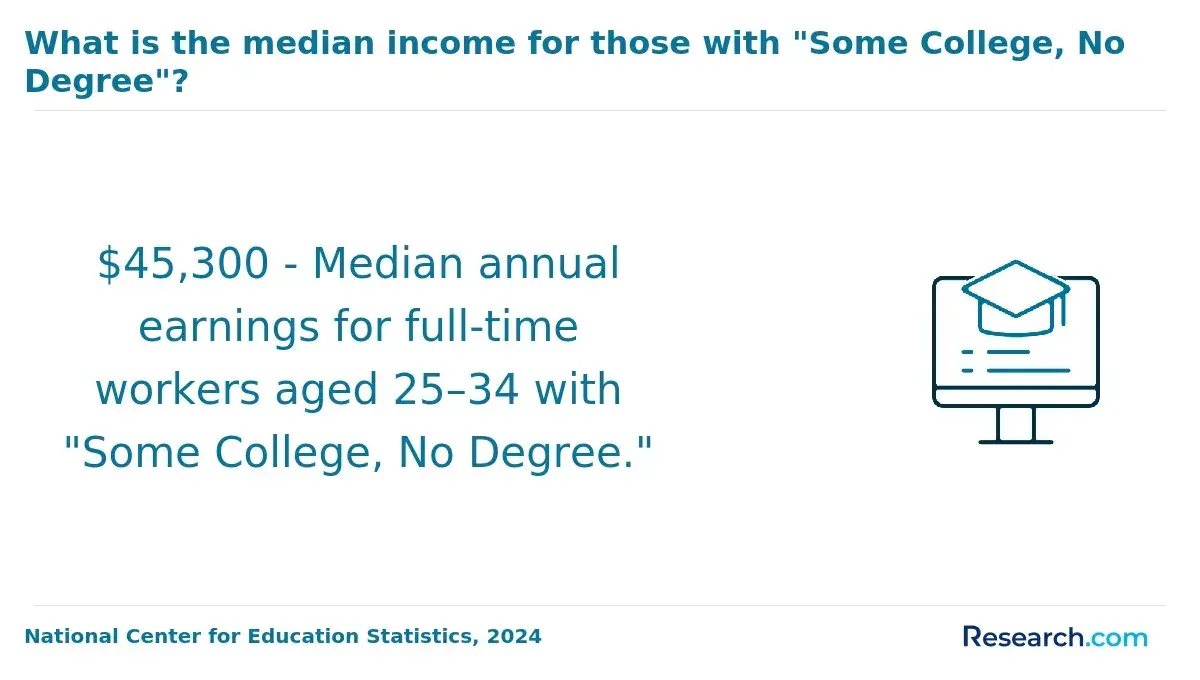
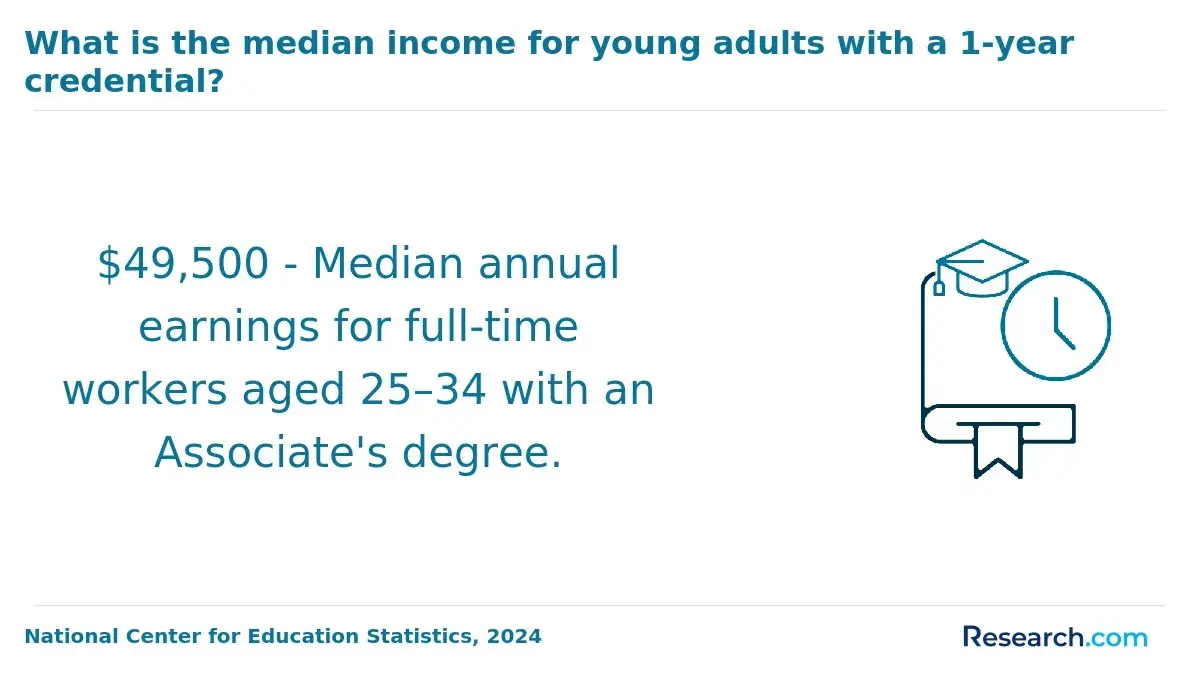
A practical way to estimate ROI is to compare total tuition and required fees with realistic earnings for target entry-level roles. The BLS 2024 median wage of $44,240 for social and human service assistants is a useful national benchmark, but your first job may pay less depending on location, employer type, and experience.
| Program profile | Likely ROI strength | Why | Best student fit |
| Low-cost public AA or AS with transfer agreement | Strong long-term ROI | Keeps early costs low while preserving access to bachelor's-level roles | Students planning to become social workers, counselors, policy analysts, or program managers later |
| Low-cost AAS with field placement | Strong short-term ROI if local jobs accept the credential | Focuses on applied skills for entry-level employment | Students who want to work in human services quickly |
| Cheap program with unclear accreditation or transfer rules | Weak or risky ROI | Credits may not transfer and employers may question the credential | Students should avoid unless accreditation and outcomes are verified |
| Higher-cost private online associate degree | Variable ROI | May offer convenience, but the higher price must be justified by support, transfer, or completion speed | Students who need a specific format not available through a local public college |
| Certificate stacked into associate degree | Potentially strong ROI | Allows students to gain job-ready skills while continuing toward the degree | Students who need employability before finishing all 60 credits |
Students should be careful with salary-based marketing claims. Median wages describe workers across experience levels, not the likely pay for a first job after graduation. A better decision rule is to ask whether the program can help you qualify for a first role, transfer without credit loss, and continue toward higher-paying credentials if needed.
If your long-term goal is social work, counseling, or administration, ROI should include transfer value. A low-cost associate degree that transfers cleanly into a CSWE-accredited bachelor's or another relevant bachelor's program may be more valuable than a terminal degree with limited transfer utility.
How Should Students Choose the Cheapest Online Social Services Associate Degree for Their Career Goals?
Students should choose the cheapest online social services associate degree by comparing total cost, completion time, accreditation, transferability, and realistic career outcomes together. The lowest advertised tuition should be only the first screening tool, not the final decision.
A step-by-step comparison process can prevent costly mistakes. Use this sequence before applying or enrolling:
- Define your target outcome: entry-level employment, transfer to a bachelor's degree, career change, promotion, or exploration of the field.
- Choose the right degree type: AA or AS for transfer, AAS for applied employment, or a stackable certificate if you need job skills first.
- Calculate total program cost using required credits, tuition, online fees, books, technology, and field placement expenses.
- Verify institutional accreditation and ask whether credits transfer to named bachelor's programs.
- Compare local job postings to see whether associate-level roles exist in your area and what employers actually require.
- Ask about online student support, course availability, practicum placement, and graduation rates.
- Estimate ROI by comparing net cost after aid with realistic entry-level wages and long-term transfer value.
Several red flags should make students pause before choosing a program. These common mistakes can turn a low-cost degree into a poor investment:
- Choosing the lowest tuition without checking mandatory online fees.
- Assuming an associate degree qualifies you for jobs that require a bachelor's or licensure.
- Confusing national median wages with likely entry-level pay in your local market.
- Ignoring whether credits transfer into the bachelor's program you may need later.
- Choosing a program with limited online course availability, which can extend completion time.
- Overlooking background check, transportation, or placement costs for field experiences.
- Relying on rankings or marketing claims instead of accreditation, cost, and outcomes data.
The best choice is the program that meets your next goal at the lowest defensible cost. For some students, that will be a local community college AA with guaranteed transfer. For others, it will be an AAS with applied human services coursework and local placement options. If your desired career requires a bachelor's or graduate degree, prioritize transfer value over the lowest short-term price.
For experienced professionals seeking advanced leadership or practice credentials, compare associate transfer pathways with future graduate options such as DSW programs.
Other Things You Should Know About Social Services
No. Social services is a broad field that includes human services, community support, outreach, behavioral health support, family services, and nonprofit programs. Social work is a regulated profession in many roles and often requires a BSW, MSW, supervised experience, and state licensure.
Some do, especially applied AAS programs. Others use projects, service learning, or optional field experiences. If a practicum is required, ask whether you can complete it with an approved agency near your home.
Yes, many students do. Asynchronous courses and part-time plans can make work-school balance easier, but accelerated courses may require significant weekly study time. Ask the school how many hours per week students should expect for each course.
Employers commonly look for communication, empathy, documentation, cultural awareness, confidentiality, teamwork, crisis de-escalation, basic technology skills, and knowledge of community resources. Bilingual ability and experience with underserved populations can also be valuable.
- Florida’s Social Work Scholarships & Grant Programs https://floridasocialworkedu.org/scholarships/
- Social Work A.A. - Transfer Degree https://www.clcillinois.edu/programs/bssdv/social-work/social-work-aa-transfer-degree
- Financial Aid Resources for California MSW Students https://www.californiasocialworkedu.org/financial-aid-resources-for-california-msw-students/
- 2026 Best Online Social Science Associate Degrees https://www.onlineu.com/degrees/associate-social-sciences
- Social Work Scholarships & Grants Available in Texas - Texas Social Work EDU https://www.texassocialworkedu.org/resources/scholarships-and-grants/
- How Long Does It Take to Become a Social Worker? https://www.onlinemswprograms.com/careers/how-to-become-a-social-worker/how-long-does-it-take/
- 22 Best Associate Degree in Human Services - Social Work Degree Center https://www.socialworkdegreecenter.com/best-human-social-services-associate-degrees/
- Associate Degree - Human Services - Online | Monroe University https://www.monroeu.edu/academics/undergraduate-programs/school-criminal-justice/online-associate-degree-human-services
- 25 Scholarships For Social Work Students | Psychology.org https://www.psychology.org/resources/social-work-scholarships/
- New York Associate Degree in Social Work & Human Services https://newyorksocialworkedu.org/new-york-social-work-degree-guide/associate-degree/