2027 Cheapest Accredited Online Cybersecurity Master's Programs With No Out-of-State Tuition Surcharge

Co-Founder and Chief Data Scientist
An online cybersecurity master's can be a practical route to advanced technical or leadership roles, but an advertised low per-credit rate does not always produce the lowest bill. The U.S. Bureau of Labor Statistics projects 33% growth in information security analyst employment from 2023 to 2033, far faster than the average for all occupations.
This guide helps working professionals compare residency-neutral tuition, institutional accreditation, fees, completion options, and likely career value before applying.
Key Things You Should Know
- A true no-out-of-state-surcharge program charges the same published online tuition to eligible students regardless of where they live, but it may still have technology, course, graduation, or distance-learning fees.
- Compare total required credits multiplied by the online rate, then add mandatory fees; a 30-credit program at $500 per credit costs $15,000 in tuition before fees, while a lower per-credit rate can cost more if the degree requires additional credits.
- Institutional accreditation, a curriculum aligned with your target role, flexible pacing, transfer-credit rules, and employer aid matter as much as tuition; information security analyst jobs are projected to grow 33% from 2023 to 2033.
What Does No Out-Of-State Tuition Surcharge Mean for an Online Cybersecurity Master's Program?
A no-out-of-state-tuition-surcharge policy means an institution does not add the higher nonresident tuition rate solely because an online student lives outside the university's home state. Schools may describe this as a flat online rate, distance-learning rate, e-rate, nationwide tuition, or "same tuition for all online students." It is not the same as free tuition, in-state residency, or a guarantee that the program is the cheapest option.
The key distinction is whether the policy applies to the specific online cybersecurity master's program. A university can use residency-neutral pricing for some online graduate programs while charging separate rates for others, particularly programs offered through a college of engineering, business school, or professional studies division.
This comparison shows why students should look beyond the phrase "no out-of-state tuition."
| Tuition model | How it works | Who may benefit most | Important limitation |
| Flat online tuition | One stated per-credit or per-term price for eligible online students | Out-of-state working professionals seeking predictable pricing | Required fees may differ by course or enrollment term |
| In-state and out-of-state rates | Residents pay a lower rate than nonresidents | Students already eligible for in-state tuition | Nonresident cost can be materially higher |
| Online tuition waiver | Nonresident surcharge is waived under stated conditions | Students who meet program and enrollment requirements | The waiver can exclude some fees, formats, or courses |
| Private nonprofit tuition | Usually one tuition schedule regardless of state residency | Students comparing service, flexibility, and net price | The published rate may be higher before scholarships |
Before treating a rate as residency-neutral, obtain written confirmation from admissions or student accounts. Ask whether the quoted rate applies to every required credit, whether it applies throughout your enrollment, and whether any campus visit, proctoring, laboratory, or specialization charge is separate.
How Can Students Verify Accreditation for an Affordable Online Cybersecurity Master's Program?
For most cybersecurity master's applicants, institutional accreditation is the essential credential to verify. It indicates that the university has been reviewed by an accrediting agency recognized by the U.S. Department of Education or the Council for Higher Education Accreditation. It can affect federal aid eligibility, employer recognition, credit transfer, and admission to later doctoral study.
Cybersecurity does not have one universal programmatic accreditor equivalent to the accrediting systems used in some licensed professions. Some computing-related programs hold specialized recognition or are associated with designations such as National Centers of Academic Excellence, but those distinctions do not replace institutional accreditation and do not automatically establish that a master's is the best fit.
Use this verification sequence before submitting an application. It separates a legitimate institutional credential from marketing language about the online format or curriculum.
- Find the university's institutional accreditor on its official accreditation or consumer-information page.
- Confirm the institution and accreditor in the U.S. Department of Education accreditation database or the accreditor's directory.
- Verify that the cybersecurity master's is an official degree offered by that accredited institution, not merely a third-party training product.
- Review whether the program has relevant specialized recognition, such as a computing or cybersecurity designation, if your employer or career goal values it.
- Ask whether the online and on-campus versions award the same degree and whether online students have equivalent academic support.
Do not confuse industry certifications with degree accreditation. Certifications such as security, cloud, audit, or risk credentials can strengthen a résumé, but they are separate from the academic standing of the university. Professionals comparing credentials across fields can use the same verification discipline when considering options such as bookkeeping certification online.
How Much Does the Cheapest Online Cybersecurity Master's Program Cost in Total?
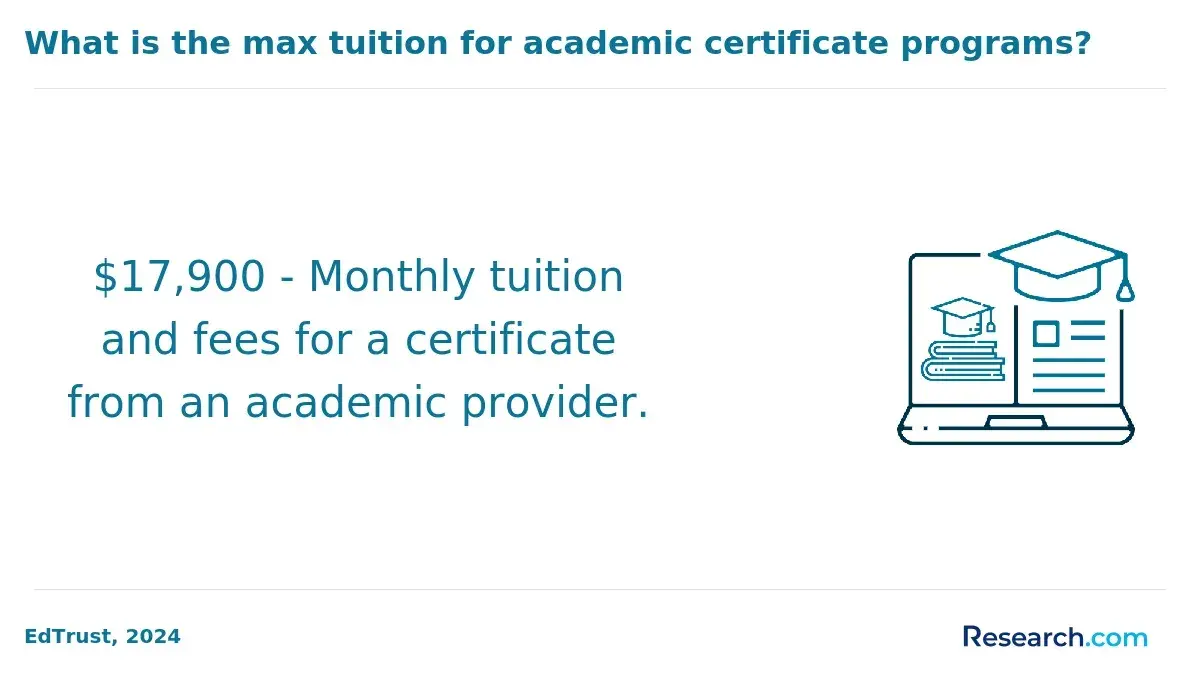
There is no single permanent "cheapest" accredited online cybersecurity master's program because universities revise tuition, credit requirements, fees, and aid. The lowest advertised per-credit price is also not necessarily the lowest total price. A program with fewer required credits and no recurring distance-learning fee may cost less than a lower-rate program with more credits or several mandatory charges.
Calculate the direct educational cost using this formula: (required credits × applicable tuition per credit) + mandatory program fees + required course materials + required travel costs. Then estimate your net cost by subtracting grants, scholarships, employer payments, and other aid that does not need to be repaid.
The following example illustrates how two residency-neutral programs can reverse positions once program length and fees are considered. These are calculation examples, not published quotes; students should use each school's current billing schedule.
| Cost component | Program A example | Program B example | Why it matters |
| Required credits | 30 | 36 | More credits can outweigh a lower rate |
| Tuition per credit | $500 | $425 | Per-credit tuition is only one input |
| Estimated tuition | $15,000 | $15,300 | Credits multiplied by tuition rate |
| Mandatory fees | $600 | $1,200 | Fees can vary by term, course, or service |
| Estimated direct total | $15,600 | $16,500 | Compare this figure before considering aid |
Ask for the current cost of attendance or a program-specific estimate, not only a tuition webpage. Include application fees, student-service fees, software, cloud-lab access, books, graduation fees, and any required travel. Living expenses may be lower for online students who remain employed and at home, but they are still personal costs to consider if reduced work hours are necessary.
Do Online Cybersecurity Master's Students Have to Establish Residency to Receive the Lowest Tuition Rate?
Usually, no. In a genuine residency-neutral online pricing model, eligible students receive the published online rate without establishing residence in the institution's state. The school may still require students to live in an authorized state, enroll fully online, maintain a particular course load, or avoid a campus-based component. Residency rules can also affect state grants even when they do not affect online tuition.
Students should distinguish a flat online rate from an in-state tuition promise. A flat rate may be lower than a school's nonresident rate but higher than its resident rate. By contrast, a resident-only rate can be the best financial option for a student who already qualifies for it, provided the program's schedule and curriculum are equally suitable.
Check these points in writing because labels vary across institutions.
- Whether the rate is available to all U.S. online students or only to students in selected states.
- Whether any required orientation, capstone presentation, or residency changes the tuition classification.
- Whether the school can provide distance education in your state and whether professional authorization restrictions apply.
- Whether military, veterans, employees, or alumni receive a separate rate with additional eligibility rules.
- Whether the tuition rate is locked for continuing students or may change each academic year.
A common mistake is moving or attempting to establish residency solely for an online tuition discount without confirming the policy. State residency standards can involve time, domicile, financial independence, and other criteria; they are not normally determined by taking online courses alone.
How Do Public and Private Universities Compare on the Cost of an Online Cybersecurity Master's Degree?
Public universities may offer especially favorable pricing to in-state students and sometimes publish a flat nationwide rate for online graduate programs. Private nonprofit universities generally do not use state residency categories, which can make their pricing simpler for nonresidents. Neither category is automatically cheaper or better; the relevant comparison is net total cost for the same academic and career objective.
Public institutions can be strong choices when their online rate is residency-neutral, the program has a manageable credit count, and the curriculum fits a technical specialty. Private nonprofit institutions can be competitive when scholarships, employer partnerships, credit transfer, frequent start dates, or advising reduce the practical cost of completion.
This table identifies the trade-offs to test rather than assuming that public or private status determines value.
| Factor | Public university | Private nonprofit university | Comparison question |
| Residency pricing | May have resident, nonresident, or flat online rates | Often one published rate | What does an out-of-state online student actually pay? |
| Tuition changes | May be affected by state and institutional policy | May be revised by institutional policy | Is the rate guaranteed or estimated for future terms? |
| Scholarships | May include institutional or state-linked aid | May include institutional merit discounts | Which awards are available to online graduate students? |
| Program pacing | May follow traditional semesters or accelerated sessions | Often offers multiple starts and structured terms | Which format limits time away from work? |
| Best-value test | Direct total cost plus fit | Net total cost plus fit | Which option best supports your target role and budget? |
Applicants considering management-oriented cybersecurity roles may also compare curriculum design with online business degrees, since governance, risk, compliance, and security leadership often involve budgeting and organizational decision-making. A review of business schools online can help clarify whether a security-focused technical degree or a broader management pathway better matches the intended role.
Can Financial Aid Reduce the Cost of a Cheap Online Cybersecurity Master's Program?
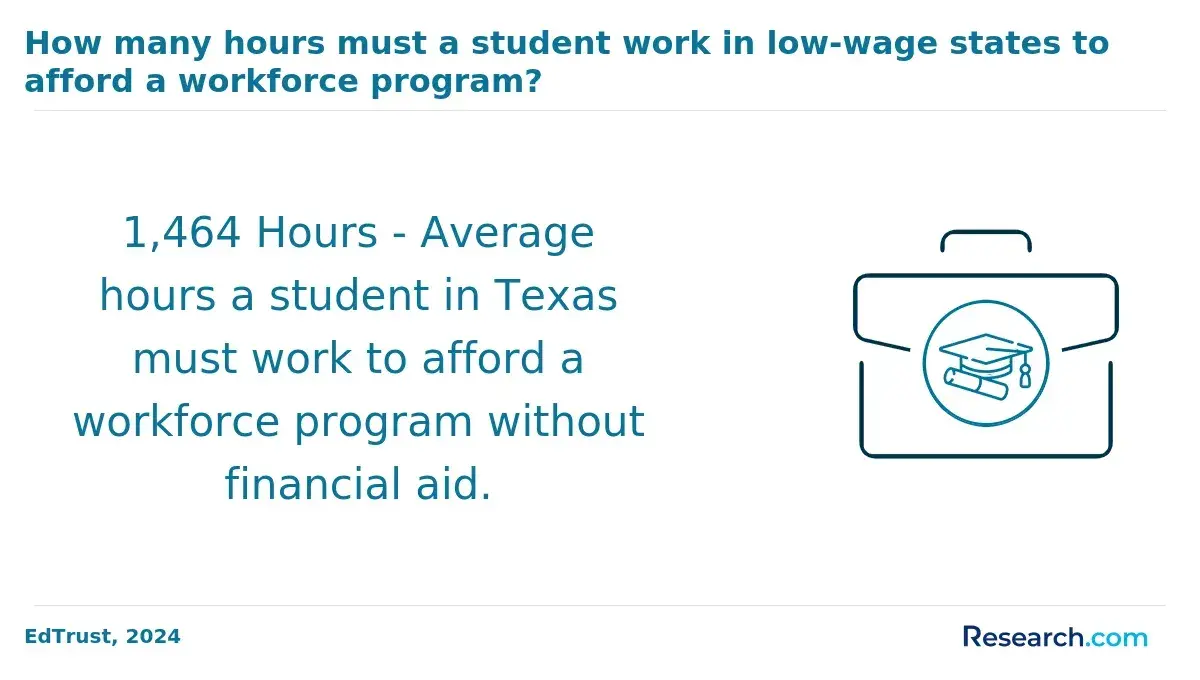
Yes. Financial aid can reduce a program's net price, although eligibility and award amounts vary. Degree-seeking online graduate students at eligible accredited institutions may be able to use federal Direct Unsubsidized Loans and Graduate PLUS Loans after filing the FAFSA. Graduate students generally should not assume grants will cover the full balance, so compare aid offers with the amount that must be borrowed or paid from savings.
Employer tuition assistance can be especially meaningful in cybersecurity because many students work in IT, risk, audit, defense, health care, finance, or government while enrolled. Confirm whether reimbursement is paid up front or after course completion, whether a grade minimum applies, and whether the employer requires continued employment afterward.
Build a net-cost plan using the following order so that you do not compare schools only by sticker price.
- Request a written estimate of required tuition and fees for the entire degree.
- File the FAFSA if the school participates in federal aid and you may need federal loans.
- Ask the program about scholarships specifically available to online graduate students.
- Review employer education benefits, union benefits, military benefits, and professional-association awards.
- Subtract grants, scholarships, and employer funds before deciding how much to borrow.
- Compare loan repayment implications and monthly cash flow, not simply the amount approved for borrowing.
Do not assume that a higher-priced institution is unaffordable before reviewing its actual aid package, or that a low-priced program needs no financing. Similar cost-planning logic applies to other advanced online pathways, including a master's in child psychology, where program-specific aid and required experiences can materially affect net cost.
How Do Program Format and Completion Time Affect the Cost of an Online Cybersecurity Master's Degree?
Format affects both direct expenses and opportunity cost. Fully online programs can reduce commuting, relocation, and campus housing expenses, while hybrid programs may require travel for residencies, orientation, labs, or capstone presentations. Confirming these requirements early is particularly important for students who live far from campus or expect to study while working full time.
Accelerated programs can reduce the number of terms in which recurring fees are charged and may help students apply new skills sooner. However, faster pacing can require more weekly study time and can increase the risk that a student reduces work hours, withdraws from a course, or needs an extra term. A traditional part-time schedule can be more financially sustainable if it preserves income and employer tuition benefits.
Cybersecurity master's degrees may be offered as MS, MPS, MBA-related, or other professional formats. An MS often emphasizes technical depth, research, analytics, secure systems, or engineering. A professional master's may emphasize applied security management, governance, risk, compliance, incident response, or leadership. A thesis path can support research or doctoral preparation, while a capstone or practicum can suit professionals seeking applied portfolio work.
When comparing pace, ask whether tuition is charged by credit, by term, or at a flat full-time rate. Per-credit billing generally makes the credit total more important; flat-term tuition can reward students who can complete more credits without undermining performance. Also ask whether the program includes internships, practicums, cyber labs, proctored examinations, or synchronous sessions that could create costs beyond tuition.
SECTION END: section-8
How Much Can Transfer Credits Reduce the Cost of an Online Cybersecurity Master's Degree?
Transfer credit can reduce cost only when a school accepts relevant graduate-level coursework and applies it to required degree credits. Policies vary widely: some programs accept a limited number of credits, some accept only recent courses with a minimum grade, and others require all cybersecurity core courses to be completed at the institution.
Certifications and professional experience may occasionally support credit or prerequisite waivers, but they should not be assumed to replace graduate coursework.
The potential savings are straightforward: each approved transfer credit can avoid the tuition charged for one required credit, but only if it shortens the degree rather than merely adding elective credit. For example, at a $500 per-credit rate, six applicable transfer credits could reduce tuition by $3,000 before any fees tied to additional terms.
Ask admissions these questions before treating transfer credit as part of your budget.
- What is the maximum number of graduate transfer credits accepted for this specific degree?
- Which cybersecurity, computer science, information systems, mathematics, or management courses may satisfy requirements?
- What grade, course age, institutional accreditation, and syllabus documentation are required?
- Will the transfer evaluation be completed before enrollment or only after admission?
- Does accepted credit reduce required tuition-bearing credits and estimated time to graduation?
Students changing fields should be cautious about choosing a degree only because prior coursework transfers. A related academic background can help, but cybersecurity employers typically value demonstrable technical skills, security knowledge, and role-relevant experience alongside the credential. Learners evaluating degree pathways in regulated support fields can see a different transfer-and-career framework through a paralegal studies associate degree.
Is a Cheap Online Cybersecurity Master's Degree Worth the Cost for Career Advancement?
A low-cost accredited online cybersecurity master's degree can be worthwhile when it develops skills needed for the role you want, fits your current experience, and can be completed without excessive debt or lost income.
It is not automatically necessary for every cybersecurity job. Entry-level security roles may be accessible through a bachelor's degree, IT experience, hands-on projects, and certifications, while a master's can be more useful for advanced technical specialization, security architecture, management, risk leadership, teaching, research, or a career transition that requires structured training.
The Bureau of Labor Statistics reported a median annual wage of $120,360 for information security analysts in May 2023 and projects 33% employment growth from 2023 to 2033. That occupation-level figure is not a graduate salary guarantee: pay depends on prior experience, location, employer, clearance eligibility, technical specialty, and job responsibilities. Use it as evidence of strong field demand, not as a promise that any degree will produce a particular income.
Programs tend to offer the strongest career value when the curriculum matches a defined target. Technical candidates may prioritize cloud security, secure software, digital forensics, threat intelligence, network defense, or security engineering.
Professionals moving toward governance may prioritize risk management, policy, audit, compliance, privacy, business continuity, and security leadership. Review required courses, labs, faculty expertise, career services, and capstone expectations rather than relying on the program title.
Cybersecurity intersects with many professional settings, including health care, education, finance, and behavioral-service organizations that manage sensitive data. Students researching adjacent careers may find that options such as BCBA school online have different credential and practice requirements, even though both fields benefit from understanding data protection and compliance.
How Should Students Compare the Cheapest Accredited Online Cybersecurity Master's Programs?
Start with a shortlist of accredited schools that explicitly state online tuition for nonresidents. Then compare each program using the same assumptions: total required credits, expected enrollment pace, mandatory fees, anticipated transfer credits, employer support, and realistic travel needs. This approach prevents a low advertised rate from masking a higher total obligation.
A useful decision matrix should include the factors below. Score only factors that matter to your goal; a security analyst seeking technical labs may reasonably rank curriculum differently from an experienced professional pursuing a security-management role.
| Comparison category | What to verify | Why it affects the decision |
| Accreditation | Recognized institutional accreditation and any relevant specialized recognition | Supports degree legitimacy, aid, transfer, and future study options |
| Total direct cost | Required credits, tuition, mandatory fees, materials, and travel | Shows the real amount before aid |
| Residency policy | Written confirmation that the online rate applies to your location and program | Avoids unexpected nonresident charges |
| Curriculum fit | Technical, management, generalist, concentration, thesis, or capstone options | Connects the degree to your intended role |
| Delivery and timing | Asynchronous access, live sessions, course load, start dates, and completion limits | Determines whether you can finish while meeting work obligations |
| Student outcomes support | Career advising, employer connections, projects, labs, and alumni access | Can strengthen the practical return on investment |
Before committing, request a written tuition estimate and ask admissions to confirm the current tuition policy, graduation requirements, transfer evaluation timeline, required synchronous or in-person activities, and whether the program can serve students in your state. Avoid choosing solely on rank, nonprofit status, or lowest per-credit tuition. The best affordable option is the one with a verified total cost and a credible path toward your intended cybersecurity work.
Other Things You Should Know About Cybersecurity
Not always. Many programs accept applicants from information technology, engineering, business, criminal justice, or other fields, but may require prerequisites in programming, networking, operating systems, statistics, or computer science. Review prerequisite costs and timelines before comparing tuition.
Usually not, though certifications can strengthen an application or demonstrate foundational knowledge. Requirements vary by university. A certification should complement, not replace, the academic preparation and technical experience needed for graduate coursework.
Look for instruction in security architecture, networks, cloud environments, incident response, risk assessment, governance, secure systems, threat analysis, and communication. The right mix depends on whether you want technical engineering work, analyst roles, forensics, or security leadership.
Cybersecurity careers generally do not require a single state-issued professional license comparable to licensed clinical professions. Employers may instead value education, experience, certifications, background checks, and, for some roles, eligibility for a security clearance. Requirements vary by employer and sector.
References
- Top Cybersecurity Master's Degrees | CyberDegrees.org https://www.cyberdegrees.org/listings/masters-degrees/
- Best Cybersecurity Schools for Earning a Master's Degree https://www.computerscience.org/degrees/masters/cybersecurity/
- Find a Cybersecurity Master's Degree Program (2025) - Programs.com https://programs.com/programs/masters-in-cybersecurity/
- Take the lead: Find online cybersecurity master's programs https://cybersecurityguide.org/online/masters-in-cybersecurity/
- 2025 Most Affordable Online Master's Degrees in Cybersecurity https://www.onlineu.com/most-affordable-colleges/cybersecurity-masters-degrees
- 6 Affordable Online Cybersecurity Graduate Programs for Working Pros - Flexibility meets ROI - those who can https://www.thosewhocan.org/6-affordable-online-cybersecurity-graduate-programs-for-working-pros-flexibility-meets-roi/
- Cybersecurity Master's Degree | SANS Technology Institute https://www.sans.edu/cyber-security-programs/masters-degree