
2027 Cheapest Accredited Online Public Policy Master's Programs With Flat-Rate Tuition: Costs per Term and Total Degree Estimates

Co-Founder and Chief Data Scientist
An online public policy master's can support careers in government, nonprofits, advocacy, research, and consulting, but an advertised term price can hide the real cost of completing the degree. The U.S. Bureau of Labor Statistics projects 9% employment growth for management analysts from 2024 to 2034, illustrating continued demand for professionals who can evaluate programs and improve organizations.
This guide helps prospective students compare flat-rate tuition, calculate likely total costs, identify fee risks, and decide whether an accelerated online format fits their budget and career goal.
Key Things You Should Know
- Flat-rate tuition is only a bargain when a student completes enough credits within each billed term; a low term price can become expensive if the program requires additional terms.
- There is no single nationwide list of the cheapest accredited flat-rate online public policy master's programs because many universities price MPP, MPA, and policy-related degrees per credit rather than by term and may change rates by enrollment period.
- Compare the estimated number of paid terms, mandatory fees, accreditation, curriculum, and career fit, not term tuition alone, before treating a program as the lowest-cost option.
What Does Flat-Rate Tuition Mean for an Online Public Policy Master's Program?
Flat-rate tuition means the university charges one set amount for a defined enrollment period, often a semester, quarter, or accelerated term, rather than charging separately for every credit. The price may cover a stated credit range, a full-time course load, or competency-based progress. It does not automatically mean unlimited courses, unlimited terms, or all fees included.
Online public policy degrees may be titled Master of Public Policy (MPP), Master of Public Administration (MPA), Master of Science in Public Policy, or a related public affairs degree. An MPP generally emphasizes policy analysis, economics, statistics, and program evaluation. An MPA commonly emphasizes public-sector management, budgeting, leadership, and implementation. Either may be relevant for policy-focused careers, but the curriculum should match the work a student wants to do.
Before comparing flat-rate options, confirm which tuition structure the school actually uses.
- Term-based flat rate: One charge applies to a specified number of credits during a semester or other academic term.
- Full-time flat rate: One charge applies once enrollment reaches the institution's full-time threshold; students below that threshold may be billed per credit.
- Competency-based flat rate: Students pay by term and progress through assessments at their own pace, subject to program rules and academic readiness.
- Per-credit tuition: Students pay only for credits attempted, which can be less costly for part-time learners.
Students pursuing adjacent human-services pathways should not assume pricing works the same way across disciplines. For example, a BCBA certification programs online search involves specialized coursework and supervised-fieldwork requirements that differ substantially from a policy degree.
Accreditation deserves separate attention. Institutional accreditation is the baseline verification that a college meets recognized academic standards and is typically important for federal aid, employer review, and credit transfer. Programmatic accreditation is less uniform in public policy than in regulated clinical fields. For public administration programs, some students also consider Network of Schools of Public Policy, Affairs, and Administration recognition or accreditation, but they should verify the program's current status directly with the school rather than relying on old marketing language.
How Much Does a Flat-Rate Online Public Policy Master's Program Cost Per Term?
A reliable per-term price must come from the university's current tuition schedule for the exact online program and enrollment level. Public policy master's programs are often billed per credit, while truly flat-rate online options may be limited, may apply only to full-time students, or may be housed under a broader public administration or public affairs degree. For that reason, students should not rank programs as "cheapest" from a search result or a single promotional figure.
The table shows the information needed to turn a published term price into a comparable cost figure. It intentionally does not assign unverified prices to institutions.
| Item to verify | Why it changes the comparison | Calculation |
| Tuition charged per term | This is the advertised flat-rate amount, but it may exclude fees. | Published tuition for one term |
| Credits included in the rate | Some rates apply only within a minimum and maximum credit range. | Included-credit range from the tuition policy |
| Program credit requirement | MPP and MPA curricula vary in length, including capstone requirements. | Total required credits after accepted transfer credit |
| Expected terms | Terms, not credits alone, drive flat-rate tuition. | Required credits divided by realistic credits completed per term, rounded up when necessary |
| Mandatory term fees | Technology, student-services, and distance-learning charges can recur. | Required fee per term multiplied by expected terms |
To calculate effective cost per credit, divide the term tuition by the number of credits a student expects to complete in that term. A student who pays the same flat rate for six credits and nine credits has very different effective prices, even though the billed tuition is identical.
Admissions requirements also affect whether a fast course load is realistic. Many online MPP and MPA programs request an accredited bachelor's degree, transcripts, a statement of purpose, résumé, letters of recommendation, and sometimes evidence of quantitative preparation. Standardized tests may be optional or waived, depending on the school. Applicants who need prerequisite coursework in economics, statistics, or quantitative analysis should include that expense and time in their plan.
How Much Does an Online Public Policy Master's Degree Cost in Total With Flat-Rate Tuition?
Total tuition for a flat-rate degree equals the flat term price multiplied by the number of billed terms needed to finish. Add mandatory fees, required course materials, residencies or travel, and any prerequisite costs. This estimate is more decision-useful than a term-price comparison because two schools with similar rates can require different numbers of terms.
Use this planning table after obtaining each institution's current tuition sheet and curriculum plan. It separates verifiable school-specific inputs from estimates that depend on a student's pace.
| Cost component | How to estimate it | Common comparison error |
| Base tuition | Flat tuition per term × expected paid terms | Comparing one term at School A with one credit at School B |
| Mandatory fees | Required fee per term × expected paid terms, plus one-time required charges | Assuming "online tuition" includes technology and university fees |
| Books, software, and materials | Review course syllabi or school estimates for required resources | Counting only tuition |
| Travel or residency costs | Estimate transportation, lodging, meals, and time away from work if required | Assuming online means no in-person requirement |
| Extra-term exposure | One additional flat tuition charge plus recurring fees | Building a budget with no contingency for a delayed capstone or retaken course |
For a quick estimate, use: (tuition per term + mandatory recurring fees per term) × expected terms + one-time required charges. Treat the result as a planning estimate, not a contract price. Tuition rates, fee schedules, curriculum requirements, and financial-aid eligibility can change, and students should obtain confirmation in writing from the institution.
Cost should be evaluated alongside career purpose. Policy graduates may work as budget analysts, program analysts, legislative staff, nonprofit managers, grant specialists, research associates, or consultants. Responsibilities can include analyzing evidence, preparing recommendations, monitoring program performance, managing stakeholders, and translating complex findings for decision-makers. Titles, pay, and hiring requirements vary widely by employer, location, experience, and whether a role requires a specialized subject background.
How Does Course Load Affect the Cost of a Flat-Rate Online Public Policy Master's Degree?
Course load is the central financial variable in a flat-rate model. If the same charge covers a range of credits, completing more credits within that permitted range lowers the effective tuition per credit and can reduce the number of terms. Taking fewer credits can eliminate that advantage.
The following comparison uses formulas rather than assumed institutional pricing. Substitute a school's published term rate and its actual credit limits before making a decision.
| Enrollment pattern | Effective-cost formula | Likely financial effect |
| Lower end of included credit range | Term tuition ÷ fewer completed credits | Higher effective cost per credit and potentially more billed terms |
| Typical full-time load | Term tuition ÷ standard completed credits | Often the intended value point for a full-time flat rate |
| Upper permitted credit range | Term tuition ÷ more completed credits | Lowest effective cost per credit if academic performance remains strong |
| Credits above the flat-rate limit | Flat tuition + excess-credit charge | May erase savings if overload credits are billed separately |
Students working full time, caregiving, or returning to quantitative study may be better served by a manageable pace, even if it produces a higher effective price. A lower-cost degree is not necessarily the best-value degree if overloading causes a withdrawal, failed course, or delayed capstone.
Students comparing flexible graduate formats in other fields may encounter the same pace-versus-price tension. A MFT online program, however, has clinical training and state licensure considerations that can constrain acceleration in ways an online policy program may not.
Is Flat-Rate Tuition Cheaper Than Per-Credit Tuition for an Online Public Policy Master's Degree?
Flat-rate tuition is cheaper only when its total cost is lower than the realistic per-credit alternative for the same credential and career goal. It tends to favor students who can consistently take a full load and finish within the planned number of terms. Per-credit pricing may be better for part-time students, those receiving employer reimbursement by credit, or students whose work and family obligations make an accelerated pace unlikely.
This comparison identifies the break-even logic students should apply to each offer.
| Situation | Usually stronger pricing model | Reason |
| Student can complete the full included load every term | Flat rate may be favorable | The term charge is spread across more completed credits. |
| Student expects one or two courses per term | Per-credit tuition may be favorable | Paying a full flat rate for a small course load can raise the effective cost per credit. |
| Student needs variable pacing | Per-credit tuition may be safer | Tuition more closely follows actual enrollment. |
| Student can accelerate without exceeding limits | Flat rate may be favorable | Fewer paid terms can lower total tuition. |
| Program has high recurring fees | Depends on total terms and fee policy | Each extra term can add both tuition and fees. |
Do not compare programs solely by institutional category. Public, private, nonprofit, and for-profit institutions can use different pricing, aid, scheduling, and student-support models. The meaningful comparison is the net price, completion plan, accreditation, curriculum quality, and relevance to the role a student wants.
Interdisciplinary alternatives can be appropriate when a student wants a broader curriculum rather than policy analysis specifically. Reviewing most affordable online interdisciplinary studies programs may help students distinguish a flexible generalist degree from an MPP or MPA with focused public-sector training.
What Fees and Additional Expenses Apply to a Flat-Rate Online Public Policy Master's Program?
Flat-rate tuition is often only one line item on a bill. Required fees can materially affect a total-cost estimate, especially in programs that use multiple short terms. Ask whether each charge applies every term, every academic year, or only once.
Before enrolling, request an itemized estimate covering the following expenses.
- University, student-services, technology, learning-management-system, or online-course fees.
- Application, enrollment, graduation, transcript, and credential-verification charges.
- Digital textbooks, statistical software, database access, or other required course materials.
- Travel, lodging, meals, and lost work time for any required orientation, residency, capstone presentation, or immersion.
- Health insurance or other charges that may apply based on enrollment status or institutional policy.
- Retake, withdrawal, late-payment, or excess-credit charges that are not included in the flat rate.
A school should be able to explain whether a capstone, internship, or independent-study course is included in the same term rate and whether it can be taken alongside other courses. This is particularly important in policy programs, where applied projects may require external-client coordination and can take longer than a standard class.
A red flag is a tuition page that states a flat price without defining the term length, credit range, fee treatment, or conditions for maintaining enrollment. Ask for the catalog year governing the student's tuition and the policy that applies if the university raises rates during enrollment.
Can Accelerated Study Lower the Total Cost of a Flat-Rate Online Public Policy Master's Degree?
Yes, accelerated study can lower total tuition when a flat-rate program permits students to complete more required work in fewer billed terms. It also can shorten time away from career advancement. The savings are not automatic: accelerated schedules may have fixed course sequences, credit caps, limited elective availability, or capstone timing that prevents a student from reducing the number of terms.
Students should test whether acceleration is feasible with an academic advisor before treating it as a financial strategy.
- Map every required core course, elective, prerequisite, and capstone in the order the program offers them.
- Identify the maximum number of credits or competencies covered by the flat rate each term.
- Confirm whether courses can be taken concurrently and whether any courses are offered only once each year.
- Assess weekly reading, writing, quantitative-analysis, and group-project demands against work and family commitments.
- Calculate the total price under a standard plan and a realistic accelerated plan, including recurring fees.
- Keep a contingency plan for a delayed course, withdrawal, or capstone extension.
Acceleration is most sensible for students with strong time availability, recent academic experience, and the ability to manage intensive policy analysis and data work. It is less suitable for students who must take a light load to protect academic performance or meet substantial professional obligations.
Students interested in accelerated formats outside public policy can compare a cyber security fast track program, but undergraduate acceleration models and technology curricula should not be used as a direct pricing benchmark for a graduate policy degree.
Can Financial Aid and Employer Reimbursement Reduce the Cost of a Flat-Rate Online Public Policy Master's?
Financial aid and employer support can reduce out-of-pocket cost, but eligibility depends on the institution, enrollment intensity, satisfactory academic progress, citizenship or residency status, annual borrowing limits, and employer policy. Submit the FAFSA for eligible U.S. programs and ask the financial-aid office how flat-rate enrollment is converted into aid eligibility.
Students should compare funding sources based on the amount available, repayment obligation, and timing of payment.
| Funding source | Potential benefit | Question to ask |
| Federal graduate loans | Can help cover eligible education costs for qualifying students | How much borrowing is needed after grants, savings, and employer support? |
| Institutional scholarships | May reduce tuition without repayment | Is the award renewable, and does enrollment level affect it? |
| Employer tuition assistance | Can lower immediate cost or reduce borrowing | Does the employer pay upfront, reimburse after grades, or require continued employment? |
| Government or nonprofit workforce support | May align with public-service employment goals | Are there service, location, or employment commitments? |
| Payment plans | Can spread a billed balance across installments | Are there enrollment fees, finance charges, or late-payment penalties? |
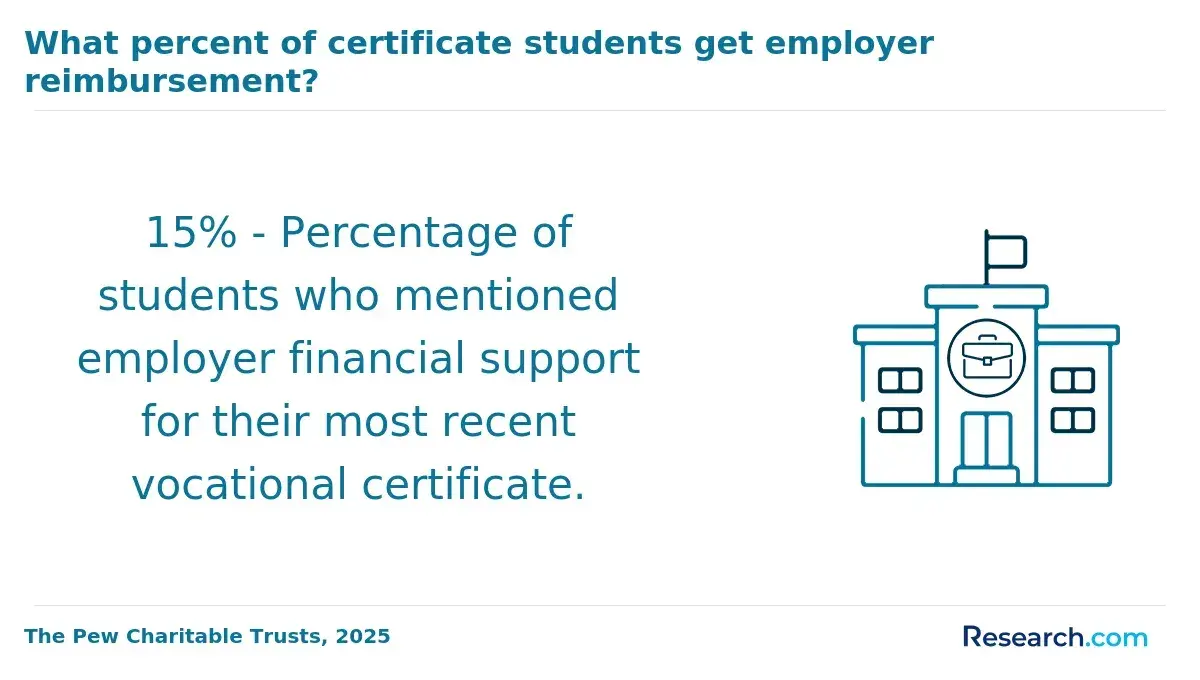
Employer reimbursement is particularly relevant for employees whose work involves program operations, budgeting, community engagement, compliance, or government relations. Obtain written confirmation of eligible degree titles, annual caps, grade requirements, repayment conditions, and whether reimbursement applies to fees as well as tuition.
Do not assume a lower advertised price is better after aid. Compare each school's expected net cost, including scholarship renewal rules and the debt required to bridge any remaining balance. Federal loan terms and forgiveness programs have specific eligibility requirements; students should review current federal guidance and their own borrowing position rather than assuming a public-service career will eliminate debt.
How Do Enrollment Breaks and Extra Terms Affect the Cost of an Online Public Policy Master's Degree?
In a flat-rate model, an extra term can be one of the largest avoidable costs because it may trigger another full tuition charge even if only one course or a capstone remains. Enrollment breaks can also affect course sequencing, scholarship renewal, loan repayment status, and the catalog-year tuition policy.
The table highlights situations that commonly add time and what students should verify before they occur.
| Situation | Possible cost effect | What to confirm |
| Taking a leave of absence | May delay sequenced courses and shift completion to a later term | Leave duration, re-entry process, tuition-rate protection, and aid consequences |
| Withdrawing after the refund deadline | May result in partial or full term charges | Refund schedule and academic/financial-aid impact |
| Retaking a course | Can require another term or create an added course charge | Repeat policy and whether the course can be taken with other requirements |
| Delayed capstone or internship | May extend enrollment beyond coursework | Registration requirement, extension fees, and project timeline |
| Changing concentration or adding electives | Can add credits and terms | Whether changes affect graduation requirements and flat-rate limits |
Students should build a completion schedule with at least one realistic buffer for work changes, caregiving, illness, or a difficult quantitative course. The goal is not to assume failure; it is to understand the financial exposure before committing to a pricing model that rewards uninterrupted progress.
Some students considering counseling-focused careers may compare policy study with a counseling degree online. Counseling preparation commonly has practicum, internship, and licensure requirements, so the consequences of scheduling delays can differ from those in a policy program.
How Should Students Choose the Best-Value Flat-Rate Online Public Policy Master's Program?
The best-value program is the one that delivers an accredited, career-relevant education at a total price and pace a student can realistically sustain. The cheapest advertised term rate is not enough evidence. A strong comparison combines verified billing rules with curriculum fit, student support, and expected career use.
Use the following process to evaluate finalists consistently.
- Confirm institutional accreditation and verify any public administration or public affairs recognition that matters to the student's goals.
- Request the current online-program tuition schedule, credit limits, mandatory-fee list, refund policy, and catalog-year terms.
- Map required credits, prerequisites, concentration requirements, capstone timing, and realistic course availability.
- Estimate the number of paid terms at the student's intended pace, then add recurring fees and plausible one-time costs.
- Calculate effective tuition per credit at the expected - not maximum possible - course load.
- Compare net cost after realistic scholarships, employer support, and expected borrowing rather than comparing sticker prices.
- Review faculty expertise, policy-analysis methods training, career services, networking access, and alumni outcomes relevant to the target sector.
- Ask whether transfer credit, prior graduate coursework, or waivers can reduce requirements, and obtain decisions in writing before relying on savings.
For many policy careers, the highest-return curriculum includes quantitative analysis, economics or public finance, program evaluation, writing for decision-makers, ethics, and a practical project. Students aiming for environmental policy, health policy, education policy, urban policy, social policy, or international affairs should also assess whether electives and faculty expertise support that specialization.
A final comparison should answer four practical questions: Can the student complete the expected course load? Is the degree recognized by the employers they want? Does the curriculum build the skills those roles use? And is the likely total net cost reasonable relative to the student's current income, borrowing tolerance, and career plan?
Other Things You Should Know About Public Policy
An MPP usually focuses more heavily on policy analysis, economics, research methods, and evaluating policy choices. An MPA typically emphasizes public and nonprofit management, budgeting, organizational leadership, and implementation. Programs can overlap, so applicants should compare required courses rather than selecting based on the title alone.
Requirements vary by university. Many programs make the GRE optional or do not require it, while others may request it in some circumstances. Applicants should check the current admissions page for the exact program and ask whether quantitative preparation can be demonstrated through transcripts or professional experience.
It can support applications for policy, program, budget, research, and administrative roles, but it does not guarantee government employment. Hiring may depend on relevant experience, writing and analytical skills, security or residency requirements, veterans' preference rules, location, and the specific agency's selection process.
Many programs require a capstone, applied project, thesis, internship, or comprehensive examination. Students should confirm the requirement early because capstone scheduling, faculty approval, client access, and registration rules can affect completion time and the number of paid terms.
References
- Tuition and Fees | University of Baltimore https://www.ubalt.edu/admission-and-aid/tuition-and-fees/index.cfm
- Master of Public Policy (MPP) https://online.cudenver.edu/programs/graduate/online-master-public-policy-mpp
- Cost of attendance | University of Idaho https://www.uidaho.edu/financial-aid/cost-of-attendance
- 2025 Most Affordable Online Master's Programs https://www.onlineu.com/most-affordable-colleges/masters-degrees
- EdAssist | Understanding college pricing models https://www.brighthorizons.com/resources/blog/edassist/understanding-college-pricing-models
- A Guide to How to Pay for Grad School https://www.collegeessayguy.com/blog/how-to-pay-for-grad-school





