2027 Cheapest Accredited Online Health Sciences Master's Programs With Flat-Rate Tuition: Costs per Term and Total Degree Estimates

Co-Founder and Chief Data Scientist
A low advertised term price can become an expensive master's degree when students need extra terms, pay separate fees, or take fewer credits than the flat-rate threshold allows. This guide helps working healthcare professionals compare accredited online health sciences master's options using term price, credits included, completion pace, and total-cost estimates.
It also explains accreditation, financial aid, employer support, and career value. For context, the U.S. Bureau of Labor Statistics projects employment of medical and health services managers to grow 29% from 2023 to 2033, increasing demand for advanced healthcare leadership and operations skills.
Key Things You Should Know
- Flat-rate tuition is cheapest only when you can complete the maximum permitted credits each term; dividing the term charge by your planned credits reveals the effective per-credit cost.
- Total degree cost depends on the number of paid terms, not simply the advertised term price: tuition equals the flat-rate charge multiplied by required enrollment terms, plus mandatory fees and other expenses.
- For healthcare leadership roles, labor-market demand is meaningful: medical and health services manager employment is projected to grow 29% from 2023 to 2033, but degree value still depends on program accreditation, employer relevance, and debt level.
What Does Flat-Rate Tuition Mean for an Online Health Sciences Master's Program?
Flat-rate tuition means a university charges one set tuition amount for a defined enrollment period, commonly a semester, quarter, or six-month term, rather than charging separately for every credit. The price usually covers a credit range or a full-time load; it does not automatically mean unlimited coursework, unlimited attempts, or unlimited time to graduate.
Online health sciences master's programs may focus on health administration, health informatics, public health, clinical research, healthcare quality, population health, or interdisciplinary health sciences. Students commonly include working clinicians, administrators, military-affiliated learners, and career changers seeking healthcare operations or analytics roles. Those focused specifically on organizational leadership can also compare master of healthcare administration programs, since curriculum fit matters as much as the billing model.
Before treating a rate as flat-rate, confirm these points in writing:
- The exact term length and published tuition charge.
- The minimum and maximum number of credits, courses, or competency units included.
- Whether a full-time course load is required to receive the stated rate.
- Whether repeated, withdrawn, clinical, laboratory, or prerequisite courses create separate charges.
- Whether the tuition rate is locked for continuing students or may change between terms.
Accreditation is a separate issue from tuition. Institutional accreditation is generally the baseline for federal aid eligibility and transfer consideration. Some health-related programs also need specialized accreditation for a particular professional goal, while a broad health sciences degree may not have one universal programmatic accreditor. Students pursuing a license, certification, or promotion should verify the requirements with the relevant employer, state board, or credentialing organization before enrolling.
How Much Does a Flat-Rate Online Health Sciences Master's Program Cost Per Term?
There is no single national flat-rate price for an online health sciences master's degree, and the lowest term price is not necessarily the lowest degree price. A school's catalog should identify whether the amount is charged per semester, quarter, or six-month session, whether fees are included, and how many credits a student can realistically complete.
The most useful comparison is not term price alone. Use the school's published charge to calculate an effective per-credit amount based on your expected enrollment, as shown below.
| Calculation | Formula | What it shows |
| Effective cost per credit | Flat-rate tuition for one term ÷ credits completed in that term | Whether your actual load makes the fixed charge worthwhile |
| Cost of a slower term | Flat-rate tuition for one term ÷ fewer completed credits | How part-time enrollment raises the effective price per credit |
| Estimated tuition before fees | Flat-rate tuition for one term × expected paid terms | The starting point for a total-degree estimate |
A student taking the allowed maximum load normally receives the strongest value from this model. A student taking one or two courses while paying the same full-term amount may pay substantially more per completed credit than a student at a per-credit institution.
Program labels can also obscure comparisons. For example, a doctorate has a different timeline, scope, and clinical structure than a master's degree; use a separate comparison when reviewing the cheapest online pharmacy school option rather than treating its tuition as a direct substitute for a health sciences master's.
How Much Does an Online Health Sciences Master's Degree Cost in Total With Flat-Rate Tuition?
Total tuition is determined by how many paid terms it takes to finish all graduation requirements. A 30-credit program and a 42-credit program can carry very different total costs even if their per-term prices appear similar. Capstones, practicum requirements, electives, foundation courses, and transferred credits can all change the required number of terms.
This table separates the tuition estimate from expenses students should add later. It is more reliable than comparing a school's headline term price.
| Total-cost component | Calculation | Verification step |
| Base tuition | Published flat-rate tuition × expected number of paid terms | Confirm the term price and whether it is guaranteed for continuing students |
| Mandatory institutional fees | Required fee per term × expected paid terms | Review the tuition schedule, not only the program webpage |
| Program-specific charges | Required one-time or course-specific charges | Ask about capstone, practicum, laboratory, examination, and graduation charges |
| Estimated total educational cost | Base tuition + required fees + program-specific charges | Request a written estimate tailored to your transfer and enrollment plan |
A practical estimate should include a buffer for an additional term unless the school confirms that your planned pace, transferred coursework, and required course sequence fit within the stated schedule. This is especially important in cohort programs, where a missed prerequisite may delay a course until the next offering.
Admissions requirements also influence the total. Many programs require a bachelor's degree, official transcripts, a minimum GPA, a résumé, and a statement of purpose. Some request healthcare experience, statistics prerequisites, letters of recommendation, or an interview. Completing missing prerequisites after admission can add time and cost even if the graduate tuition itself is flat-rate.
How Does Course Load Affect the Cost of a Flat-Rate Online Health Sciences Master's Degree?
Course load is the central financial variable in a flat-rate program. The same term charge is spread across more credits when a student completes a heavier load, but the workload must remain realistic alongside employment, caregiving, and any clinical or capstone obligations.
The following comparison shows why students should calculate value using their expected load rather than the maximum load advertised by the institution.
| Enrollment pattern | Effective cost calculation | Likely financial effect |
| Maximum permitted course load | Flat-rate term price ÷ maximum completed credits | Usually produces the lowest effective per-credit cost |
| Typical full-time load | Flat-rate term price ÷ planned completed credits | Shows the realistic cost if the maximum load is not feasible |
| Part-time load under a full-time flat rate | Flat-rate term price ÷ fewer completed credits | Can make the program comparatively expensive per credit |
| Incomplete or repeated coursework | Additional term price ÷ remaining credits | Can sharply increase the marginal cost of the final credits |
Students should avoid assuming that all available credits can be taken at once. Course sequencing, faculty approval, prerequisite rules, capstone timing, and academic-progress policies may limit enrollment. A working professional who needs a lighter pace may be better served by a transparent per-credit program, even when its listed credit rate initially looks higher.
Ask the admissions counselor for a term-by-term degree map showing the courses available in each session. Then compare that map with your work calendar, family responsibilities, and prior experience in statistics, writing, analytics, and healthcare operations. A sustainable pace is generally less costly than an overloaded term that leads to withdrawal or repetition.
Is Flat-Rate Tuition Cheaper Than Per-Credit Tuition for an Online Health Sciences Master's Degree?
Flat-rate tuition can be cheaper than per-credit pricing when a student consistently completes enough credits to reach the fixed-price break-even point. Per-credit tuition can be cheaper for students who need one course at a time, anticipate enrollment breaks, or cannot use the full credit allowance.
Use this comparison to identify the break-even point before making a deposit or accepting financial aid.
| Pricing comparison | Formula | Decision meaning |
| Flat-rate cost for a term | Fixed term charge | Does not change within the included credit range |
| Per-credit cost for a term | Per-credit rate × credits taken | Rises only as credits are added |
| Break-even number of credits | Flat-rate term charge ÷ per-credit rate | Above this number, flat-rate pricing may cost less before fees |
| Whole-degree comparison | Total flat-rate estimate versus total per-credit estimate | Accounts for different completion timelines and required terms |
Compare equivalent programs whenever possible: similar credit requirements, the same level of accreditation, comparable student support, and a curriculum aligned with the same career goal. A low-cost program is not automatically high value if it lacks the data analytics, quality improvement, finance, leadership, or population-health coursework an employer expects.
Campus-based pricing may also differ from online pricing, particularly for technology, facility, residency, and student-service fees. Do not assume the online format automatically costs less; request the online program's complete tuition and fee schedule.
What Fees and Additional Expenses Apply to a Flat-Rate Online Health Sciences Master's Program?
Flat-rate tuition often covers instruction, but it may exclude mandatory charges. Fees can change the ranking between two apparently low-cost programs, especially when they recur every term or apply to clinical, practicum, or capstone work.
Review the following categories before estimating your out-of-pocket cost. The school's current catalog and billing office should provide the controlling amounts.
- Application, enrollment, transcript-evaluation, and graduation fees.
- Technology, learning-management, online-learning, student-service, and distance-education fees.
- Books, e-books, publisher platforms, software, data-analysis tools, and proctoring charges.
- Practicum, background-check, immunization, drug-screening, liability-insurance, and site-placement costs when required.
- Travel, lodging, meals, and lost work time for any required residency, orientation, presentation, or clinical activity.
Ask whether fees are included in the advertised term rate, charged once, or charged every term. Also confirm whether the program requires a personal computer with specific specifications or paid software licenses. These costs can be manageable, but excluding them from one school's estimate while including them for another produces a misleading comparison.
A common red flag is a school that describes tuition as "all-inclusive" without defining what is included. Request an itemized answer and retain it with your financial comparison.
Can Accelerated Study Lower the Total Cost of a Flat-Rate Online Health Sciences Master's Degree?
Accelerated study can lower total tuition when it reduces the number of flat-rate terms required for graduation without causing course repeats, withdrawals, or delayed completion. It does not automatically reduce cost: students still need access to required courses, sufficient time, and the academic preparation to handle a compressed schedule.
The financial difference comes from avoiding an entire additional billing period, not from taking classes faster in the abstract.
| Completion approach | Term-count effect | Tuition implication |
| Standard planned pace | Completes required credits across the scheduled number of terms | Base estimate equals flat-rate tuition multiplied by scheduled paid terms |
| Accelerated permitted pace | May reduce the number of paid terms if more coursework is completed each term | Savings may equal the tuition and recurring fees for avoided terms |
| Overextended pace | May lead to an incomplete, withdrawal, or repeat | Can add a paid term and erase anticipated savings |
Acceleration is best suited to students with strong time-management skills, prior knowledge of the subject matter, dependable weekly study time, and an employer schedule that can accommodate intensive coursework. It may be less suitable when a program has group projects, fixed clinical hours, sequential courses, or a required practicum site.
Licensed nurses considering a more clinically advanced route should evaluate education pathways separately. ADN to NP programs have clinical and licensure requirements that differ materially from a nonclinical health sciences master's, so their time and cost assumptions should not be combined.
Can Financial Aid and Employer Reimbursement Reduce the Cost of a Flat-Rate Online Health Sciences Master's?
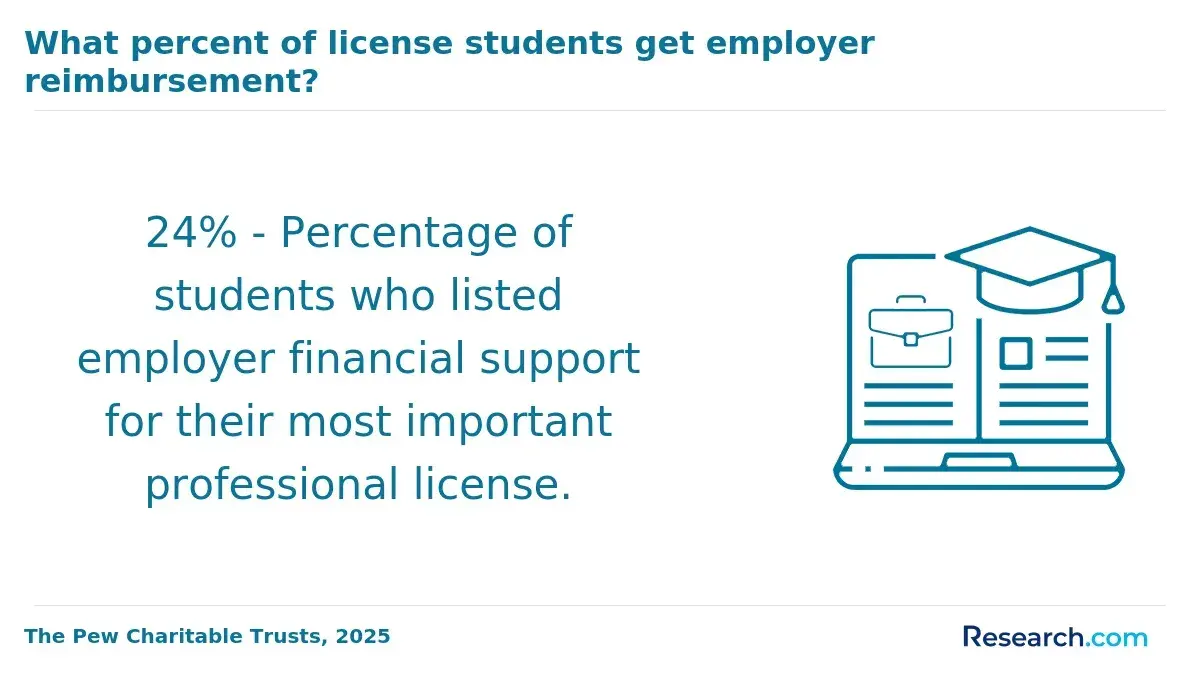
Yes. Financial aid, employer tuition assistance, military education benefits, scholarships, and payment plans can reduce the amount a student pays upfront or borrows. They do not lower the university's published tuition unless they are grants or scholarships, so compare both the full price and your likely net price.
For eligible graduate students, federal Direct Unsubsidized Loans generally have an annual borrowing limit of $20,500. That limit can help finance enrollment, but it should not be treated as a recommended borrowing target; students should compare anticipated debt with their employer support, savings, and likely career benefit.
Before enrolling, take these steps to avoid aid-related surprises:
- Submit the FAFSA and ask the financial-aid office how its academic year and term structure affect disbursement.
- Request written confirmation of whether the program, enrollment level, and start date qualify for institutional scholarships or federal aid.
- Read your employer policy for eligibility dates, grade requirements, repayment obligations, annual caps, and approved-program rules.
- Coordinate reimbursement timing with the school's payment due dates so that a delayed employer payment does not trigger late fees.
- Borrow only after calculating the remaining cost of tuition, mandatory fees, and living expenses.
Employer support can be particularly valuable for healthcare workers whose degree directly supports quality, compliance, data, operations, or supervisory responsibilities. Learners still exploring entry-level clinical support roles may compare training pathways such as the best online medical assistant programs, which are distinct from master's-level study and may fit a different career stage.
How Do Enrollment Breaks and Extra Terms Affect the Cost of an Online Health Sciences Master's Degree?
An enrollment break can affect cost even when a school does not charge tuition during leave. Returning students may face a newer tuition rate, changed curriculum requirements, a reactivation fee, lost scholarship eligibility, or a course sequence that requires waiting for the next cycle. In a flat-rate model, one extra active term can be the largest unplanned expense in the degree budget.
Students should review these policies before choosing a program:
- Leave-of-absence rules, maximum time away, and whether returning students retain their prior tuition rate.
- Withdrawal deadlines, refund schedules, and the academic and financial consequences of dropping a course.
- Satisfactory academic progress standards and the effect of an incomplete or failed course on aid eligibility.
- Maximum time allowed to finish the degree and whether a new catalog year can add requirements.
- Whether a capstone, practicum, or final course is offered every term or only at specific times.
Build an "extra-term" scenario into every comparison. Add one additional flat-rate charge and recurring fees to the base estimate, then decide whether you could manage that amount without excessive borrowing. This conservative calculation is more useful than assuming every course will be available exactly when planned.
How Should Students Choose the Best-Value Flat-Rate Online Health Sciences Master's Program?
The best-value program is the accredited option that supports your target role at the lowest realistic total cost, not the one with the smallest advertised term charge. For health sciences, value also depends on whether the curriculum builds skills that employers use, such as healthcare finance, quality improvement, informatics, policy, epidemiology, leadership, or data interpretation.
Use this scorecard to compare finalists consistently. It emphasizes the factors that most often change the final bill and the degree's practical usefulness.
| Comparison factor | What to verify | Why it affects value |
| Accreditation and authorization | Institutional accreditation, state authorization, and any required programmatic accreditation | Influences aid, transfer options, employer recognition, and professional eligibility |
| Realistic total cost | Term tuition, number of paid terms, mandatory fees, and an extra-term scenario | Prevents a low term price from masking a high final bill |
| Credit capacity and sequencing | Credits allowed each term and availability of required courses | Determines whether flat-rate pricing can actually be used efficiently |
| Career alignment | Courses, practicum opportunities, faculty expertise, and relevant outcomes support | Connects spending to the responsibilities of the intended role |
| Work-life fit | Live-session requirements, deadlines, group work, residencies, and support services | Reduces the risk of needing an expensive extra term |
Start with a written goal: promotion in healthcare administration, transition to informatics, public-health work, quality and safety leadership, or a related role. Then request a degree plan and complete cost sheet from each school. If you are pursuing environmental compliance, occupational health, or safety-focused work instead of a general health sciences degree, an environmental health and safety degree online may offer a closer curriculum match.
Do not choose a program solely because it advertises "flat-rate," "accelerated," or "affordable" tuition. Confirm the maximum included credits, course availability, all fees, transfer-credit decision, refund rules, and accreditation status before committing. A program is a stronger investment when its total cost, completion plan, and career relevance all work together.
Other Things You Should Know About Health Sciences
Depending on the concentration and prior experience, graduates may pursue healthcare operations, quality improvement, population health, clinical research coordination, health education, compliance, informatics support, or administrative leadership roles. Requirements vary by employer, and many management roles also expect relevant healthcare experience.
Usually, a general health sciences master's is not a direct licensure program. Licensure pathways for professions such as nursing, pharmacy, counseling, or allied health have specific curriculum, clinical, examination, and state-board requirements. Confirm eligibility before enrolling if licensure is your goal.
Some schools may accept eligible graduate-level transfer credits, but policies vary by institution, course age, grade, accreditation, and curriculum match. Obtain a formal transfer evaluation and confirm whether accepted credits reduce the number of paid flat-rate terms.
Completion time depends on the program's credit requirement, term format, course sequence, transfer credit, and your enrollment pace. A full-time student may finish faster than a part-time working professional, but an accelerated schedule is worthwhile only when it reduces required paid terms and remains academically manageable.
References
- Tuition and Fees https://www.unthealth.edu/tuition-and-fees/index.html
- Admissions https://healthprofessions.chsu.edu/admissions/
- External Scholarships & Grants https://www.downstate.edu/education-training/student-services/financial-aid/assistance/grad-scholarships.html
- Tuition & Cost Estimates https://www.nuhs.edu/admissions/tuition-fees/
- Institutional vs Program Accreditation: What You Should Look For | Articles | Unimy https://www.unimy.com/article/institutional-vs-program-accreditation-what-you-should-look-for
- Admissions Requirements USF Health's Online Health IT Programs https://www.usfhealthonline.com/admissions/requirements/
- Financing Your Degree https://aspph.org/student-journey/financing-your-degree/
- How does a college degree improve graduates' employment and earnings potential? - APLU https://www.aplu.org/our-work/publicuvalues/employment-earnings/
- Data Sources for Post-Graduation Outcomes https://www.airweb.org/article/2021/09/30/data-sources-for-post-graduation-outcomes
- How Long is an Online Master's Degree Program? OnlineEducation.com https://www.onlineeducation.com/faqs/how-long-to-earn-masters-degree