2027 Online Health Sciences Master's Programs With University Scholarships: Awards, Eligibility & Tuition After Aid

Co-Founder and Chief Data Scientist
Paying for an online Health Sciences master's requires more than comparing sticker tuition: scholarship rules, enrollment status, and fees can materially change the bill. For the 2024-25 aid year, eligible graduate students may borrow up to $20,500 in federal Direct Unsubsidized Loans, making scholarships especially valuable for limiting higher-cost borrowing. This guide is for prospective and current online Health Sciences students who want to compare university awards, estimate tuition after aid, confirm eligibility, and build a practical funding plan before enrolling.
Key Things to Know About Health Sciences Master's Programs with Scholarships
- University scholarships for online Health Sciences master's students are commonly merit-based, need-based, profession-focused, or employer-supported; eligibility and whether distance learners qualify vary by school and award.
- Graduate tuition often must be evaluated by total program cost, not per-credit price alone: add mandatory fees, technology charges, clinical or practicum expenses, and any courses not covered by an award.
- For 2024-25, federal Direct Unsubsidized Loan limits for eligible graduate students are up to $20,500 annually, so stacking scholarships, grants, employer assistance, and savings can reduce reliance on loans.
What online Health Sciences master's programs offer university scholarships?
Online Health Sciences master's programs may offer scholarships through the graduate school, a college of health sciences, an alumni foundation, or a department rather than through the online program itself. The most promising options usually state explicitly that online, distance, or part-time graduate students may apply. Do not assume that an institution's general scholarship page applies to a particular online program.
Programs in health administration, population health, clinical research, health informatics, environmental health, and health education may have overlapping funding opportunities. Applicants considering master of healthcare administration programs should separately compare program-level merit awards and the broader university graduate-scholarship catalog.
The examples below show where to look, not a guarantee that a particular award is available. Scholarship pools, deadlines, eligible concentrations, and online-student rules can change between admission cycles.
| Program type | University funding sources to check | Best fit for | Question to ask before applying |
| MS in Health Sciences | Graduate school merit awards, college donor funds, departmental scholarships | Students seeking a broad clinical, administrative, or education-focused curriculum | Does the award apply to fully online and part-time enrollment? |
| MS in Health Informatics or Health Data | STEM-related scholarships, informatics department awards, employer partnerships | Working professionals moving into health technology or analytics | Is the scholarship renewable for a multi-year online schedule? |
| MPH or population-health master's | School of public health awards, service-based awards, community-health donor funds | Applicants with public-service, prevention, or community-health experience | Are practicum costs or travel included, or is tuition the only covered charge? |
| Environmental or occupational health master's | Department awards, workforce-development funds, industry-sponsored assistance | Safety, compliance, and environmental-health professionals | Is the award limited to a particular specialization or campus location? |
Start with each institution's financial-aid office and the academic department that houses the degree. A school with a modest tuition discount that applies automatically and renews predictably can be financially preferable to a larger one-time award at a higher-priced program.
What is the average tuition for Health Sciences master's programs before aid?
There is no single national tuition figure for an online Health Sciences master's because credit requirements, residency pricing, and program formats differ. A useful benchmark is the National Center for Education Statistics' published graduate tuition-and-fee data: average graduate tuition and required fees at public institutions were substantially lower for in-state students than prices at private nonprofit institutions in recent reporting. That gap is informative, but it does not replace a program-specific estimate.
Use the school's published per-credit rate and required credit total to calculate tuition before aid. Then request a written estimate that includes fees and any costs that the program bills separately.
| Cost item | How to calculate it | Why it matters after aid |
| Base tuition | Per-credit tuition × required credits | Many scholarships are calculated against this amount only. |
| Mandatory university fees | Term fee × expected terms | Technology, registration, distance-learning, and student-service fees may remain unpaid. |
| Program expenses | Published estimate for software, books, practicum, background checks, or travel | These can create out-of-pocket costs even with a tuition scholarship. |
| Employer benefit | Annual reimbursement cap minus exclusions | Reimbursement may arrive after course completion and may require continued employment. |
| Scholarship and grant aid | Confirmed award amount or percentage | Check whether it is disbursed by term, limited to tuition, and renewable. |
For example, a 36-credit program priced at $700 per credit has $25,200 in base tuition before fees. A $5,000 tuition scholarship lowers that base figure to $20,200, but it does not necessarily pay for a $100 application fee, course materials, or a required practicum. Compare that net tuition with your cash flow, not just the award's headline value.
What types of financial aid and scholarships are available for Health Sciences master's programs?
Graduate funding is usually a package, not one award. Scholarships generally do not need to be repaid, while federal loans do; employer reimbursement may have work-service or repayment conditions. Students interested in clinical progression can also compare funding structures associated with ADN to NP programs, since employer support and workforce awards are common considerations in nursing advancement.
The categories below help applicants decide where to focus. Read each award's terms because names such as "fellowship," "grant," and "scholarship" do not guarantee the same tax treatment, coverage, or renewal conditions.
| Funding type | Typical basis for selection | When it makes sense | Key limitation |
| University merit scholarship | Academic record, professional achievement, leadership, or admission profile | Applicants with a strong GPA, relevant experience, or a compelling admissions file | May be competitive, one-time, or unavailable to part-time students. |
| Need-based institutional grant | Financial need, often documented through the FAFSA or institutional form | Students with demonstrated need who can meet filing deadlines | Graduate need-based grants can be limited and may change with financial circumstances. |
| Departmental or donor scholarship | Field, concentration, service background, identity, or career goal | Applicants whose work aligns closely with the donor's stated purpose | Often requires a separate application and has a narrow applicant pool. |
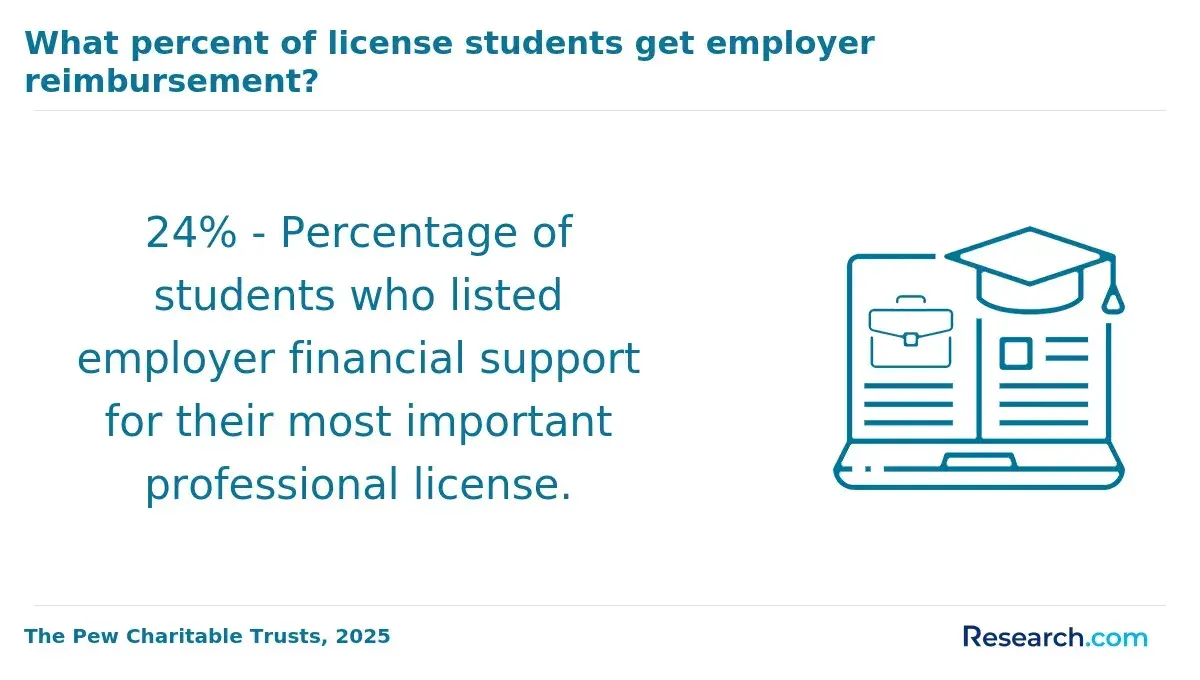
| Employer tuition assistance | Employment status and job relevance | Working professionals whose employer offers education benefits | Annual caps, grade requirements, and repayment clauses may apply. |
| Federal student aid | FAFSA eligibility and federal rules | Students who need predictable financing after grants and scholarships | Loans accrue interest and should be compared with expected repayment capacity. |
University scholarships are worth prioritizing when their terms reduce tuition without requiring repayment. Students who do not meet institutional criteria, need funding beyond a scholarship cap, or attend below half-time may need a combined plan involving employer benefits, savings, payment plans, and eligible federal loans.
How much do Health Sciences master's scholarships typically cover?
Most university scholarships for master's students are partial awards rather than full rides. They may be a fixed amount, a percentage reduction in tuition, or a limited number of credits. Full-tuition awards exist but are comparatively uncommon and frequently require exceptional academic credentials, service commitments, research participation, or full-time enrollment.
The following comparison explains how to evaluate coverage without treating an award's headline amount as your final cost.
| Award structure | What it may cover | Financial trade-off |
| Fixed-dollar scholarship | A specified amount applied to one term, one year, or the full program | Easy to price, but inflation in tuition or extra terms can reduce its relative value. |
| Tuition-percentage scholarship | A stated share of eligible tuition charges | Can rise with tuition, but usually excludes fees and noncredit requirements. |
| Credit-based award | Tuition for a defined number of credits | Useful when course prices are stable; confirm whether it applies to required electives. |
| Full-tuition scholarship | Eligible tuition for the stated award period | Offers major debt reduction, but may still exclude fees, insurance, books, and living costs. |
Ask for a net-cost worksheet showing tuition, mandatory fees, scholarship disbursement by term, estimated loan need, and any conditions that could reduce the award. A smaller renewable scholarship can be more valuable than a larger first-year grant if you expect to study part-time over several years.
For adjacent pharmacy pathways, comparing the cost structure of a cheapest online pharmacy school can also help clarify how professional-program tuition and scholarship rules differ from a Health Sciences master's.
Who is eligible for Health Sciences master's scholarships?
Eligibility depends on the specific award. Admission to an online master's program does not automatically make a student eligible for every university scholarship. Common requirements include degree-seeking status, a minimum enrollment level, satisfactory academic progress, a stated GPA, and submission by a separate deadline.
Before spending time on essays, compare your profile against the award's nonnegotiable criteria. These are the eligibility areas most likely to determine whether an application is worth pursuing.
- Academic eligibility: A minimum undergraduate or graduate GPA, admission status, or evidence of academic achievement may be required for merit awards.
- Enrollment eligibility: Some awards require full-time enrollment, while others permit online or part-time students; confirm your planned credit load qualifies.
- Program eligibility: An award may be limited to Health Sciences, public health, informatics, environmental health, or another named concentration.
- Financial-need eligibility: Need-based aid may require a FAFSA, timely verification documents, and financial information from the relevant aid year.
- Professional or service eligibility: Donor-funded awards may prioritize employees in health care, veterans, community-health workers, rural practitioners, or applicants serving a defined population.
- Residency or work-location eligibility: State, regional, or employer-supported awards can require residence or employment in a particular area.
Eligibility language should be read literally. "Preference" means a factor may strengthen an application; "required" means you are not eligible without it. If a criterion is unclear, email the scholarship administrator before applying and retain the response.
What is the application process for Health Sciences master's scholarships?
Scholarship timing varies. Some universities evaluate all admitted applicants automatically, while others require a separate form through the graduate school or department. Submit aid documents early because scholarship deadlines may occur before the program's final admission deadline.
Use this sequence to avoid missed opportunities and to create a comparable record of each offer.
- Create a spreadsheet with the scholarship name, deadline, online-enrollment rule, award amount, renewal rule, and required documents.
- File the FAFSA when the school or award requires it, then complete any verification requests promptly.
- Apply for admission early enough to receive the student identification number or admission decision needed for scholarship applications.
- Prepare reusable materials: résumé, transcripts, professional license or certification evidence if relevant, recommendation contacts, and a focused personal statement.
- Tailor each essay to the scholarship's stated purpose, connecting your Health Sciences training to a specific workforce, service, research, or leadership goal.
- Save confirmation receipts and follow up on missing documents before the deadline rather than assuming a submitted application is complete.
- Compare written award letters by total eligible charges, payment timing, renewal terms, and remaining borrowing need before making an enrollment deposit.
A strong request for clarification is specific: ask whether the scholarship applies to your online concentration, how many credits it covers, whether it is taxable, and what happens if you take a leave of absence. General questions often produce general answers that cannot support a cost decision.
Do online Health Sciences students qualify for the same aid as on-campus students?
Online students can qualify for federal financial aid at an eligible institution and may receive some of the same university scholarships as campus-based students. However, identical eligibility is not automatic. A scholarship can be restricted by delivery format, campus, residency, enrollment intensity, or the availability of campus employment and assistantships.
Online learning can be a strong fit for working professionals, especially when reduced commuting or relocation costs offset any smaller institutional-award pool. Students exploring specialized fields such as an environmental health and safety degree online should verify whether program-specific awards recognize distance learners and whether fieldwork requirements create additional costs.
| Aid source | Online students may qualify? | What to verify |
| Federal Direct Unsubsidized Loans | Often yes, when the student and program meet federal eligibility requirements | Enrollment level, program eligibility, FAFSA completion, and annual borrowing limit. |
| University merit scholarships | Sometimes | Whether online cohorts are included and whether the award is automatic or separate. |
| Need-based institutional grants | Sometimes | FAFSA requirement, residency rules, and available graduate funding. |
| Graduate assistantships | Less consistently available | Whether remote roles exist and whether assistantship recipients must enroll on campus. |
| Employer tuition reimbursement | Often yes | School accreditation, job relevance, grade threshold, annual cap, and repayment clause. |
Request confirmation in writing rather than relying on a marketing page or a verbal statement. The financial-aid office should be able to identify the aid year, program code, enrollment requirement, and whether an online student's award differs from a campus student's award.
Can Health Sciences master's students combine multiple scholarships and grants?
In many cases, yes. Students may combine university scholarships, external scholarships, grants, employer assistance, veterans' education benefits, and loans, subject to institutional packaging rules and the cost-of-attendance limit. External awards should always be reported to the financial-aid office because they can change other aid in the package.
Stacking smaller awards can reduce borrowing more effectively than waiting for one highly competitive full-tuition scholarship. It works best when each award has compatible restrictions and disbursement dates.
| Potential advantage | Potential drawback | How to manage it |
| Lower loan balance and interest exposure | An external scholarship may reduce other need-based aid | Ask which aid category will be adjusted before accepting funds. |
| Multiple funding sources can cover separate costs | Some awards pay tuition only and cannot pay fees or living expenses | Match each award's permitted use to your cost worksheet. |
| Employer support can supplement university aid | Reimbursement may be delayed or require repayment after leaving the employer | Review the employer agreement and plan short-term cash flow. |
| Renewable awards can stabilize multi-year costs | Different renewal dates create administrative risk | Track every renewal requirement and deadline in one calendar. |
Do not decline federal aid prematurely. First obtain the final written scholarship package, identify charges not covered by awards, and then decide how much loan eligibility to accept. Federal loans can often be reduced later if other confirmed funding arrives, subject to school procedures and timing.
What are the requirements to maintain scholarship status in Health Sciences master's programs?
Scholarship maintenance, also called renewal or continuation, is the set of conditions required to keep an award after the first disbursement. Requirements are award-specific, but commonly address GPA, satisfactory academic progress, enrollment, pace toward graduation, conduct, and completion within a defined time frame.
Review the award letter and student handbook before scheduling courses. The following checks can prevent an unexpected loss of funding.
- Confirm the minimum cumulative GPA and whether it is measured each term or annually.
- Verify the minimum credits needed each term and whether summer enrollment counts toward the requirement.
- Check whether a withdrawal, incomplete, repeated course, leave of absence, or reduced course load triggers repayment or cancellation.
- Learn the school's satisfactory academic progress standard, including the required completion pace and maximum time allowed for the degree.
- Identify whether renewal is automatic or requires a new FAFSA, application, essay, or departmental nomination.
- Ask how a curriculum change, concentration change, or transfer credit affects the scholarship's remaining value.
A common mistake is treating a scholarship as a guaranteed program-long discount. If maintaining an award requires full-time enrollment but your work schedule supports only one course at a time, calculate the program's cost without the renewal before relying on it.
What tips can help Health Sciences master's students secure more scholarship funding?
The strongest strategy is to apply broadly but selectively: prioritize awards for which you clearly meet the criteria, then add university, department, employer, and external opportunities that fit your professional direction. Applicants from entry-level clinical backgrounds may also find useful cost comparisons through best online medical assistant programs when planning an earlier education step or employer-supported progression.
Take these actions before committing to a school so that your scholarship search improves the actual enrollment decision rather than only the admissions outcome.
- Compare at least several programs using total estimated cost after confirmed aid, not rankings, tuition rate, or scholarship amount alone.
- Apply early for admission and separately track scholarship deadlines, which may close months before classes begin.
- Ask your employer's human-resources or benefits office about reimbursement, direct billing, grade requirements, and any post-completion work commitment.
- Use a résumé that quantifies health care impact, such as patients served, quality-improvement work, training delivered, compliance responsibilities, or community outreach.
- Write scholarship essays around a credible career plan and show how the degree supports a defined health-services need rather than repeating your admissions essay.
- Request recommendations from supervisors or faculty who can describe your readiness for graduate-level work and contribution to health care.
- Ask each financial-aid office whether a competing written offer can be reviewed, while understanding that reconsideration is discretionary and not assured.
Red flags include unclear renewal language, awards described only verbally, pressure to enroll before receiving a written aid package, and tuition estimates that omit fees. Choose the school whose confirmed net cost, academic fit, scheduling flexibility, and funding terms work together - not simply the institution advertising the largest award.
Other Things You Should Know About Health Sciences
Begin when you begin graduate-school research, ideally before submitting admission applications. Departmental and graduate-school deadlines may arrive before the program's final admissions deadline, and some awards require an admission decision first.
Scholarship amounts used for qualified tuition and required course materials are generally treated differently from amounts used for living expenses, travel, or optional expenses. Tax treatment depends on the award and your circumstances, so keep award letters and consult a qualified tax professional when needed.
You can ask whether the financial-aid office will review new financial information or a written offer from another institution. A review is discretionary, and the school may not increase aid, but a respectful request supported by documentation can clarify available options.
Contact the scholarship administrator and financial-aid office immediately to learn whether an appeal, probation period, reinstatement process, or alternative aid is available. Also revise your budget before registering for the next term, especially if a reduced course load caused the loss of eligibility.
References
- 25 Public Health Scholarships - MPH Online https://www.mphonline.org/top-25-public-health-scholarships/
- Master of Public Health Program at the Medical College of Wisconsin https://www.mcw.edu/education/graduate-school/graduate-school-programs/public-health/mph-program
- 25 Public Health Scholarships and Tips to Apply https://www.publichealthdegrees.org/resources/scholarships/
- Financing Your Degree https://aspph.org/student-journey/financing-your-degree/
- 50 Top Scholarships for Students of Medical & Health Programs https://www.edumed.org/financial-aid/scholarships/
- MPH Scholarships, Fellowships & Funding 2026 https://www.publichealthonline.org/mph-scholarships/
- 68 Key Scholarships for Master's Degree Students https://www.onlinemastersdegrees.org/financial-aid/scholarships/
- 15+ Online Public Health Student Scholarships & Grants https://www.onlinemphdegree.net/public-health-scholarships/
- Scholarships for Online Grad School | OEDb.org https://www.oedb.org/graduate-scholarship/