2027 Best Value Online International Business Degree Programs: Affordable Accredited Options with the Strongest ROI

Co-Founder and Chief Data Scientist
Choosing an online international business degree is not just a question of finding the lowest tuition. The better question is whether the program is accredited, affordable after fees, flexible enough to finish, and connected to career outcomes that justify the investment. That matters for budget-conscious students, working adults, transfer students, and career changers who need a degree that fits around real financial and scheduling constraints.
International business programs can prepare students for work in global trade, supply chains, finance, marketing, consulting, and cross-border operations. But value varies widely. A low advertised price can become expensive if credits do not transfer, fees are unclear, courses are hard to access, or graduation takes longer than expected. At the same time, the article’s cited figure that 62% of international business graduates report higher salaries within five years post-graduation shows why a careful ROI-focused choice can matter.
This guide explains how to compare affordable accredited online international business degree programs, what costs to examine, how employers may view online credentials, what accreditation to verify, and which career and salary factors should shape your decision.
Key Things to Know About the Best Value Online International Business Degree Programs
- Best-value online international business programs combine competitive tuition, financial aid, transfer credits, and flexible formats to minimize total education costs and shorten time to degree completion.
- Accreditation, graduation rates, student support, program pacing, and career outcomes are essential metrics to evaluate overall educational and financial value effectively.
- Review all fees, residency rules, credit transfers, salary potential, and employer recognition thoroughly to ensure the degree supports strong career growth and long-term financial security.
What Are the Best Value Online International Business Degree Programs?
The best value online international business degree programs are usually not the cheapest programs on paper. They are accredited programs that keep total costs manageable, allow students to use transfer credits, provide enough scheduling flexibility to finish, and offer coursework tied to global business careers. Since online programs can reduce overall expenses by up to 40% compared with traditional formats, they can be especially useful for students who need to keep working while completing a degree.
Program types that often deliver strong value
- Public regional universities: These schools often offer lower tuition than private institutions, especially for in-state students. Many also have regional accreditation, established online systems, and clearer credit-transfer pathways.
- Transfer-friendly colleges: Students with prior college coursework can save substantial time and money when a school accepts a large number of applicable credits. The most useful programs publish transfer rules clearly and provide degree audits before enrollment.
- Competency-based programs: These programs let students move faster when they can demonstrate mastery. They can be cost-effective for experienced professionals, but they require strong self-direction and consistent study time.
- Programs with strong online support: A low-cost program is less valuable if advising is slow, courses are hard to access, or students struggle to get help. Look for online tutoring, career services, library access, technical support, and responsive faculty.
- Workforce-aligned business tracks: Concentrations or electives in global supply chains, international marketing, trade compliance, global finance, or cross-cultural management can make the degree more practical for career-focused students.
How to define “best value” before applying
Compare programs by total cost to completion, not only per-credit tuition. Ask whether your credits will transfer, whether courses are available every term, whether there are added online or technology fees, and whether the school reports graduation or career outcomes. Students comparing business-related online options may also find the affordability framework used for easy degrees that pay well helpful when weighing cost against practical career value.
How Do You Choose an Affordable Accredited Online International Business Degree?
To choose an affordable accredited online international business degree, start with accreditation and then calculate the real cost of finishing. A program should be evaluated on whether it is recognized, whether credits transfer, whether the schedule fits your life, and whether the curriculum supports your target career. Regional accreditation tends to improve credit transferability and employer recognition, so it should be one of the first items you verify.
Decision checklist for comparing programs
- Confirm institutional accreditation: Prioritize regionally accredited institutions, especially if you plan to use federal financial aid, transfer credits, or apply to graduate school later.
- Review the business curriculum: A strong international business program should include core business topics along with global trade, international marketing, global finance, supply chain management, international law or compliance, and cross-cultural communication.
- Calculate total program cost: Include tuition, online fees, technology fees, textbooks, course materials, graduation fees, and any residency or proctored exam costs.
- Ask for a transfer evaluation: If you have prior credits, request a written estimate of how many apply to the degree. General acceptance of credits is not the same as credits counting toward major or graduation requirements.
- Check course delivery format: Asynchronous courses work well for unpredictable schedules. Synchronous courses may provide more interaction but can be difficult for shift workers or students in different time zones.
- Evaluate student support: Advising, tutoring, writing help, career coaching, and internship support can affect whether you finish on time.
Students still deciding between international business and a broader management path may want to compare curricula and costs against a business administration degree online accredited option, especially if they want a wider business foundation before specializing.
Cost-conscious students can also learn from affordability models in other fields, including resources such as the cheapest online electrical engineering degree list, where accreditation, total cost, and transfer policies are also central to program value.
Which Online International Business Degree Programs Offer the Highest ROI?
The highest-ROI online international business degree programs combine reasonable total cost with strong completion support and career-relevant training. ROI is not guaranteed by the degree title. It depends on what you pay, how long it takes to graduate, how much debt you carry, and whether the program helps you qualify for better roles. This is especially important when the average student loan debt is approaching $30,000.
ROI factors to compare
| ROI factor | Why it matters | What to ask before enrolling |
| Graduation success | Programs with high on-time graduation rates, typically above 70%, may help students avoid extra terms and additional costs. | What percentage of online business students graduate on time? |
| Total cost | Affordable tuition loses value if mandatory fees, repeated courses, or poor transfer policies increase the final price. | What is the estimated total cost after transfer credits and fees? |
| Career alignment | International business roles often reward practical skills in markets, logistics, compliance, finance, and communication. | Which employers, projects, internships, or career services support international business students? |
| Flexibility | Working adults often need predictable course schedules to avoid stopping out. | Are courses asynchronous, part-time friendly, and offered consistently? |
Programs with the strongest ROI tend to make it easier to finish efficiently. They publish tuition and fees clearly, accept applicable transfer credits, provide proactive advising, and connect assignments to business problems graduates may face in global markets.
A graduate who completed an online international business degree while working full time described the experience as demanding but worthwhile. The main challenge was managing coursework around work deadlines and family responsibilities. Flexible scheduling and responsive faculty helped him continue, and he was able to apply new business concepts at work before graduation. That practical connection is one of the clearest signs that a program may deliver value beyond the credential itself.
What Is the Average Cost of an Online International Business Degree Program?
The average cost of an online international business degree depends on institution type, residency status, transfer credits, and fees. Public universities generally offer tuition between $15,000 and $25,000 for in-state students, while private schools often exceed $40,000. Those figures make it important to compare the full price of completion rather than relying on the advertised per-credit rate.
Major cost variables
- Public vs. private tuition: Public institutions often provide the lowest tuition for residents. Private nonprofit universities may cost more, so students should look for scholarships, transfer credit policies, and stronger support services that could offset the higher price.
- In-state and out-of-state pricing: Some public universities charge more for out-of-state online students, while others offer a single online rate. Residency rules can significantly change affordability.
- Flat-rate tuition: Some programs charge a fixed amount per term. This can benefit students who can complete more courses at once, but it may not help students who need a slower pace.
- Transfer credit savings: Prior college coursework, community college credits, military training, or approved prior learning can reduce the number of credits you need to pay for.
- Added fees: Online technology fees and other charges may add 5-15% to the total cost. Review the program’s fee schedule before enrolling.
Questions that reveal the real price
- How many credits will I need after transfer evaluation?
- Are tuition rates locked, or can they increase while I am enrolled?
- Are textbooks, simulations, software, or proctoring fees included?
- Is financial aid available for part-time students?
- Are there extra charges for online courses, graduation, or student services?
Students comparing programs in fields such as bachelor of psychology online programs often face similar cost questions: low tuition matters, but transfer policies, pacing, and support can determine the final price paid.
Are Affordable Online International Business Degrees Respected by Employers?
Affordable online international business degrees can be respected by employers when they come from accredited institutions with credible academic standards. The online format itself is usually less important than the school’s legitimacy, the program’s quality, and the graduate’s ability to demonstrate relevant skills. Studies indicate that more than 70% of recruiters consider accreditation and institutional quality vital for online credentials.
What improves employer confidence
- Regional accreditation: This signals that the institution has been reviewed for academic quality, governance, student support, and financial stability.
- Recognizable institutional reputation: Employers may respond more favorably to schools with transparent outcomes, established business programs, and a history of serving working adults.
- Business-relevant projects: Case studies, market-entry plans, supply chain analyses, trade research, and capstone projects can help graduates show applied skills.
- Employer or industry connections: Advisory boards, internship options, career fairs, alumni networks, and employer partnerships can strengthen the bridge between coursework and hiring.
- Nonprofit governance: Nonprofit public and private universities may face less employer skepticism than some for-profit alternatives, though students should evaluate each institution individually.
How to present an online degree to employers
Graduates should emphasize the accredited university, degree title, business projects, measurable achievements, and tools or methods learned. There is usually no need to highlight that the program was online unless asked. If an employer raises questions, focus on accreditation, curriculum rigor, and how the program built skills relevant to the role.
One graduate noted that some hiring staff initially hesitated when they learned her coursework was online. She addressed the concern by pointing to the university’s accreditation and discussing work-relevant projects from the program. That approach shifted the conversation from delivery format to demonstrated ability, which is where job candidates have the strongest leverage.
What Accreditation Should You Look for in an Online International Business Program?
For an online international business program, institutional accreditation should come first. Regional accreditation is especially important because it affects federal financial aid eligibility, credit transfer, graduate school admission, and employer confidence. Programmatic business accreditation can add value, but it should not replace institutional accreditation. More than 70% of employers highly value graduates from accredited programs, making this a critical step in your search.
Types of accreditation to understand
- Regional accreditation: This reviews the institution as a whole, including academic standards, faculty qualifications, student services, governance, and financial practices. It is often the most important accreditation for students to verify.
- Programmatic business accreditation: Organizations such as AACSB or ACBSP evaluate business programs specifically. This can signal stronger business curriculum standards and may matter more for students seeking competitive corporate roles or graduate business study.
- State authorization: Online students should confirm that the school is authorized to enroll students in their state. This is especially important for students living outside the school’s home state.
- Federal financial aid eligibility: Accreditation alone is not enough. Students who need federal aid should confirm that the institution participates in Title IV aid programs.
Accreditation red flags
- The school does not clearly identify its accreditor.
- The accreditor is unfamiliar or not recognized by appropriate oversight bodies.
- The program promises unusually fast completion with little academic work.
- Credits are unlikely to transfer to regionally accredited institutions.
- Employment or salary claims are vague, exaggerated, or not supported by published outcomes.
Before applying, verify accreditation on the school’s official website and through the accreditor’s own directory. Do not rely only on marketing pages or admissions representatives.
Which Online International Business Programs Are Best for Working Adults?
The best online international business programs for working adults are flexible, predictable, transfer-friendly, and supported by advisors who understand nontraditional students. With a 40% surge in adult learner enrollment in online courses over recent years, programs increasingly need to serve students who balance school with jobs, caregiving, military service, or career transitions.
Features working adults should prioritize
- Asynchronous coursework: Students can complete lectures, discussions, and assignments on a weekly schedule instead of logging in at fixed times.
- Part-time enrollment: A sustainable pace may be more realistic than a full-time course load, especially for students with demanding work schedules.
- Accelerated or competency-based options: Experienced professionals may benefit from faster pathways, but only if they can commit enough time to steady progress.
- Generous transfer policies: Adult students often bring prior credits. A program that applies those credits efficiently can reduce cost and time to completion.
- Multiple start dates: Rolling or frequent start dates help students begin when their work and personal schedules allow.
- Career services for experienced learners: Working adults may need help translating the degree into promotion, management, consulting, or career-change opportunities rather than entry-level placement only.
Best fit by learner type
| Learner situation | Best program feature | Why it helps |
| Full-time employee | Asynchronous or evening-friendly format | Reduces scheduling conflicts with work hours. |
| Student with prior credits | Transfer-friendly degree plan | Can lower both tuition cost and time to graduation. |
| Experienced professional | Competency-based or accelerated option | May allow faster progress through familiar material. |
| Career changer | Strong advising and career coaching | Helps connect coursework to a new business path. |
| Parent or caregiver | Part-time enrollment and predictable deadlines | Supports steady progress without overload. |
Working adults should be cautious about enrolling in a program simply because it advertises speed. The better measure is whether the schedule, advising, and course availability make graduation realistic.
What Financial Aid Options Are Available for Online International Business Students?
Online international business students may qualify for federal aid, state aid, institutional scholarships, employer tuition assistance, military education benefits, and transfer-credit savings. Nearly 60% of undergraduates rely on some form of financial aid, so students should compare aid options before assuming a program is unaffordable.
Common financial aid pathways
- Federal financial aid: Students may qualify for Pell Grants and Direct Subsidized Loans by completing the FAFSA, but they must attend an eligible accredited institution and maintain satisfactory academic progress.
- Institutional scholarships: Universities may offer need-based, merit-based, transfer, adult learner, or business-specific scholarships for online students.
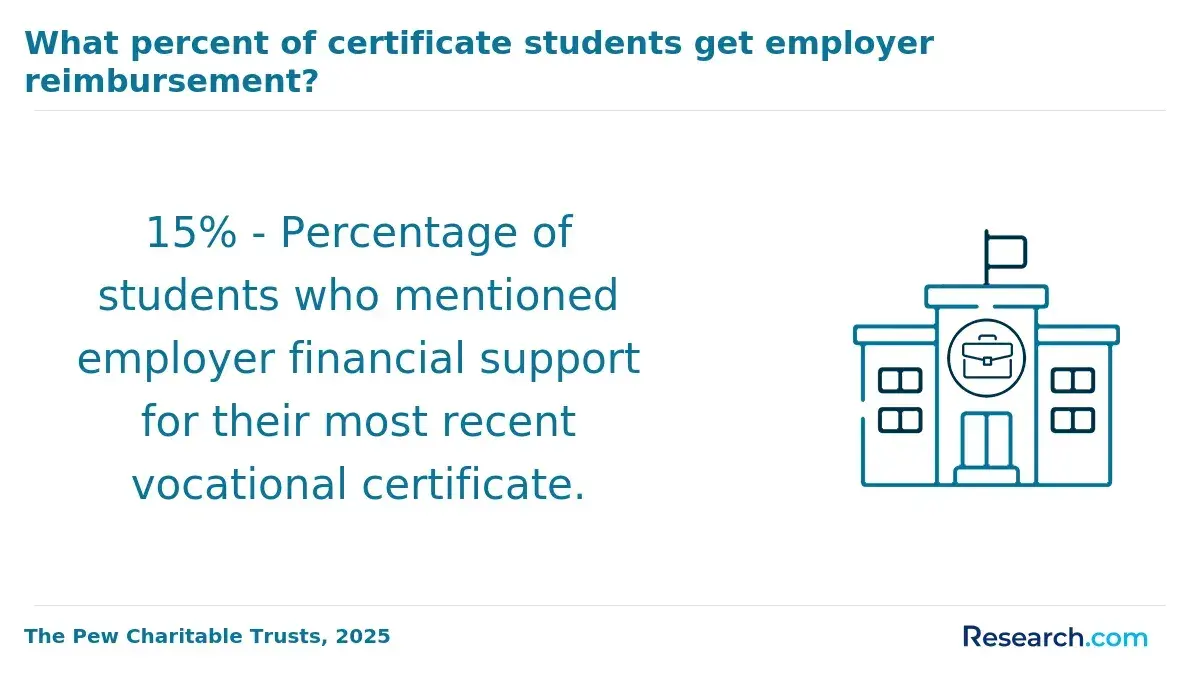
- Employer tuition assistance: Working professionals should ask whether their employer offers reimbursement or direct billing. Confirm grade requirements, repayment rules, and annual limits before enrolling.
- Military education benefits: Active duty service members, reservists, veterans, and eligible family members may be able to use GI Bill benefits or tuition assistance if the program meets applicable eligibility standards.
- State and workforce grants: Some students may qualify for state-based aid or workforce development funding, depending on location, employment status, and program eligibility.
- Transfer-credit optimization: Although not financial aid in the traditional sense, accepted transfer credits can directly reduce tuition by lowering the number of courses required.
Financial aid questions to ask the school
- Is the online international business program eligible for federal financial aid?
- Can part-time students receive aid?
- What scholarships are available specifically for online or business students?
- How will transfer credits affect my aid package and graduation timeline?
- Are there minimum GPA or completion requirements to keep aid?
Students exploring flexible, career-focused online programs in other areas, such as an online social media marketing degree, can use the same financial aid checklist: verify accreditation, confirm aid eligibility, compare total cost, and avoid borrowing more than necessary.
What Careers Can You Pursue With an Online International Business Degree?
An online international business degree can support careers in global operations, marketing, finance, trade, procurement, logistics, consulting, and management. The best path depends on your experience level, language skills, technical abilities, industry knowledge, and willingness to work with international markets or cross-border teams.
Career paths for graduates
- Entry-level business roles: Graduates may start as business analysts, sales coordinators, marketing assistants, trade assistants, or operations support specialists in companies with international customers or suppliers.
- Global supply chain and logistics: Roles can include procurement specialist, logistics coordinator, supply chain analyst, or import/export coordinator. These jobs often require attention to regulations, vendor relationships, timelines, and cost controls.
- International marketing and sales: Graduates interested in customer behavior, branding, and market research may pursue international sales, market development, or global marketing support roles.
- Finance and trade-related roles: Students with strong quantitative skills may pursue financial analyst, trade finance support, or international banking-related positions, depending on experience and employer requirements.
- Management tracks: With experience, graduates may move into operations manager, global product manager, regional sales manager, or international business development roles.
- Remote-friendly roles: Digital collaboration has expanded opportunities for global project coordinators, virtual consultants, and remote business analysts, though competition can be strong.
- Graduate education: Some graduates use the degree as a foundation for an MBA, a master’s in global management, or another advanced business credential.
Students should choose electives and projects based on the roles they want. For example, a student aiming for supply chain work should prioritize logistics, analytics, procurement, and operations coursework, while a student targeting international marketing should build skills in market research, communication, and digital strategy.
The value of affordability plus accreditation applies across many online fields. Students comparing degree options can see a similar decision framework in an online environmental engineering degree resource, where program recognition, cost, and career fit are also central considerations.
What Is the Salary Potential for Graduates of Online International Business Programs?
Salary potential for graduates of online international business programs varies by role, industry, location, experience, and skill set. Some mid-level positions can earn over $75,000 annually, but a degree alone does not guarantee that outcome. Graduates usually improve their earning power by combining the degree with practical business experience, analytical skills, communication ability, and knowledge of global markets.
Factors that shape earnings
- Accreditation and school reputation: A degree from a regionally accredited institution may carry stronger employer recognition and support better long-term mobility.
- Industry choice: International finance, technology-driven trade, global supply chains, and specialized consulting may offer stronger earning potential than general administrative roles.
- Location: Urban centers and international business hubs often provide more opportunities and higher compensation than smaller markets, although remote work can broaden access.
- Experience level: Entry-level salaries are typically lower than earnings in supervisory, specialist, or management positions. Prior work experience can make the degree more valuable immediately.
- Technical and analytical skills: Skills in data analysis, financial modeling, customer relationship management systems, logistics tools, and market research can strengthen a graduate’s profile.
- Language and cultural competence: Foreign language ability and cross-cultural communication skills may be valuable for roles involving international clients, suppliers, or teams.
How to improve salary outcomes
- Choose a concentration aligned with a specific career path.
- Complete projects that can be discussed in interviews.
- Build internship, part-time, or volunteer experience related to international business.
- Use career services before graduation, not only after completing the degree.
- Track job postings early to identify the skills employers repeatedly request.
The strongest salary outcomes usually come from pairing the degree with a clear career strategy. Students should look beyond broad job titles and identify the industries, employers, and skills that match their goals.
What Graduates Say About Best Value Online International Business Degree Programs
- Shmuel: "As a student mindful of expenses, I found that selecting an affordable accredited online international business degree was crucial. The programs with the strongest ROI not only saved me money but also opened doors to roles in global marketing and supply chain management. It's encouraging to see affordable options that truly balance cost with quality education."
- Shlomo: "Working full-time while studying, I needed a program that maximized return on investment without sacrificing flexibility. Online international business degree programs with high ROI gave me skills aligned with career advancement in international trade and consultancy sectors. Reflecting on my journey, choosing the right accredited program was the best decision for professional growth and financial stability."
- Santiago: "Career-focused and aiming for leadership in multinational corporations, I sought an online international business degree with clear value. I learned that programs offering the strongest ROI often support careers in global finance and strategic management. The key insight was balancing accreditation and affordability to ensure meaningful opportunities after graduation."
Other Things You Should Know About International Business Degrees
Many online international business programs incorporate virtual networking events, group projects, and discussion forums to facilitate peer and mentor connections. While these interactions may differ from face-to-face networking, advances in technology allow students to build professional relationships globally, which is essential for international business careers.
Common specializations include global supply chain management, international marketing, cross-cultural negotiation, and international finance. These options allow students to tailor their education to specific career goals and industries, enhancing their expertise and employability in niche areas of international business.
Many accredited online international business programs accept transfer credits from regionally accredited institutions, helping reduce overall tuition costs and time to degree completion. Transfer policies vary by school but typically require official transcripts and may limit the number of transferable credits to ensure core curriculum coverage.
References
- International Business https://akademiata.pl/en/offer/bachelor/international-business/
- International Business Bachelor’s Degree Program https://study.gov.pl/international-business-bachelors-degree-program
- International Business Degree - MSU Denver https://www.msudenver.edu/online/international-business-bs/
- International Business Degree Online https://www.snhu.edu/online-degrees/bachelors/bs-in-business-administration/international
- Top Online Business Degrees That Pay Off in 2026: A Smart Investment in Your Future - Swiss School of Business and Management Geneva https://www.ssbm.ch/top-online-business-degrees-that-pay-off-in-2026-a-smart-investment-in-your-future/
- Online MBA International Business | OnlineMBA.com https://www.onlinemba.com/mba-careers/international-business/
- What to do after a Bachelor's degree in International Business https://www.ipag.edu/en/blog/what-do-after-bachelors-degree-international-business
- Best Online International Business Master's & MBA Programs https://www.supplychainguide.org/degrees/online-masters-in-international-business/
- Best Online International Business Degrees https://careerkarma.com/blog/top-online-international-business-degrees/
- International Student Scholarship Search & International Financial Aid https://www.iefa.org/