2027 International Business Degree Completion Programs for Working Adults

Co-Founder and Chief Data Scientist
Choosing an international business degree completion program is usually a practical career decision, not a traditional college-search exercise. Most applicants already have college credits, work experience, military training, or professional responsibilities, and they need to know which program will accept the most prior learning, fit a full-time schedule, qualify for financial aid, and carry enough accreditation value to matter to employers.
This guide explains how international business degree completion programs work for working adults, how they differ from traditional campus programs, what credits may transfer, what GPA standards to expect, how online and hybrid formats are structured, how long completion may take, what accreditation to verify, and how to think about cost and career outcomes. The goal is to help you compare programs based on fit, credibility, total cost, and likely return, not just speed or convenience.
Key Things to Know About International Business Degree Completion Programs for Working Adults
- Maximize credit for prior learning-especially military and professional training-to reduce time and tuition; some programs accept up to 75% transfer credits in international business degrees.
- Choose programs recognized by employers and licensure bodies-over 60% of international business graduates report higher job placement rates with accredited, industry-aligned degrees as of 2023.
- Access financial aid tailored for working adults, including employer tuition assistance and federal grants, which can cover up to 80% of program costs in many international business completion programs.
What Are International Business Degree Completion Programs, and Who Are They Designed For?
International business degree completion programs are bachelor's pathways built for students who started college but did not finish. Instead of requiring a full four-year sequence from the beginning, these programs focus on applying eligible prior credits toward the remaining major, general education, residency, and graduation requirements.
They are most useful for adults who need a recognized bachelor's credential but cannot pause work or family responsibilities to attend a traditional daytime program. The best programs combine academic rigor with adult-focused policies: transparent transfer reviews, evening or online coursework, predictable course rotation, and advising that helps students avoid taking unnecessary credits.
Who these programs usually serve
- Adults with previous college credit: Students who completed part of a bachelor's degree can often use completed coursework toward the new degree, depending on grades, course equivalency, credit age, and institutional policy.
- Working professionals: Employees who are blocked from promotion because they lack a bachelor's degree may use completion programs to qualify for credential-gated roles in business, operations, sales, logistics, marketing, or management.
- Military-affiliated learners: Veterans, active-duty service members, and reservists may be able to apply ACE-evaluated military training, prior college coursework, or exam-based credit toward degree requirements.
- Career changers: Adults moving into global business, trade, supply chain, market expansion, or cross-border operations may need both the credential and the business foundation.
Common features to compare
- Accelerated pacing: Shorter course terms may help students finish faster, but accelerated courses require disciplined weekly study time.
- Credit-for-prior-learning options: Prior college credits, professional certifications, ACE-evaluated military training, exams, or portfolio assessment may reduce the number of courses left to complete.
- Flexible delivery: Online, evening, weekend, and hybrid formats make the degree more workable for adults managing employment, caregiving, travel, or irregular schedules.
- Career-focused curriculum: A strong international business completion program should cover global markets, international trade, finance, management, supply chains, cross-cultural communication, and business strategy.
Organizations such as the National Student Clearinghouse, the American Association of State Colleges and Universities, and the Lumina Foundation cite degree completion programs as important tools for raising adult attainment rates. For the student, however, the practical question is narrower: will the program accept enough prior learning, provide enough flexibility, and award a credential that employers and graduate schools will respect?
Some adults also build skills through short-term credentials while finishing a bachelor's degree. For example, relevant certificate programs online may support targeted skill development, but they should be viewed as complements rather than substitutes when a bachelor's degree is required for advancement.
How Do International Business Degree Completion Programs Differ From Traditional On-Campus Degree Programs?
International business degree completion programs differ from traditional on-campus bachelor's programs mainly in audience, schedule, transfer design, and pacing. A traditional program is usually built for students entering from high school and attending full time during weekday hours. A completion program is built for adults who already have credits and need a realistic path to finish while working.
- Scheduling formats: Completion programs commonly use evening, weekend, online, or hybrid courses. Traditional programs are more likely to rely on weekday, daytime schedules that are difficult for full-time workers.
- Pacing options: Many completion programs use accelerated terms, cohort sequencing, or year-round course availability. Traditional programs usually follow a standard semester calendar with fewer options to compress time.
- Residency requirements: Completion programs may reduce or clarify the number of credits that must be completed at the degree-granting institution. Traditional programs often assume students will complete most upper-division work on campus.
- Asynchronous coursework: Completion pathways frequently offer over 75% of coursework asynchronously, which helps adults with rotating shifts, travel, caregiving, or time-zone challenges. Traditional programs may include fewer asynchronous options.
- Transfer-credit emphasis: Completion programs are typically more intentional about evaluating prior college credits, professional learning, and ACE-evaluated military training. Traditional programs may be less flexible or slower to evaluate nontraditional credit.
- Advising model: Adult-focused programs often provide degree maps, pre-enrollment credit estimates, and career-oriented advising. Traditional advising may assume a more linear, full-time student path.
- Credential equivalence: When offered by an accredited institution, both pathways can lead to the same Bachelor of Science or Bachelor of Arts in International Business degree.
- Enrollment trends: According to the National Center for Education Statistics and IPEDS data, enrollment in degree completion programs has risen steadily over the past decade, reflecting demand from adults balancing career advancement and life obligations.
The trade-off is that completion programs can be more efficient, but they also require careful planning. A fast program is not automatically a good value if it accepts too few transfer credits, schedules required courses infrequently, or lacks the accreditation needed for employer recognition. Students comparing options should ask for a written transfer evaluation, a term-by-term completion plan, and confirmation that the degree awarded is the same credential offered through the institution's traditional pathway.
Students who want a shorter timeline may also compare accelerated bachelor's degree options, but speed should be weighed against workload, course availability, and total out-of-pocket cost.
What Prior Credits and Experiences Count Toward a International Business Degree Completion Program?
International business degree completion programs may count several types of prior learning, but acceptance is never automatic. Each institution decides how credits apply to general education, electives, major requirements, residency requirements, and upper-division coursework. The most important step is to obtain a formal pre-enrollment credit evaluation before committing to a program.
- Transfer credits: Credits from regionally accredited colleges are commonly considered. Schools may require minimum grades, course equivalency, current relevance, or a cap on the total number of transfer credits accepted.
- Military training credits: ACE-evaluated military training can be valuable for veterans and active service members. However, some institutions apply these credits only as electives, while others may apply them more broadly.
- Professional certifications: Credentials in areas such as supply chain management, project leadership, management, logistics, or business operations may count if the institution has a policy for evaluating them and if the learning aligns with degree requirements.
- Prior Learning Assessment: PLA allows students to document college-level learning gained through work, military service, training, or professional responsibilities. CAEL research has found that students who use substantial prior learning can reduce time and cost for degree completion significantly.
- Credit-by-examination: CLEP and DSST exams may help students satisfy lower-division or general education requirements by demonstrating college-level proficiency.
Transfer policies can create major differences in cost and time to completion. Two programs with the same tuition rate may produce very different total costs if one accepts 75 credits and another accepts only 45. AACRAO guidelines recommend equitable credit evaluation processes, but institutional rules still vary. Students should submit all official transcripts, ACE documentation, exam results, certification records, and training documents as early as possible.
Questions to ask before enrolling
- How many total transfer credits can be applied to the bachelor's degree?
- How many credits must be completed through your institution?
- Will prior credits apply to major requirements, general education, electives, or only free electives?
- Do you accept ACE-evaluated military or workplace training?
- Is PLA available, and what fees or portfolio requirements apply?
- Can I receive a written degree audit before paying an enrollment deposit?
One graduate described the credit-review process as the turning point: "I wasn't sure if my military training or project management certificates would count, but I submitted every transcript, certificate, and training record I had." The pre-enrollment evaluation showed that more credits transferred than expected. "This recognition saved me almost a year of study, and it helped me see that my professional experience had real academic value."
What Is the Minimum GPA Requirement for International Business Degree Completion Programs?
Most international business degree completion programs require a cumulative GPA between 2.0 and 2.5 on a 4.0 scale from previous college coursework. This requirement helps schools judge whether applicants are prepared for upper-division business courses, but GPA is rarely the only factor considered for adult learners.
- Standard admission: Applicants who meet the stated GPA requirement and have enough transferable credits may move directly into the completion pathway after transcript review.
- Conditional admission: Some schools admit students below the minimum GPA if they complete a probationary term, maintain a required grade level, meet with advisors, or use academic support services.
- Open admission options: Certain adult-focused programs may place less emphasis on GPA when applicants have extensive documented work experience, military training, or recent successful coursework.
- Holistic review: Admissions teams may consider professional experience, personal statements, letters of recommendation, leadership history, and evidence that the applicant is ready to return to school.
- Academic forgiveness: Returning adults with older low grades may qualify for fresh-start or academic forgiveness policies after a period of non-enrollment. These policies vary by institution and may affect institutional GPA differently from transfer GPA.
- Pre-admission evaluation: Applicants should request a formal academic review before assuming they are ineligible. A low GPA from years ago may not be the final word if recent credits, work history, or conditional pathways are available.
Students with a GPA below the published threshold should be direct with admissions advisors. Ask whether the program offers conditional admission, whether additional community college coursework could improve eligibility, and whether grades from older coursework can be excluded under an academic renewal policy. The right question is not only "Do I qualify?" but also "What is the clearest path to qualify without wasting time or money?"
Adults comparing flexible admissions models across career fields may also review examples outside business, such as game design online programs, to understand how online degree pathways sometimes accommodate nontraditional students.
How Are International Business Degree Completion Programs Structured Around Full-Time Work Schedules?
International business degree completion programs are usually structured to make steady progress possible for adults who cannot attend classes during standard work hours. Common formats include evening cohorts, weekend intensives, fully asynchronous online courses, hybrid sessions, and shorter academic terms. Many programs suggest enrolling in 6 to 9 credits each term so students can progress without creating an unsustainable workload.
The most work-friendly programs do more than offer online classes. They publish course rotations, minimize schedule surprises, provide advising for part-time students, and make required courses available often enough that one missed term does not delay graduation by a year.
Common scheduling models
- Evening courses: Useful for students with predictable daytime jobs, though commuting and fixed meeting times can still be challenging.
- Weekend intensives: Helpful for students who can reserve blocks of time, but they may be demanding for those with caregiving duties or weekend work.
- Asynchronous online courses: Best for adults who need maximum flexibility, though they require strong self-management and weekly discipline.
- Hybrid formats: A compromise between flexibility and face-to-face interaction. Students should confirm whether campus visits are occasional, monthly, or required every term.
- Cohort models: Students move through courses as a group, which can improve accountability and predictability but may reduce flexibility if life events interrupt progress.
Data from the National Student Clearinghouse Research Center indicates that cohort-based learners display higher persistence and graduation rates than those enrolled in traditional settings. For working adults, the value of a cohort is often practical: fewer registration decisions, clearer timelines, and classmates who understand the challenge of balancing school with employment.
Before enrolling, ask how the program handles course cancellations, missed synchronous sessions, temporary stop-outs, and work-related travel. Dedicated student success advisors can be especially helpful when students need to adjust credit loads without losing momentum.
One graduate described the early weeks as difficult: "Squeezing coursework between long workdays felt impossible." She credited the cohort structure and advisor check-ins with keeping her on track. "Knowing my classmates were facing the same deadlines helped. The calendar was predictable, so I could plan around work demands instead of constantly reacting."
Is Online or Hybrid Delivery Available for International Business Degree Completion Programs?
Yes. Online and hybrid delivery are widely available in international business degree completion programs. In 2023, roughly 63% of adult learners in bachelor's degree completion programs opted for fully online formats while about 22% engaged with hybrid models, according to NCES data. The expansion of online learning has made degree completion more realistic for adults who cannot relocate, commute several days a week, or attend daytime classes.
Main delivery formats
- Synchronous live sessions: Students attend scheduled virtual classes in real time. This format provides structure and interaction but may be difficult for shift workers or students in different time zones.
- Asynchronous recorded lectures: Students complete lectures, readings, discussions, and assignments on their own weekly schedule. This format offers flexibility but requires self-discipline.
- Hybrid models: Students complete much of the work online while attending selected campus sessions, residencies, presentations, or intensives. This format can support networking but may add travel and scheduling costs.
Quality signals to verify
- Same accreditation: The online or hybrid pathway should be covered by the same institutional accreditation as the campus-based degree.
- Qualified faculty: Instructors should have relevant academic or professional expertise in international business, trade, global strategy, finance, marketing, or operations.
- Student support: Online learners should have access to advising, tutoring, library services, technical support, writing help, and career services.
- Clear technology expectations: Programs should state required software, proctoring rules, group-work expectations, and any synchronous attendance requirements.
- Transparent residency requirements: If in-person sessions are required, students should know when, where, how often, and at what additional cost.
The best format depends on how you work and learn. Students who need structure may prefer live sessions or a cohort model. Students with irregular hours often benefit from asynchronous delivery. Students who value networking and occasional in-person interaction may prefer hybrid study, as long as travel requirements are manageable.
How Long Does It Take to Complete a International Business Degree Completion Program?
The time needed to finish an international business degree completion program depends mainly on how many credits transfer, how many credits must be completed at the institution, and whether the student enrolls full time or part time. Students entering with around 60 transfer credits generally need about two years of full-time study to finish, while those with 90 credits often reduce this to about one year.
Those timelines can change if required courses are offered only once per year, if the program includes internships or capstones with fixed schedules, or if the student needs to pause for work or family reasons. Prior Learning Assessment, ACE-evaluated military training, and credit-by-examination may shorten the path, but they do not always reduce major requirements or institutional residency requirements.
- Credits awarded: The number of accepted transfer, PLA, military, and exam credits is usually the largest factor in time to degree.
- How credits apply: Credits that apply only as electives may not shorten the degree as much as credits that satisfy general education or major requirements.
- Enrollment status: Full-time study shortens the calendar, while part-time study is often more realistic for working adults but usually extends completion by a year or more.
- Course availability: A program can advertise a fast timeline, but students may still face delays if required upper-division courses are not offered frequently.
- Fixed requirements: Internships, capstones, fieldwork, or required residencies may limit how quickly a student can finish.
- Financial impact: Faster completion may reduce tuition exposure and help graduates reach post-degree opportunities sooner, but an overloaded schedule can increase the risk of withdrawal or poor grades.
Applicants should request a personalized completion plan based on their actual transfer evaluation, not a generic "as few as" timeline. A reliable plan should show remaining courses, term sequence, credit load, expected graduation date, and any assumptions about summer enrollment or continuous attendance.
What Accreditation Should a International Business Degree Completion Program Hold?
An international business degree completion program should be offered by an institution with recognized accreditation. Accreditation affects financial aid eligibility, credit transfer, graduate school admission, and employer confidence. For business programs, students should also consider whether the business school or program has programmatic accreditation.
- Regional accreditation: Regional accreditation remains the most widely recognized standard for international business degree completion programs. Accreditors such as the Higher Learning Commission (HLC), the Middle States Commission on Higher Education, and the Southern Association of Colleges and Schools Commission on Colleges (SACSCOC) review academic quality, governance, faculty qualifications, and student support. This type of accreditation is generally expected by employers, graduate schools, and the federal student aid system.
- National accreditation: Nationally accredited institutions, including some accredited by the Distance Education Accrediting Commission (DEAC), often focus on career training or distance education. These institutions may be legitimate, but credits from nationally accredited schools may not transfer as easily to regionally accredited institutions.
- Programmatic accreditation: Business-specific accreditors such as the Accreditation Council for Business Schools and Programs (ACBSP) and the Association to Advance Collegiate Schools of Business (AACSB) review business programs. Programmatic accreditation can signal stronger business-school oversight and may support graduate school or employer recognition.
- Unrecognized accreditation: Students should avoid schools that rely on unfamiliar or unrecognized accrediting agencies. Degrees from such institutions may not qualify for federal financial aid and may be rejected by employers, graduate schools, or credential evaluators.
- Verification tools: Prospective students should independently verify accreditation through the U.S. Department of Education's Database of Accredited Postsecondary Institutions and Programs (DAPIP), rather than relying only on school marketing materials.
Accreditation should be checked before applying, not after enrollment. Confirm the institution's current status, the business program's accreditation if claimed, and whether the online or completion pathway is covered under the same accredited institution. Students planning to continue into graduate study should also ask target graduate schools whether the degree will meet admissions expectations.
Adults planning a future graduate business credential may also compare online MBA programs no GMAT low cost, but the undergraduate degree should first meet recognized accreditation standards and support the student's immediate career goals.
How Much Do International Business Degree Completion Programs Cost, and What Financial Aid Is Available?
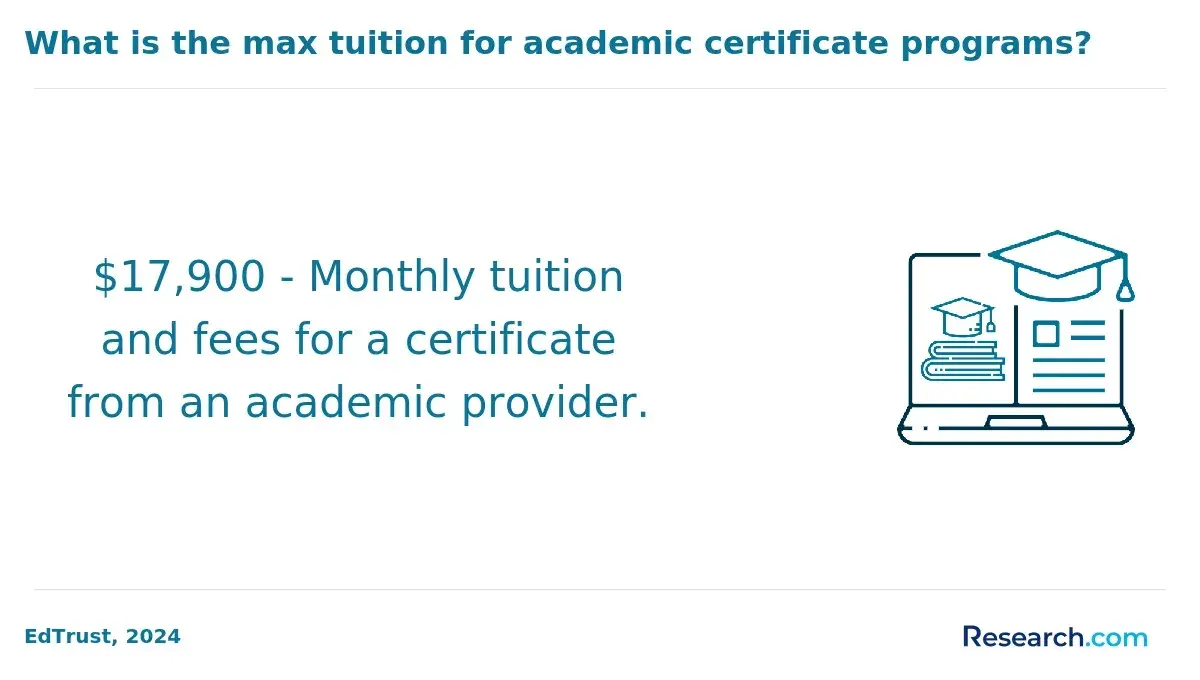
Costs for international business degree completion programs vary widely. Public regional universities typically charge between $300 and $600 per credit hour, while private nonprofit institutions range from $500 to $1,200 per credit. For-profit schools often fall within this range but may offer more flexible or accelerated scheduling formats. Students should also budget for mandatory fees ranging from $100 to $300 per term, plus technology, course materials, and possible residencies or intensives that may add roughly 10-20% to the base cost.
The most important cost figure is not the advertised tuition rate. It is the net cost to finish after transfer credits, financial aid, employer benefits, military benefits, scholarships, fees, and required materials. A program with a higher per-credit price may cost less overall if it accepts more prior credits and has fewer remaining requirements.
Common aid and cost-reduction options
- Federal financial aid: Eligible students may use federal aid after filing the FAFSA. Some part-time learners may access Pell Grants, depending on eligibility and enrollment intensity.
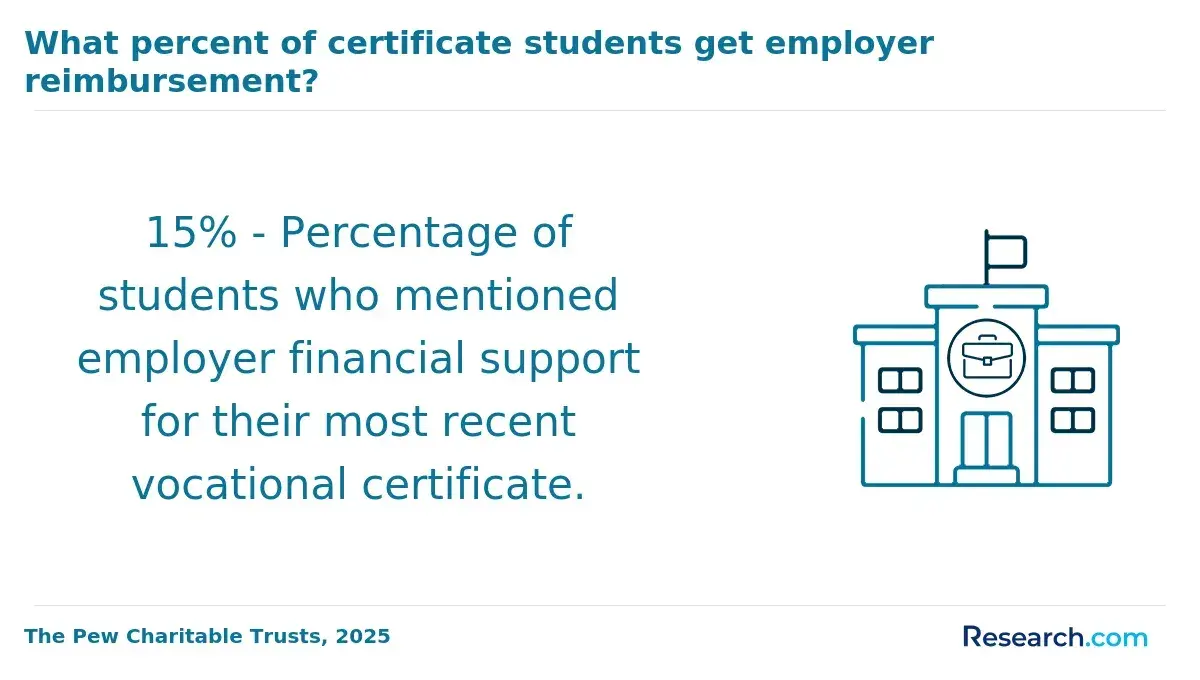
- Employer tuition reimbursement: Many working adults reduce costs through employer programs that pay part or all of tuition, often with grade, job-relatedness, or retention requirements.
- Military benefits: Military-affiliated learners may be able to use GI Bill and MyCAA benefits to help pay for approved programs.
- Institutional scholarships: Some schools offer scholarships for transfer students, adult learners, veterans, or students completing an interrupted degree.
- Tax benefits: Students paying out of pocket may be able to use the Lifetime Learning Credit or the employer-provided educational assistance exclusion under IRS Section 127. A tax professional can explain eligibility.
- Credit maximization: PLA, transfer credit, CLEP, DSST, and ACE-evaluated training can lower total cost if the credits apply to remaining degree requirements.
When comparing programs, build a side-by-side estimate that includes accepted credits, remaining credits, per-credit tuition, term fees, books, technology fees, residency costs, aid eligibility, and employer reimbursement. Students comparing business pathways may also want to review accredited online business degree programs to understand how affordability, accreditation, and delivery format interact.
Some schools also use shorter academic terms, including formats similar to 6-week online courses with certificates. These formats can help adults move quickly, but they require careful workload planning, especially for students taking more than one accelerated course at a time.
What Career Outcomes Can Working Adults Expect After Completing a International Business Degree?
Working adults who complete an international business bachelor's degree may be better positioned for roles that require a bachelor's credential, especially when they combine the degree with existing professional experience. Data from the College Scorecard and Georgetown University's Center on Education and the Workforce reveal that graduates typically earn a 15% to 25% higher median salary compared to those with some college but no degree.
The degree does not guarantee a promotion or salary increase. Outcomes depend on prior experience, industry, location, employer demand, language skills, technical skills, networking, and the relevance of the curriculum. The strongest results usually come when students connect the degree to a specific career target before enrolling.
- Promotion eligibility: A completed bachelor's degree can help employees qualify for roles that require a degree for advancement.
- Credential-gated titles: Graduates may pursue positions in international marketing, supply chain management, business analysis, global operations, trade compliance, procurement, or management where a bachelor's degree is expected.
- Salary premium: Graduates report roughly 20% higher median wages than peers without degree completion, reinforcing the value of finishing the credential.
- Career advancement: Adult learners may use the degree to support leadership roles, internal transfers, global assignments, or graduate business study.
- Strategic positioning: Students who already have work experience should market the degree as a complement to proven skills, not as a reason to start over in entry-level roles.
Before enrolling, students should compare the curriculum with job postings they want. Look for courses or electives tied to global strategy, data analysis, logistics, international finance, market entry, cross-cultural management, business law, and supply chains. If a target employer, graduate school, or regulated role has specific credential expectations, confirm that the program's accreditation and coursework will be accepted.
How Do Employers View a International Business Degree Completed Through a Completion Program?
Employers generally focus more on institutional accreditation, degree relevance, work experience, and demonstrated skills than on whether the degree was completed through a traditional or adult-completion pathway. Employer surveys from the Society for Human Resource Management (SHRM) and the National Association of Colleges and Employers (NACE) indicate that hiring managers prioritize accreditation status and program recognition over the method by which a degree was earned.
In many cases, the diploma from an accredited institution does not identify the student as a completion-program graduate. The resume can simply list the degree, institution, and graduation year. The completion format can become a positive interview point if the candidate uses it to demonstrate discipline, time management, persistence, and the ability to balance professional responsibilities with academic work.
- Accreditation matters most: Degrees from properly accredited institutions carry more credibility with employers, graduate schools, and credential evaluators.
- Diploma uniformity: Completion program graduates often receive the same degree title as students in traditional formats, preserving credential equivalence.
- Resume strategy: Candidates should emphasize the degree, relevant coursework, global business skills, work achievements, and measurable outcomes rather than the delivery format.
- Regulated or government roles: Jobs subject to federal government standards, OPM qualification rules, or state board requirements may require additional verification before enrollment.
- Private-sector hiring: Most business employers weigh experience, skills, references, accomplishments, and degree credibility more heavily than whether courses were online, hybrid, or accelerated.
The safest approach is to choose an accredited program, keep documentation of accreditation and transcripts, and align coursework with the roles you plan to pursue. If your employer has tuition reimbursement or promotion policies, ask HR in advance whether the program and institution qualify.
What Graduates Say About International Business Degree Completion Programs for Working Adults
- Shmuel: "Completing the international business degree while working full time changed what I thought was possible. The evening and weekend options gave me enough structure without forcing me to step away from my job. The credit transfer process also mattered. Several credits I had already earned counted toward the degree, which shortened the timeline and made the decision easier to justify financially."
- Shlomo: "Accreditation was the first thing I checked. I needed to know the degree would be taken seriously by my employer and by any graduate program I might consider later. Transparent tuition, financial aid guidance, and a clear schedule helped me plan around family responsibilities instead of guessing what each term would cost."
- Santiago: "The program was clear from the beginning about career outcomes and expectations. I was not looking for a generic business degree; I wanted coursework tied to global companies, international operations, and management. The accelerated structure helped me finish faster than I expected, but the most valuable part was being able to connect class projects to the work I was already doing."
Other Things You Should Know About International Business Degrees
International business degree completion programs often provide tailored support services for working adults, including academic advising, tutoring, and career counseling. Many programs also offer flexible scheduling, online access to course materials, and dedicated staff to assist with credit transfer evaluations. These services help students balance work, family, and school commitments effectively.
Yes, credits earned from accredited international business degree completion programs typically transfer toward graduate degrees if they meet the graduate institution's requirements. Students should verify course equivalencies and consult with admissions offices beforehand to ensure their credits apply. This pathway helps working adults advance their education without redundant coursework.
In 2027, international business degree completion programs for working adults often include virtual networking events, alumni associations, and industry collaborations. These opportunities facilitate professional connections, enhance career prospects, and allow students to engage with global business leaders and peers, crucial for career advancement.
Military veterans can use education benefits such as the GI Bill to enroll in international business degree completion programs that are approved by the Department of Veterans Affairs. Additionally, many institutions offer credit for military training and experience, reducing the time and cost needed to complete the degree. Veteran support offices on campus typically assist with benefit applications and academic planning.
References
- International Business Degree Online https://www.snhu.edu/online-degrees/bachelors/bs-in-business-administration/international
- What Do Employers Think of International Experience? | Go Overseas https://www.gooverseas.com/blog/what-do-employers-think-of-international-experience
- International Business Administration Major https://catalog-2025-2026.aup.edu/undergraduate-requirements/major-requirements/international-business-administration-major
- IACBS Accreditation https://iacbs.net/accreditation/
- Why Accreditation Matters for Business Schools - IBA | International Business Academy https://ibalondon.co.uk/why-accreditation-matters-for-business-schools/
- How to Balance Work & Study While Pursuing International Business | BSBI https://www.berlinsbi.com/blog/tips-for-balancing-work-and-study-while-pursuing-a-bachelors-in-international-business-and-management
- International Business https://akademiata.pl/en/offer/bachelor/international-business/
- Triple accreditation - Wikipedia https://en.wikipedia.org/wiki/Triple_accreditation
- How to Find a Job with an International Business Degree - Hunter Recruiting https://www.hirecruiting.com/newsroom/how-to-find-a-job-with-an-international-business-degree/
- International Business Bachelor’s Degree Program https://study.gov.pl/international-business-bachelors-degree-program