2027 Best Two-Year Degrees With Low GPA Options

Co-Founder and Chief Data Scientist
A low GPA can make college applications intimidating, but it does not rule out an associate degree. The important distinction is between admission to a college and admission to a particular major. Cost matters, too: College Board reports average published tuition and fees of $4,050 for in-district students at public two-year colleges in 2024-25.
That figure excludes books, transportation, and living expenses. This guide compares accessible degree fields, identifies selective-program hurdles, and shows you how to find a path that fits your grades, budget, and career goal.
Key Things You Should Know
- Business, information technology, criminal justice, and psychology are often worth investigating first because college admission may be less restrictive than entry to clinical majors; confirm the specific program's policy.
- Open admission to a college does not guarantee entry to nursing or allied health. Those programs may require prerequisite grades, a separate application, and limited-seat selection.
- Public two-year colleges averaged $4,050 in published in-district tuition and fees in 2024-25, according to College Board; compare your total cost and financial aid, not tuition alone.
Top 10 Best Two-Year Degrees With Low GPA Options
Business Programs
An associate degree in business administration can suit students seeking broad office skills or a route to a bachelor's degree. An Associate of Arts (AA) or Associate of Science (AS) may emphasize transferable coursework; an Associate of Applied Science (AAS) may emphasize accounting software, operations, or workplace projects.
College admission may be accessible with a low GPA, but placement and course prerequisites still matter. Choose a transfer pathway if a bachelor's degree is your goal; choose a career-focused curriculum if you want applied skills sooner.
Healthcare Programs
Health information technology and medical office administration are useful alternatives for students interested in healthcare but not ready for selective clinical admission. These degrees can prepare students for administrative or records-related entry-level work, depending on employer requirements.
By contrast, radiography, dental hygiene, and other clinical associate programs commonly have separate prerequisites, competitive selection, and in-person training. Ask whether your GPA is assessed for college admission, program admission, or both before choosing a major.
Information Technology Programs
Information technology and computer support associate degrees emphasize troubleshooting, networks, operating systems, and security fundamentals. They may be a practical choice when a low GPA limits entry to a selective major, although individual programs can still set prerequisites.
Compare an AS if you plan to transfer with an AAS focused on technical practice. An associate degree can support applications for entry-level support roles; employers may also value demonstrated skills, experience, or industry certifications.
Nursing / Pre-Nursing Programs
Pre-nursing coursework can offer a way to rebuild an academic record, but admission to the college or pre-nursing track is not admission to an associate degree in nursing (ADN) program. ADN entry may depend on science grades, prerequisite completion, an entrance exam, and available seats.
Before enrolling, ask which grades count in selection and whether courses also apply to another degree if admission is delayed. Graduates must meet state requirements and pass the licensing examination to practice as registered nurses.
Criminal Justice Programs
A criminal justice AA or AS can provide a transfer foundation, while an AAS may focus on applied public-safety topics. For a student with a low GPA, it can be more accessible than a selective clinical program, but verify the college's policy.
The degree does not itself confer police authority or guarantee entry to an agency: hiring may involve an academy, background investigation, fitness standards, and state-specific training. Check local employer requirements before selecting a concentration.
Psychology / Counseling Programs
An associate degree in psychology is usually best viewed as a transfer pathway, not a qualification to practice as a counselor or psychologist. It can help students with low GPAs establish a stronger college record through introductory psychology, research, and general education courses.
Some graduates pursue entry-level human-services support work, subject to employer requirements. If counseling is your goal, map the associate courses to a bachelor's program and investigate the graduate education and licensure your intended role requires.
What Two-Year Degrees Accept Students With a Low GPA?
Which two-year degrees accept students with a low GPA? Start with majors that do not require a separate competitive application, then check the rules at each college. "Low GPA" has no universal cutoff: a school may admit an applicant while requiring placement support or limiting entry to certain courses.
This comparison separates a potentially accessible starting point from later barriers. It describes common program structures, not verified admission policies at every college.
| Degree field | Potential fit for a low-GPA applicant | Requirement to verify |
| Business | Often a broad starting point for transfer or office-focused study | Accounting or math prerequisites |
| Information technology | Applied coursework may offer a route into technical skills | Math prerequisites and required lab access |
| Criminal justice | May offer transfer or workforce-oriented options | Requirements of the intended employer or academy |
| Psychology | Can support a later transfer application | Whether courses apply to the intended bachelor's major |
| Healthcare administration or health information | May avoid clinical-program selection | Program-specific entry rules and employer credentials |
| Nursing or clinical allied health | Possible after prerequisite coursework and grade improvement | Separate selection criteria and clinical eligibility |
The best choice is the one whose entry requirements and end goal both fit. An easier-to-enter degree is a poor substitute if it does not lead toward the work you want.
What Are the Admission Requirements for Low-GPA Two-Year Programs?
What are the admission requirements for low-GPA two-year programs? Requirements vary by institution and major. A community college may admit applicants who have a high school diploma or equivalent without using GPA to rank them, yet still assess readiness for math and English. A selective major may review college prerequisite grades, tests, background checks, or other criteria.
Use these checks to distinguish a genuine entry route from a program you cannot yet enter:
- Find the published requirements for both college admission and admission to your intended major.
- Ask whether the school evaluates high school GPA, previous college GPA, prerequisite GPA, or a combination.
- Request a review of previous college credits, including which grades count and whether repeated courses replace earlier grades.
- If you fall short, ask which transferable courses can raise your eligibility and when you may reapply.
Do not assume that a missing GPA cutoff on a program webpage proves there is no GPA requirement. Get the current policy from admissions or the department before paying an application fee.
Are Online Two-Year Degrees Available for Students With Low GPAs?
Are online two-year degrees available for students with low GPAs? Yes, particularly in fields such as business, IT, criminal justice, and psychology, but online delivery does not change a college's admission rules.
Check whether the entire degree is available online and whether classes require live meetings, proctored exams, or scheduled labs. Nursing and other clinical programs generally require in-person skills training or placements even when some lectures are online.
For students balancing work with coursework, an asynchronous schedule may help more than a program simply labeled "online." Some competency-based online colleges offer a different pace, but compare their admissions, transfer-credit rules, aid eligibility, and degree requirements before choosing that format.
How Long Do Two-Year Degrees Take, and What Do They Cost?
How long do two-year degrees take, and what do they cost? Many associate degrees require roughly 60 semester credits, but "two-year" generally assumes a full-time schedule and timely access to required courses. Part-time enrollment, prerequisites, repeated courses, and clinical sequencing can extend completion. Accepted transfer credits may shorten it.
College Board's $4,050 average for 2024-25 public two-year in-district tuition and fees is a starting benchmark, not a total degree price. Compare residency-based tuition, mandatory fees, books, equipment, commuting, and lost work hours.
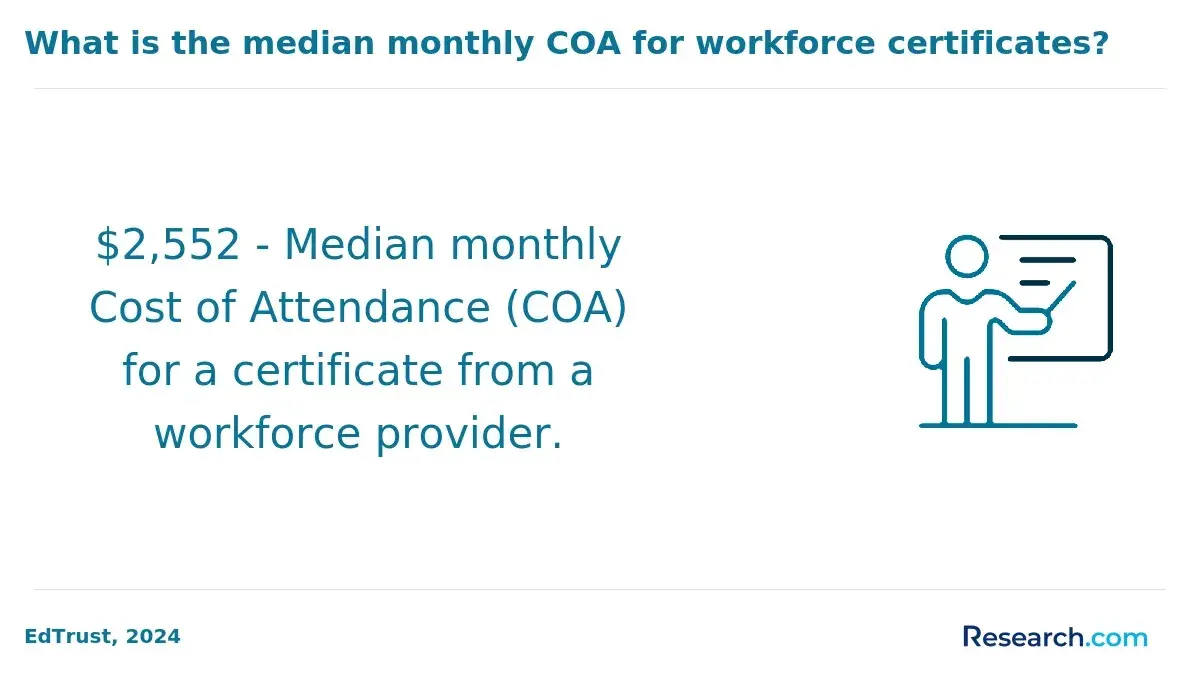
Ask each school for an estimate based on your remaining courses, then complete the FAFSA and compare aid offers. If a shorter credential would meet your goal, investigate FAFSA-approved online certificate programs and verify aid eligibility for the specific program.
What Coursework Do Low-GPA Two-Year Degree Programs Include?
What coursework do low-GPA two-year degree programs include? Students generally complete general education alongside major courses; a low-GPA entry route does not mean reduced academic requirements.
Business students may study accounting and communication, IT students may complete networking labs, and psychology students may take introductory statistics. Clinical degrees add science prerequisites, supervised practice, and skills assessments.
Review the course sequence before enrolling. A prerequisite offered only at certain times can delay graduation, while an AA or AS intended for transfer may require different general education courses from an AAS intended primarily for workforce preparation. If you need to strengthen your record, prioritize the prerequisites your target major actually evaluates.
Which Two-Year Degrees Lead to Strong Salaries and Job Outlooks?
Which two-year degrees lead to strong salaries and job outlooks? Some clinical associate pathways connect to well-paid occupations, but they are often the least accessible to applicants with weak prerequisite grades.
The U.S. Bureau of Labor Statistics reports a 2024 median annual wage of $93,600 for registered nurses and projects 5% employment growth from 2024 to 2034. Those are occupation-wide figures, not expected earnings or job-placement results for ADN graduates; RN practice also requires licensure.
For a realistic return-on-investment comparison, weigh your likelihood of entering and finishing a program against its total cost and the qualifications employers require.
Business, IT, and psychology can offer more accessible starting points, but outcomes vary substantially by role and further education. If your goal requires a bachelor's degree, compare transfer plans and best bachelors degrees rather than assuming the associate degree is the final credential.
What Careers Can You Start With a Two-Year Degree?
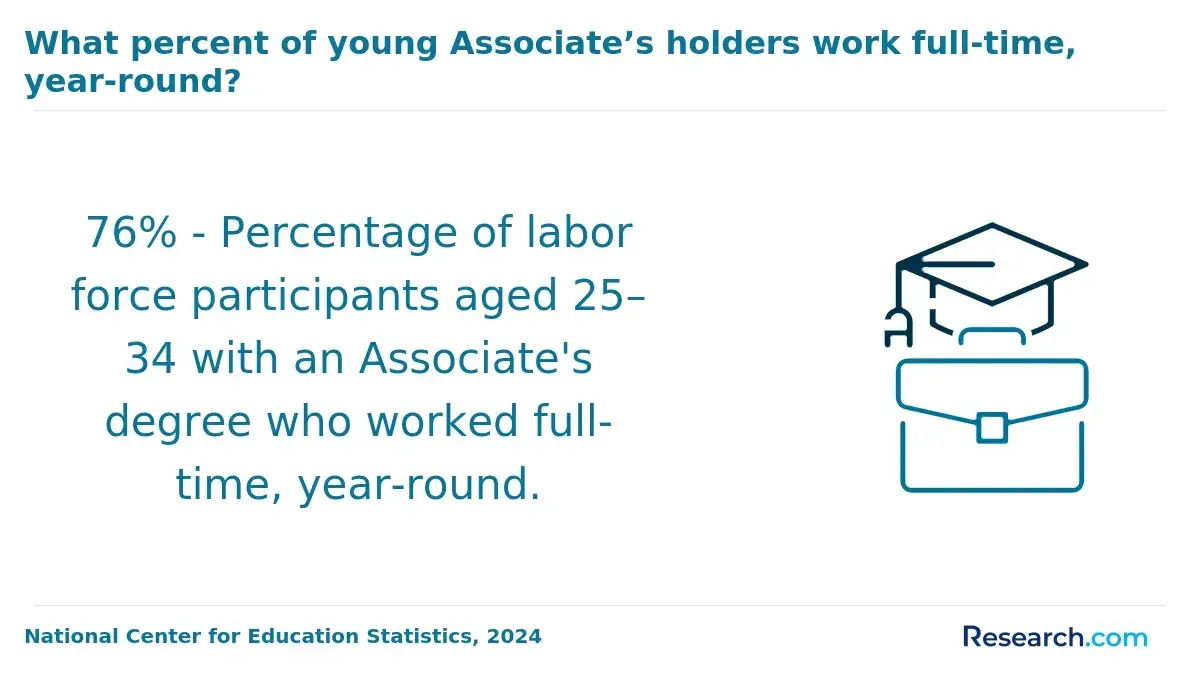
What careers can you start with a two-year degree? Depending on the curriculum and local hiring standards, graduates may pursue administrative assistant, IT support, medical records, or human-services support roles.
An AAS with relevant technical practice may be useful for immediate job applications; an AA or AS may be more valuable when the intended occupation calls for further study.
Work backward from actual job postings in your area. Note required software, credentials, experience, and work schedules, then compare them with the program's courses and internship opportunities. A degree can make you eligible to apply without ensuring an offer. If postings consistently require a bachelor's degree, treat the associate program as the first step of a transfer plan.
Which Two-Year Programs Require Licensure or Professional Certification?
Which two-year programs require licensure or professional certification? Nursing and many clinical allied-health paths have requirements beyond earning an associate degree. Others may involve optional credentials or employer-specific qualifications. The distinction matters because admission to a college does not establish eligibility for a license.
This overview shows the type of follow-up to investigate; requirements vary by state and occupation:
| Path | Requirement beyond the degree to investigate |
| Registered nursing | State licensure, including the required licensing examination |
| Radiography or dental hygiene | Applicable state licensing rules and examinations |
| Health information or IT support | Whether employers expect a particular professional or industry certification |
| Law enforcement | Agency hiring standards and required academy training |
Before applying to a regulated program, confirm that its curriculum and required in-person experiences satisfy the rules where you intend to work.
How Can You Choose an Accredited Two-Year Program?
How can you choose an accredited two-year program? Verify institutional accreditation through the accreditor or the U.S. Department of Education, then check whether your intended occupation calls for specific programmatic approval or accreditation.
For nursing and allied health, confirm that the program meets relevant state licensing requirements. Accreditation alone does not guarantee admission, transfer, licensure, or employment.
Ask the school for its current major-admission criteria, a written review of your transferable credits, a full cost estimate, and the degree plan for your goal. Confirm that accepted credits will apply to the intended bachelor's major, not merely appear on a transcript.
Military-affiliated students comparing an online military college should also ask how military training is evaluated for credit and how benefits apply to the specific program.
Other Things You Should Know About
Often, yes. Check each college's admission policy and any separate requirements for your major. Previous college grades may matter more than high school grades for some applicants.
No. Nursing programs may require prerequisite grades, an entrance exam, and a separate competitive application even when the college admits you.
Choose based on the curriculum and your goal, not the abbreviation alone. AA and AS degrees are often transfer-oriented; AAS degrees often emphasize workforce preparation. Confirm transfer agreements and required courses.
It may, especially if a program evaluates prerequisite grades. Ask how the school counts repeated courses and whether the improvement will meet its next application deadline.
References
- Occupation Finder - Bureau of Labor Statistics https://www.bls.gov/ooh/occupation-finder.htm
- Fast Facts: Tuition costs of colleges and universities (76) | ed.gov https://nces.ed.gov/fastfacts/display.asp
- School-Determined Requirements | 2024-2025 Federal Student Aid Handbook https://fsapartners.ed.gov/knowledge-center/fsa-handbook/2024-2025/vol1/ch1-school-determined-requirements
- Admission - St. Louis Community College. https://catalog.stlcc.edu/general-information/admission/
- Complying with Professional Licensure Requirements: A Beginner's Checklist | wiche.edu https://wcetsan.wiche.edu/resources/complying-professional-licensure-requirements-beginners-checklist
- Nursing Intake Process | Community College of Philadelphia https://www.ccp.edu/degree-programs/nursing/nursing-intake-process
- Admission Information | Northern Virginia Community College Academic Catalog https://catalog.nvcc.edu/admission-information/
- Prerequisites & Requirements - Rogue Community College https://www.roguecc.edu/degrees-and-programs/degrees-and-certificates/health-professions-public-safety-pathway/lpn-to-adn-advanced-placement-bridge/prerequisites-and-requirements.php
- Placement Test Exemptions - BCC https://bladencc.edu/testing/placement-test-exemptions/