2027 Most Affordable Associate Degrees for Students Who Need Transfer Credit

Co-Founder and Chief Data Scientist
The cheapest associate degree is not a bargain if its credits do not count toward your bachelor's degree. That decision matters when tuition is already a substantial expense: the College Board reported average published tuition and fees of $4,050 for in-district students at public two-year colleges in 2024-25. Students bringing previous college credit must also find out how much coursework remains. This guide compares six degree fields, explains the costs that can change the answer, and shows you how to confirm a transfer pathway before enrolling.
Key Things You Should Know
- A local public college's transfer-focused AA or AS is often a strong low-cost starting point, but compare the cost of remaining credits and fees - not tuition alone.
- Ask the intended bachelor's institution to confirm which courses satisfy major requirements; accepted credits may otherwise count only as electives.
- The College Board's 2024-25 public two-year average was $4,050 in published annual in-district tuition and fees, not an estimate of your total degree cost or financial-aid-adjusted price.
Top 10 Most Affordable Associate Degrees for Students Who Need Transfer Credit
Business Programs
A transfer-focused business AA or AS can cover accounting, economics, statistics, and general education before a bachelor's degree in business. It may be inexpensive at a public community college, especially if previous courses satisfy requirements. Check the destination university's business-school prerequisites: a course accepted by the university may not fulfill its major. An AAS in business may offer more job-oriented classes but fewer applicable bachelor's credits. Choose the pathway that minimizes the cost of credits you will need to retake.
Healthcare Programs
A health sciences AS can provide transferable biology, chemistry, and general education for a bachelor's program. By contrast, some healthcare AAS degrees prioritize immediate occupational training; their specialized courses may transfer as electives rather than satisfy a new major. Laboratory and clinical requirements can also raise costs and limit online options. Before enrolling, compare prerequisite lists at your intended destination and check whether a regulated occupation requires separate program accreditation, examination, or licensure.
Information Technology Programs
An IT or computer science AS can be affordable when its mathematics, programming, and general education courses match a bachelor's curriculum. Check the destination program's required programming languages, calculus sequence, and course equivalencies; similarly named classes are not necessarily interchangeable. An IT AAS may better suit students seeking applied skills sooner, but its credits may fulfill fewer bachelor's requirements. Budget for any required software, equipment, or certification exams rather than comparing tuition alone.
Nursing / Pre-Nursing Programs
Pre-nursing AS coursework may transfer into a bachelor of science in nursing pathway, but completing prerequisites does not guarantee admission to a selective nursing program. An associate degree in nursing is a different, clinical pathway that may prepare eligible graduates to seek RN licensure after meeting state requirements and passing the licensing examination. Compare both routes using clinical-placement rules, program accreditation where applicable, fees, and a receiving school's RN-to-BSN or pre-licensure transfer policy. Nursing credits do not automatically substitute for one another.
Criminal Justice Programs
A criminal justice AA or AS can be a lower-cost first step toward a bachelor's degree when its general education and introductory major courses have clear equivalents. An AAS may emphasize workplace preparation instead, so check how its credits apply before choosing it for transfer. Public-safety jobs have employer- and jurisdiction-specific hiring standards; the degree alone does not establish eligibility. Compare course requirements with both your destination college and the career you want.
Psychology / Counseling Programs
A psychology AA or AS commonly offers transferable general education, introductory psychology, research, and statistics. Confirm which statistics and laboratory-science courses the intended bachelor's program requires. This path can be economical for students planning further study, but an associate degree alone does not qualify someone to practice as a licensed psychologist or professional counselor. If your goal is a licensed role, compare the full education and supervised-training pathway - not just the associate degree's price.
What Are the Most Affordable Associate Degrees That Transfer Easily?
The most affordable option is usually the transfer-focused degree that leaves you with the fewest paid-for credits that do not advance your intended bachelor's major. A public community college AA or AS with an established agreement to your destination is often a sensible place to start. No field is universally cheapest: laboratory charges, clinical expenses, residency tuition, and the number of previous credits accepted can change the result.
The comparison below shows which degree orientation is generally worth investigating first. It is not a ranking of schools or a promise that credits will transfer.
| Degree path | Often a good fit when | Main cost or transfer risk |
| AA in business, psychology, or criminal justice | You have a matching bachelor's major and can complete shared general education | Major prerequisites may differ by destination |
| AS in IT, health sciences, or pre-nursing | You can follow the destination's required math and science sequence | Labs, course sequencing, and selective admission can add cost or time |
| Career-focused AAS | Workforce preparation is the immediate priority | Applied credits may transfer only as electives |
If you already have college credit, request evaluations from both schools. The sending college must determine what completes the associate degree; the receiving college must determine what advances the bachelor's degree.
How Can You Verify Accreditation and Transfer Credit Policies?
Institutional accreditation helps establish a college's standing, but it does not guarantee course-by-course transfer. Check the institution's current accreditation status through the accreditor or U.S. Department of Education, then obtain the receiving college's written transfer and degree-applicability policies. For nursing and other regulated fields, check relevant program accreditation and state licensing rules separately.
A reliable transfer check follows this sequence:
- Choose a likely bachelor's major and destination institution before selecting associate courses.
- Request an official evaluation of your existing credits, including any grade, course-age, or residency restrictions.
- Match proposed courses against the destination's current equivalency guide, major requirements, and any articulation agreement.
- Ask an advisor to identify credits that count only as electives and obtain an updated degree plan if you change majors.
A common mistake is relying on a general promise that a college "accepts transfer credits." What matters is whether the credits satisfy requirements in your degree plan.
How Much Do Affordable Associate Degrees Cost Online and On Campus?
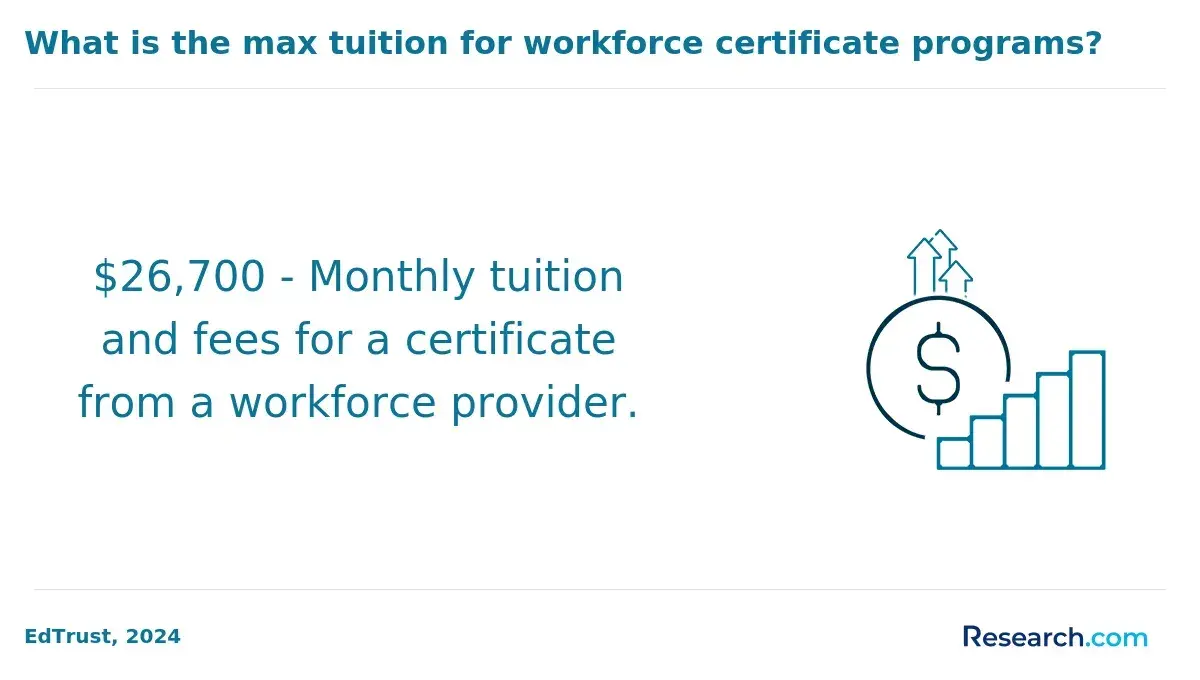
Online study can reduce commuting expenses, but it is not necessarily cheaper than a local campus program. Compare tuition by residency and delivery mode, mandatory online and campus fees, required materials, and the credits left after evaluation. The College Board's $4,050 public two-year average for 2024-25 covers published annual in-district tuition and fees; it is neither a national price for every online program nor an estimate of your net cost after aid.
These cost categories explain why the lowest advertised tuition may not produce the lowest completion cost.
| Cost factor | What can change the comparison |
| Tuition and mandatory fees | In-district, out-of-district, out-of-state, and online rates may differ |
| Remaining coursework | Rejected credits or credits counted only as electives can increase paid enrollment |
| Program requirements | Labs, clinical placements, software, exams, and travel may add expenses |
| Financial aid | Grants and scholarships can change net price; eligibility depends on the student and program |
Ask each college for a cost estimate based on your evaluated credits, intended enrollment pace, and residency status. Complete the FAFSA to explore federal aid if eligible, and compare grants and scholarships before borrowing.
What Admission Requirements Apply to Transfer-Focused Associate Degree Programs?
Many community colleges admit students to the institution with a high school diploma, GED, or equivalent, but admission does not settle placement, prerequisite, or major-entry requirements. A previous college student should expect to provide official transcripts for a credit evaluation. Schools may impose minimum grades for transfer courses, and an accepted course may still fail to meet a specific major prerequisite.
Nursing and some allied-health programs often have separate, selective admission involving prerequisite sciences, grades, deadlines, and other published criteria. Before paying an application or enrollment fee, distinguish admission to the college from admission to the program you need. Ask whether an evaluation can be completed early enough to inform your course registration.
Which Courses Should Students Take to Maximize Transfer Credits?
Start with courses required by the intended bachelor's program, not a generic list of "transferable" classes. General education in writing, mathematics, laboratory science, and social science is often useful, but the correct version and sequence depend on the major. Business students may need particular economics and accounting courses; IT students may need a defined calculus or programming sequence; pre-nursing students should follow the receiving program's science requirements.
Build each term's schedule from the destination's current degree plan and articulation agreement. Have an advisor confirm course equivalencies in writing, especially for classes you previously completed. Avoid filling gaps with electives merely to reach the associate degree's credit requirement if those electives will not advance the bachelor's degree.
How Long Does It Take to Complete an Affordable Associate Degree?
Associate degrees commonly require about 60 semester credits, but credits alone do not determine completion time. A full-time student starting without prior credit may finish in roughly two years; part-time enrollment, prerequisite sequences, limited course offerings, or clinical requirements can extend that timeline. Accepted previous coursework may shorten it, subject to minimum residency credits and remaining major requirements.
Be cautious with accelerated associate's degree online options. A short advertised timeline may assume substantial transferable credit, and a short course term is not the same as completing an entire degree in one term. Ask for a personalized plan showing accepted credits, courses remaining, when each is offered, and the resulting total cost.
Which Careers Can Students Pursue After Earning These Associate Degrees?
These fields can support different next steps, but transfer-focused degrees are generally designed as a foundation for further study, not a guarantee of employment. Business coursework may support entry-level office roles; IT coursework can support applications for help-desk work; and criminal justice coursework may be relevant to some public-safety or administrative roles. Employers set their own experience and hiring requirements.
For students who want a shorter route into a specific skill area, compare the cost and employer relevance of certificates I can get online against an associate degree. A certificate may suit a near-term IT or business skill goal, while a transfer-focused associate degree usually makes more sense when a bachelor's degree is the planned destination. Healthcare and nursing roles require particular attention to clinical training and state-specific credentials.
What Salaries and Job Outlook Can Graduates Expect?
Salary figures describe occupations, not what a new associate degree graduate will earn. For example, the U.S. Bureau of Labor Statistics reported a May 2024 median annual wage of $93,600 for registered nurses. That figure covers nurses across education and experience levels; completing an associate nursing program does not itself confer RN licensure or that wage. Use occupational data only after confirming that the program leads toward the role's actual entry requirements.
Outlook also varies within a field: a psychology transfer pathway, for instance, should not be evaluated as though it directly qualifies someone for licensed practice. Students considering that long-term goal may encounter online doctoral programs without dissertation, but a program's dissertation format does not establish eligibility for psychologist licensure. Check state rules, required clinical training, and the precise credential before using an occupation's wages or growth projections to judge return on investment.
How Should Students Compare Online Associate Degree Programs?
Compare online programs against the same transfer and total-cost criteria you would use on campus. Confirm whether required courses are available online every term, whether sessions are scheduled or asynchronous, and whether labs, clinical work, exams, or orientation require in-person attendance. "Online" does not mean entirely remote or self-paced.
Then compare each college's accreditation, written credit evaluation, residency-credit requirement, destination-school agreements, mandatory fees, and advising access. If you are choosing a bachelor's destination as well, a guide to best online degrees can help frame the broader comparison - but confirm that the specific bachelor's institution and major will apply your associate credits. The strongest choice is the program you can complete affordably and use toward your next degree.
Other Things You Should Know About
An AA or AS is often designed for transfer, while an AAS often emphasizes employment. The destination college's course-by-course evaluation matters more than the abbreviation.
Not necessarily. The college may accept a course but apply it only as an elective, or exclude it under grade, age, or residency rules. Request an official evaluation.
Not always. Compare residency-based tuition, mandatory fees, remaining credits, materials, and any travel or in-person requirements after financial aid.
Usually you can apply, but admission and application of credits are separate decisions. Confirm the destination's major requirements and transfer agreement before completing the associate program.
References
- .14 Evaluation and Review Process for Transfer of Courses and Credits. | Library of Maryland Regulations https://regs.maryland.gov/us/md/exec/comar/13B.06.02.14
- Estimate your college cost | USAGov https://www.usa.gov/estimate-college-cost
- College Affordability and Transparency Center | ed.gov http://collegecost.ed.gov/
- Transfer Students - College Catalog - The University of Chicago http://collegecatalog.uchicago.edu/thecollege/transfercredit/transferstudents/
- Advanced Placement (AP) | Clovis Community College https://www.cloviscollege.edu/student-services/academic-counseling/credit-for-prior-learning.html
- Degree Audit and Transfer Credit - Registration and Records https://registrar.ncsu.edu/operations/degree-audit-and-transfer-credit/
- How Do Transfer Credits Work? A Guide for Adult Learners | Whitworth Online https://online.whitworth.edu/news-articles/how-do-transfer-credits-work-when-you-go-back-to-school/
- Transfer Equivalencies - UK Admissions https://admission.uky.edu/transfer/equivalencies
- Transfer - Moraine Valley Community College https://www.morainevalley.edu/academics/transfer-programs/
- Transferring credit | Transfer to Wayne State University https://wayne.edu/transfer/community-college/credit