
2027 Best Associate Degree Completion Programs

Co-Founder and Chief Data Scientist
Have college credits but no degree? The best associate degree completion program is the one that applies those credits to requirements you still need - not merely one that accepts them. Cost matters, too: the College Board reported average published tuition and fees of $4,050 at public two-year colleges for 2024-25, before books and other expenses. For returning students, accepted credits can change both the bill and the finish date. This guide compares six fields and shows you how to check transfer evaluations, remaining coursework, online requirements, and career fit before enrolling.
Key Things You Should Know
- Choose by credits that satisfy degree requirements, not the number a college accepts; also check required credits at the awarding institution.
- Business, IT, criminal justice, and psychology offer different transfer and career pathways; healthcare and nursing may add selective admission, labs, clinical work, or licensure requirements.
- Public two-year colleges averaged $4,050 in published tuition and fees for 2024-25, but your total completion cost depends on remaining credits, residency rates, fees, and aid.
Top 10 Best Associate Degree Completion Programs
Business Programs
Returning students seeking broad workplace skills or a business bachelor's pathway. An AA or AS may emphasize transferable accounting, economics, and general education; an AAS may emphasize applied office or management skills. Ask whether previous business courses meet current major requirements, not just electives.
Compare accounting and spreadsheet coursework with the roles you want: an associate degree may support entry-level administrative or bookkeeping work, but management roles commonly require experience.
If a bachelor's degree is the goal, check the receiving university's course-by-course requirements before choosing an applied track.
Healthcare Programs
Students whose earlier science and general education credits match a specific health program. Health information pathways may offer more online coursework, while laboratory and patient-care programs typically require in-person practice. A broad healthcare studies degree is not interchangeable with training for a licensed occupation.
Check science-course age limits, minimum grades, selective admission, clinical placements, and any required programmatic accreditation. Compare the exact credential with your target occupation: a general transfer-focused AS may suit future study, while a specialized AAS may prepare students for a defined workforce pathway.
Information Technology Programs
Students with applicable computing credits who want technical support preparation or a route to further study. Compare networking, cybersecurity, programming, and general IT curricula against your intended job; the labels alone reveal little about hands-on practice.
Some schools restrict how older technical courses apply because tools and standards change. An AAS may prioritize job-ready labs, while an AS may leave more room for transferable math and general education. Certifications can complement coursework, but neither a degree nor a certification guarantees an IT position.
Nursing / Pre-Nursing Programs
Students who distinguish an associate degree in nursing (ADN) from a pre-nursing transfer track. An ADN typically includes supervised clinical education and can provide a route to registered nurse licensure after meeting state requirements and passing the NCLEX-RN.
Pre-nursing coursework alone does not qualify someone for that license. Nursing admission may be selective even at an open-admission college. Before counting on a quick finish, verify prerequisite grades and age limits, program approval, clinical schedules, accreditation where relevant, and which prior credits actually satisfy the nursing curriculum.
Criminal Justice Programs
Students interested in public safety, corrections, or transferring into a related bachelor's program. An AA or AS may prioritize general education and transfer; an AAS may emphasize applied criminal justice coursework. Neither degree automatically confers police certification or meets an agency's hiring standards.
Ask whether the program includes an internship, whether it can be completed online, and whether the coursework meets your intended university's requirements. For a specific public-safety job, compare employer and state training rules before paying for courses that may not advance your eligibility.
Psychology / Counseling Programs
Students planning to transfer into psychology, social work, or another behavioral-health field. An AA or AS can complete foundational courses and general education, but an associate degree alone does not qualify someone to practice as a licensed counselor or psychologist.
Some human-services AAS programs instead emphasize entry-level support work and may include a practicum. If graduate study is the eventual goal, prioritize transfer agreements and required statistics or science courses; if immediate employment matters more, ask employers which support roles accept the credential.
What Are Associate Degree Completion Programs?
An associate degree completion program is a pathway for someone who has already earned college credit but has not finished an associate degree. It applies eligible previous coursework toward a college's current degree requirements.
Many associate degrees require roughly 60 semester credits, but the number still needed depends on the curriculum, the transfer evaluation, and credits the awarding college requires students to earn there.
"Completion" is not a uniform program format: some colleges offer a designated returning-student track, while others admit students into a standard degree and evaluate their credits individually.
Degree labels provide a starting point, not a guarantee about transfer or employment. This comparison shows which question matters most for each common credential.
| Credential | Common emphasis | Key completion question |
| AA | General education and transfer | Will the remaining courses meet the intended bachelor's program requirements? |
| AS | Transfer-focused study, often with math or science | Do prior prerequisites satisfy the current major sequence? |
| AAS | Applied, career-focused study | Do previous technical credits meet current skills requirements, and will credits transfer if needed? |
Who Qualifies for an Associate Degree Completion Program?
Eligibility varies by college. Applicants generally need to submit transcripts from every previous institution and meet the college's admission rules.
A designated completion pathway may require a minimum number of previously earned credits; another college may accept returning students at any stage but require more coursework before graduation. Admission to the college is not necessarily admission to a selective nursing or allied-health major.
Before applying, ask whether the college can provide a preliminary transfer evaluation, what grades it accepts, and whether old science or technical courses expire for major credit. If application costs are a concern, no application fee online colleges may be worth comparing, but a waived fee does not make a program the least expensive to complete.
How Do You Choose an Accredited Associate Degree Completion Program?
Start with institutional accreditation recognized by the U.S. Department of Education. Then assess the program against your goal: a future university's transfer requirements for an AA or AS, or employer and licensing requirements for a career-focused AAS.
Nursing and some allied-health fields may also require state approval or relevant programmatic accreditation. Accreditation supports legitimacy; it does not mean every credit will transfer or every graduate will qualify for a license.
A useful comparison requires more than a college ranking. Request the following information from each school and compare the answers for your own transcript.
- Obtain a written evaluation showing which prior courses satisfy general education, major, prerequisite, and elective requirements.
- Confirm the minimum credits you must earn at that college and which required courses are offered in your preferred format and term.
- Ask for an estimate of remaining tuition, mandatory fees, books, and any lab, clinical, or exam expenses.
- Check the transfer agreement or occupational eligibility rules that apply to your next step.
A red flag is a promised finish date or credit total offered before the school reviews your transcripts and remaining requirements.
Which Credits Transfer Into an Associate Degree Completion Program?
Colleges commonly review previous coursework from accredited institutions, but accepted credit and credit that fulfills a requirement are different. An older anatomy course might count as an elective but not meet a nursing prerequisite.
A transferable business class might likewise fail to satisfy a particular major requirement. Minimum grades, course equivalencies, subject limits, and credit caps vary by school.
Some colleges also assess military training, examinations, industry credentials, or documented prior learning. Work experience does not automatically become college credit; ask how it is evaluated, what it costs to assess, and whether awarded credits count toward the major or only electives.
Finally, confirm the college's residency requirement - the credits you must complete through the institution awarding the degree - and, if you plan to transfer again, how the destination university will apply each course.
Are Online Associate Degree Completion Programs Legitimate?
Yes, an online completion program can lead to a legitimate associate degree when it is offered by an appropriately accredited college and meets the requirements of the field.
Online does not necessarily mean self-paced or entirely remote: courses may have live meetings, fixed deadlines, proctored assessments, campus labs, or local clinical placements. Ask for the requirements of the specific major, not just the college's general online-learning description.
If returning to school feels intimidating, a list of the easiest online degree options can suggest fields to investigate, but perceived difficulty should not outweigh credit fit, academic requirements, or your career goal. A convenient format that leaves many prior credits unused may take longer than a less flexible alternative.
How Long Do Associate Degree Completion Programs Take?
There is no reliable finish date without a transcript evaluation and course plan. A student with most general education completed may still need a sequence of major courses offered only in certain terms; another student may be able to enroll immediately in the few remaining requirements.
Part-time enrollment, prerequisite order, clinical scheduling, and the college's residency-credit rule all affect the timeline. Short course terms describe individual classes, not the time needed to earn the entire degree.
Build a term-by-term plan with an advisor before relying on an advertised completion time. For students coordinating study with caregiving, resources on online courses for stay at home moms may help frame scheduling questions, but confirm whether your chosen degree actually permits part-time study and whether its required courses run when you can take them.
How Much Do Associate Degree Completion Programs Cost?
The relevant price is the cost of your remaining degree requirements, not tuition for a standard two-year schedule. The College Board's 2024-25 public two-year average of $4,050 in published annual tuition and fees is a useful national reference, not a quote for an individual completion pathway.
Residency status, remaining credits, mandatory fees, books, transportation, and clinical or technology expenses can materially change the total.
Ask each college for an itemized estimate after it evaluates your transcripts. Compare that amount with your expected grants, scholarships, employer tuition assistance, and other aid; eligible students can submit the FAFSA to assess federal aid options.
A school with higher per-credit tuition may cost less overall if more prior coursework meets degree requirements. If upfront costs matter, compare no application fee online colleges only if you have not already ruled them out on transfer fit and total cost.
What Careers Can Associate Degree Completion Graduates Pursue?
Career options depend on the specific degree, skills, and employer requirements. Business and criminal justice graduates may explore administrative, customer-service, or public-safety support roles; IT students may pursue technical support; human-services graduates may seek entry-level support work.
Specialized healthcare and nursing pathways can lead toward regulated occupations, but may require clinical training, examinations, certification, or state licensure. Psychology or pre-nursing transfer degrees are often steps toward further education rather than stand-alone professional credentials.
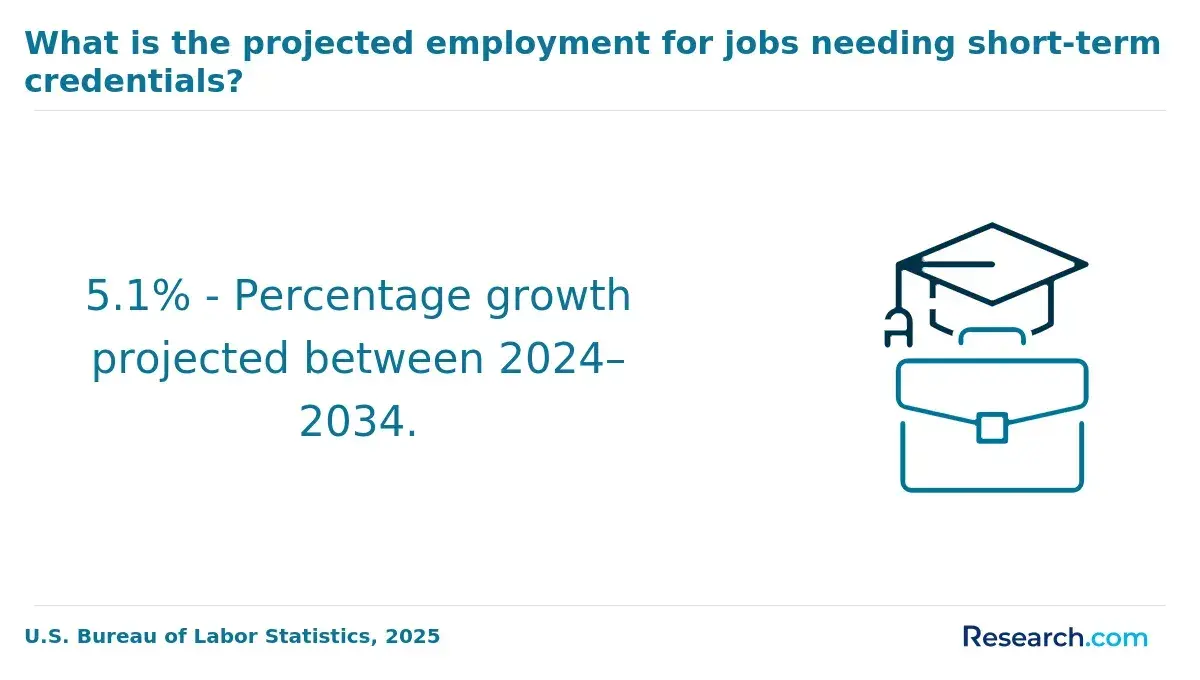
Compare current job postings with the curriculum before enrolling. If postings consistently ask for a particular certification or technical skill rather than a degree, online courses with certificates may be an alternative or supplement. Check whether employers recognize the credential; a short course is not a substitute for required licensure or clinical education.
What Salaries and Job Outlook Can Graduates Expect?
Occupational wages describe people working in a job - not the expected earnings of everyone who completes an associate degree. For example, the U.S. Bureau of Labor Statistics reported a May 2024 median annual wage of $93,600 for registered nurses.
That figure includes nurses with varied education and experience; an ADN graduate must also meet state licensure requirements and pass the licensing examination before practicing as an RN.
Use BLS wage and employment projections for the specific occupation you want, then check local job postings for credential requirements. Business, IT, healthcare, and public-service degrees lead to different roles with different pay and hiring conditions.
A practical return-on-investment comparison weighs your remaining program cost and time against realistic entry-level opportunities - not an occupation-wide median or an assumed promotion.
Other Things You Should Know About
Usually, yes, if the new college admits you and accepts applicable credits. Request a transfer evaluation to see what fulfills its degree requirements and how many credits you must earn there.
General education credits may remain usable, while schools may set recency rules for science, nursing prerequisites, or fast-changing technical subjects. The receiving college decides how each course applies.
Some programs can be completed online, but labs, clinical work, proctored activities, or live sessions may be required. Confirm the delivery requirements for every course you still need.
It can be if the remaining associate coursework also advances your intended bachelor's program. Compare an articulation agreement and course-by-course transfer plan with the option of transferring directly; finishing an associate degree first is not always the shorter route.
References
- Credit for Prior Learning - Transfer Credit Ohio https://transfercredit.ohio.gov/students/student-programs/Prior-Learning-Assessments
- School-Determined Requirements | 2024-2025 Federal Student Aid Handbook https://fsapartners.ed.gov/knowledge-center/fsa-handbook/2024-2025/vol1/ch1-school-determined-requirements
- DAPIP | Homepage - Office of Postsecondary Education (OPE) https://ope.ed.gov/dapip/
- Tuition and College Costs | WSAC https://wsac.wa.gov/tuition-and-college-costs
- Schedule Types and Instructional Methods | umdearborn.edu https://umdearborn.edu/office-registrar/schedule-types-and-instructional-methods
- Enrollment Procedures for College Credit Programs | Florida State College at Jacksonville Catalog https://catalog.fscj.edu/student-services/enrollment/college-credit-programs
- Class Formats | Ivy Tech Community College https://www.ivytech.edu/classes/class-formats/
- How the College Credit Transfer Process Works and How it Can Be Improved | ACE Blog https://ace.edu/blog/how-the-college-credit-transfer-process-works-and-how-it-can-be-improved/
- Senior Residence Requirement (30-Credit Rule) | L&S Undergraduate Academic Deans' Services https://deans.ls.wisc.edu/policies-forms/residence-requirement-30-credit-rule/
- Courses Required for Transfer Admission | Transfer Student Resources https://transfer.ncsu.edu/resources/courses-required-for-transfer-admission/


