2027 Best Two-Year Degrees for Career Changers

Co-Founder and Chief Data Scientist
Changing careers means weighing more than which degree sounds interesting: you need a path you can finish, afford, and use to enter a different field. The College Board reported average published tuition and fees of $4,050 for in-district students at public two-year colleges in 2024-25. That makes an associate degree worth considering, but tuition is only part of the decision. This guide compares career-focused and transfer-oriented options, explains where licensing adds steps, and shows what to verify before enrolling.
Key Things You Should Know
- For a defined occupation, start with a career-focused program such as nursing or an accredited allied-health degree; confirm clinical access and licensing eligibility before comparing schedules.
- For a broader pivot into business or technology, compare entry-level job requirements with the degree's curriculum; an associate degree is not the only route.
- The U.S. Bureau of Labor Statistics reports a $93,600 median annual wage for registered nurses in 2024, but that is an occupational median, not a starting salary or a guaranteed outcome for degree holders.
Top 10 Best Two-Year Degrees for Career Changers
Business Programs
An Associate of Applied Science (AAS) in accounting, business administration, or supply chain management can support a move into bookkeeping, operations support, or customer-facing business roles. An Associate of Arts (AA) or Associate of Science (AS) in business may make more sense if you plan to transfer for a bachelor's degree. Match courses to the work you want: accounting software and spreadsheets matter more for bookkeeping than a broad survey of management. An associate degree alone rarely qualifies someone for a management position.
Healthcare Programs
Allied-health associate programs, including dental hygiene, radiography, and respiratory therapy, offer relatively defined occupational paths. They are strongest for career changers who want patient-facing work and can accommodate laboratories, clinical placements, and possibly selective admissions. Check each program's accreditation, local placement arrangements, and eligibility for the credential required in your state. These degrees involve substantially different daily work: dental hygiene centers on preventive oral care, while respiratory therapy treats breathing problems. A general healthcare studies degree does not substitute for occupation-specific training.
Information Technology Programs
An AAS in information technology, networking, or cybersecurity can help a career changer build practical skills for technical support or junior infrastructure work. An AS in computer science is usually the better starting point for someone intending to transfer into a bachelor's program. Compare hands-on labs, programming and troubleshooting content, and internship access - not just a program's use of "cybersecurity" in its name. Security analyst roles commonly require additional experience or education; the associate degree is more realistically an entry point into the field.
Nursing / Pre-Nursing Programs
An Associate Degree in Nursing (ADN) is designed to prepare students for registered-nurse licensure, subject to state requirements and passing the NCLEX-RN. It combines classroom study with supervised clinical work and usually has separate, competitive admission requirements. A pre-nursing AA or AS is different: it covers prerequisites but does not itself qualify a graduate for RN licensure. Career changers should ask when they can enter clinical courses, whether previous science credits are accepted, and whether the program meets the requirements of the state where they intend to practice.
Criminal Justice Programs
A criminal justice AA, AS, or AAS can introduce law, corrections, and public-safety systems. It may suit career changers pursuing support roles or planning to transfer into a related bachelor's program. For police or corrections jobs, however, hiring typically depends on agency screening, training, and other requirements that a degree does not replace. Ask local employers whether they value this credential for your target role before committing; a degree with internships or transferable coursework may offer more options than one built around a single job title.
Psychology / Counseling Programs
An AA or AS in psychology generally provides a foundation for transfer, not a direct path to becoming a counselor or psychologist. Those professions require substantially more education and, typically, licensure. For someone who wants to enter a helping profession sooner, a human services or behavioral health AAS may be more relevant to supervised support roles. Compare local job postings carefully: role titles and qualification requirements vary, and an associate degree does not confer permission to provide independent therapy.
What Are the Best Two-Year Degrees for Career Changers?
The best two-year degree for a career changer is the one that leads toward a specific next job without requiring time, money, or scheduling commitments you cannot manage. An AA or AS often emphasizes transfer, while an AAS often emphasizes workforce preparation; verify the individual curriculum rather than relying on the abbreviation.
This comparison summarizes the main trade-off for each field. Use it to narrow your choices before comparing individual colleges.
| Degree field | Best fit | Important trade-off |
| Nursing ADN | Career changers seeking an RN pathway | Selective admission, clinical hours, and licensure exam |
| Accredited allied health | People seeking a defined patient-care occupation | In-person training and occupation-specific credential rules |
| IT or networking AAS | People seeking technical support or infrastructure roles | Skills and experience matter alongside the degree |
| Business AAS or transfer degree | People applying existing work experience to a new function | Broad coursework may need a targeted internship or skill |
| Criminal justice or psychology AA/AS | People planning further study | Many desired roles require training beyond the associate degree |
Start with the job you want, then work backward to its actual entry requirements. If you are still exploring fields, a guide to good majors in college can help you compare longer-term directions before choosing a transfer pathway.
Which Two-Year Degrees Offer the Highest Salaries?
Among the paths covered here, dental hygiene and registered nursing connect to occupations with comparatively high median wages. The Bureau of Labor Statistics reported a 2024 median annual wage of $94,260 for dental hygienists. That figure describes workers across the occupation - not new graduates - and reaching the role requires appropriate education and state licensure.
Salary alone can mislead. Compare local job openings, shift expectations, physical demands, and the cost of meeting licensing requirements. Business and IT degrees can also lead to well-paid careers over time, but an associate degree by itself does not establish a predictable salary or qualify someone for a senior role.
Which Two-Year Degrees Have the Strongest Job Outlook?
Job outlook is useful when it points to demand for the occupation you can realistically enter - not just a field with a promising name. The Bureau of Labor Statistics projects 5% employment growth for registered nurses from 2024 to 2034. That national projection supports considering nursing, but it cannot tell you whether clinical placements or entry-level openings are available near you.
For IT and business, search local postings for the specific role and note required experience, software, and credentials. For regulated healthcare jobs, also check whether nearby programs have clinical capacity; demand for workers does not necessarily mean more training seats.
What Accreditation Should Career Changers Look For?
First, verify that the college holds institutional accreditation recognized by the U.S. Department of Education. Then check whether the particular program has accreditation required or preferred for licensure, certification, or employment. In fields such as nursing, dental hygiene, radiography, and respiratory therapy, the program-level check is especially important.
Accreditation does not mean credits will automatically apply to a future bachelor's degree. Request the destination college's transfer evaluation or an applicable articulation agreement. If you are comparing online providers, a list of accredited non profit schools can help you build a shortlist, but verify both institutional status and your specific program's requirements yourself.
What Are the Admission Requirements for Two-Year Degrees?
Most colleges ask associate-degree applicants for a high school diploma or equivalent and prior college transcripts. The major may have a second admissions process. Nursing and allied-health programs can require prerequisite sciences, minimum grades, entrance assessments, immunizations, background checks, or other clinical-site documentation. Admission to the college therefore does not mean admission to the program.
Ask an advisor to review your transcripts before you register. Confirm which credits satisfy major requirements, whether older science courses still count, and when you may apply to a selective cohort. These answers are more useful to a career changer than an institution's general admission policy.
How Long Do Two-Year Degree Programs Take and Cost?
Many associate degrees require roughly 60 semester credits, but "two-year" describes a common full-time plan, not a completion promise. Prerequisites, limited course offerings, clinical sequencing, part-time enrollment, and accepted transfer credit can change your timeline. Before applying, obtain a term-by-term plan showing when required courses actually run.
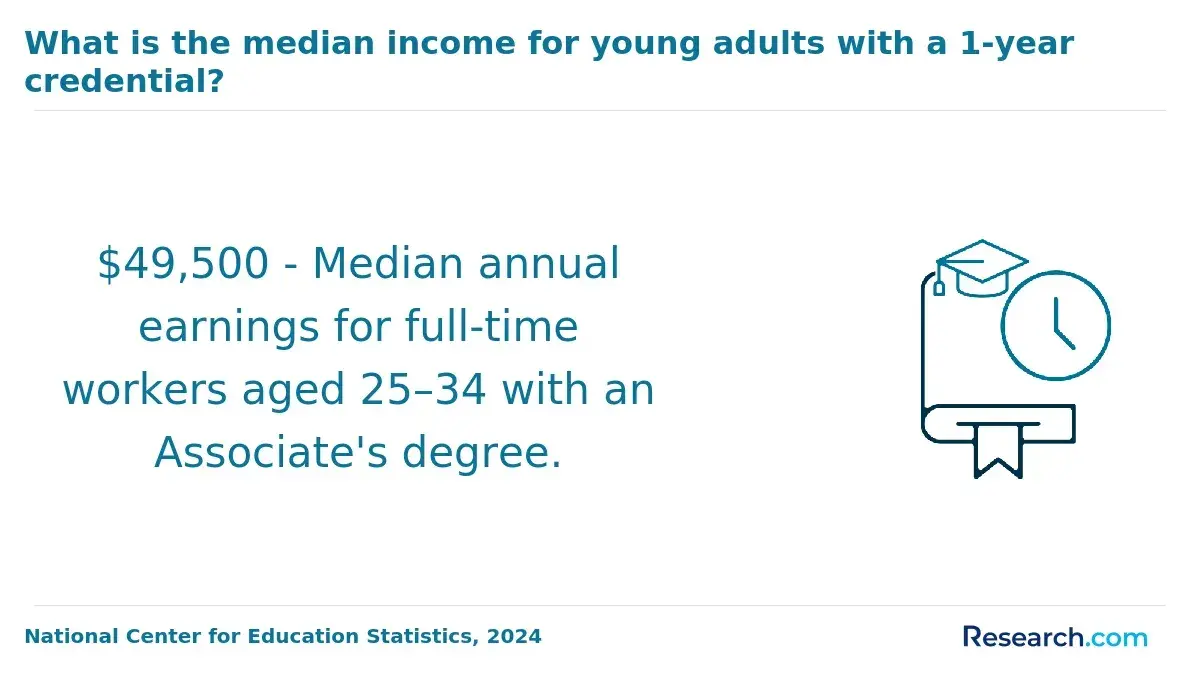
Published tuition is only a starting point. Compare these costs using the number of credits you would still need to complete:
- Public two-year, in-district benchmark: $4,050 in average published tuition and fees for 2024-25, according to the College Board; your program and residency may differ.
- Additional costs to request from each school: program fees, books, equipment, transportation, clinical requirements, and licensing exams.
Ask about grants, scholarships, employer tuition assistance, and whether the school and program qualify for federal financial aid. If speed is your main concern, compare your remaining requirements rather than assuming that programs described as easiest associate degrees will be the fastest route to your target job.
Should Career Changers Choose Online or Campus Programs?
Online study can reduce commuting, but it does not necessarily offer flexible hours. Business, psychology, and some IT courses may be asynchronous; live sessions and fixed deadlines can still conflict with work. Nursing and many allied-health programs require in-person labs or clinical placements even when lectures are online.
Ask for a sample schedule covering the entire program, not just the first term. A campus or hybrid program may be the better choice if you need supervised practice or reliable access to equipment. An online program may fit better if its attendance rules, exam arrangements, and any local placements work with your job and caregiving commitments.
What Careers Can You Start With a Two-Year Degree?
Realistic first roles depend on the degree and any separate credentials. Examples include bookkeeper or operations assistant for business; help-desk technician for IT; and, after meeting applicable requirements, registered nurse, dental hygienist, or respiratory therapist for occupation-specific healthcare programs. A human services degree may support supervised service roles, while criminal justice graduates must meet the hiring rules of the agencies they approach.
Before enrolling, collect several local job postings for your target role. If most require a bachelor's degree, extensive experience, or a license the program cannot prepare you to pursue, choose a different associate pathway or plan explicitly for further education.
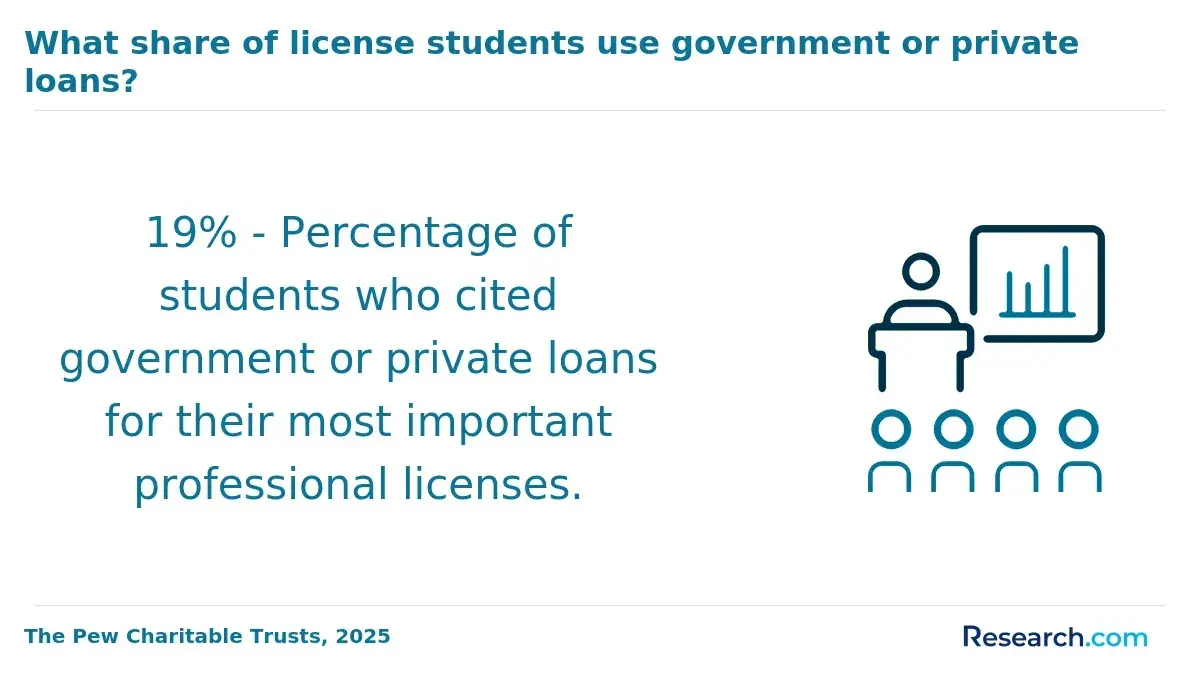
Which Licenses and Certifications Do Graduates Need?
A degree and a professional credential are not interchangeable. RN candidates must meet state board requirements and pass the NCLEX-RN; other clinical occupations have their own state licensing or certification rules. In IT, an employer may value an industry certification, but requirements vary by role. Public-safety employers may require academy training and screening.
Check the relevant state board or employer's requirements before paying a deposit. If your target job accepts shorter training instead of a degree, compare the total cost and opportunities for advancement with quick certifications that pay well. A shorter credential may help you enter a field sooner, but it should not be treated as equivalent to a license or an associate degree.
Other Things You Should Know About
Yes, for some entry-level roles. Internships, clinical training, projects, or relevant skills from your previous work can help demonstrate readiness. Check job postings for requirements beyond the degree.
Choose an AAS when its occupational training matches a job you intend to seek soon. Choose a transfer-oriented AA or AS when a bachelor's degree is necessary for your goal; confirm how the credits will apply.
Often, but feasibility depends on course scheduling. Ask specifically about required daytime labs, clinical shifts, synchronous classes, and the availability of part-time sequencing.
They may. Request an official evaluation showing which credits fulfill your new degree's requirements, not merely how many credits the college will accept.
References
- THE VALUE OF EDUCATIONAL DEGREES IN TURBULENT ECONOMIC TIMES: EVIDENCE FROM THE YOUTH DEVELOPMENT STUDY - PMC https://pmc.ncbi.nlm.nih.gov/articles/PMC4792031/
- Cost of Attendance (Budget) | 2025-2026 Federal Student Aid Handbook https://fsapartners.ed.gov/knowledge-center/fsa-handbook/2025-2026/vol3/ch2-cost-attendance-budget
- Annual Earnings by Educational Attainment - COE https://nces.ed.gov/programs/coe/indicator/cba/annual-earnings
- Associate's degree: Career Outlook | bls.gov https://www.bls.gov/careeroutlook/subject/associates_degree.htm
- Transfer Degrees | Colorado Department of Higher Education Home https://cdhe.colorado.gov/transfer-degrees
- Substance Use Disorder Professional / Substance Use Disorder Professional Trainee - Frequently Asked Questions https://doh.wa.gov/licenses-permits-and-certificates/professions-new-renew-or-update/substance-use-disorder-professional/frequently-asked-questions
- Transfer Glossary - NCCCS https://www.nccommunitycolleges.edu/transfer-glossary/
- Transferring onward from Southeast | southeastmn.edu https://www.southeastmn.edu/academic_programs/transferonward.aspx
- Degree Programs for Working Adults - Online & In Person | NEIT https://www.neit.edu/the-neit-edge/degree-pathways/for-working-professionals
- Licensure Programs - Office of Institutional Effectiveness https://institutionaleffectiveness.louisiana.edu/accreditation/licensure-programs