
2027 Best Two-Year Degrees With Flat-Rate Tuition

Co-Founder and Chief Data Scientist
A flat tuition bill can make an associate degree easier to budget for, but only if the rate covers the courses you need. The College Board reported average published tuition and fees of $4,050 for in-district public two-year students in 2024-25, making the difference between a predictable semester charge and an unexpectedly costly schedule worth examining.
This guide is for students comparing transfer and career-focused degrees. It explains which fields may fit your goals, where to find flat-rate options, and how to check whether a tuition cap will actually lower your total cost.
Key Things You Should Know
- Flat-rate tuition usually applies only after you reach a full-time credit threshold; confirm the credit range, residency rules, and fees before treating the advertised rate as your cost.
- CUNY community colleges, including Borough of Manhattan Community College and LaGuardia Community College, publish full-time semester tuition for eligible students, but program availability and admission rules differ by campus.
- An associate degree commonly requires around 60 credits; prerequisites, clinical placements, part-time enrollment, and course scheduling can extend the time - and cost, beyond two years.
Top 10 Best Two-Year Degrees With Flat-Rate Tuition
Business Programs
Business administration and business management associate degrees can suit students seeking entry-level office work or a route to a bachelor's degree. An AA or AS may prioritize transferable accounting, economics, and general education courses; an AAS may emphasize applied workplace skills. Flat-rate tuition is most useful if required classes are available in terms when you can carry the full-time load. Before choosing, check whether the intended bachelor's program accepts the business courses toward the major - not merely as elective credit.
Healthcare Programs
Healthcare associate options include health information technology, medical laboratory technology, and allied-health programs. Their costs differ sharply: a classroom-based program may fit a full-time tuition cap more easily than one with equipment, testing, clinical, or placement fees. Some occupations also require programmatic accreditation or certification eligibility. Choose by the job you want, then check the program's required experiences and credentialing pathway. A general healthcare degree is not interchangeable with training for a specific licensed clinical role.
Information Technology Programs
Computer science AS programs often emphasize mathematics and transfer; information technology or networking AAS programs may focus on applied technical work. Compare both the curriculum and the tuition threshold: a flat semester rate offers less value if prerequisites keep you below full-time enrollment. Ask whether courses include labs, projects, or preparation for relevant industry certifications. Certifications can strengthen an application, but they are separate from the degree and may involve examination fees.
Nursing / Pre-Nursing Programs
A nursing associate degree is a potential route toward registered-nurse licensure; pre-nursing coursework prepares students to apply to a nursing program but does not itself qualify them for licensure. Nursing admission may be selective even when the college has broadly accessible admission. Prerequisites, clinical schedules, supplies, and exam-related costs can make a flat tuition quote a poor estimate of total expense. Confirm the program's accreditation, state-board status, clinical requirements, and graduates' eligibility to take the NCLEX-RN before enrolling.
Criminal Justice Programs
Criminal justice AA or AS degrees may support transfer, while applied programs may emphasize public-safety procedures and administration. Neither degree automatically qualifies someone as a police officer or corrections officer; hiring standards, academy training, background checks, and state requirements vary. If you plan to transfer, compare required courses with the destination university's major map. If employment is the immediate goal, ask local employers which credentials and training they actually require.
Psychology / Counseling Programs
Psychology associate degrees are generally foundations for bachelor's study, not licenses to practice counseling. Some related programs prepare students for entry-level behavioral-health support work, subject to employer and state requirements. Flat-rate tuition can help with predictable general education costs, but the larger financial decision is whether subsequent degrees are necessary for your target role. Check transfer agreements early so lower-division courses apply to the intended psychology or counseling pathway.
What Are Two-Year Degrees With Flat-Rate Tuition?
Two-year degrees with flat-rate tuition are associate degree programs at colleges that charge a set tuition amount for a defined enrollment period or credit range rather than charging separately for every credit. "Two-year" describes a common full-time pathway, not a guaranteed finish date. AA and AS degrees often support transfer; AAS degrees often emphasize workforce preparation, though each college's curriculum determines its purpose.
Flat-rate tuition differs from short-course pricing. A 6 week courses with certificates option may be useful for a narrow skill goal, but a short class does not complete an associate degree. The best-value flat-rate program is one whose course schedule lets you use the covered credits without taking unnecessary classes.
Which Accredited Schools Offer Two-Year Degrees With Flat-Rate Tuition?
CUNY community colleges provide examples of accredited schools with full-time semester tuition. The comparison below identifies associate-degree choices to investigate, not a guarantee that every major admits every applicant or that every course fits the same schedule. CUNY colleges hold institutional accreditation through the Middle States Commission on Higher Education; check any additional accreditation required for your intended occupation.
| School | Associate-degree examples | Flat-rate detail to verify |
| Borough of Manhattan Community College | Business management AAS; nursing AAS | Eligibility for CUNY's full-time semester tuition, plus nursing-specific admission and fees |
| LaGuardia Community College | Business administration AS; nursing AAS | Eligibility for CUNY's full-time semester tuition, plus program sequencing and clinical costs |
These are examples, not a ranked list. Ask each college to confirm its current full-time credit threshold, residency documentation, tuition for your enrollment category, and whether your chosen program can be completed without terms below that threshold.
How Much Do Two-Year Degrees With Flat-Rate Tuition Cost?
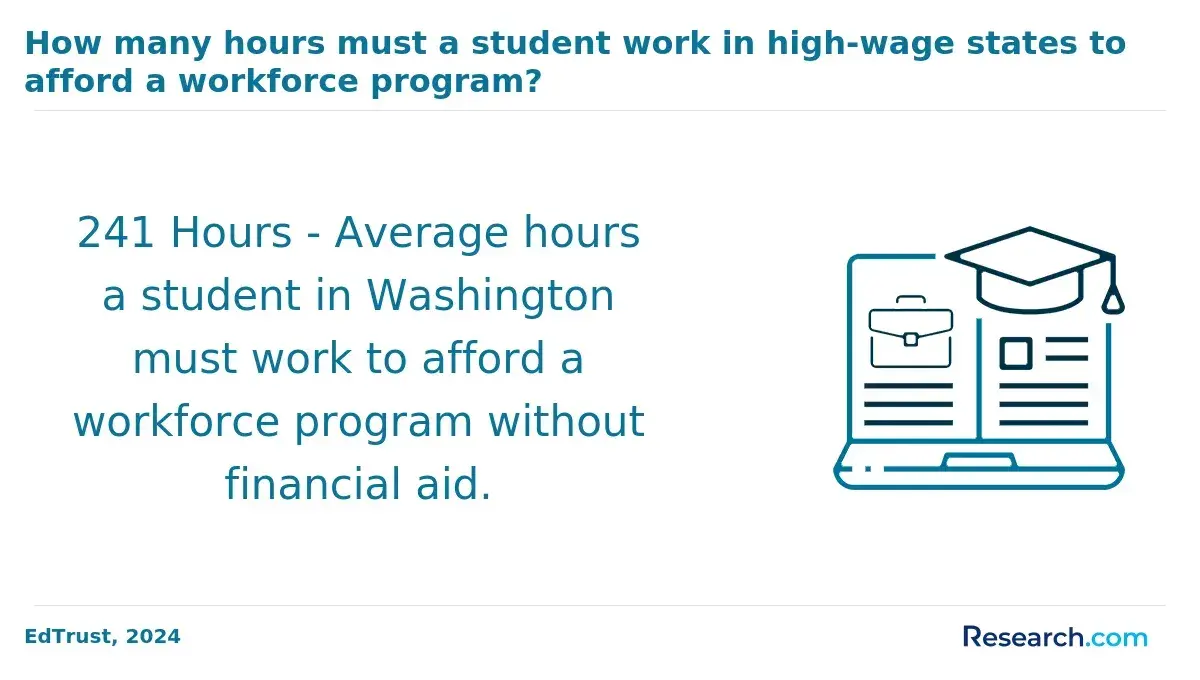
Compare a school's flat-rate charge with its per-credit alternative, then add mandatory fees and program expenses. These published figures provide context, but they represent different groups of students and should not be treated as directly comparable degree totals.
- $4,050: Average published 2024-25 tuition and fees for in-district students at public two-year colleges nationwide, according to the College Board.
- $2,400: CUNY's published semester tuition for eligible full-time New York City resident community-college students; verify the current rate and your residency status before budgeting.
A semester rate is not the cost of a degree. Estimate the number of semesters you will need, including prerequisites and any term in which you cannot enroll full-time. Add books, transportation, technology, lab or clinical charges, and living expenses. Then compare financial-aid offers using net price, your cost after grants and scholarships - not tuition alone. If counseling is your eventual goal, the cost of a later cheapest masters program belongs in a separate, longer-term education budget.
What Admission Requirements Apply to Two-Year Degree Programs?
Community-college admission commonly requires an application and evidence of high-school completion or an equivalent credential. Placement, prerequisite courses, and transcript review may affect which classes you can take first. Nursing and some allied-health majors often have separate, selective applications with additional academic or clinical-readiness requirements; admission to the college is not admission to those programs.
Ask for a written review of prior college credit before planning around a full-time tuition rate. Accepted credits can lower the total needed for the degree, but they may also leave a final semester below the flat-rate threshold. If you are returning to school later in life, guides to degrees for seniors can help frame questions about advising and accessibility; the college must still confirm its own admission and transfer policies.
Which Two-Year Degrees Offer Online, Campus, and Hybrid Formats?
Business, criminal justice, psychology, and some IT associate degrees may offer online sections; nursing and other clinical programs require in-person experiences. A college can offer a flat full-time tuition rate without offering every required course online. "Online" may also mean scheduled live classes rather than study on your own time.
Choose the format that lets you take required courses consistently. Before enrolling, ask whether the entire degree is available in your preferred format, which courses run each term, and whether labs, exams, internships, or clinical placements require travel. A cheaper full-time semester is not a saving if an unavailable course delays graduation.
What Coursework Do Two-Year Degree Programs Typically Include?
Most associate degrees combine general education - such as writing, mathematics, and communication - with courses in the major. Business students may study accounting; IT students may complete programming or networking labs; nursing students complete science prerequisites and supervised clinical learning. Transfer-oriented programs often devote more room to courses that fit a bachelor's curriculum, while applied programs may include more occupational coursework.
Use the program's course map to check prerequisites and term availability. The costly mistake is filling a flat-rate semester with classes that count as credits but do not satisfy graduation, transfer, or career requirements.
Which Careers Can You Pursue With a Two-Year Degree?
The right career target depends on the specific degree, not the associate credential alone. Applied IT or business study may support applications for entry-level support or administrative roles; eligible nursing graduates can pursue registered-nurse licensure after meeting state requirements and passing the licensing exam. Psychology study is more often a transfer step toward further education than a direct route to counseling practice.
If your goal is licensed counseling, even the easiest masters degree to get is not a substitute for checking state-specific education, supervised-experience, and examination requirements. Consider a certificate or apprenticeship instead when your target job values focused training more than a broader associate curriculum.
What Salaries and Job Outlook Can Two-Year Degree Graduates Expect?
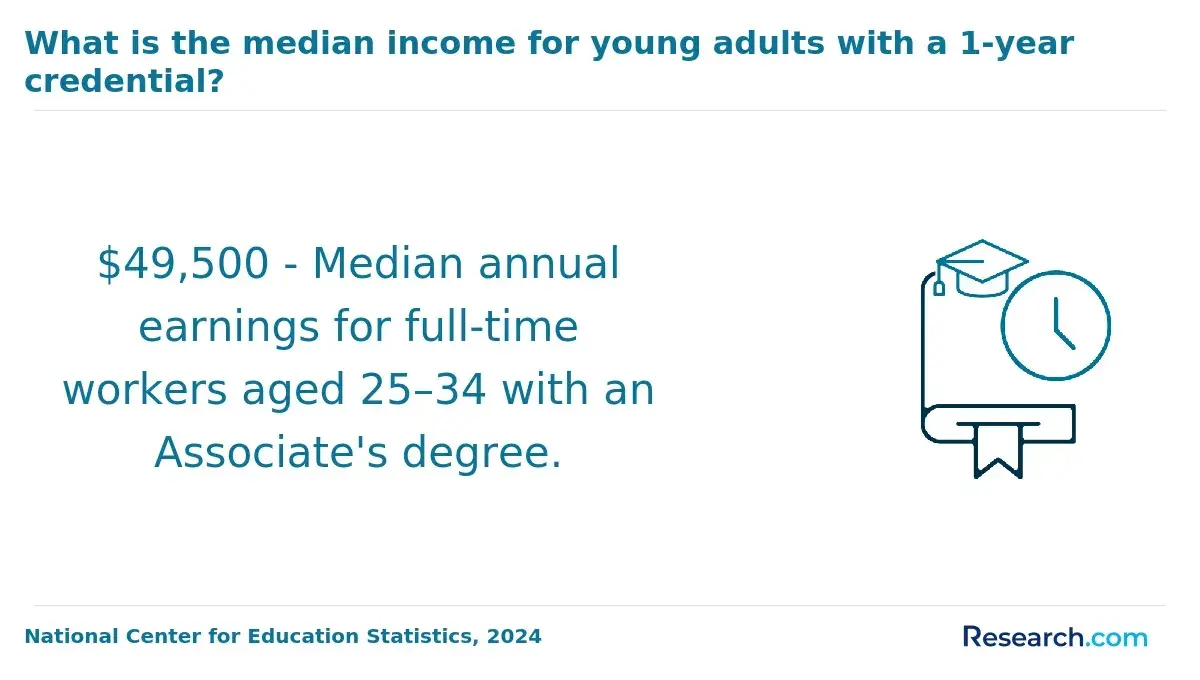
The U.S. Bureau of Labor Statistics reports a May 2024 median annual wage of $93,600 for registered nurses. That is the median for employed people in the occupation, not a predicted starting salary or the earnings of associate-degree graduates. Registered nurses must meet state licensure requirements, and employers may prefer or require a bachelor's degree for some positions.
For other fields, compare the exact occupations available in your area rather than attaching one salary to a broad major such as business or psychology. Review entry requirements alongside wages and projected openings: a promising occupational figure is not useful if the associate program does not qualify you to compete for the job.
Which Licenses and Certifications Do Two-Year Degree Careers Require?
Licensure and certification are separate from earning an associate degree. Nursing graduates seeking RN practice must meet their state board's eligibility rules and pass the NCLEX-RN. Some allied-health roles require completion of an appropriately accredited program, a certification examination, state licensure, or a combination of these. IT certifications generally involve separate exams, while public-safety roles may require academy training and employer screening.
Before paying a deposit, ask the program which credential its graduates are eligible to pursue, whether that eligibility applies in your state, and what exams or supervised hours remain. Treat a claim that the degree alone makes you a nurse, counselor, or licensed allied-health professional as a red flag.
Other Things You Should Know About
Usually not. Colleges define a full-time credit threshold and may impose course-load limits or extra charges. Confirm the current policy before adding classes.
It can be if you take enough required credits each term. Part-time students, students with substantial transfer credit, and students delayed by course sequencing may spend less under a per-credit model.
Sometimes, depending on the specific program. Confirm required labs, clinical placements, scheduled online sessions, and campus visits; do not rely on a college-wide online-course listing.
Request a program-specific cost estimate and course map showing the credits covered by flat tuition, mandatory fees, likely completion time, transfer applicability, and any admission or licensure requirements.
References
- Fast Facts: Tuition costs of colleges and universities (76) | ed.gov https://nces.ed.gov/fastfacts/display.asp
- School-Determined Requirements | 2024-2025 Federal Student Aid Handbook https://fsapartners.ed.gov/knowledge-center/fsa-handbook/2024-2025/vol1/ch1-school-determined-requirements
- For OTC students: Next steps - Transfer Credit Ohio https://transfercredit.ohio.gov/students/student-programs/otc-pathways/otc-pathways-ready
- Flat-Rate Tuition | ou.edu http://www.ou.edu/bursar/tuition_fees/flat-rate-tuition.html
- III. FEES OTHER THAN TUITION - The City University of New York https://www.cuny.edu/about/administration/offices/legal-affairs/university-tuition-fee-manual/iii-fees-other-than-tuition/
- Flat-Rate Tuition Frequently Asked Questions | Transfer to Wayne State University https://wayne.edu/registrar/flat-rate-faq
- Tuition & Expenses | Student Financial Services https://financialaid.wsu.edu/tuition-and-expenses/
- Student Tuition and Fees | Standard Practice Guides https://spg.umich.edu/policy/601.39
- Degree Types | Henry Ford College Catalog https://catalog.hfcc.edu/degrees
- Online Associates Degree - UW Flexible Option https://flex.wisconsin.edu/degrees-programs/associate-degree-online/


