
2027 Best Online Associate Degrees for Work-Life Balance

Co-Founder and Chief Data Scientist
Choosing an online associate degree around a job or family schedule means looking beyond the word "online." A program may require live classes, fixed lab times, or clinical shifts. The decision matters for career planning, too: the U.S. Bureau of Labor Statistics projects employment of medical records specialists to grow 7% from 2024 to 2034, but the work environment varies by employer.
This guide compares six degree fields by study flexibility and realistic career paths, then shows you what to check before enrolling.
Key Things You Should Know
- For the most predictable study schedule: Business, information technology, and some health information programs are worth comparing first. Confirm whether courses are asynchronous and offered part-time.
- Plan around the full degree: An associate degree commonly requires about 60 credits; prerequisites, course sequencing, and part-time enrollment can extend completion beyond two years.
- Budget beyond tuition: The College Board reports average public two-year in-district tuition and fees of $4,150 for 2025-26. Books, technology, transportation, and any required placements can change your total cost.
Top 10 Best Online Associate Degrees for Work-Life Balance - Work-Life Balance Degrees
Business Programs
An online associate in business administration or accounting is a strong starting point for students who need location-independent coursework. Many programs teach spreadsheets, bookkeeping, communication, and management fundamentals without labs or clinical placements. An Associate of Arts (AA) or Associate of Science (AS) may emphasize transfer; an Associate of Applied Science (AAS) may emphasize immediate workplace skills. Look for asynchronous classes and predictable deadlines, not just an online label. Entry-level office work can have regular hours, but customer-facing roles and month-end accounting duties may require less flexible schedules.
Healthcare Programs
Health information management and medical records programs may suit students who want healthcare-related work without direct patient care. Some offer fully online coursework, while others require a supervised experience or preparation for a certification exam. Verify the exact requirements before enrolling. Medical office administration is another option, though front-desk jobs usually require on-site hours. Billing and records tasks may sometimes be remote, particularly with experience; an online degree does not make the resulting job remote by default.
Information Technology Programs
IT support and networking associate degrees often combine flexible online lessons with hands-on projects or virtual labs. They can prepare students for entry-level support work, although employers may also value certifications and troubleshooting experience. Ask whether labs can be completed on your own equipment and whether courses require live attendance. Help-desk work may offer remote opportunities, but rotating shifts and on-call duties can limit work-life balance. Choose a program with practical projects you can show employers.
Nursing / Pre-Nursing Programs
Pre-nursing AS programs can offer online general education courses, but science labs may require in-person attendance. An associate degree in nursing also requires supervised clinical training and may have selective admission separate from college admission. Clinical schedules can be difficult to fit around work or caregiving, and nursing jobs may involve nights, weekends, or long shifts. Choose this path for its clinical career goal, not because it appears online. Confirm state board eligibility and clinical placement arrangements before applying.
Criminal Justice Programs
Criminal justice AA, AS, and AAS programs can often deliver theory and writing courses online, making part-time study possible. An associate degree may support certain administrative, security, or public-safety pathways, but it does not replace an agency's hiring standards, academy training, or background checks. Fieldwork, if required, may be local and scheduled. Compare the program against the job you want: investigative and management roles generally require experience or additional education, while shift-based public-safety work may offer limited schedule control.
Psychology / Counseling Programs
An online psychology AA or AS is usually a transfer foundation rather than a direct route to becoming a counselor. Courses commonly cover development, research, and human behavior and may fit an asynchronous schedule. The trade-off is a longer education pathway: licensed counseling generally requires graduate education, supervised experience, and state licensure. Some entry-level human-services jobs may involve evenings or in-person client contact. Before enrolling, check how the courses apply to your intended bachelor's program.
What Are the Best Online Associate Degrees for Work-Life Balance?
The best fit depends on whether you need flexibility while studying, predictable hours after graduation, or both. Business and IT are useful first comparisons when asynchronous coursework is the priority. Health information may be a better fit if you want to work in healthcare without clinical training. None guarantees a flexible job.
Use this comparison to narrow your choices before evaluating individual schools.
| Degree field | Study-schedule advantage | Work-life trade-off to check |
| Business | Often no lab or placement requirement | Office hours vary by role and employer |
| Health information | Coursework may be available online | Some programs require a supervised experience |
| IT | Projects and virtual labs may be completed remotely | Support jobs may require shifts or on-call coverage |
| Nursing | Some prerequisite courses may be online | Clinical schedules and patient-care shifts are less flexible |
| Criminal justice | Theory courses may suit part-time study | Public-safety roles may require rotating shifts |
| Psychology | Transfer-focused courses may be available online | Licensed counseling requires further education |
If you are returning to school later in life, compare advising, technology support, and part-time policies alongside options such as online degree programs for seniors. Support that helps you finish may matter more than a program's advertised pace.
Which Careers Offer the Best Work-Life Balance After an Associate Degree?
Administrative and records-based roles may offer more predictable daytime work than clinical care or emergency response, but job titles alone cannot tell you whether a position offers balance. Ask employers about shift coverage, overtime, remote-work eligibility, and how far in advance schedules are posted.
Medical records, bookkeeping support, and some IT support roles can be worth exploring. Each has a trade-off: records jobs may be on-site, bookkeeping workloads can rise around deadlines, and IT teams may cover evenings or weekends. If schedule control is essential, compare actual entry-level postings in your area before choosing a major.
How Much Do Online Associate Degrees Cost and How Long Do They Take?
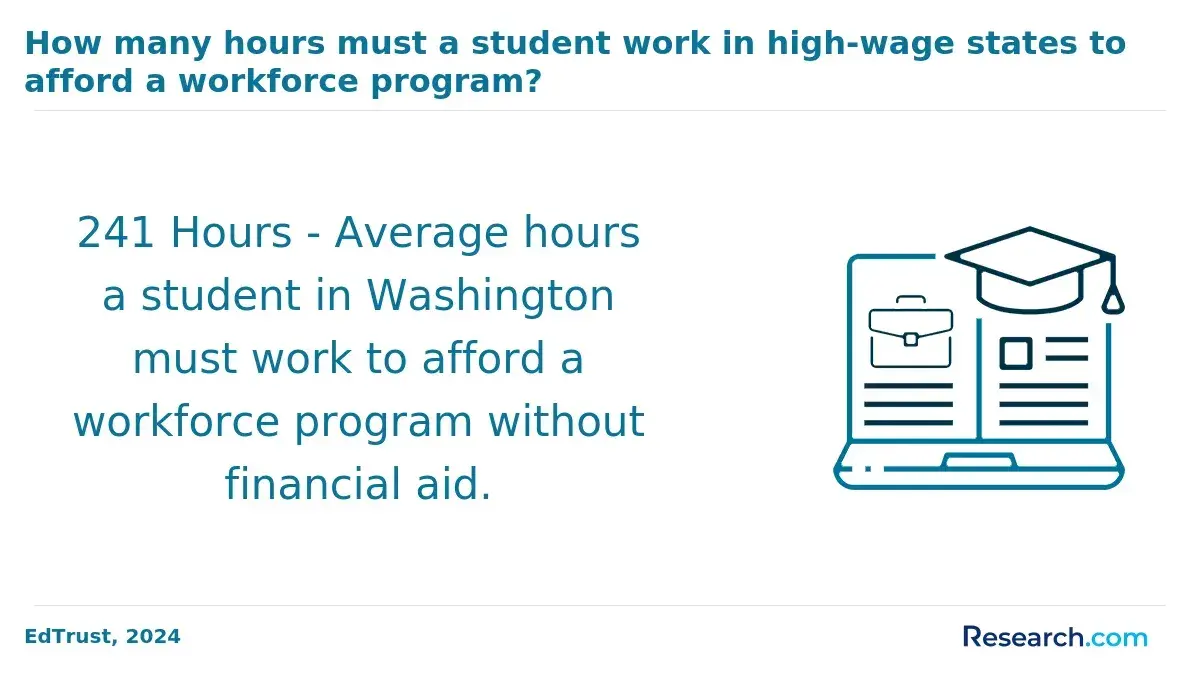
Associate degrees commonly require about 60 credits. Two years is a reasonable full-time planning benchmark, not a promise; part-time study, prerequisites, limited course availability, and clinical sequencing can extend the timeline. Accepted transfer credits may shorten it, but ask for an evaluation showing which requirements they fulfill.
The College Board's 2025-26 average of $4,150 for public two-year in-district tuition and fees is a starting point, not a program price. Nonresident rates, books, software, exam fees, and required travel can materially increase the total. Compare each school's estimated cost for all remaining credits, then check financial aid eligibility, scholarships, and employer tuition assistance. For a narrower job goal, short certificate programs that pay well may be worth comparing - but check whether the credential meets employer requirements before choosing speed over a degree.
Which Online Associate Degrees Lead to Flexible or Remote Careers?
Business administration, accounting support, health information, and IT offer coursework relevant to tasks that some employers allow remotely. That makes them potential routes to flexible work, not inherently remote careers. Entry-level staff may need on-site training, and employers can change location policies.
Compare job postings for the specific role you want rather than searching only for "remote associate degree jobs." Note required experience, work hours, location restrictions, software skills, and certifications. A program that teaches current tools and provides substantial projects may be more useful than one marketed around remote-work possibilities alone.
What Do You Learn in an Online Associate Degree Program?
Most programs combine general education - such as writing, math, and communication - with major courses. Business students might study accounting; IT students, networking and troubleshooting; and health information students, medical terminology and records practices. Nursing adds sciences and clinical learning, while psychology commonly emphasizes research and human development.
Degree type affects the next step. AA and AS programs often support transfer, while AAS programs often prioritize workforce preparation, though schools vary. If a bachelor's degree is your goal, ask a destination school whether each course will satisfy a major requirement - not merely whether it will accept the credit. An accelerated bachelor's degree may be a later option, but its timeline depends on accepted credits and remaining requirements.
What Are the Admission Requirements for Online Associate Degrees?
Colleges generally ask for a high school diploma or equivalent, an application, and transcripts. Placement measures or prerequisite courses may affect where you begin. Admission to the college does not necessarily mean admission to a selective major: nursing and some allied-health programs may have separate grades, prerequisite, testing, or background-check requirements.
Before applying, ask when each required course is offered, whether part-time students can take it, and whether online courses have live sessions. If you have previous college work, request a transfer-credit evaluation early. A flexible first term is less helpful if a required course later runs only at a time you cannot attend.
How Can You Verify Online Associate Degree Accreditation?
Start with the college's institutional accreditation: confirm its current status in the U.S. Department of Education's accreditation database and with the named accreditor. Accreditation can matter for federal financial aid and credit transfer, but it does not ensure that another school will apply every course toward your intended degree.
Then check requirements specific to your goal. For nursing or another regulated field, confirm that the program meets applicable state approval requirements and prepares students for the relevant licensing pathway where they intend to work. Treat vague claims such as "fully accredited" as a prompt to ask which institution or program is accredited, by whom, and for what purpose.
Do These Careers Require Licenses or Professional Certifications?
Requirements depend on the occupation, not just the degree title. Nursing requires meeting state licensure rules and passing the applicable licensing examination; completing an associate program alone is not a license. Some health information and IT positions value or require particular certifications, while criminal justice employers may impose agency-specific training and hiring standards.
An associate degree in psychology does not qualify someone for licensed counseling. That path generally involves a bachelor's degree, an appropriate graduate program, supervised practice, and state licensure. Even when comparing an easiest online masters degree, check whether its curriculum and clinical training meet the licensing board's rules in the state where you plan to practice.
What Salary and Job Outlook Can Graduates Expect?
Use occupational data to assess a career path, not to predict what an associate degree graduate will earn. For example, the Bureau of Labor Statistics reports a May 2024 median annual wage of $93,600 for registered nurses. That figure covers nurses across education levels and experience; it is not a starting salary or a return promised by an associate degree. Nursing also requires licensure and may involve demanding shifts.
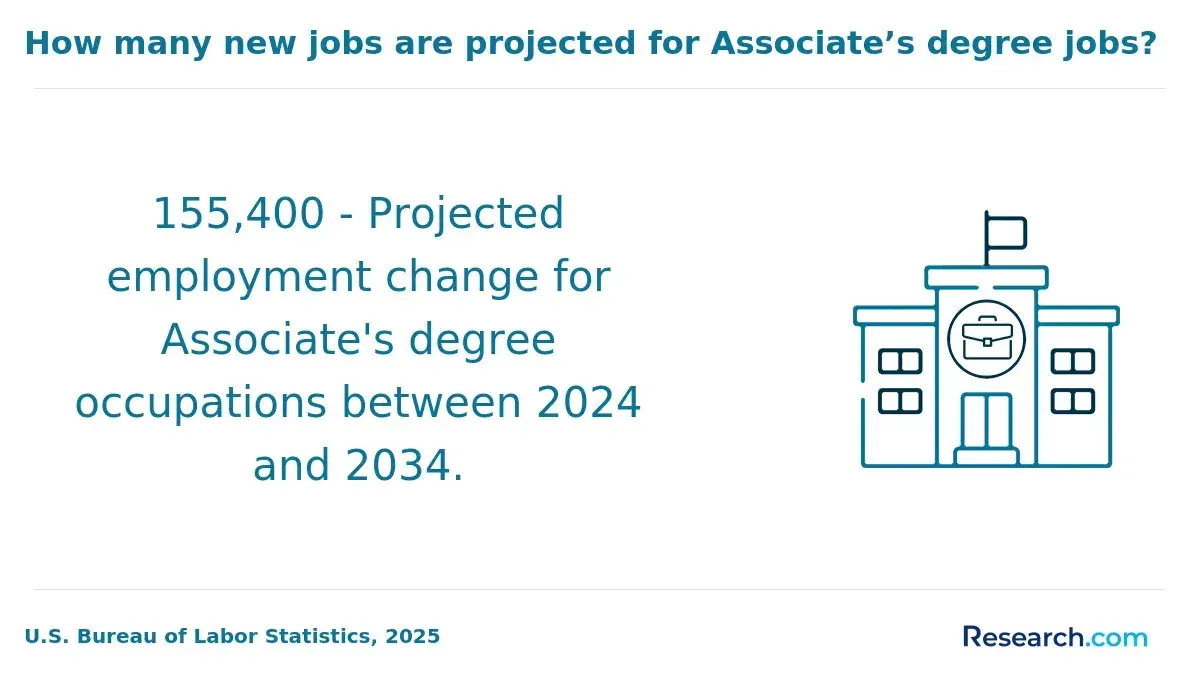
The BLS projects 7% employment growth for medical records specialists from 2024 to 2034. That suggests opportunities to investigate, but growth does not establish local hiring prospects, remote availability, or individual outcomes. Compare local job ads and occupational wage data with your total education cost. If the roles you want consistently require a bachelor's degree, certification, or experience, include that next step in your time and budget decision.
Other Things You Should Know About
Sometimes. Asynchronous courses still have deadlines, and a program may require live sessions, labs, exams, or placements. Check every required course, not just the program description.
Business, IT, and some health information programs may be easier to fit around work because they can avoid clinical schedules. Course availability and part-time policies determine the actual fit.
No. Some related tasks can be performed remotely, but employers may require experience or on-site training. Review entry-level postings before selecting a major.
Start with your goal. An AA or AS may suit a planned bachelor's transfer; an AAS may suit direct workforce preparation. Confirm the particular program's curriculum and transfer agreements rather than relying on its initials.
References
- Undergraduate Retention and Graduation Rates - COE https://nces.ed.gov/programs/coe/indicator/ctr/undergrad-retention-graduation
- Definitions - Transfer Credit Ohio https://transfercredit.ohio.gov/educational-partners/educational-partner-initiatives/articulation-transfer-policy-policy/articulation-transfer-policy-definitions
- School-Determined Requirements | 2024-2025 Federal Student Aid Handbook https://fsapartners.ed.gov/knowledge-center/fsa-handbook/2024-2025/vol1/ch1-school-determined-requirements
- Reduced Course Load | Study in the States - Homeland Security https://studyinthestates.dhs.gov/sevis-help-hub/student-records/manage-program-dates-registration-and-course-load/reduced-course
- Online: FAQ Practicum Education | baylor.edu https://socialwork.web.baylor.edu/current-students/practicum-education-current-students/online-msw/online-faq-practicum-education
- What Is an Accredited University? Understanding Accreditation | National University https://www.nu.edu/blog/what-is-an-accredited-university/
- FAQs - Maryland School of Social Work https://www.ssw.umaryland.edu/practicum/faqs/
- Online Learning Programs | wichita.edu https://www.wichita.edu/academics/oal/online_programs/index.php
- Reduced Course Load - Student Disability Services https://sds.utk.edu/students/accommodations-and-services/other-accommodations/reduced-course-load/
- Online | Coastline College https://www.coastline.edu/locations/online.php


