2027 Best PhD Programs With Academic Advising

Co-Founder and Chief Data Scientist
A PhD program can promise close mentorship yet leave you unsure who will guide your coursework, research, and career decisions. That matters if you hope to study academic advising or work in higher education: the U.S. Bureau of Labor Statistics reports a May 2024 median wage of $103,960 for postsecondary education administrators, but a doctorate alone does not qualify someone for those jobs.
This guide helps prospective researchers and experienced advisers distinguish relevant PhDs from professional doctorates, compare the support that matters during doctoral study, and identify what to verify before committing.
Key Things You Should Know
- Look for a PhD with relevant higher education or student affairs research, not just a program whose name mentions advising; confirm that faculty can supervise your intended topic.
- Check three distinct forms of support: course-planning advice, research and dissertation supervision, and career development. Access to one does not establish access to the others.
- Compare a written funding offer with total required costs and ask how advising works when a faculty mentor leaves or a dissertation stalls. Neither a PhD nor an advising service guarantees completion or employment.
Top 10 Best PhD Programs With Academic Advising - Top Programs
Business / DBA Programs
A business PhD may suit someone researching how universities manage advising resources, student-success technology, or organizational decisions. A DBA is a professional doctorate aimed more often at applied management questions; it is not a PhD and should not replace one on a PhD shortlist. In either case, ask whether an adviser has experience with higher education research rather than assuming a business faculty member can supervise an advising-focused dissertation.
Education / EdD Programs
An education PhD is a strong starting point if your goal is original research on advising practices, persistence, or educational equity. An EdD may better fit an experienced practitioner tackling a problem in their own institution, but it is a different credential. Compare faculty projects, research-methods training, and dissertation requirements. Do not infer that every education PhD has faculty who study college advising.
Educational Leadership Programs
Educational leadership PhDs can connect advising research to institutional policy and organizational change. Check whether the program concentrates on postsecondary education: one focused on school-district leadership may be a poor fit for a college-advising dissertation. Ask who would advise your research and whether students work with campus advising offices or institutional research teams. Leadership experience may still matter more than a doctorate for many administrative promotions.
Psychology Programs
A psychology PhD may fit research on motivation, decision-making, belonging, or help-seeking among college students. Its laboratory and faculty-match expectations can differ substantially from those of a higher education PhD. Psychology research training does not, by itself, prepare someone for every campus advising role. Clinical psychology pathways also have separate accreditation and licensing considerations; academic advising is not the same occupation as licensed psychological practice.
Nursing / DNP Programs
A nursing PhD can support research on how nursing students progress through demanding curricula or clinical training. A DNP instead emphasizes advanced nursing practice and applied improvement; it should not be listed as a PhD. If you want to advise nursing students, first determine whether the intended position requires nursing credentials or teaching experience. A doctorate does not replace any license required for nursing practice.
Public Health Programs
A public health PhD could suit research on student well-being, access to support, or population-level educational outcomes. A DrPH is a separate, practice-oriented credential. An advising-focused applicant should seek faculty who actually study students or educational systems; a department's broad commitment to health equity is not enough to establish research fit. Compare data access and dissertation supervision before choosing this less direct route.
Computer Science Programs
A computer science PhD may suit someone developing or evaluating advising systems, such as course-planning tools. The decisive question is whether a faculty researcher can supervise both the technical work and responsible evaluation with students. Growing use of AI does not make an automated recommendation system an adequate substitute for human advising, nor does it make a technical PhD necessary for most adviser positions.
Cybersecurity Programs
A cybersecurity PhD has a narrow but plausible connection to advising: protecting student records and studying the security of student-support systems. It is unlikely to be the best route for someone who wants to research adviser-student relationships. Ask whether prospective faculty supervise education-related work and whether access to sensitive data is feasible. Privacy rules and research approvals can shape the dissertation timeline.
Social Work / Human Services Programs
A social work PhD may fit research on referrals, basic-needs support, and how campuses connect students with services. A DSW is a professional doctorate, not a PhD. Neither degree automatically grants a social work license or qualifies its holder to provide clinical services; state rules and supervised practice may apply. For advising research, check whether faculty study postsecondary students rather than assuming any student-support topic will fit.
Public Administration / Public Policy Programs
A public policy or public administration PhD can fit research on advising budgets, access, and the effects of student-success policies. A DPA is a distinct professional doctorate. This route makes most sense when your central question concerns policy design or evaluation rather than day-to-day advising practice. Look for a supervisor with higher education expertise and access to suitable institutional data.
What Are the Best PhD Programs Focused on Academic Advising?
There is no universal "best" academic advising PhD. Academic advising is usually a research topic within a PhD in higher education, student affairs, education, or a related discipline, rather than the name of a standalone PhD. For this title, the strongest program is one that combines an appropriate research adviser with dependable doctoral advising, clear dissertation milestones, and a workable funding arrangement.
The following PhDs are starting points for a focused search, not a ranking or verified endorsements of their advising services. Confirm each program's current degree name, faculty availability, doctoral support, and funding directly before applying.
| Program to investigate | Potential research fit | Most important question to verify |
| Penn State PhD in Higher Education | Advising as part of higher education policy, organization, or student success | Which available faculty member could supervise your specific advising question? |
| University of Maryland PhD in Higher Education, Student Affairs, and International Education Policy | Advising within student affairs or broader postsecondary systems | How are doctoral students assigned academic and dissertation advisers, and what happens if the match changes? |
A program should move onto your shortlist only after you establish that its doctoral students - not merely undergraduates - receive the support you need. Ask to see the doctoral handbook and speak with current students about adviser access, feedback, and progress when research encounters delays. A familiar university name cannot answer those questions.
Start with institutional accreditation recognized by the U.S. Department of Education or the Council for Higher Education Accreditation. Academic advising is not generally a separately licensed profession with a required PhD-specific programmatic accreditor. If your proposed degree is in a regulated clinical field, check the accreditation and state requirements for that profession separately.
Accreditation establishes an important baseline; it does not measure the quality of doctoral mentorship. A directory of non profit colleges can help you begin an institutional search, but verify the institution's current accreditation status and the specific PhD's requirements with official records.
There is no reliable single price or completion time for an academic-advising-focused PhD. Requirements depend on the admitting discipline, prior graduate preparation, enrollment status, examinations, research progress, and dissertation defense. Completing coursework does not mean the degree is nearly finished: securing data access, gaining research approval, and revising a dissertation can extend the timeline.
Compare your expected net cost, not tuition alone. Request a written breakdown of tuition, mandatory fees, health insurance, research expenses, and any required travel. Then identify what a fellowship or assistantship actually covers, how long support lasts, whether summer funding is included, and what work or progress conditions apply. Do not assume every PhD is funded - or that a high published tuition figure reflects what a funded student pays. Employer assistance or federal aid may be relevant, but eligibility and repayment obligations differ.
In a relevant PhD, academic advising may be studied through higher education theory, student development, organizational behavior, research ethics, statistics, and qualitative or mixed-methods research. Possible dissertation questions include whether an advising intervention improves student navigation, whose needs existing services miss, or how advisers use student data responsibly. The degree's exact courses depend on its discipline; there is no standard national "academic advising PhD" curriculum.
Expect independent research and, according to the program, comprehensive or qualifying examinations, candidacy, a proposal, and a defended dissertation. Ask whether faculty and campus partners can support your proposed study. Access to student records or participants may require institutional permissions and research review; an appealing topic is not automatically a feasible dissertation.
PhD admission commonly requires a completed bachelor's degree; individual programs may require or prefer a relevant master's degree. Expect a statement of purpose, transcripts, recommendations, and evidence that your research interests fit available faculty. Programs may also request a writing sample, interview, research experience, or a standardized test. Check each program's doctoral admissions page rather than assuming a university-wide graduate policy applies.
Before applying, identify faculty whose recent work connects to your question and check whether applicants should contact them. A directory of online colleges free application does not establish that a particular PhD waives its application fee; verify the doctoral policy. If you already hold a master's degree, ask whether any graduate coursework applies to this PhD. Admission with a master's does not automatically reduce research or dissertation requirements.
An online PhD can support rigorous advising research, but delivery format alone does not establish equivalence. Compare access to faculty, research methods training, institutional data, peer researchers, and dissertation feedback. Some programs deliver coursework online yet schedule live seminars, research meetings, campus visits, examinations, or defenses. Confirm each requirement for the entire degree before calling it fully online or compatible with your work schedule.
Campus study may make research-group participation and informal faculty contact easier; online study may remove a relocation barrier. Neither format fixes a weak adviser match. Ask prospective students and faculty how often doctoral researchers meet, how feedback is provided, and whether part-time enrollment is officially permitted. Do not infer part-time availability from online course delivery.
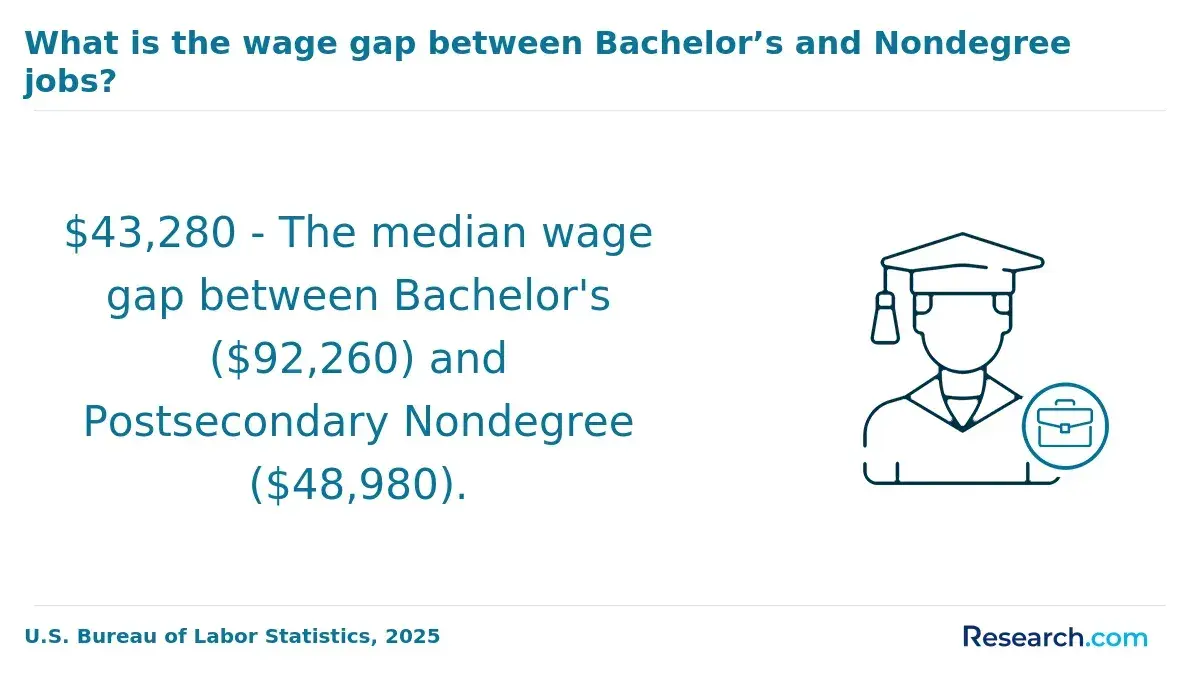
An advising-related PhD can prepare you to pursue research, institutional research, higher education policy work, or faculty positions. Experienced professionals may also use doctoral research in advising leadership or student-success initiatives. The fit depends on the role: many academic adviser jobs do not require a doctorate, while faculty hiring considers publications, teaching, research fit, and the academic job market. Administrative leadership generally requires relevant experience as well.
If your goal is direct student advising rather than original research, compare the PhD's cost and years of study with a relevant master's degree and advising experience. If compensation is the main goal, exploring degrees you can get online that pay well may clarify alternatives, but occupational pay is not evidence that a doctorate will produce the same outcome.
Pay follows the occupation, employer, location, and experience - not an academic-advising PhD salary scale. The Bureau of Labor Statistics' May 2024 median of $103,960 for postsecondary education administrators describes workers in that occupation, not new PhD graduates or academic advisers specifically. Many such jobs do not require a PhD, and the degree alone does not secure an administrative appointment.
For a realistic return-on-investment estimate, compare positions you could pursue with and without the doctorate. Account for the funding offer, living costs, possible borrowing, foregone earnings, and the value of the research career you want. Treat an advertised occupational median as context, not a forecast of your earnings.
How Do You Choose a Reputable Academic Advising PhD Program?
Choose by research fit and demonstrated doctoral support, then test affordability and career relevance. A clear conversation with a prospective faculty adviser is more useful than a general claim that the university offers academic advising.
Use the following checks to turn a shortlist into an enrollment decision:
- Confirm the awarded degree is a PhD, the institution is accredited, and a faculty member can supervise your specific research question.
- Request the doctoral handbook and identify who handles course decisions, research supervision, adviser changes, and dissertation delays.
- Compare written funding terms, remaining degree requirements, enrollment expectations, and any in-person obligations.
- Speak with current doctoral students about feedback and support, then compare the PhD with the qualifications your target jobs actually request.
Red flags include treating general student services as proof of dissertation mentorship, assuming every PhD is fully funded, or choosing solely by a ranking. If you are earlier in your education and considering an associate's degree online, map the bachelor's-level and possible graduate preparation first; an associate's degree alone does not qualify you for standard PhD admission.
Other Things You Should Know About
Academic advising is more commonly a research focus within higher education, student affairs, education, or another PhD. Check the awarded degree and available dissertation supervisors rather than relying on a topic mentioned in program descriptions.
Usually not. Review postings from employers that interest you; relevant education and advising experience may be a more direct route. A PhD makes more sense if you want to conduct original research or pursue roles that value it.
Not necessarily. An academic adviser may guide coursework and degree progress, while a research or dissertation adviser directs scholarly work. Ask who performs each role and how adviser changes are handled.
Consider an EdD if your priority is an applied problem in professional education practice. Choose a PhD when its faculty, research training, and dissertation better match your goal of original research. Verify the requirements of the actual programs you are comparing.
- Revisiting Academic Advising: Potential Role and Implications in Undergraduate Medical Training in India - PMC https://pmc.ncbi.nlm.nih.gov/articles/PMC10789466/
- Measuring Student Success In IPEDS: Graduation Rates (GR), Graduation Rates 200% (GR200), And Outcome Measures (OM) https://nces.ed.gov/ipeds/use-the-data/measuring-student-success-in-ipeds
- Best Practices for Advising for Programs | Brown University https://graduateschool.brown.edu/academics-research/graduate-advising-and-mentoring/advising-and-mentoring-graduate-programs/best
- Faculty Roles and Responsibilities Regarding Graduate Students | osu.edu https://cfaes.osu.edu/faculty-roles-and-responsibilities
- 1. Responsibilities of Directors of Graduate Studies | The Graduate School https://gradschool.duke.edu/academics/dgss-and-dgsas/dgs-manual/1-responsibilities-directors-graduate-studies/
- Best Practices for Faculty Mentoring - UCSB Graduate Division https://www.graddiv.ucsb.edu/bestpractices-faculty-mentoring
- Completion Rates and Time to Degree Completion | Academic Affairs https://academicaffairs.uams.edu/irpa/office-of-institutional-studies/student-outcomes/completion-rates/
- PhD | Advising Guide - Stanford Computer Science https://www.cs.stanford.edu/phd-milestones-progress-guidelines/phd-advising-guide
- Graduate Student Advising and Mentoring Policy | ku.edu https://services.ku.edu/TDClient/818/Portal/KB/PrintArticle