2027 Best Part-Time Doctoral Programs for Parents

Co-Founder and Chief Data Scientist
A part-time doctorate can fit family life - but only if its deadlines, research demands, and required travel fit your actual childcare schedule. The National Center for Science and Engineering Statistics counted 57,862 U.S. research doctorate recipients in 2023, a reminder that doctoral study is a substantial undertaking; that figure does not include every professional doctorate.
This guide compares fields and degree types, then shows parents how to check part-time eligibility, total cost, in-person requirements, and career value before committing.
Key Things You Should Know
- The best fit depends on both your goal and your weekly availability: a practice-focused DBA or EdD serves a different purpose from a research-intensive PhD.
- Confirm that the doctoral program officially permits part-time enrollment; online courses alone do not establish a part-time pathway or eliminate live meetings, placements, or campus visits.
- Compare total cost and likely career benefit, not tuition alone. The Bureau of Labor Statistics reported a 2024 median wage of $140,910 for computer and information research scientists, but that occupational figure is not a promised return on a doctorate.
Top 10 Best Part-Time Doctoral Programs for Parents - Top Programs
Business / DBA Programs
A Doctor of Business Administration (DBA) may suit an experienced parent who wants to investigate problems in their organization while continuing to work. Applied research can make a workplace-based project relevant, but employer access to data and predictable project supervision matter.
Compare officially approved part-time course loads, scheduled residencies, and the final research requirement. An MBA or targeted management experience may be a better investment if your goal is a promotion rather than doctoral-level inquiry. A business PhD is a distinct, usually more research-oriented path.
Education / EdD Programs
A Doctor of Education (EdD) can fit teachers, administrators, and education professionals addressing a practice problem. Parents may be able to connect an applied doctoral project to their workplace, but school-calendar access, permissions, and data collection can still complicate family scheduling.
Check whether part-time enrollment is formally available and whether cohorts require evening meetings or summer residencies. Choose an education PhD instead when sustained original research and faculty research fit are central to your goal; a doctorate does not itself confer teacher or administrator certification.
Educational Leadership Programs
Educational leadership doctorates, often EdD programs, focus on organizational improvement in schools, colleges, or other education settings. They may suit parents already working in leadership who can draw on professional experience. Ask whether the curriculum requires access to a school or district for its final project and whether scheduled cohort sessions fit your busiest terms.
If you need a principal or superintendent credential, check your state's separate requirements before choosing a degree; leadership experience and a doctorate are not interchangeable with certification.
Psychology Programs
Psychology PhD and Doctor of Psychology (PsyD) programs can differ substantially in research emphasis, clinical preparation, funding, and placement demands. A parent seeking clinical licensure must investigate required practica, internship availability, supervised experience, and state rules - not just online coursework.
Research-focused psychology doctorates also require close faculty fit and sustained research time. Part-time clinical pathways may be difficult to reconcile with fixed placement schedules, so verify the exact program's enrollment policy. For some nonclinical goals, a master's degree may be sufficient.
Nursing / DNP Programs
A Doctor of Nursing Practice (DNP) emphasizes advanced nursing practice and evidence-based improvement; a nursing PhD emphasizes original research. Post-master's and other entry pathways have different prerequisites and remaining requirements. Parents should check whether the program permits part-time study, who arranges clinical placements, when practice hours occur, and whether a workplace project is allowed.
A DNP does not independently grant advanced-practice licensure: existing credentials, specialty preparation, certification, and state rules determine eligibility. Compare required hours and scheduling before comparing online course formats.
Public Health Programs
A Doctor of Public Health (DrPH) generally targets applied public health leadership, while a public health PhD typically emphasizes research. Working parents should examine fieldwork, collaborative projects, required meetings, and the timing of any on-site components. Relevant professional experience may be important for admission, depending on the program.
If your goal is a specific public health job rather than advanced leadership or research, compare the doctorate's added value with an MPH and experience. Confirm part-time permission and the culminating requirement directly with the program.
Computer Science Programs
A computer science PhD is primarily a research degree, making adviser fit, laboratory or research-group participation, and dissertation progress more important than convenient lecture times. For parents, a formally approved part-time route must also work with research meetings and any residency rules. Ask whether funding or assistantships require full-time enrollment.
If your aim is software advancement rather than independent research, a master's degree, portfolio, or additional industry experience may offer a more direct path. Do not assume a research occupation requires - or rewards - every computer science doctorate equally.
Cybersecurity Programs
Cybersecurity doctorates may focus on technical research, policy, or applied organizational problems; the degree title alone does not reveal which. Parents should compare research supervision, laboratory access, security-related project constraints, and scheduled attendance alongside official part-time rules.
A PhD fits original research goals; a practice-focused doctorate may better suit experienced security leaders. For many operational roles, relevant experience and industry certifications are more immediately useful than doctoral study. Confirm what the program actually requires before assuming that remote coursework makes the research flexible.
Social Work / Human Services Programs
A Doctor of Social Work (DSW) commonly emphasizes advanced practice, teaching, or leadership, while a social work PhD typically emphasizes research. For a parent, an applied project connected to existing practice may be manageable, but field access and fixed supervision meetings still matter.
Compare formal part-time options, admissions expectations for professional experience, and the final project or dissertation. Check state licensing rules separately: a doctorate does not replace required social work licensure or supervised practice. A master's-level credential may already meet your intended role's requirements.
Public Administration / Public Policy Programs
A Doctor of Public Administration (DPA) may suit a parent pursuing applied government or nonprofit leadership; a public policy or administration PhD is generally a closer fit for original research. Verify whether evening classes extend to the entire part-time degree, including research seminars and the final project.
Public-sector data access and employer permissions can affect project timelines. Neither doctorate automatically leads to a senior government post. If your goal is advancement in an existing agency, compare the doctorate with an MPA, policy-focused master's degree, or additional management experience.
What Are the Best Part-Time Doctoral Degrees for Parents?
There is no single best part-time doctorate for every parent. The strongest match is a degree that advances a specific goal and has an officially permitted schedule you can sustain through its final research, project, or clinical requirements. The options below are field and degree-type comparisons, not a ranking of institutions or a claim that every program in a field offers part-time study.
This comparison connects each degree type to a likely goal and its main scheduling trade-off.
| Goal | Potential fit | Parent-specific trade-off |
| Improve practice in an existing profession | DBA, EdD, DNP, DrPH, DSW, or DPA, as appropriate | Workplace projects can be relevant but may depend on approvals, data access, or placements. |
| Conduct original research | Field-specific PhD | Adviser availability, research milestones, and funding conditions may limit scheduling freedom. |
| Enter a licensed clinical occupation | Appropriately accredited, licensure-aligned clinical doctorate when required | Placements and state requirements may dictate hours and location. |
If you have not yet completed a bachelor's degree, doctoral admission is a later decision. Online associate degrees can be one earlier educational step, but they do not provide direct entry to a doctorate.
Online access can remove a commute; hybrid delivery can concentrate campus meetings into scheduled visits. Neither guarantees flexible deadlines. Asynchronous courses allow students to access instructional material at different times, while synchronous courses require attendance at set times. Doctoral advising, research seminars, clinical work, examinations, and defenses may impose additional fixed commitments in either format.
Some parents compare online self-paced colleges, but should not assume that a doctoral program is self-paced because its courses are asynchronous. Request a term-by-term schedule that includes required live sessions and the dissertation or project stage.
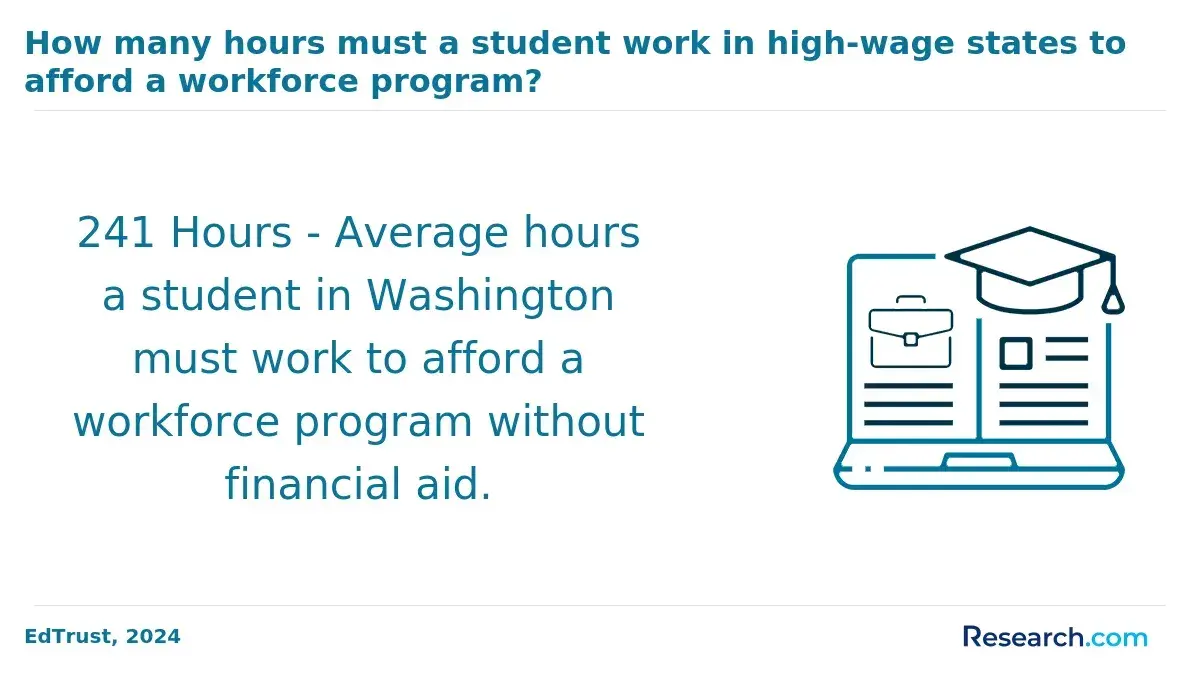
There is no reliable universal price or completion time for a part-time doctorate. Published per-credit tuition is only one component, and part-time study can spread payments over more terms while extending fees and delaying career benefits. A funded PhD may have a different net cost from a largely student-funded professional doctorate; confirm whether funding applies to part-time students.
These cost categories show why two similar tuition quotes can lead to different family budgets.
| Cost category | What to compare |
| Academic charges | Remaining required credits, tuition rates, mandatory fees, and research or dissertation registration charges. |
| In-person requirements | Travel, lodging, local placements, and childcare during residencies or clinical hours. |
| Funding and time | Assistantship eligibility, tuition remission, employer assistance, and costs if the project extends beyond coursework. |
Ask each program for a written estimate based on your entry pathway and proposed part-time load. A previous master's degree does not automatically reduce required doctoral work. Research approvals, data collection, adviser capacity, clinical hours, and defense scheduling can affect completion after classes end.
Verify that the institution holds recognized institutional accreditation, then check whether your intended occupation calls for specialized program accreditation or approval. This is particularly important in nursing, clinical psychology, social work, and education, where program requirements and state licensing rules can interact. Accreditation alone does not guarantee that a particular doctorate satisfies your state's licensing requirements.
Before paying an application fee, confirm the institution's status through its accreditor or a U.S. Department of Education-recognized accreditation database. For a licensed role, compare the exact degree, placements, and curriculum against the relevant state board's requirements - and ask the program which states it is designed to serve.
Doctoral admission normally requires at least a completed bachelor's degree; many professional doctorates require or prefer a relevant master's degree, professional experience, or existing licensure. Research PhD applicants may need a research statement, writing sample, and strong faculty fit.
Programs can also require recommendations, prerequisite courses, an interview, or applicable GRE or GMAT scores. Check the doctoral program's rules rather than assuming a university-wide graduate policy governs admission.
If you are earlier in your education, online associate degree programs may help you begin undergraduate study; you would still need the subsequent preparation required for doctoral eligibility. Applicants who already hold graduate credits should request a program-level evaluation of whether those credits satisfy specific doctoral requirements.
Expect advanced field courses and research or evidence-evaluation methods, followed by a substantial culminating requirement. A PhD commonly involves qualifying or comprehensive examinations, candidacy, a dissertation proposal, original research, and an oral defense. Professional doctorates may instead require an applied doctoral project, clinical project, capstone, or dissertation. None should be assumed to end when scheduled coursework ends.
For parents, the pivotal question is who controls the final-stage timetable. Ask when an adviser is assigned, how often meetings occur, whether data collection needs employer or ethics approval, and what happens if a supervisor becomes unavailable. In clinical programs, obtain the placement and hour requirements before planning childcare.
Compare programs against a real family calendar, including school breaks, work peaks, and backup care - not an ideal week. A sample course timetable is insufficient if later research or placements follow different rules.
Ask each shortlisted program these questions before deciding whether its part-time route is workable:
- What is the minimum and maximum approved part-time course load, and are required courses offered often enough to sustain it?
- Which meetings, exams, residencies, defenses, or placements have fixed times or locations?
- What weekly commitments change after coursework, and how do students arrange adviser meetings?
- What leave, deadline-extension, and reentry policies apply when caregiving needs change?
Price the childcare and travel needed for the least flexible term, not just the first term. If the program cannot describe its later-stage schedule, treat that uncertainty as a decision factor.
Doctoral study can support advanced clinical practice, independent research, teaching, or professional leadership, depending on the field. It does not guarantee a promotion or faculty appointment. The Bureau of Labor Statistics' occupational wage data describe people working in an occupation - not the earnings of graduates from a particular doctoral program. Experience, location, employer, publications, and licensure can all affect opportunities.
Define the role you want first, then check its typical education and regulatory requirements. If that role does not require doctoral training, compare the degree's cost and time with a master's degree, experience, or certificates I can get online. Certifications may be useful for a targeted skill, but they do not substitute for a required clinical doctorate or research preparation.
How Should Parents Choose a Reputable Part-Time Doctoral Program?
Start with your intended outcome, then narrow the field to programs that explicitly authorize part-time doctoral enrollment. Compare the official catalog, program handbook, tuition schedule, funding terms, and licensing information - not rankings or an "online" label alone. For a PhD, discuss adviser fit and whether an assistantship requires full-time study; for a professional doctorate, scrutinize project supervision and any placement requirements.
Common mistakes include budgeting only for tuition, assuming a master's degree guarantees advanced standing, and overlooking in-person commitments. Request written answers about remaining requirements, fees, funding eligibility, and the schedule after coursework. If those answers do not fit your household's time and finances, deferring enrollment or choosing a narrower credential may be the better decision.
Other Things You Should Know About
Possibly, but online coursework does not rule out residencies, clinical placements, research activities, live meetings, or a scheduled defense. Verify every requirement for the specific program.
Choose by goal and workable schedule, not degree label alone. A PhD usually centers on original research; a professional doctorate generally emphasizes advanced practice or applied inquiry. Either can demand substantial time outside class.
Not necessarily. Ask for a program-level evaluation showing which prior graduate courses meet doctoral requirements and which research, clinical, and residency requirements remain.
Confirm official part-time eligibility, required live and in-person commitments, the final project or dissertation process, total estimated cost, funding conditions, and policies for a caregiving interruption.
- Cost of Attendance (Budget) | 2025-2026 Federal Student Aid Handbook https://fsapartners.ed.gov/knowledge-center/fsa-handbook/2025-2026/vol3/ch2-cost-attendance-budget
- Understanding federal eligibility requirements | hhs.gov https://childcareta.acf.hhs.gov/understanding-federal-eligibility-requirements
- The Difference Between Clock Hours and Credit Hours | dhs.gov https://studyinthestates.dhs.gov/2016/03/difference-between-clock-hours-and-credit-hours
- Working Connections Child Care | DCYF https://dcyf.wa.gov/services/earlylearning-childcare/getting-help/wccc
- Understanding College Costs | studentaid.gov https://studentaid.gov/resources/prepare-for-college/students/choosing-schools/consider-costs
- Remote and In-Person Learning: Utility Versus Social... - PMC https://pmc.ncbi.nlm.nih.gov/articles/PMC9769479/
- Family Leave of Absence | Brown University https://graduateschool.brown.edu/academics-research/rules-regulations/doctoral-student-status-issues/leaves-absence/family
- Parental Leave For Birth Or Adoption | Benefits https://benefits.utah.edu/parental-leave-for-birth-or-adoption/
- Child Care Subsidy | Financial Aid - University of Michigan https://finaid.umich.edu/types-aid/child-care-subsidy
- Intentions versus outcomes in doctoral degree completion | tandfonline.com https://www.tandfonline.com/doi/full/10.1080/07294360.2024.2396347